
Attacks in Ukraine are once again causing shortages of wiring harnesses
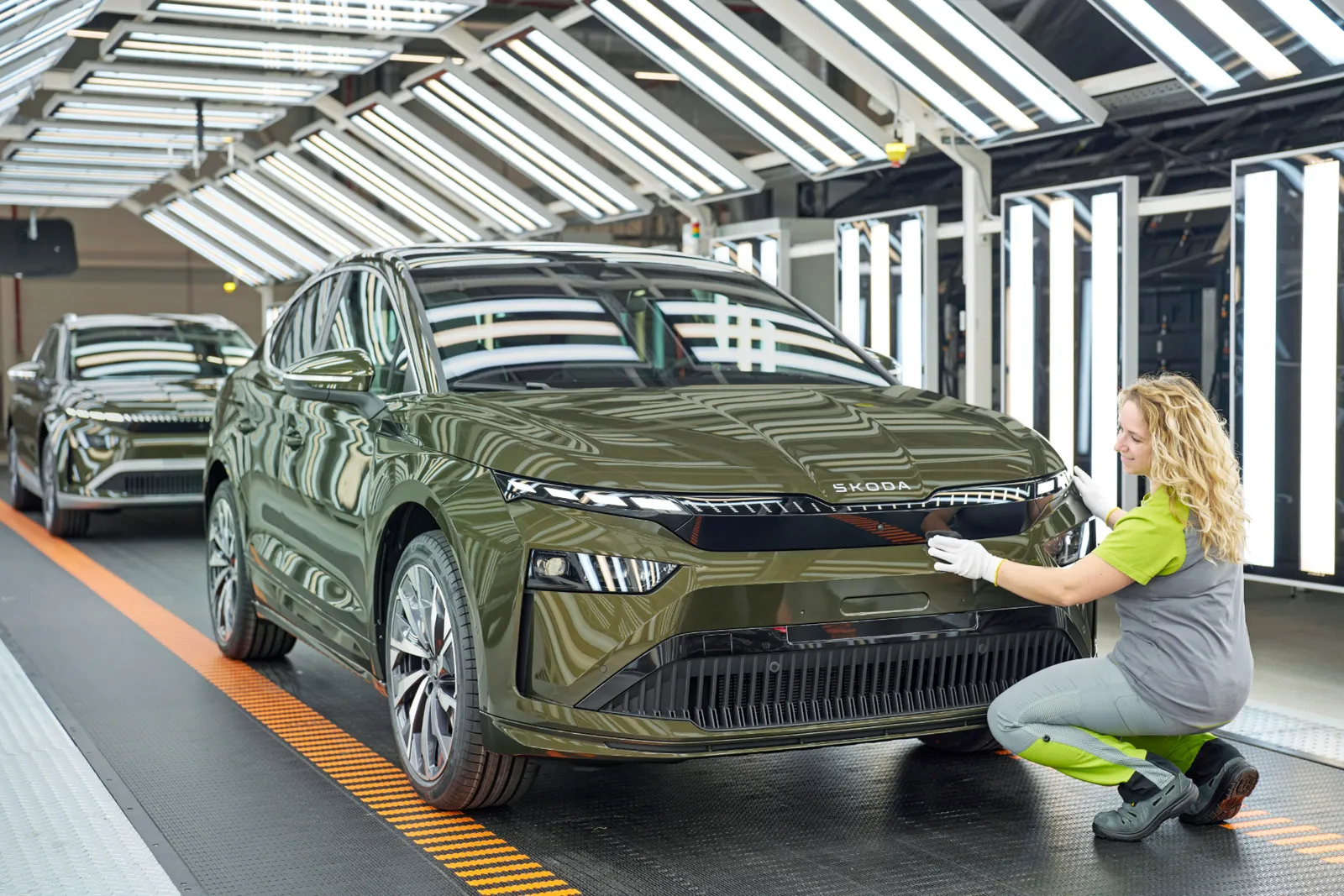
The lack of wiring harnesses from Ukraine is once again disrupting automobile production in Europe. BMW had to cut shifts at several facilities, while Skoda was affected by models such as the Enyaq and Elroq.
The shortage of wiring harnesses halted production of the Skoda Enyaq and Elroq.
Image: Skoda
The current supply problems appear to be caused by Russian attacks on facilities of German supplier Kromberg & Schubert in Ukraine, according to a report in Handelsblatt citing industry sources. BMW itself confirms short-term shortages in parts supply and resulting production adjustments, but does not name the supplier or the specific components affected.
BMW’s plants in Regensburg, Leipzig, and Oxford were impacted. Production has resumed at Regensburg, where models such as the X1 and X2 along with their electric versions, the iX1 and iX2, are manufactured. Leipzig is also expected to return to normal operations soon. Recovery at BMW’s Mini plant in Oxford is likely to take longer. The extent of production delays at these three sites remains unknown at present.
At Skoda as well, production bottlenecks were evident for weeks. According to media reports, additional and night shifts were restricted. Vehicles affected included the electric cars Enyaq and Elroq, as well as the Kodiaq. Production has resumed normally at Skoda as of this week.
Kromberg & Schubert operates factories in Ukraine, including those in Shytomyr and Luzk. The Shytomyr facility was attacked several times over the past months and temporarily shut down after significant damage to production equipment and infrastructure. In mid-October, the Luzk plant also ceased operations following an attack. According to the Ukrainian news agency Interfax, this facility supplies BMW, Mercedes-Benz, Audi, and Porsche among others.
Mercedes-Benz currently reports no production disruptions. No issues at Audi and Porsche plants have been reported either. The slow resolution of these bottlenecks is also due to the wiring harnesses themselves. They are highly customized for each vehicle model and its features and are installed early in the bodybuilding process. Therefore, an alternative production site requires not only available capacity but also appropriate manufacturing tools, trained staff, and approval from the respective automaker.
Wiring harness problems affected automakers as early as 2022
Shortly after the start of Russia’s full-scale invasion in spring 2022, a shortage of wiring harnesses from Ukraine caused production disruptions at several European automakers. BMW halted operations at its plants in Munich and Dingolfing at that time, with Regensburg and Leipzig also affected. Mini production was also suspended in Oxford. At Volkswagen, the MEB plants in Zwickau and Dresden came to a standstill temporarily due to a lack of wiring harnesses.
Manufacturers and suppliers subsequently built additional capacity outside Ukraine, including in North Africa. Yet even these alternative locations are not immune to disruptions. In spring, severe floods damaged a Kromberg & Schubert plant in Morocco. According to media reports, this affected production of the electric Mercedes GLC in Bremen, until Mercedes ensured supply through other locations.
These repeated outages highlight how difficult it is to secure supply chains for complex electrical systems. Parallel production of identical cable sets at multiple locations could reduce dependency, but it naturally increases costs and effort for manufacturers and suppliers.