
Germany shows what’s to come: electric cars are surging while hybrids are declining.
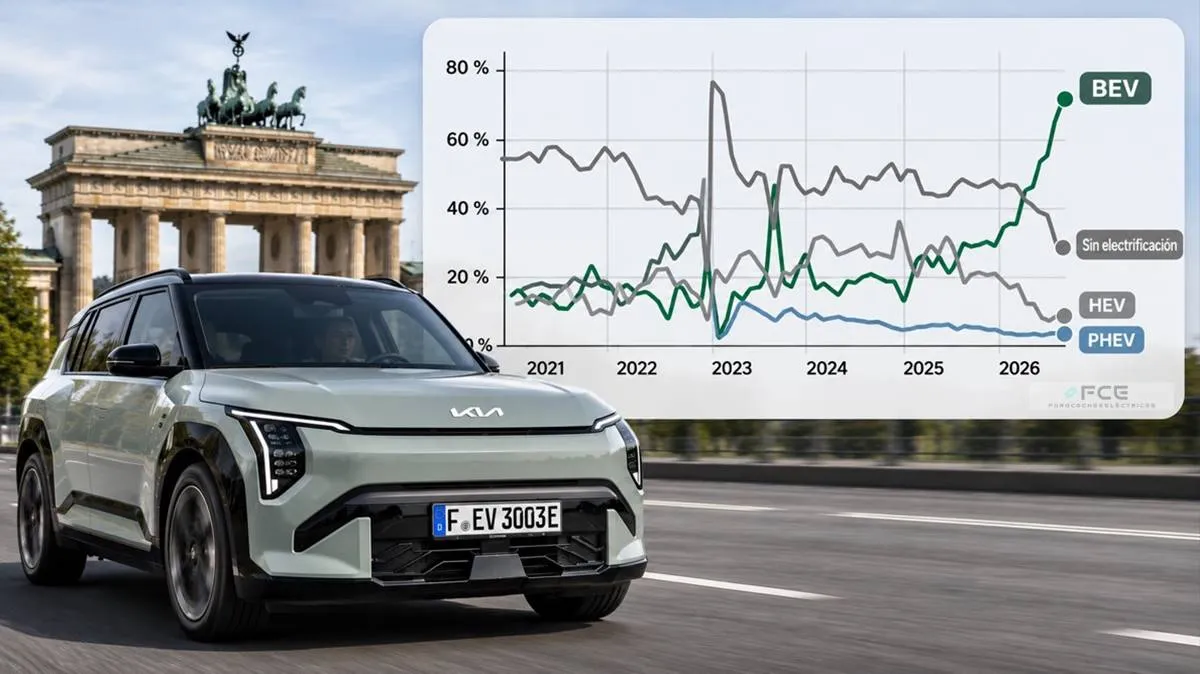
Germany has become a canary in the coal mine of Europe. The country, which for decades has been the strongest advocate of internal combustion engines, is now witnessing electric cars drive a shift in trends that is putting not only traditional gasoline and diesel models under pressure but also hybrid technologies that previously seemed to serve as a bridge to the new 100% electric era.
What’s more interesting is that this change isn’t happening only among manufacturers specializing in electric cars, such as Tesla. It’s also affecting traditional brands that have relied on thermal engines to sustain their sales for years. Kia’s case is particularly notable and could be a preview of what we’ll see in other European markets in the coming years.
A chart prepared by analyst Electricnick using official registration data from Germany’s KBA shows how significantly the landscape is changing. The evolution of different technologies within Kia demonstrates a radical transformation in just a few years, with electric cars taking center stage while combustion and hybrid alternatives lose ground.
Kia in Germany: Electric cars shift from an alternative to dominating sales
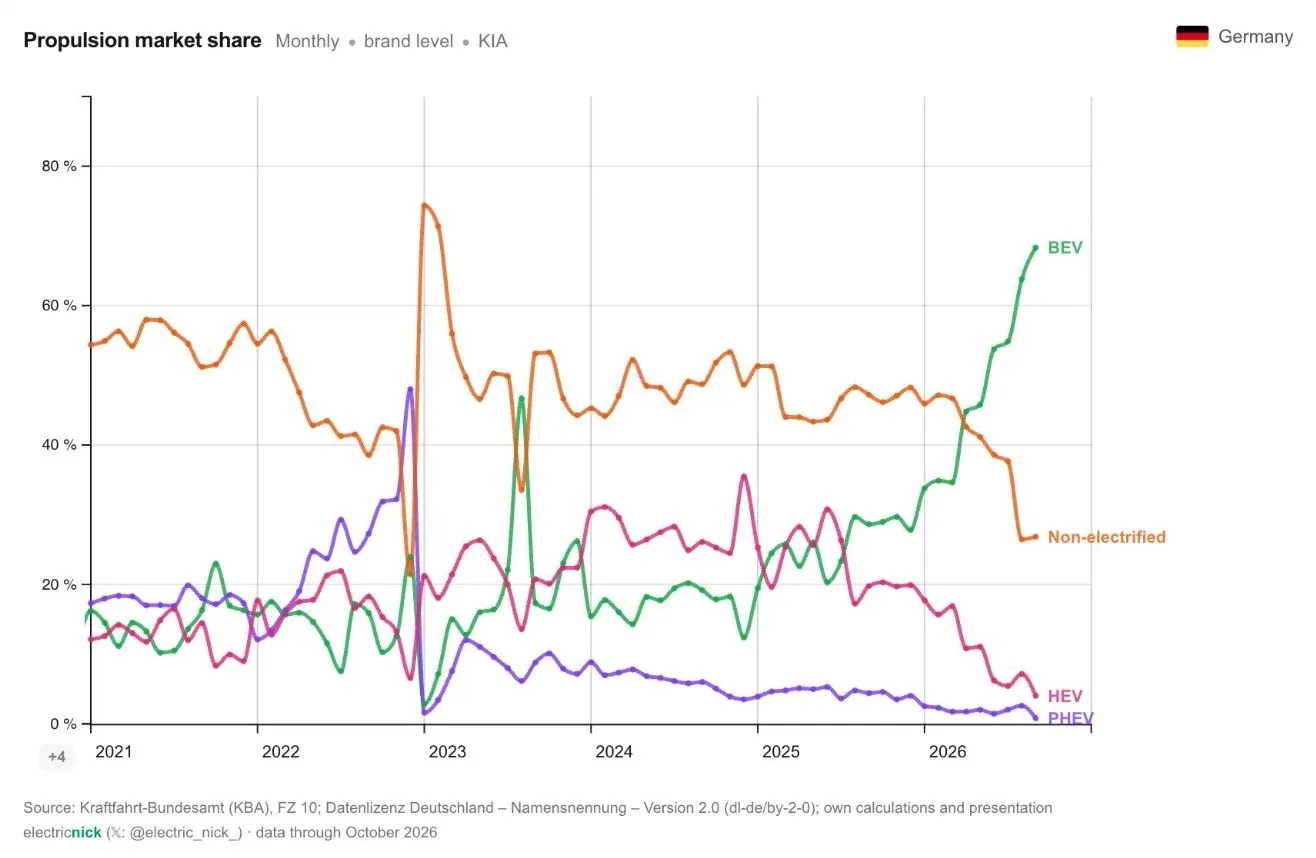
The data is particularly striking. By the end of 2020, gasoline and diesel cars accounted for approximately 55% of Kia’s registrations in Germany. Electric cars made up only about 15%, while conventional and plug-in hybrids shared the remaining 30%.
Over the following years, the situation changed slowly. Internal combustion engine models maintained a dominant position, generally between 40% and 55%, while electric car sales experienced significant fluctuations. Hybrids, on the other hand, seemed to have established themselves as an option for drivers who were not yet ready to switch to electric vehicles.
However, a change began to occur in 2025 and accelerated dramatically in 2026. Kia’s share of electric cars rose from around 25-30% at the beginning of 2025 to nearly 68% by October 2026. In other words, almost seven out of ten Kia vehicles registered in Germany are now electric.
The trend for traditional models is exactly the opposite. Vehicles without electric powertrains, which still accounted for nearly half of sales at the start of 2026, have dropped to about 27%. This significant loss in market share in just a few months shows how the brand’s registration composition is changing.
But perhaps the most surprising aspect is the performance of hybrids. For much of 2024 and 2025, conventional hybrids accounted for between 20% and 30% of Kia’s monthly sales. At certain points, they even exceeded 35%. However, in 2026, their share plummeted to around 4%.
Plug-in hybrids have also failed to escape this trend. After reaching levels above 20% at certain times in 2022, they have seen their significance decline almost continuously, eventually dropping to a minimal share of nearly 1%.
The result is a picture very different from what we had just two years ago. Kia has shifted from relying mainly on internal combustion engines and their various hybrid versions to finding electric vehicles as the main driver of its registrations in Germany. Now, the landscape is quite different, and this change comes at a time when the electric vehicle market has exploded.
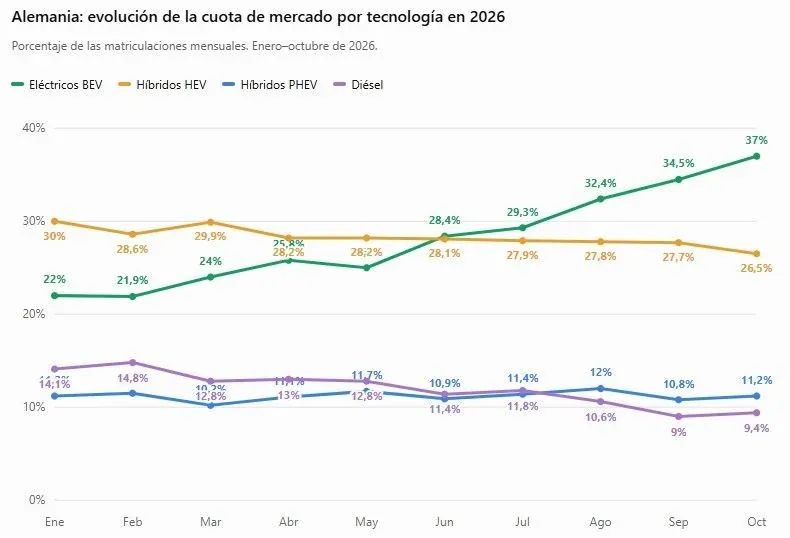
What is happening in Germany can also be understood in terms that go far beyond just the Korean manufacturer. For years, much of Europe’s automotive industry has argued that hybrids would be an essential technology for decades, especially due to concerns about charging infrastructure, prices, and the range of electric vehicles.
However, Kia’s recent actions, along with those of other brands as shown in the chart above, suggest a different scenario. When a manufacturer offers a sufficiently wide and competitive range of electric vehicles at competitive prices, consumers may begin to skip this intermediate stage and opt directly for an electric car.
The conclusion is that electric cars will become the leading sales force in Europe in the short term, and that some brands’ investments in internal combustion engines, for both gasoline and hybrid models, are money being thrown away directly, as sales of these models will be minimal in just a few years. There will be many models competing for those remaining sales.