
Goodbye to the ID.4 era; Volkswagen is beginning to produce the new ID. Tiguan at its futuristic factory in Emden.
13/11/2026 12:30
Updated to
13/11/2026 12:30
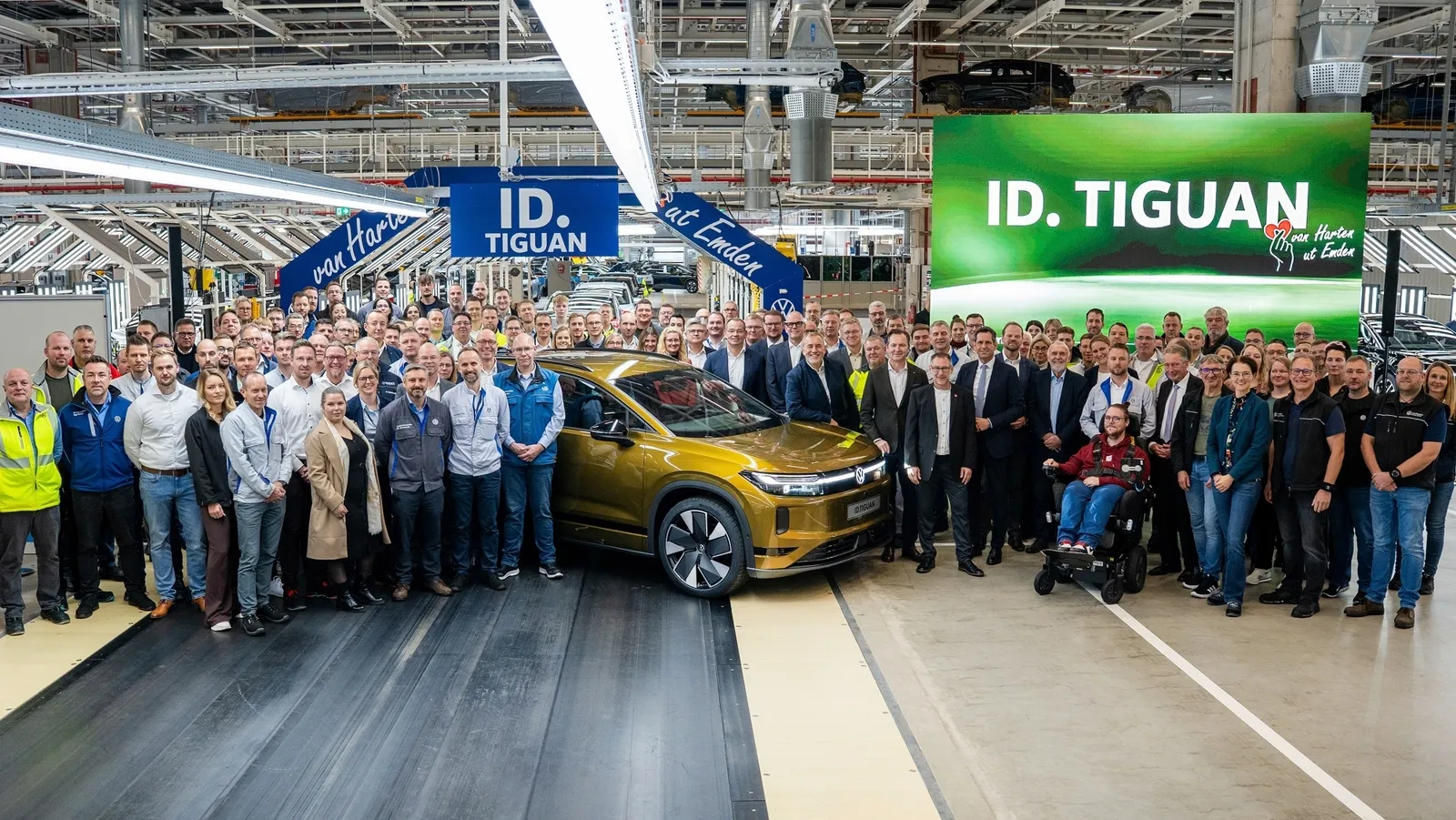
The first production Volkswagen ID. Tiguan, the 100% electric version of the brand’s best-selling SUV, has already rolled off the assembly line in Emden, in northern Germany. The factory will increase production pace over the coming weeks to meet demand, with the first customers receiving their cars in early 2027.
Although it hasn’t yet reached dealerships, interest is already strong: since its global debut in early October, Volkswagen has received several thousand reservations. It replaces the ID.4 and ID.5 models, of which the brand has produced over 950,000 units, and will coexist with the gasoline, diesel, and hybrid Tiguan models that continue to be manufactured in Wolfsburg. Not all reservations will result in sales, but it’s a positive sign for one of the brand’s key models.
Emden, a Factory Already Specializing in Electric Vehicles
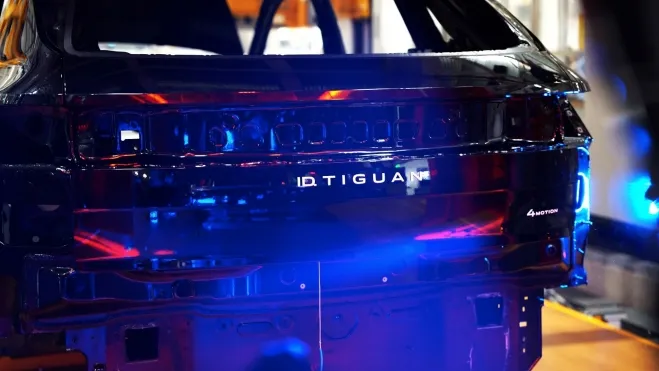
Emden is Volkswagen’s factory located farthest north in Germany and has focused on electric cars for years. The Volkswagen ID.4 was manufactured there, and the ID.7 is still produced there in both sedan and station wagon versions. According to the brand, the ID.7 was the most registered electric vehicle in Germany in October. In total, over 500,000 electric cars have already left its production lines.
For the workforce, it’s much more than just a new model. The works council sees it as a key element to ensure sufficient workloads over the next decade and to help the factory reach its 70th anniversary in 2034 in good health.
Three versions and up to 600 kilometers of range
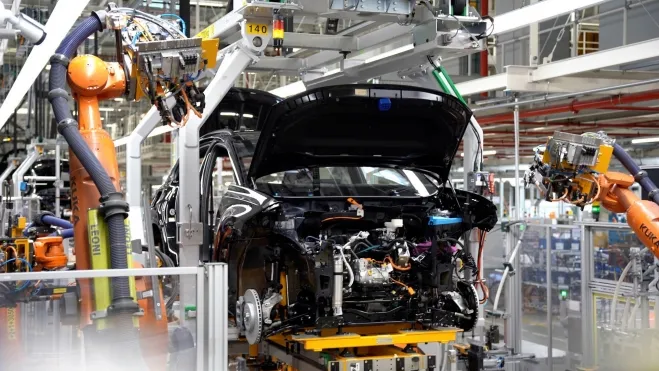
The ID. Tiguan is built on the MEB+ platform, the evolution of the electric vehicle platform that Volkswagen introduced with the ID.3 in 2021. The lineup starts with a rear-wheel-drive version featuring 190 horsepower and a 58 kWh battery. Above that is another rear-wheel-drive model with 286 horsepower and a 77 kWh battery, while the top version is the 4MOTION all-wheel-drive model with 299 horsepower and the same 77 kWh battery.
According to the version, the certified range reaches up to 600 kilometers with the harmonized WLTP protocol. The 4MOTION version, the most powerful one, shows a combined fuel consumption of between 15.7 and 17.2 kWh per 100 kilometers. Volkswagen has equipped the ID. Tiguan to tow up to 1,800 kilograms with the smaller battery and up to 2,000 kilograms with the larger one.
More SUV styling on the outside and back to buttons on the inside
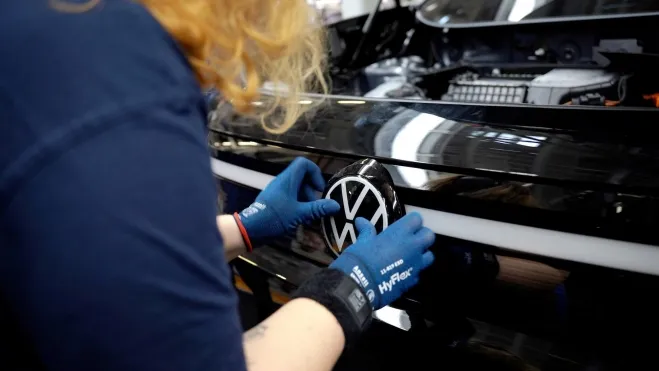
Exteriorly, the changes are immediately noticeable. The brand’s new design language, named “Pure Positive,” moves away from the rounded, crossover-inspired silhouette of its predecessors in favor of a classic SUV shape with precise lines and taut surfaces. Additionally, Volkswagen has reverted to the traditional handle-style door handles.
Inside, the brand has addressed customer complaints, as reported during its launch presentation. The climate control system returns to physical buttons, and the steering wheel eliminates touch controls. For the first time in a European Volkswagen, the passenger seat comes equipped with its own 12-inch screen. Beneath the front hood lies a small trunk space of 32 liters, while the rear trunk offers a minimum capacity of 534 liters.
When it arrives and how much it costs
The pre-order opened on October 13 in Germany and other European countries, with prices starting at 42,695 euros. In Spain, it will first arrive in the Match, Life, and Style trims, while the R-Line is scheduled for the first quarter of 2027. Here, the promotional launch price begins at 32,400 euros for the Match version with a 58 kWh battery, provided it is financed through Volkswagen and the brand’s discounts along with subsidies from Plan Auto+, which is nearing depletion of funds.