
30 electric cars compete in an endurance test: Mercedes and BMW dominate, while XPeng surprises everyone
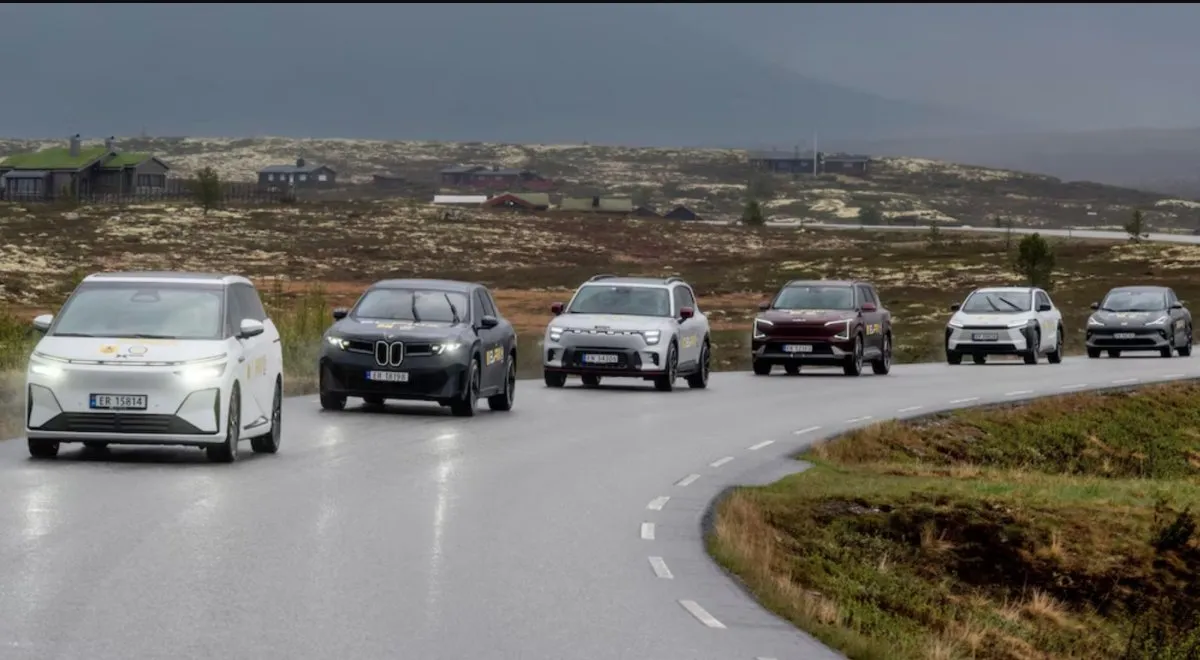
Range remains one of the key factors that buyers of electric cars consider most highly, especially if they plan to use them for traveling. But there is something that may be even more important than the distance we can cover with a fully charged battery: how long it takes to restore range when we stop to charge. It is precisely this aspect that the German automobile club ADAC has chosen to analyze, through a comparison of some of the most interesting electric cars on the market.
The results bring some surprises. Mercedes and BMW top the rankings, confirming the significant technological leap made by their latest electric platforms, which are also equipped with large batteries. But Chinese manufacturers are also present, capable of competing with European premium brands and even surpassing Tesla in one of the most important aspects for long trips: charging speed.
The comparison includes 30 electric cars from various segments and price ranges, from small urban vehicles to large sedans and luxury SUVs. All were evaluated using ADAC’s new protocol introduced in early 2026, which employs a more demanding testing cycle and allows for comparing results under consistent reference conditions.
Mercedes CLA and BMW iX3 lead in range rankings for long trips
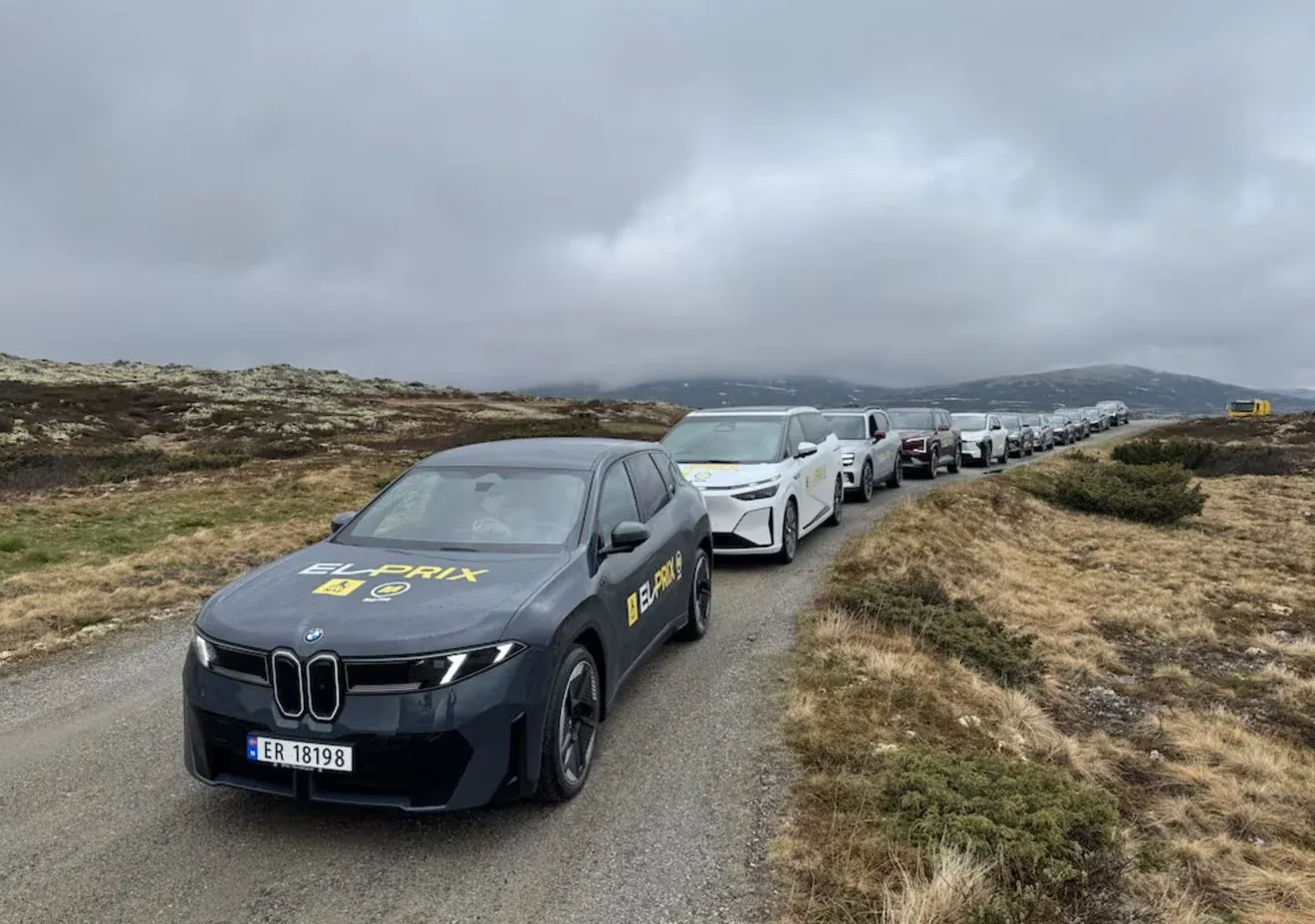
To determine its rankings, ADAC used a rather interesting criterion. Instead of simply measuring range with a full charge, it calculates how many kilometers each car can travel using 90% of the range achieved in its tests, plus the additional distance it can cover during a 20-minute fast charging stop.
In this way, the result more closely reflects what a driver might experience during a long journey, where it’s not typical to completely drain the battery, but rather to stop before it reaches 0%. It also allows for evaluating the efficiency and charging speed of each model—two factors that can make a huge difference between cars with initially similar ranges.
The winner is the Mercedes CLA 350 4MATIC, which achieves a combined range of 1,071 kilometers. Of this, 605 kilometers correspond to the initial drive with 10% of the battery remaining, while an additional 466 kilometers can be covered during a 20-minute charge. This result positions the new German sedan as the benchmark in this comparison.
The BMW iX3 50 xDrive is right behind it, with a range of 1,059 kilometers. This new generation Neue Klasse SUV can travel 602 kilometers before needing to stop and then cover another 457 kilometers during charging. Only 12 kilometers separate the top two models, showing just how close the competition has become between Mercedes and BMW.
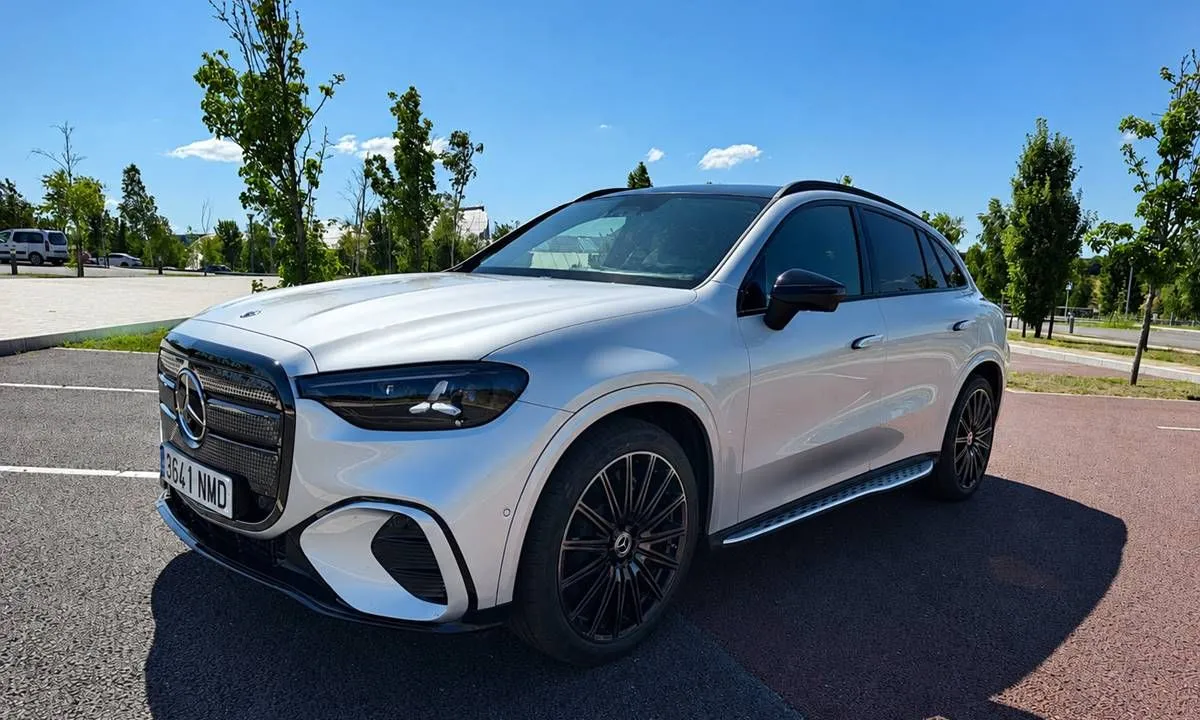
The third place also goes to BMW, with the iX3 40, which achieves 932 kilometers of range. Behind it is the electric Mercedes GLC 400, with 906 km, while the Hyundai Ioniq 6 finishes in fifth place with 885 kilometers. This is a particularly interesting result for the Korean sedan, as it continues to show that good aerodynamics and an efficient charging system can be just as important as having a high-capacity battery.
However, one of the biggest surprises comes from China. The XPeng P7+ Long Range achieves a combined range of 864 kilometers, surpassing models such as the Tesla Model 3, Volvo ES90, or Audi S e-tron GT. But what’s truly remarkable isn’t its position in the rankings—it’s what happens when it’s time to charge it.
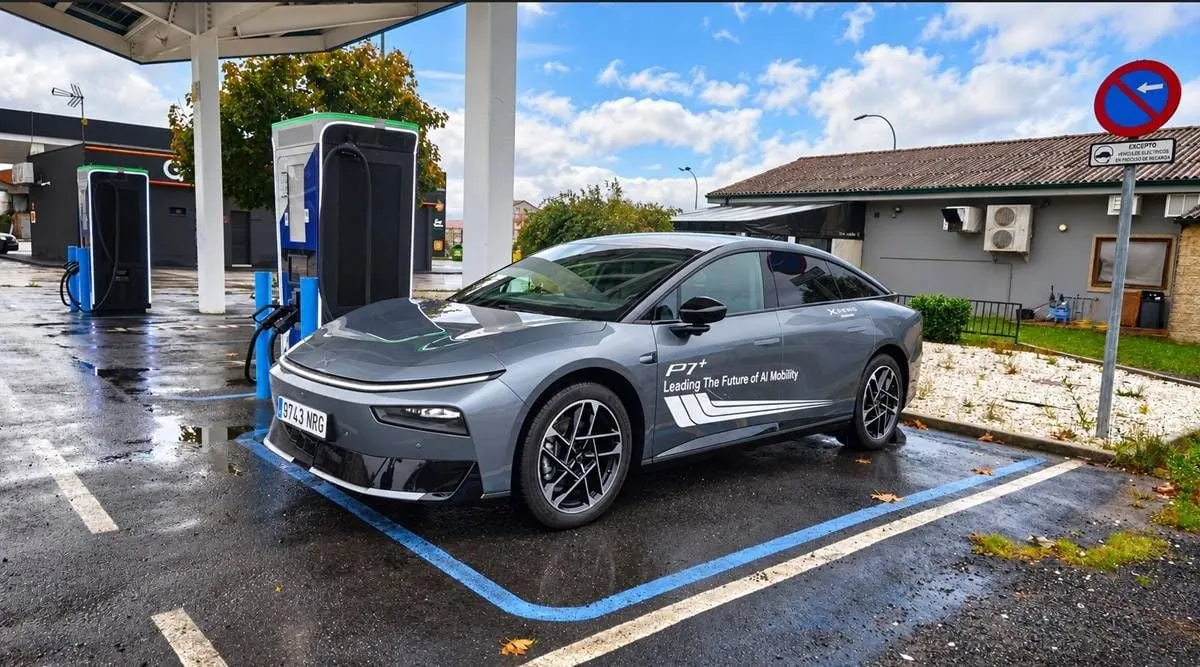
The XPeng is capable of regaining 445 kilometers of range in just 20 minutes, a figure that places it among the best in the entire test. For perspective, the Tesla Model 3 Premium Long Range regains 311 kilometers in the same time. A difference of 134 kilometers that highlights the progress of new electric architectures and ultra-fast charging systems.
That said, Tesla still has an advantage in efficiency and initial range. The Model 3 can travel 527 kilometers before needing to recharge, compared to 419 kilometers for the XPeng. But when charging is taken into account, the ranking changes, with the Chinese manufacturer ending up ahead at 864 kilometers versus Tesla’s 838 kilometers.
Ranking of the 30 Electric Cars Tested by ADAC
The table below shows the results of the comparison, sorted by total range. The first range column indicates the distance that can be traveled from 100% to 10% battery level, while the second column shows the kilometers covered during a 20-minute charge.
Model
Range 100-10%
Charge 20 min
Total
Mercedes CLA 350 4MATIC
605 km
466 km
1,071 km
BMW iX3 50 xDrive
602 km
457 km
1,059 km
BMW iX3 40
533 km
399 km
932 km
Mercedes GLC 400 4MATIC
503 km
403 km
906 km
Hyundai Ioniq 6 84 kWh
479 km
406 km
885 km
XPeng P7+ Long Range
419 km
445 km
864 km
Volvo EX60 P10 AWD
457 km
403 km
860 km
Audi S e-tron GT quattro
473 km
382 km
855 km
Tesla Model 3 Premium LR
527 km
311 km
838 km
Volvo ES90 Extended Range
462 km
348 km
810 km
Volvo EX90 Twin Performance
438 km
327 km
765 km
Genesis G80 Electrified AWD
434 km
294 km
728 km
BMW iX xDrive45
467 km
259 km
726 km
Toyota C-HR+ 77 kWh
425 km
285 km
710 km
Kia EV4 81,4 kWh
441 km
245 km
686 km
Peugeot e-5008 Long Range
464 km
218 km
682 km
Tesla Model Y Standard
394 km
286 km
680 km
Tesla Model Y Performance
399 km
244 km
643 km
Nissan Leaf 75 kWh
419 km
224 km
643 km
VW ID.3 Neo 50 kWh
293 km
246 km
593 km
Mini Countryman E
363 km
224 km
587 km
Kia EV5 81.4 kWh
334 km
200 km
534 km
Jeep Compass electric
331 km
198 km
529 km
Audi Q4 40 e-tron
275 km
196 km
471 km
MG4 EV Urban 54 kWh
292 km
177 km
469 km
Nissan Micra 52 kWh
290 km
177 km
467 km
Kia PV5 Passenger 71.2 kWh
291 km
174 km
465 km
Suzuki e Vitara 61 kWh
306 km
130 km
436 km
Kia EV2 42.2 kWh
221 km
142 km
363 km
Renault Twingo E-Tech
158 km
97 km
255 km
The results also reveal significant differences between models that may seem quite similar on paper. For example, the Tesla Model Y Standard achieves a combined range of 680 kilometers, surpassing the Model Y Performance, which comes in at 643 km. This difference is attributed to both fuel consumption and battery performance during charging.
The Toyota C-HR+ also stands out, managing to outperform the Kia EV4 and Peugeot e-5008, while the new Nissan Leaf reaches 643 kilometers. These figures show how mid-range models are now offering driving ranges that were previously reserved for much more expensive electric cars.
On the opposite end are urban models such as the Kia EV2 or the Renault Twingo. The compact Renault achieves a combined range of 255 kilometers, but it’s not designed for crossing Europe on highways either. Its approach is very different, and its results should be interpreted considering its size, price, and intended use.
According to ADAC, an electric car can be considered fully suitable for long trips when it has a combined range of over 750 kilometers with a 20-minute stop. A range between 600 and 750 kilometers is still adequate for traveling, while below that figure, stops may need to be more frequent or longer.
The conclusion of this comparison is quite clear. Range no longer depends solely on installing larger and larger batteries. Efficiency, thermal management, and especially the ability to maintain high power levels during charging are gaining increasing importance.
Mercedes and BMW currently dominate the ADAC rankings, but manufacturers like XPeng show that competition is advancing rapidly. For those who regularly use their electric cars on the road, it can be much more interesting to cover 400 kilometers in 20 minutes than to have just a few dozen extra kilometers at the start of a journey.