
2 hours and 46 minutes of charging to cover 5,886.7 Km: BMW’s new electric car demonstrates its efficiency
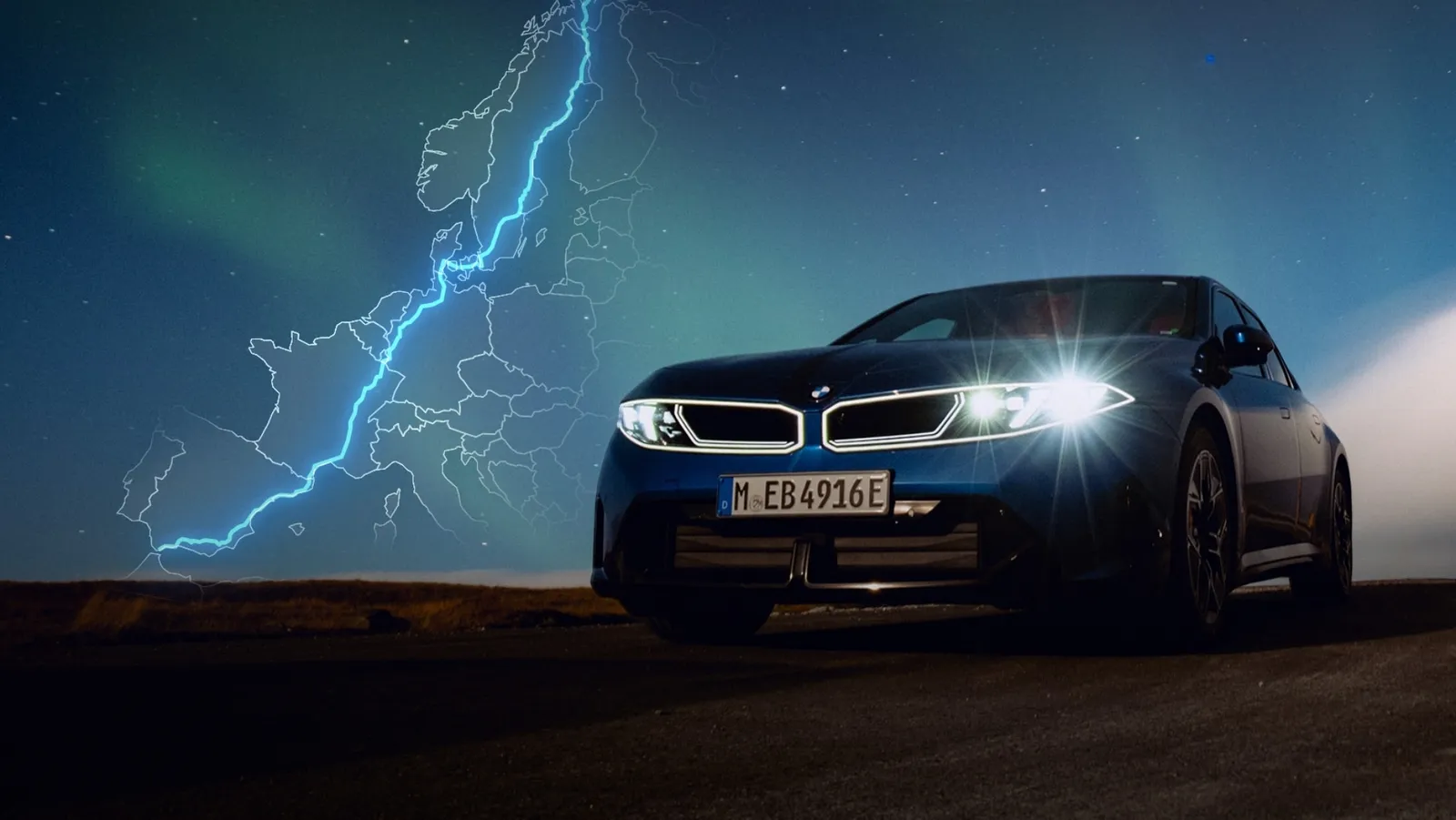
Two hours and twenty-five minutes was all it took for the new BMW i3, the first all-electric Series 3, to travel from Nordkapp in Norway to Tarifa in Cádiz. Along the way, it covered 5,886.7 kilometers and crossed eight countries, always recharging at public stations. BMW has shown that traveling with an electric car doesn’t necessarily mean losing many hours at charging stations.
This journey is part of the Paneuropeana, a challenge designed to measure what concerns those considering electric cars for travel the most: the time lost at chargers. According to BMW, the i3 reduced the previous record set in 2017 by more than seven hours. Their efficiency team had previously taken the BMW iX3 50 xDrive to travel 1,007 kilometers on a single charge between Debrecen (Hungary) and Munich.
How the Paneuropeana Works

The route connects the northernmost point in Europe reachable by car, on Norway’s island of Magerøya, with the southern tip of the continent. The checkpoints are predetermined and require passing through highways, secondary roads, and cities, so it’s not the fastest driver who wins, but those who spend the least time charging.
The interesting part is that the charging stations aren’t marked, and each team decides where to stop based on the charging network, time, or traffic conditions. The i3 was always driven by a single engineer, along with another identical i3 and an iX3 as support vehicles. BMW claims all three were standard models, equipped with the same hardware and software as those sold to customers.
Lower consumption than specified in regulations
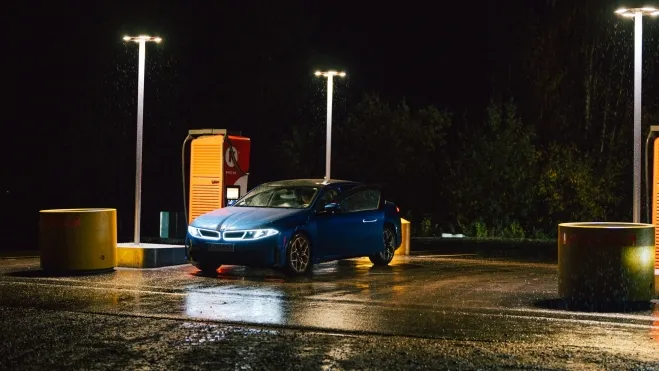
The i3 traveled for 3 days, 2 hours, and 41 minutes at an average speed of 79.7 kilometers per hour. It consumed 12.5 kWh per 100 kilometers, which is even lower than its best WLTP rating range of 13.4 to 18 kWh. It was connected to a charger for a total of 2 hours, 45 minutes, and 54 seconds, always using fast DC charging at an average power of 275 kW.
This is precisely the combination that matters for a long journey. A car that uses little energy needs less power at each stop, and if it can recharge quickly, the stops are sufficient only for stretching one’s legs.
BMW’s New Generation Electric Powertrain
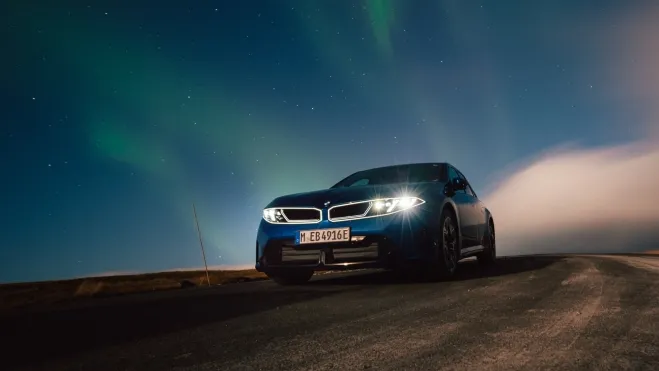
The i3 50 xDrive introduces BMW’s sixth generation of eDrive technology. It features an electric motor on each axle, delivering a combined power of 469 horsepower and 645 Nm of torque. It accelerates from 0 to 100 kilometers per hour in 4.7 seconds and can reach 200 kilometers per hour.
Its battery has a usable capacity of 108.7 kWh and consists of cylindrical lithium-ion cells mounted directly within the battery pack, which is integrated into the car’s structure. It achieves up to 912 kilometers of range according to the WLTP cycle. With its 800-volt architecture, it supports up to 400 kW of DC power, enough to recharge 423 kilometers in 10 minutes, and enables two-way charging.
Features that reduce costs
With an aerodynamic coefficient of 0.21, the i3 is the most aerodynamic BMW to date, and it was equipped with 19-inch M Aerodynamic tires on this model. Its tires offer 14% better rolling resistance than what is required by the A efficiency rating. The engines lose 40% less energy compared to those in the previous generation, while the new battery cells store 20% more energy per volume than the prismatic cells BMW has used until now. Additionally, over 95% of braking is handled by the electric motors, which return that energy to the battery.