
12,000 tons less of CO2 per year: China already has 60 driverless electric trucks operating at 5,400 meters above sea level, amidst ice and snow.
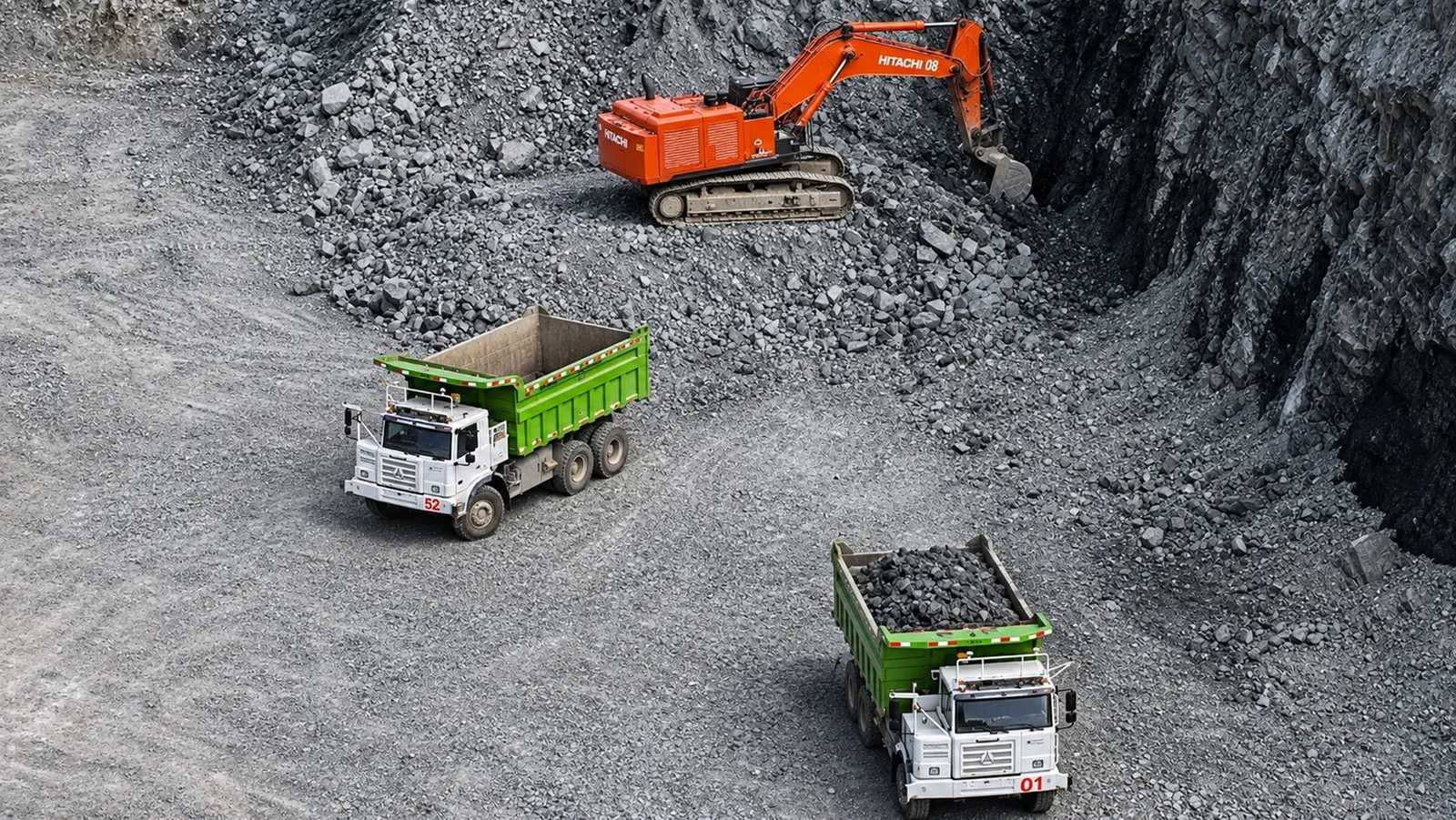
China has just reached a new milestone in the electrification of heavy transportation. At a copper mine located over 5,400 meters above sea level, a fleet of 60 electric trucks operates without drivers on board. These are not experimental vehicles but ones that already participate regularly in material extraction and transportation operations, withstanding extreme temperatures, snow, and mountain roads.
The project is being carried out at the Zhibula mine, located in Tibet and owned by Julong Copper, a subsidiary of the mining giant Zijin Mining. The autonomous driving technology was developed by EACON Mining, which claims to have established the largest fleet of autonomous trucks in a single metal mine in China. It would also be the world’s first mining operation to use exclusively autonomous electric trucks for its transportation tasks at altitudes over 5,000 meters.
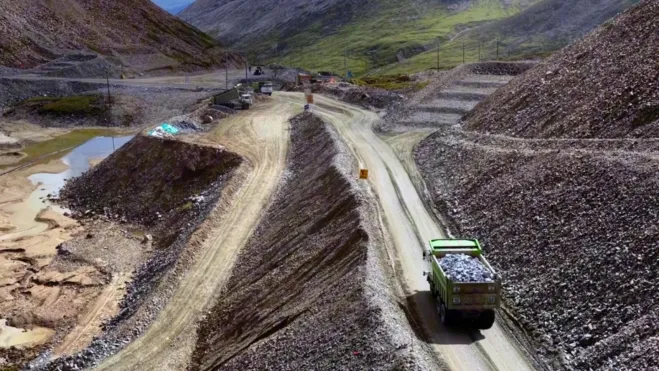
60 electric trucks capable of operating without drivers in extreme conditions
The initiative began in September 2025, when the 60 electric trucks manufactured by SANY arrived at the mining facility. Initially, they operated with drivers while engineers tested the functionality of the autonomous systems. According to EACON, it took them only about two weeks to validate the technology and enable its operation without safety drivers.
The transition was carried out gradually. By March 2026, 52 trucks were already operating autonomously on a regular basis, and by the end of September, all 60 vehicles had been fully integrated into the mine’s regular operations. Working conditions represent one of the main challenges. At over 5,400 meters above sea level, the atmospheric pressure and oxygen concentration are significantly lower than normal. Additionally, the trucks must cope with strong ultraviolet radiation, snowstorms, icy surfaces, and steep slopes.
To overcome these challenges, EACON uses a system that combines information from various sensors with adaptive control technologies. This enables vehicles to interpret terrain conditions and adjust their operation, even when snow, ice, or reflections make it difficult to detect obstacles.
12,000 tons of CO2 avoided per year
The results reported by the company are particularly impressive. The introduction of autonomous trucks has reduced the need for drivers in transportation operations by approximately 80%, while the effective daily working hours have increased by 16%.
Electrification also has a significant environmental impact. According to EACON’s estimates, the 60 electric trucks will help avoid around 12,000 tons of CO2 emissions annually. However, the company has not released detailed data on energy consumption, battery capacity, or charging speeds.
The technology also helps reduce workers’ exposure to extremely harsh conditions. At such high altitudes, lack of oxygen and weather conditions can greatly hinder human work, so eliminating the need to stay inside trucks represents an operational advantage.
China is already developing electric trucks capable of carrying 230 tons
Zhibula’s project is part of Zijin Mining’s broader strategy to electrify its operations. The nearby Julong Copper mine already uses electric trucks with a loading capacity of 140 tons, capable of transporting over 2,000 tons of material daily. According to the company, these trucks consume more than 17% less energy than comparable conventional vehicles.
In addition, in August 2026, Zijin Longking introduced the ZL230E, a massive electric mining truck with the capacity to transport 230 tons. This model features a battery with a capacity of approximately 1,400 kWh and a propulsion system of 1.6 MW, equivalent to around 2,176 horsepower.
Meanwhile, EACON is integrating autonomous technology into another 18 conventional NTE240 mining trucks, each with a capacity of 220 tons, that operate at the nearby mine. Some of these trucks are already running without safety drivers, while the rest are still in the validation phase.
Zijin Mining aims to gradually replace conventional mining trucks with electric alternatives over the next three years. Zhibula’s experience shows that the combination of electrification and autonomous driving is already working in one of the planet’s most challenging industrial environments, although the reported productivity and emission figures have not yet been subject to published independent verification.