
Xpeng G9L review: Quiet, spacious, but not fuel-efficient
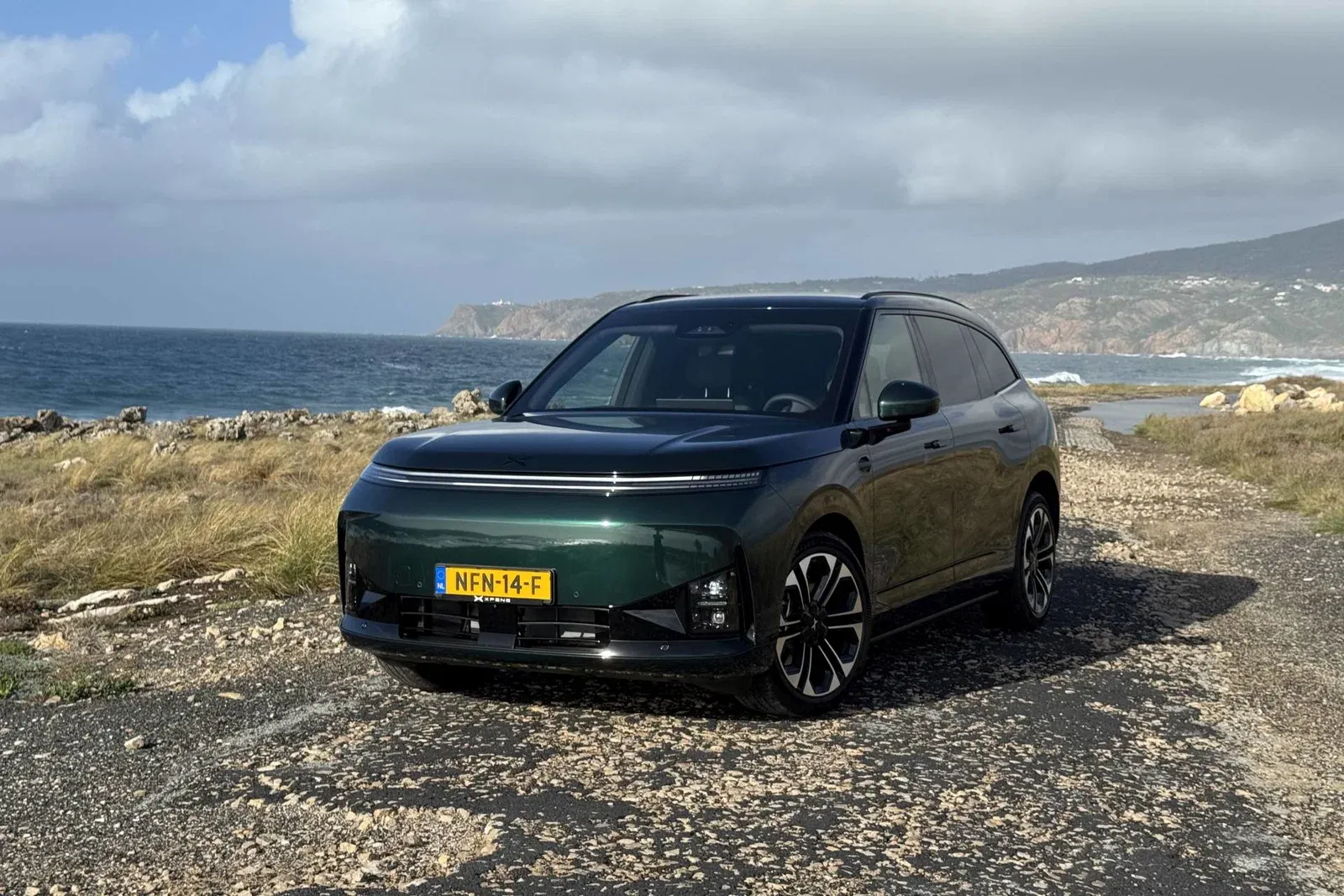
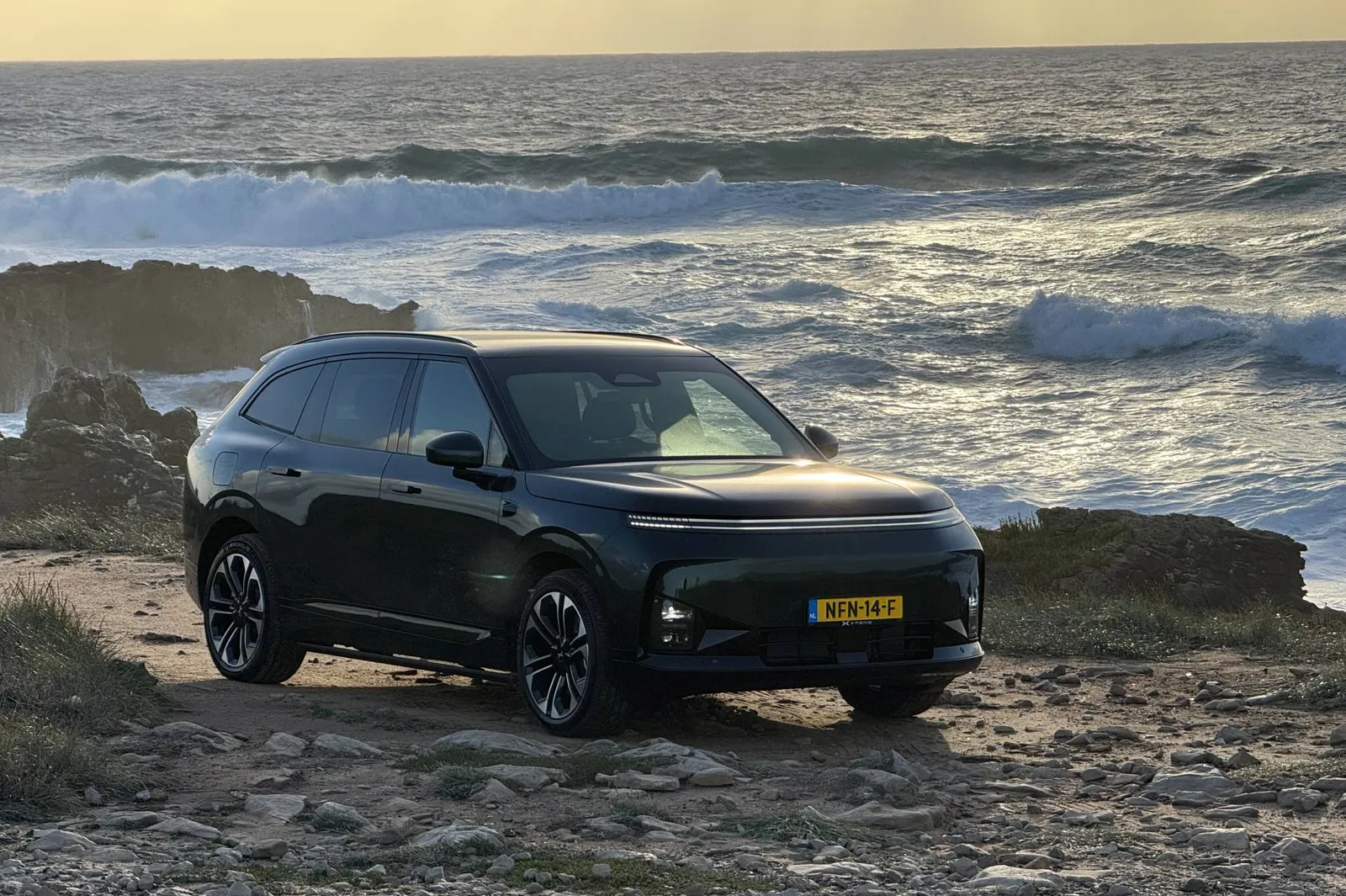
With its over five meters in length, just under two meters in width, and 1.78 meters in height, the Xpeng G9L is indeed a substantial vehicle. Its 3.10-meter wheelbase also clearly shows that Xpeng has given great importance to interior space. Visually, however, the Chinese brand remains true to itself. The narrow, continuous light strips on the front and rear resemble its existing models, while a unique feature are the DLP pixel headlights, which can project graphics and driving information onto the road.
Electrically operating doors add an extra touch of luxury, though they only open fully if enough space is given beyond what’s necessary. Additionally, electrically extendable step boards are available upon request, which should be a practical addition, especially for shorter passengers, given the vehicle’s height.
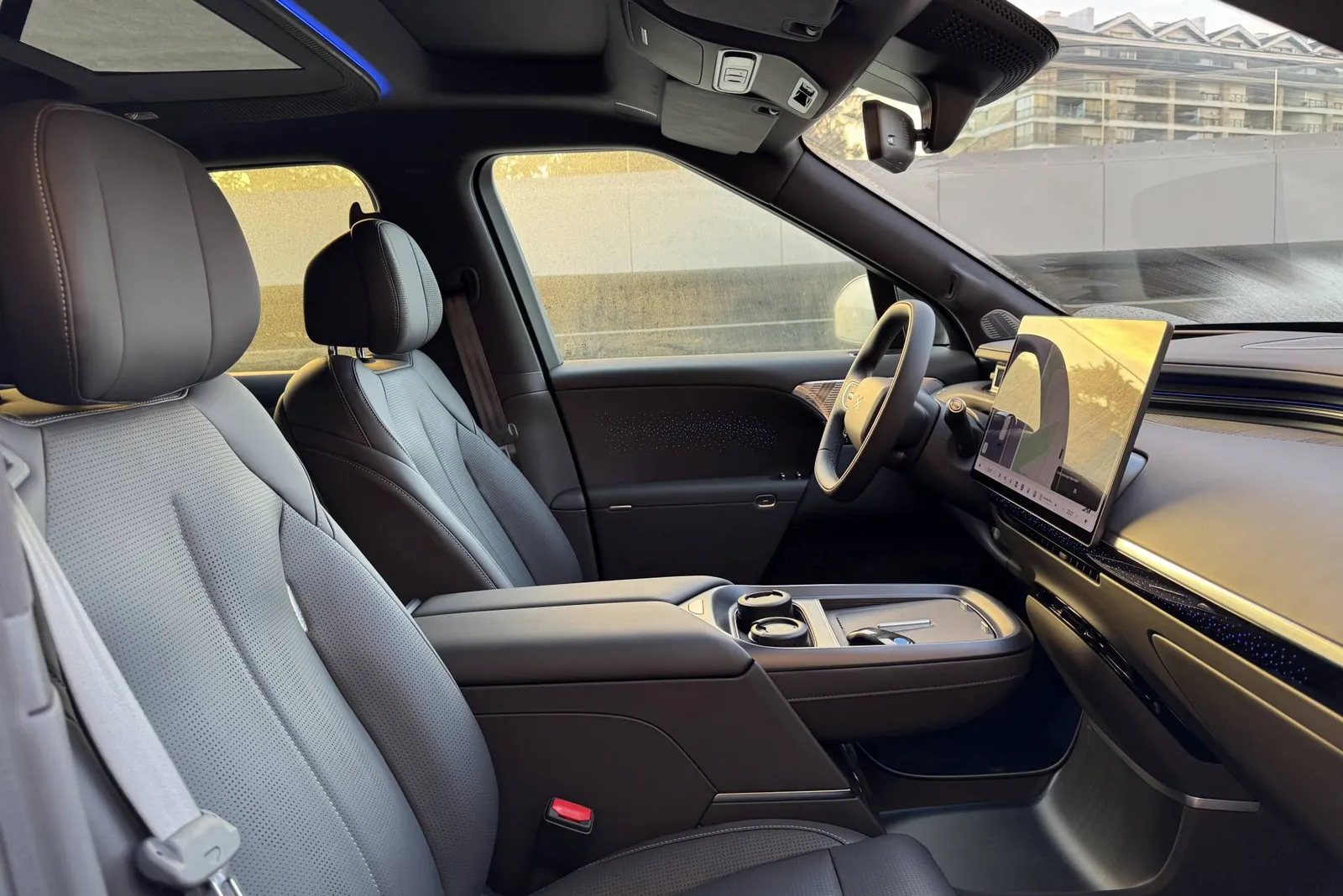
Inside, buyers can choose between two different seating configurations. The seven-seater version features a classic 2:3:2 layout, while the six-seater model replaces the middle seat bench with two individual seats each equipped with its own armrests. It becomes clear that Xpeng aims to attract comfort-focused customers with the G9L just by looking at the seating setup. The front seats are not only electrically adjustable, heated, and ventilated but also come with various massage programs. In addition, there are lumbar and thigh supports. Sensors also detect the shape of the occupants’ bodies, allowing the seat contours to adjust automatically. The side panels can also be adjusted in curves to provide additional support.
In the six-seater version, this feature is part of the standard equipment, while in the seven-seater version it is included in the optional Premium Package. Xpeng calls this technology “Active Adaptive Seating,” but it didn’t fully convince us during our first test. The side supports were too loose for our taste, failing to provide the necessary lateral support, which became evident on the winding country roads around Cascais.
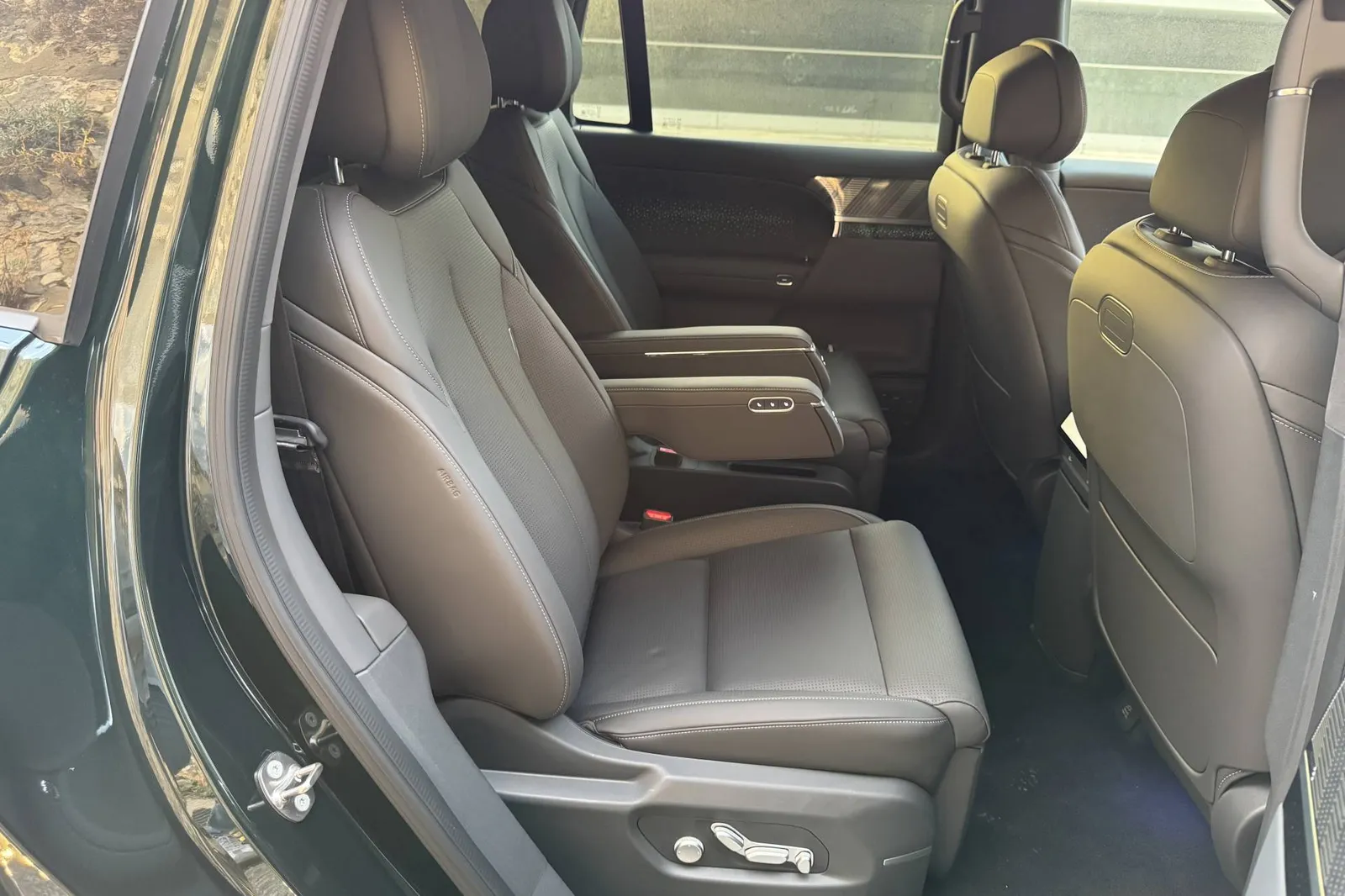
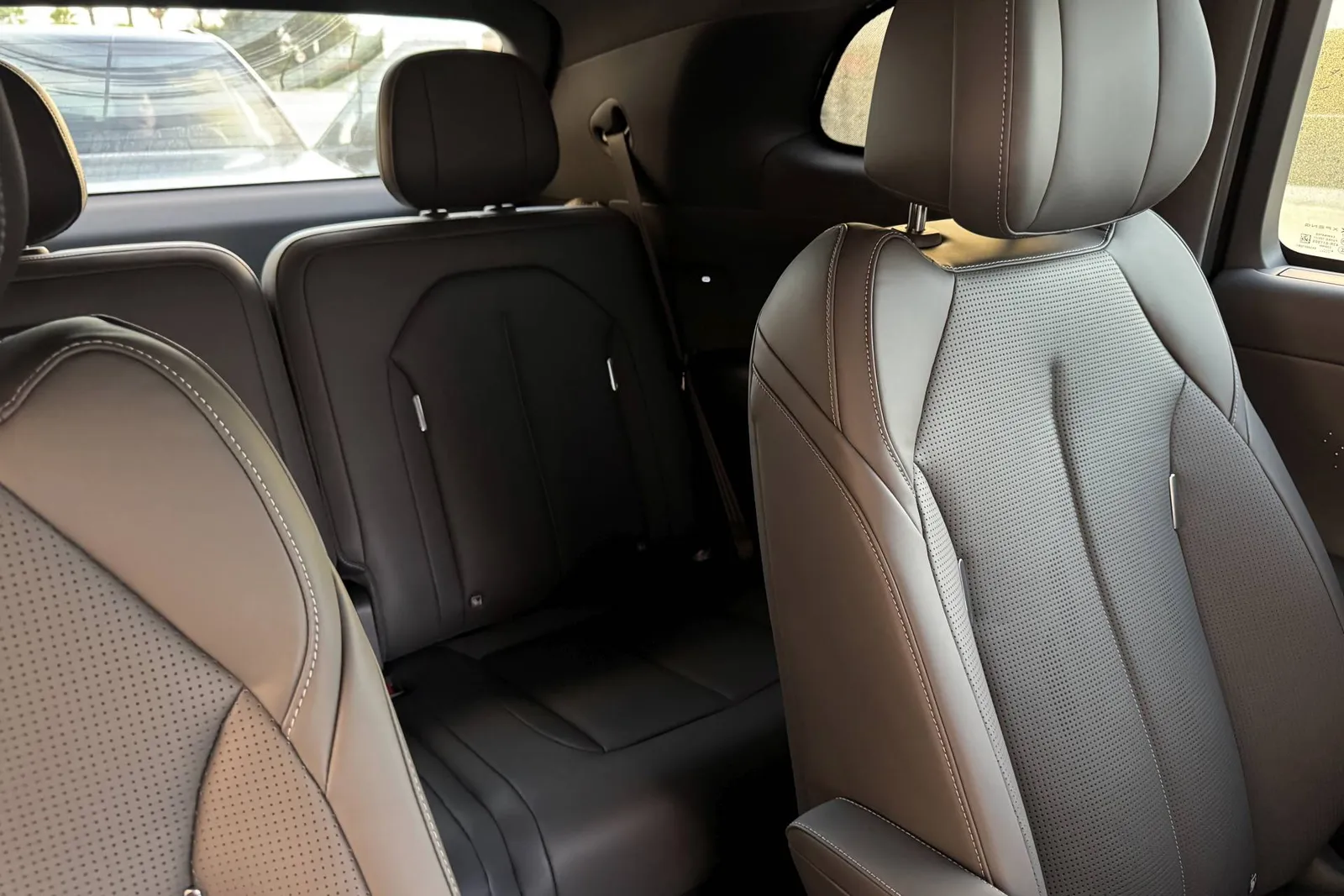
To ensure that passengers in the second row are not left out, Xpeng also equips this row with Nappa leather seats featuring seat heating, ventilation, and a ten-point massage function. However, what stands out most is the equipment in the third row. Here too, there are heated seats that can be electrically folded with a button press, a USB-C port for both passengers, and foot wells that offer surprisingly ample space even for average-sized adults. One still wouldn’t want to travel long distances in these seats, but at least Xpeng doesn’t treat them as mere emergency seats.
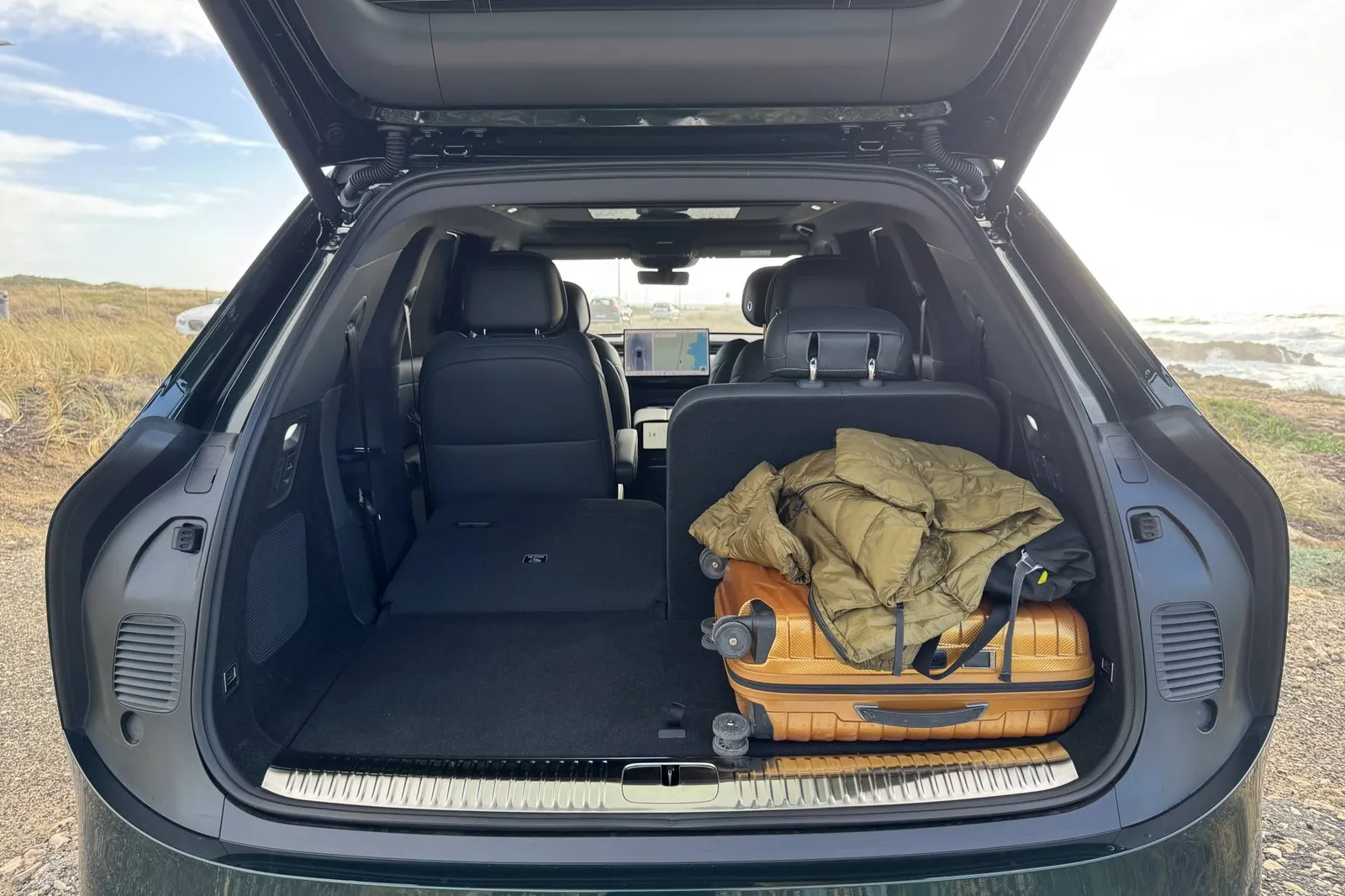
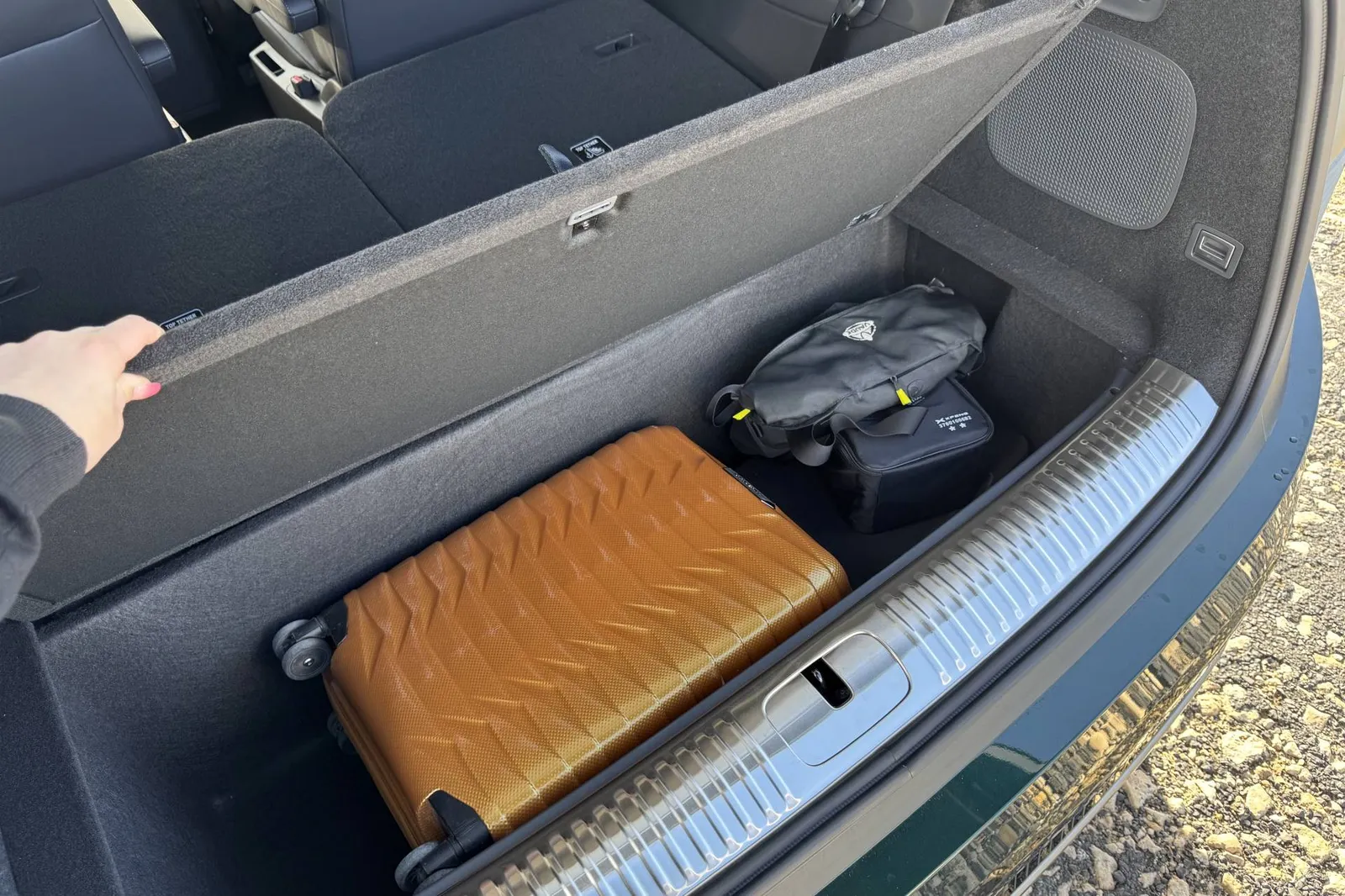
The ample space for six to seven passengers has implications for the trunk capacity. With all seats occupied, including the storage compartment under the load floor (which easily fits a carry-on suitcase!), only 367 liters remain. When the rear seats are folded down, the volume increases to 1330 liters in the six-seater all-wheel-drive model. There is also a 65-liter frunk under the hood, but it might still be tight for the luggage of a fully occupied large family during trips.
Entertainment instead of boredom in the back seat
Even outside the seats, Xpeng has equipped the interior generously. Hidden in the center console is a 12.5-liter cooler with two separate temperature zones. A three-zone automatic climate control system and air purification with PM2.5 particle filters are also part of the standard equipment. For passengers in the back seats, a 21.4-inch screen can be electrically lowered from the ceiling. Combined with the sound system that includes as many as 23 speakers, YouTube and various streaming services ensure ample entertainment options.
At the front, a 17.3-inch central touchscreen handles the control of the infotainment system as well as numerous vehicle functions, with a Qualcomm Snapdragon 8295 processor providing the computing power. Behind the steering wheel is a relatively small 8.8-inch driver display, which requires occasional squinting due to the small text. Fortunately, navigation instructions and other relevant information are projected directly into the driver’s field of view via a standard augmented-reality head-up display of sufficient size.
Speaking of navigation: After the smaller L03, the G9L is the second Xpeng model to integrate Google Maps directly into its proprietary user interface. This is made possible by the Google Maps SDK, which allows real-time traffic information and up-to-date map data to be combined with the built-in charging planning features. Voice commands can be issued using “Hey Xpeng,” and the system can recognize commands from six different locations inside the vehicle. Software updates, like those for the brand’s other current models, are delivered via over-the-air updates.
High engine power and even greater charging capacity
Xpeng’s vehicles are known for their high charging speeds, and the G9L is no exception: it can be charged at up to 540 kW at a suitable HPC station. This is made possible by the 800-volt architecture, combined with an 110 kWh NMC battery that is always installed regardless of the chosen powertrain. Under ideal conditions, the battery should be able to charge from 10% to 80% in less than twelve minutes at a sufficiently powerful fast charging station. Additionally, the G9L supports vehicle-to-load functionality with a power output of up to 6 kW, allowing it to power external devices such as those used in camping.
There are two engine options available. The entry-level model is the G9L RWD Long Range, which features rear-wheel drive and 270 kW or 367 horsepower. Xpeng claims a combined WLTP range of up to 591 kilometers for this version. Those seeking more power should opt for the AWD Performance version. Two electric motors together deliver 430 kW or 585 horsepower along with a maximum torque of 695 Nm, enabling the large SUV to accelerate from 0 to 100 km/h in 4.9 seconds. The WLTP range drops to 553 kilometers in this case. Given the large battery size, these aren’t the highest range figures; our tests showed the G9L consuming 20.8 kWh per 100 kilometers even at moderate driving speeds and a top speed of 90 km/h. Both versions reach a speed limit of 200 km/h, and those who want to tow a trailer can pull up to two tons.
Xpeng uses a double wishbone front axle combined with a multi-link rear axle. Standard features also include adaptive dampers and a dual-chamber air suspension system. This system is designed to detect uneven surfaces in advance and adjust the damping accordingly. The air suspension allows the vehicle’s height to be changed as well. In the highest setting, it provides up to 216 millimeters of ground clearance, with Xpeng claiming a maximum wheelbase depth of 700 millimeters.
What may be even more relevant for everyday use is the standard rear-wheel steering. It reduces the turning radius of this Chinese flagship vehicle to just eleven meters, and it will prove particularly useful when maneuvering in tight parking lots. Another focus for Xpeng is noise reduction. Acoustic glass, additional insulation materials, especially quiet Michelin tires, and active noise suppression help keep unwanted noises out of the cabin.
The Xpeng G9L can also prove its high comfort standards during our first drive. Outside noises hardly penetrate the interior, creating a pleasantly quiet atmosphere. The overall interior comfort also leaves a great impression. A drive on the highway was not possible due to time constraints, so it remains to be seen how well the extensive sound insulation performs at higher speeds.
High expectations for the assistance systems
In terms of assistance systems, Xpeng distinguishes between features that are already available and those that will be enabled later. At launch, options include an emergency braking assistant, a lane change assistant, a 360-degree camera system, and various parking aids. We find it particularly practical that the automatic parking assistant can also be controlled via a smartphone app, allowing the G9L to maneuver independently in both longitudinal and transverse parking spaces. For more complex driving maneuvers, the manufacturer relies on its latest computing platform equipped with self-developed Turing AI chips, which process data from cameras and radar sensors positioned around the vehicle.
Building on this, the next-generation pilot system is intended to handle more complex traffic situations in the future. The foundation for this is the so-called second-generation Vision-Language-Action model, abbreviated as VLA 2.0. The issue is that these enhanced functions are expected to be available in Europe only via a software update in 2027. Whether and to what extent this will actually happen also depends on relevant legal requirements and regulatory approvals.
Xpeng refers to this as “Level 2++.” However, it is not an officially recognized autonomous driving level. Therefore, even with a G9L equipped with these features, the driver remains responsible for driving the vehicle.
Six seats cost 6,000 euros more – at least at first glance
The Xpeng G9L starts at 74,600 euros. This version is the rear-wheel-drive Long Range Ultra with seven seats, 367 horsepower, and a WLTP range of up to 591 kilometers. The similarly seven-seater AWD Performance Ultra costs at least 79,600 euros. Xpeng charges 85,600 euros for the six-seater variant with two individual seats in the second row. The 6,000 euro price difference between the two all-wheel-drive versions seems substantial at first. However, the six-seater already includes the premium package, which adds another 4,990 euros for the seven-seater version. This package includes items such as the previously mentioned adaptive seat bolsters, DLP pixel headlights, and electrically extendable step boards. When comparing the two all-wheel-drive models with their respective packages, the actual price difference narrows to 1,010 euros.
Aside from that, Xpeng keeps its optional features list concise. The white exterior color, which suits the vehicle remarkably well, is standard, while the other paint options—Waving Green, Mirror Gray, and Diamond Black—each cost an additional 1200 euros. The electrically adjustable tow hitch comes at a further cost of 1290 euros.
Regarding warranty, Xpeng does not follow the legal minimum standards: the vehicle comes with a seven-year or 160,000-kilometer warranty, while the high-voltage battery is covered for eight years or 160,000 kilometers. Incidentally, the European models are not produced in China but at Magna’s facility in Graz, Austria, where the G6, G9, and P7+ are already manufactured. The first deliveries of the new G9L are scheduled for December 2026.
Conclusion: Three major Xpeng models — but for whom exactly?
The Xpeng G9L is a car that stands out primarily due to its combination of top-notch features. Three rows of seats with ample luxury and a well-equipped rear area appeal to families as well as customers who want to minimize any loss of comfort in the back seats. Meanwhile, its 800-volt architecture promises extremely short charging times, leaving even staunch opponents of electric vehicles with few arguments left.
The perhaps most interesting question concerns not so much the car itself but rather the market in which it must succeed. With the G9, the new G9L, and the X9, Xpeng now offers three vehicles in the premium price segment. Naturally, their concepts differ: the G9 targets buyers of traditional premium SUVs, the G9L provides additional space for larger families, while the X9 adopts a different approach as a luxury electric van. However, they all operate in a market segment where the potential customer base is limited. Large, expensive electric cars are not volume models in Germany anyway.
In addition, as a relatively young brand of Chinese origin, Xpeng still needs to build a broader customer base. This inevitably raises the question of how many buyers actually exist in this country for three high-priced models at once. Technically, Xpeng undoubtedly has a lot to offer, but whether that will be enough to convince sufficient customers is another matter entirely. Especially with the G9L, it will be interesting to see if its additional space and extensive comfort features are sufficient to stand out not only against established competitors but also among its own model lineup.