
VW ID. Unyx 09 in testing: An Xpeng with the Wolfsburg emblem
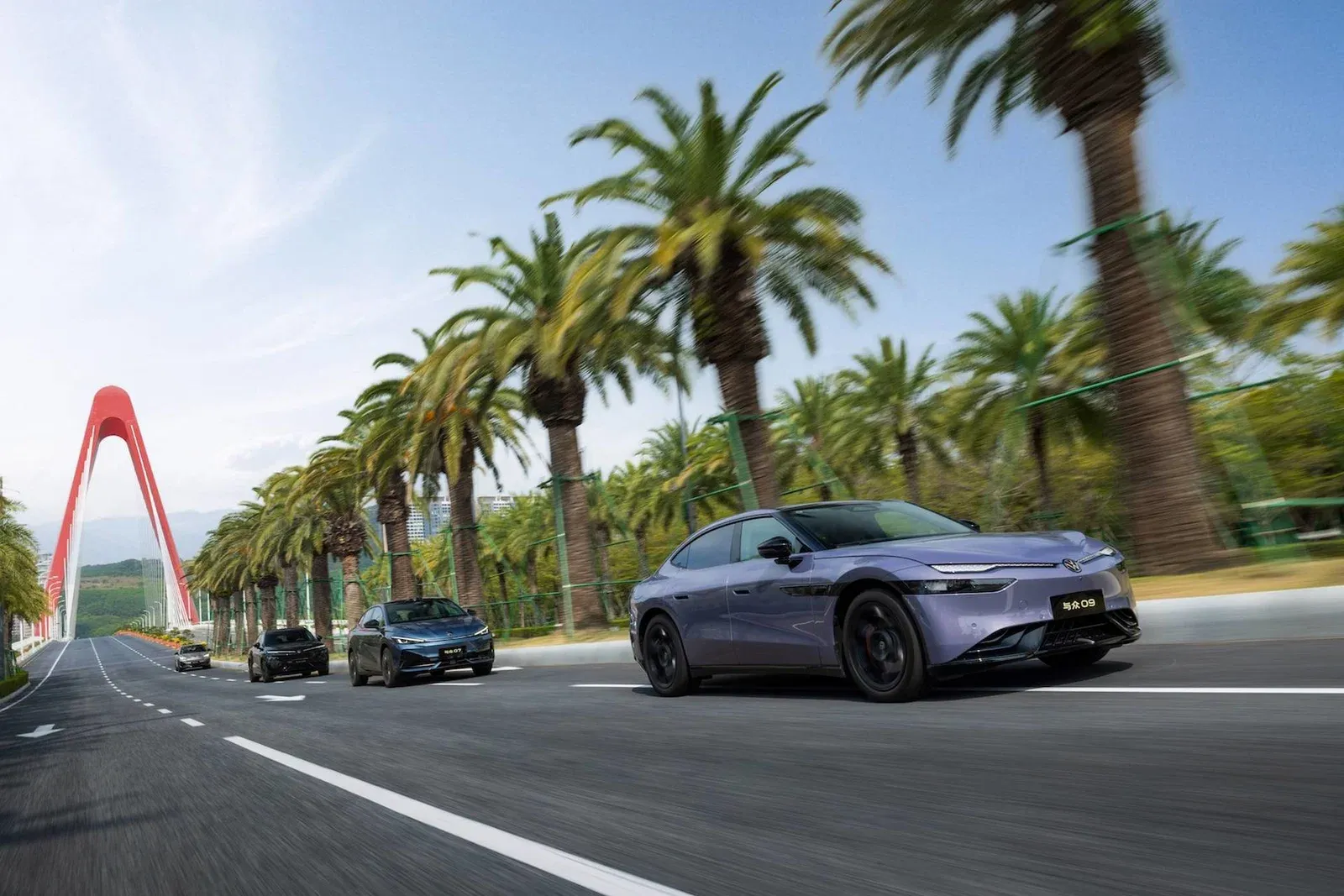
A five-meter fastback sedan, over 500 horsepower, 500 kW charging capacity, and a range of more than 700 kilometers: With the VW ID. Unyx 09, Volkswagen introduces the second model from its partnership with Xpeng in China. The car is well-made — but it’s not a Volkswagen.
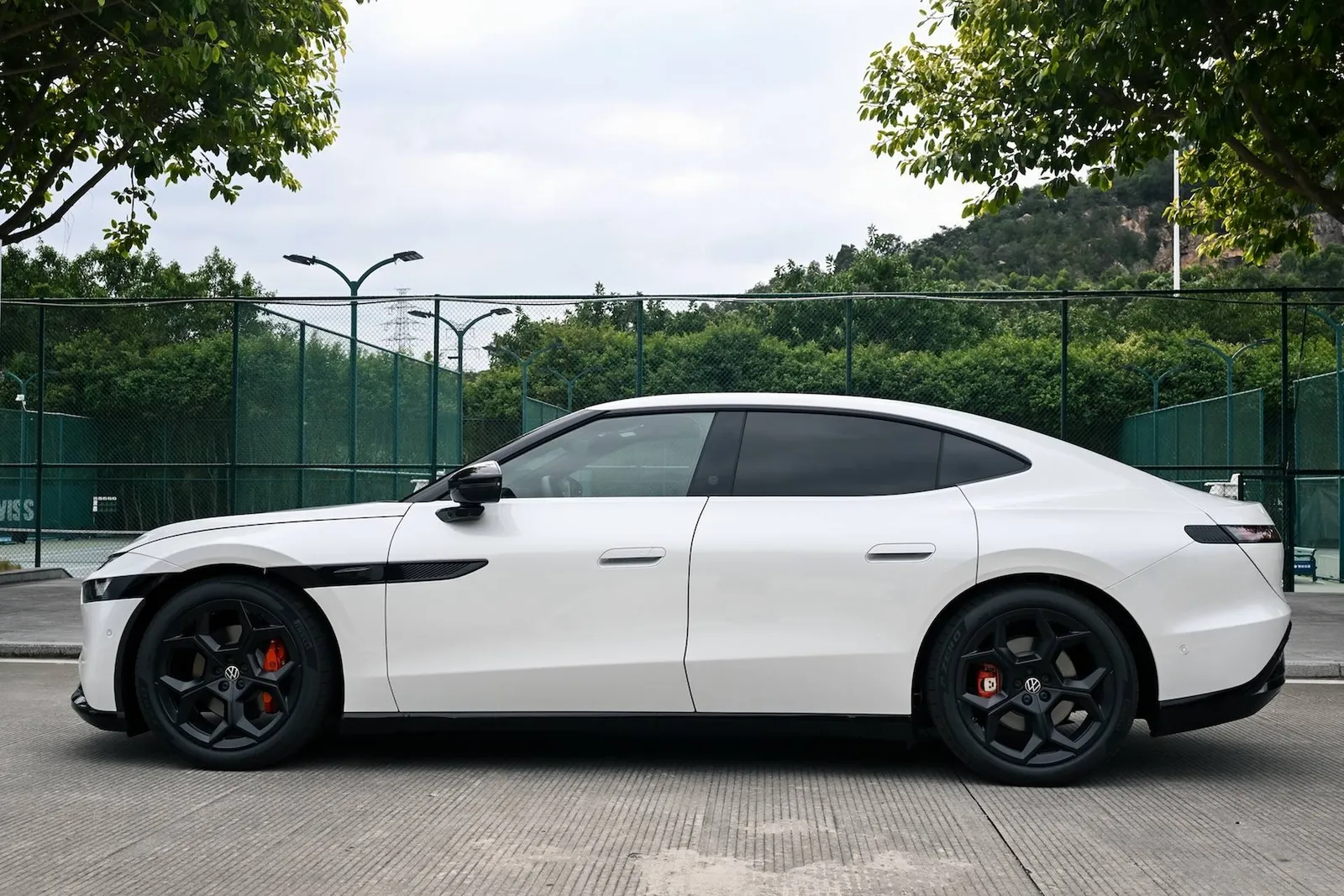
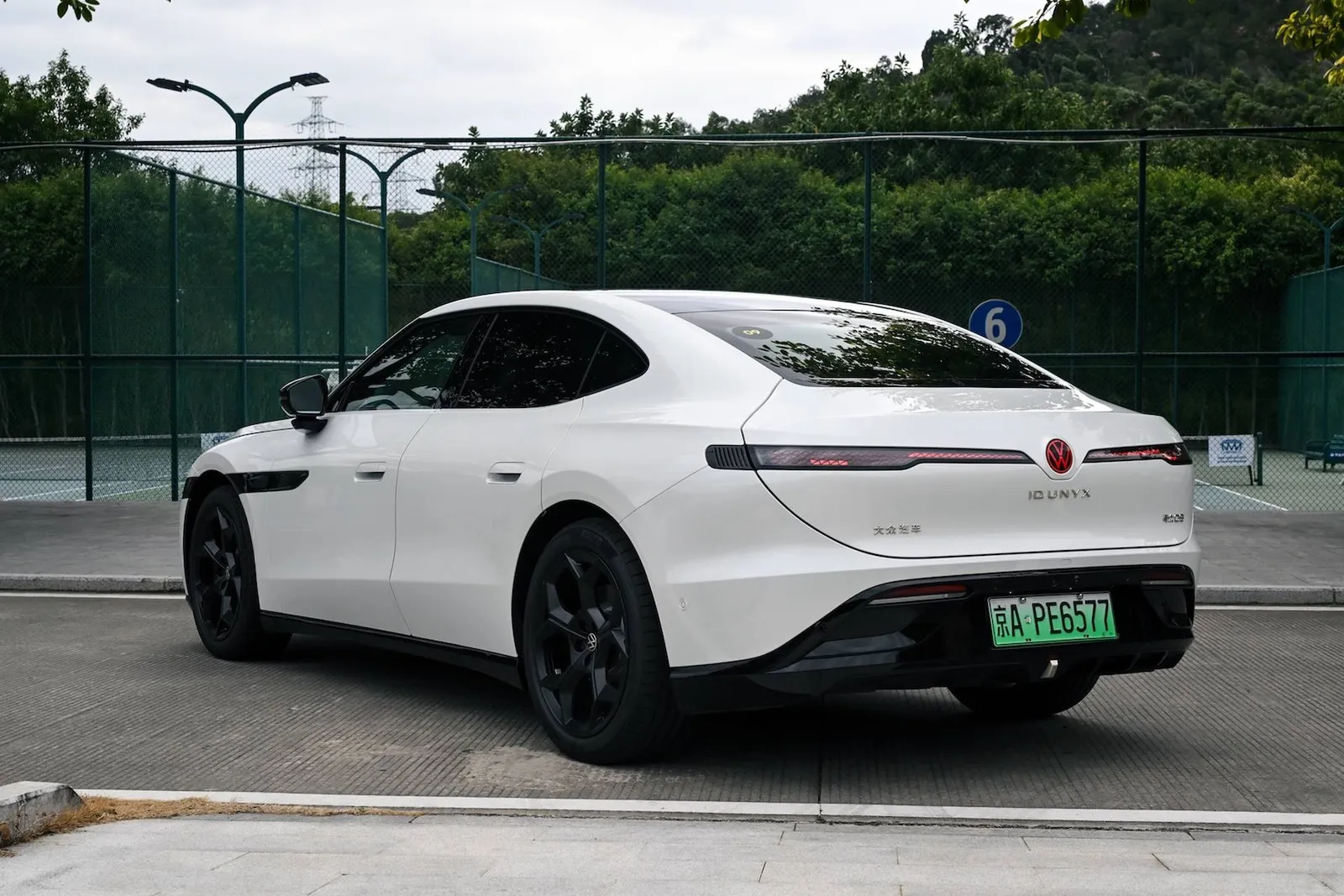
Those who see the ID. Unyx 09 for the first time wonder who designed it. Its lines may appear athletic and confident, but they also seem generic and arbitrary. At 5.08 meters long, nearly two meters wide, and with a very low height of just 1.51 meters, the large Unyx does have a very dynamic presence. Yet its design could just as easily have come from any random Chinese electric startup.
Neither the front end nor the flat roofline bears any recognizable Volkswagen signature. If the brand emblems are covered, one could just as easily install a different logo on the hood and no one would notice. Even the carefully placed Wolfsburg emblems around the car don’t help. They seem more like a desperate attempt to force the car’s identity to match Volkswagen’s own after the fact.
Technology from Guangzhou, plenty of power
The parentage is unequivocally known. Like its older brother, the ID. Unyx 08, the 09 was also developed in collaboration with Xpeng. Technically, it is the identical twin of the Xpeng P7. The architecture, chassis, powertrain, as well as the driving assistance systems, computer, and infotainment system all come from the partner in Guangzhou. There are few flaws to point out regarding the technology itself. Beneath the floor lies a flat LFP battery from CATL with a capacity of just under 92 kWh. The cells are rated for 5C charging, allowing the 09 to gain enough energy for up to 250 kilometers in about five minutes. Ideally, the charging capacity should reach 520 kW—a figure that VW’s electric vehicles in this country can only dream of.
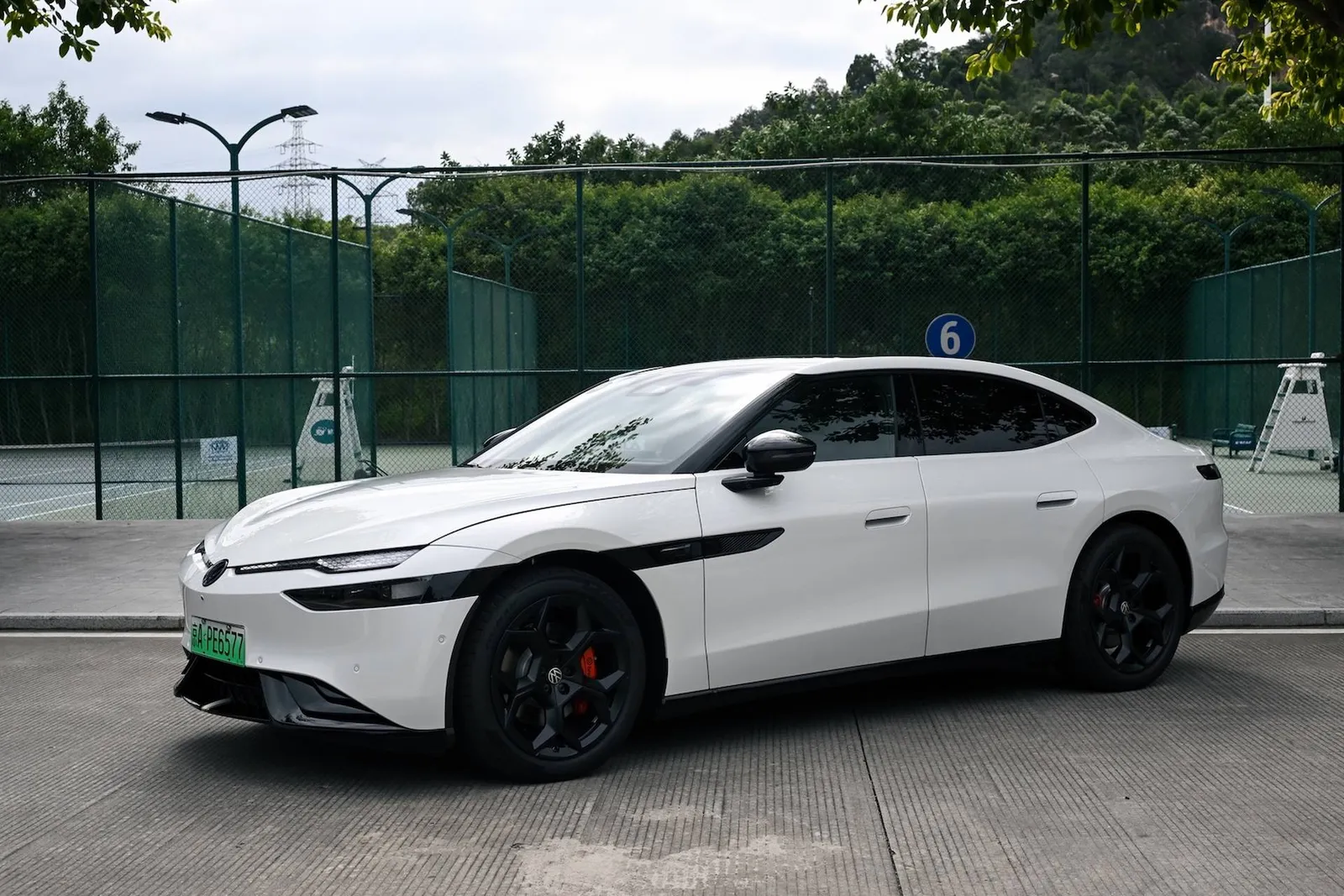
In terms of engine power as well, the Xpeng clone delivers impressive performance: the base rear-wheel-drive model has 230 kW (313 hp), while the all-wheel-drive version adds another 140 kW (190 hp) at the front, resulting in a total of 370 kW (503 hp). This enables a top speed of 200 km/h. According to the Chinese testing cycle, its range reaches up to 755 kilometers. The vehicle feels very powerful in real driving conditions. Despite a curb weight of 2,307 kilograms, the all-wheel-drive version accelerates from a standstill with great vigor, fitting its sporty character. Its maximum torque of 695 Newton meters allows the electric giant to reach 100 km/h in just 4.6 seconds.
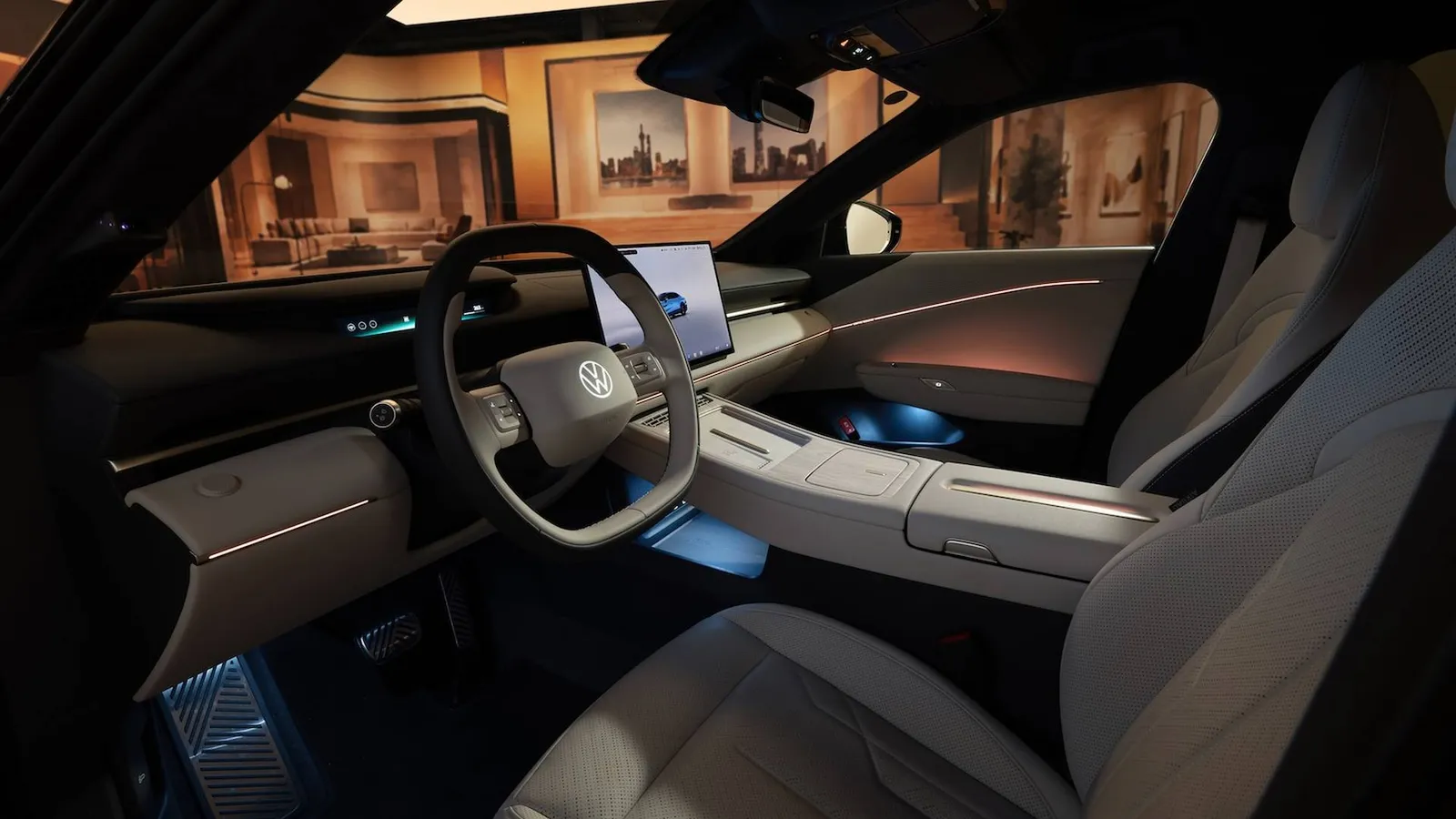
Inside, the driver is greeted with a mixed impression. The choice of materials is quite impressive: fine nappa leather, intricately crafted decorative stitches, and numerous soft-touch surfaces create a premium and comfortable atmosphere. In terms of gadgets, the VW ID. Unyx 08 is also well-equipped: an augmented-reality head-up display projects a 85-inch diagonal virtual image in front of the windshield, along with a 15.6-inch central touchscreen and 20 speakers from a specially tuned Unyx sound system. However, the digital architecture falls short and is disappointing.
Compared directly to the company’s newer and significantly cheaper models that already use the independently developed China Electronic Architecture (CEA), the infotainment system no longer appears innovative or cutting-edge. This is also evident in the driver assistance features. Unlike the new ID. Era 5X, the Unyx 09 does not rely on the Hyper Sense 8 system developed by Cariad and Horizon, but instead uses an Xpeng-specific solution. While its computing power of 750 TOPS is impressive on paper, and the eleven cameras, three radar sensors, and twelve ultrasonic sensors provide good overall visibility for the assistance systems, there is no lidar. Moreover, its adaptive responses in urban areas and heavy traffic on highways fall short of what the Hyper Sense system can achieve.
A Gran Turismo that struggles to define its role
It’s not only in the coordination of the assistants that it becomes clear one should have pursued more than just basic badge engineering for the VW ID. Unyx 09. Additional shortcomings are evident especially in the suspension: The vehicle is supposed to be a luxurious Gran Turismo, but it drives as if it itself isn’t quite sure what kind of balance it needs to achieve. The suspension is indifferent — not stiff enough for sporty ambitions, yet not flexible enough for the role of a long-distance cruiser. The large wheels exacerbate the issue, as minor bumps are transmitted uncomfortably clearly into the cabin.
This is surprising because the all-wheel-drive version comes standard with a full suite of features: double wishbone front suspension, five-link rear suspension, dual-chamber air suspension throughout, and adaptive dampers. Xpeng has included everything that is high-quality and expensive here. However, with its suspension development expertise from Wolfsburg, the setup of the 09 has little to do with that. In the end, on the Chinese market, price is the main deciding factor. And it is likely the strongest advantage of the electric 09.
The entry-level Ultra model starts at around 22,500 euros when converted, and currently there is even a special edition limited to 500 units that reduces the price by another 1,500 euros. The all-wheel-drive model in the most expensive trim is listed at around 31,000 euros. This price makes VW barely undercut the Xpeng P7+, another electric vehicle manufacturer. However, the Xpeng P7+’s Plus version offers slightly greater range and more computing power for its assist features.
The uncomfortable question about the original
So why should a Chinese customer buy a Volkswagen that doesn’t drive like a Volkswagen when they can get a comparable car from the original brand? The slow sales start of the SUV ID. Unyx 08, which was also developed under the same partnership, has already answered this question: Between April and August, Volkswagen was able to sell only an average of 267 units per month. The target was well over 3000 units. According to internal documents, Volkswagen plans to sell nearly 4900 units per month for the 09 model.
The VW Group can be considered a master of the platform strategy, having popularized this concept and perfected it through millions of variants. However, when cooperating with Xpeng, its limitations become apparent as it shifts from sharing architecture to basic badge engineering. Objectively, the ID. Unyx 09 is indeed a well-made car with strong acceleration, a high-quality interior, and competitive technology given its price. Yet it lacks everything that defines a Volkswagen: the sense that everything fits together seamlessly. In the end, the same question that plagued the 08 remains: Why not just buy an Xpeng?