
The Zeekr 7X will receive an 85 kWh battery in Q4 2026. The brand is filling the gap between 75 and 103 kWh.
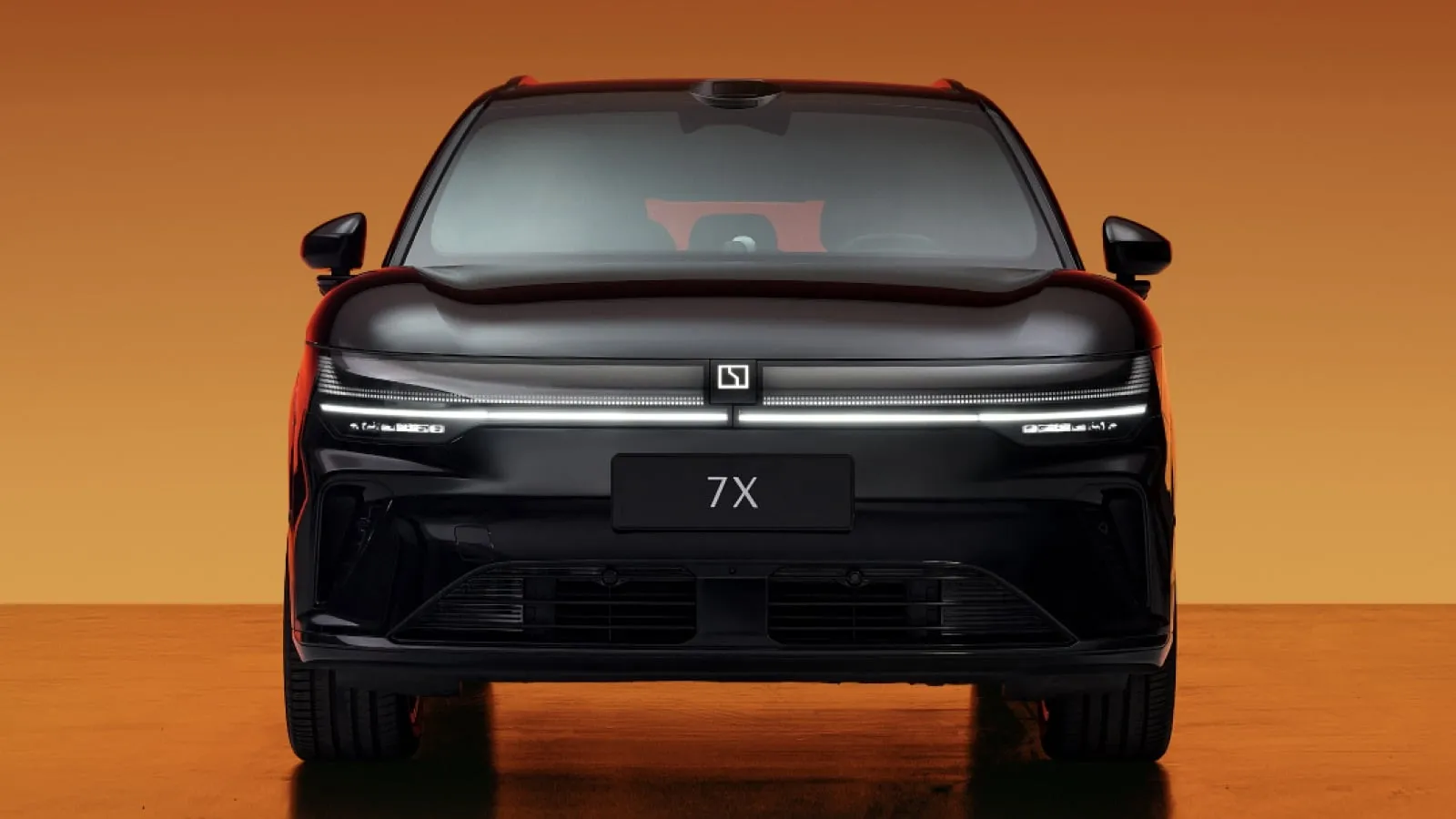
Zeekr has announced an updated 7X for the fourth quarter of 2026 in China. The main change is a new 85 kWh battery, which will sit between the current 75 kWh and 103 kWh versions. This move is quite practical for buyers, as the gap between the base model and the one with longer range is currently quite large.
Table of Contents
Show
Hide
The Zeekr 7X is one of the brand’s most important models today. It’s clear that the manufacturer doesn’t want to wait until a full facelift to make adjustments.
The new 85 kWh battery. What’s the deal here?
The current Zeekr 7X in China is available in three variants. The base version comes with a 75 kWh LFP battery, while the two higher-end versions use a 103 kWh NMC battery pack from CATL. The problem is simple: the difference between 75 and 103 kWh is significant, both in terms of specifications and likely in price and range.
That’s why Zeekr has added the 85 kWh Golden Battery option, which is Geely’s own pack based on LFP chemistry. The brand has not yet disclosed the range, charging speed, or whether the new version will operate on an 800 V or 900 V architecture. This is actually important, as today’s 7X blends both worlds.
In practice, the new version is meant to fill the middle of the product range. It makes sense for customers: not everyone wants to go with the base 75 kWh version, but not everyone either needs or wants to pay more for the 103 kWh option.
There is one caveat, though. So far we only know the capacity. Without data on weight, operating voltage, and charging curve, it’s hard to say whether this will truly be the “sweet spot” or just another option in the price list.
What Zeekr 7X Offers in China Today
The current Chinese version of the Zeekr 7X was launched in September 2024, and by October 2025 it received a major update involving charging, powertrain, and driver assistance systems. Now another revision is coming, roughly a year later.
The price of the current model in China ranges from 229,800 yuan to 269,800 yuan, which is approximately $34,200 to $40,200. There are three trims available:
Zeekr 7X Trim in China
Battery
Powertrain
Power
CLTC Range
10-80% Charging Time
Price
7X RWD Max
75 kWh LFP
RWD
370 kW
620 km
10.5 min
229,800 yuan
7X RWD Max Long Range
103 kWh NMC
RWD
Not specified
802 km
10 min 15 sec or about 10 min
249,800 yuan
7X AWD Ultra
103 kWh NMC
AWD
585 kW
715 km
OK. 10 minutes.
269,800 yuan.
The base model with a 75 kWh battery uses an 800 V platform. It has a CLTC range of 620 km and, according to the manufacturer, can charge from 10% to 80% in 10.5 minutes.
The two more expensive versions with CATL’s 103 kWh Qilin battery already feature a 900 V architecture. They offer CLTC ranges of 802 km and 715 km respectively. The manufacturer claims a charging time of 10 minutes or 10 minutes and 15 seconds from 10% to 80%, depending on the version and testing conditions.
The top AWD variant delivers 585 kW, or 784 horsepower, and accelerates from 0 to 100 km/h in 2.98 seconds. That’s impressive on paper. In the real world, it will be more important to know how long such a car can maintain high charging power and how much energy it actually consumes at highway speeds.
Golden Battery, or Geely’s own LFP battery
The new 85 kWh package is set to belong to the Golden Battery family, also known as Aegis Golden Brick. It is an LFP battery developed by Geely Group, featuring short “blade”-style cells. The manufacturer claims this design offers high durability—up to 1 million kilometers of driving distance and 3,500 charging cycles—as well as improved resistance to thermal runaway.
It sounds good, but these are still the manufacturer’s claims. Only real-world data will show how much of this durability remains after several years and with fast DC charging.
Nevertheless, the direction makes sense. LFP is cheaper and generally handles frequent charging to high levels better than traditional NMC batteries. If Zeekr maintains very fast charging even for the 85 kWh version, it might hit the sweet spot in its offerings.
Will 85 kWh replace 75 kWh?
There are two versions of these events. Officially, Zeekr mentions adding a new 85 kWh variant between the 75 and 103 kWh options. However, some market observers assume that the 85 kWh version might eventually replace the 75 kWh in the base model.
This would make commercial sense. The current 620 km CLTC range with the 75 kWh battery performs well under China’s testing cycle, but a new battery could boost this figure to around 700 km CLTC. Such a range would put the 7X much closer to its newer Chinese competitors, such as the Li Auto i6 with an 87.3 kWh LFP battery and a range of up to 720 km CLTC.
For now, this is just a scenario. Zeekr has not stated whether the 75 kWh option will be removed from the lineup, nor exactly how far the 7X with an 85 kWh battery will go.
The Zeekr 7X is a key sales pillar for the brand
This model is not a niche addition to the lineup. In the first seven months of 2026, Zeekr 7X deliveries totaled 62,865 units, accounting for 29.35% of all brand deliveries during that period. According to other data, cumulative domestic deliveries in China have already reached 136,356 units.
The global perspective is even more interesting. On August 24, 2026, Zeekr announced that global orders for the 7X had exceeded 200,000 units. The milestone unit was ordered by a customer in Mexico.
The 7X is already available in over 50 countries and regions. The brand also highlights the model’s strong position in its segment in places such as Mexico, Hong Kong, Australia, and Malaysia. In South Korea, pre-orders began in June and gathered over 1,000 orders within a month.
This shows one thing: Zeekr does not view the 7X as a domestic SUV for China, but rather as a global volume model, something like Geely’s answer to the Tesla Model Y, but in a more premium version.
Europe is already on the list, but the Chinese and global specifications are not the same.
The Zeekr 7X arrived in Europe as early as 2025, but the global version is not a copy of the car from China. It is slightly smaller, with a length of 4787 mm instead of 4825 mm, and its wheelbase is also shorter: 2900 mm rather than 2925 mm.
There are also differences in the powertrain and range. The global 7X starts with a version featuring one engine producing 310 kW, a 75 kWh LFP battery, and a WLTP range of 480 km. There is also a variant with a 100 kWh battery and a WLTP range of 615 km, while the top model has 475 kW and two engines.
For European customers, it’s this difference between CLTC and WLTP that matters. The 700 or 800 km figures in China on paper do not equate to 700 or 800 km in Europe. It’s important to keep this in mind before someone starts converting an 85 kWh battery into “range equivalent to a diesel.” No. That’s not how it works.
As of now, there is no confirmation on when the 85 kWh version will be available outside China. However, if the 7X is to be one of the pillars of its global expansion, it would be strange for Zeekr to reserve the most sensible mid-range option only for the domestic market.
Zeekr clears inventory ahead of launch
Before the introduction of the 2027 model year, the brand continues to offer incentives for the current 7X. In China, customers still receive three free options worth a total of 18,999 yuan.
These include:
a electrically adjustable rear seat, valued at 5,000 yuan
a refrigerator with cooling and heating functions, priced at 2,999 yuan
20-inch multi-spoke wheels, priced at 11,000 yuan
In addition, there are temporary purchase benefits. The customer can choose between 5-year financing at 0% interest, a reduction of 10,000 yuan on the final payment, or an additional package.
This is a classic tactic before an update. On one hand, the manufacturer alerts the market that a new model is coming; on the other hand, it helps sell out existing inventory. It’s fairer than quietly introducing a new variant just a month after the first customers receive their cars.
Zeekr is therefore doing something rare for this industry. It reveals the product cycle earlier, instead of pretending nothing is happening. The question is whether the new 85 kWh battery will offer the same fast charging as the 75 kWh and 103 kWh versions, as that is where the real value of this update lies. Would you buy the 7X in the mid-range version, or with these specs would you still aim for the 103 kWh model?