
All of Baltic Power’s turbines are now installed. Poland’s first Baltic wind farm is entering its final phase.
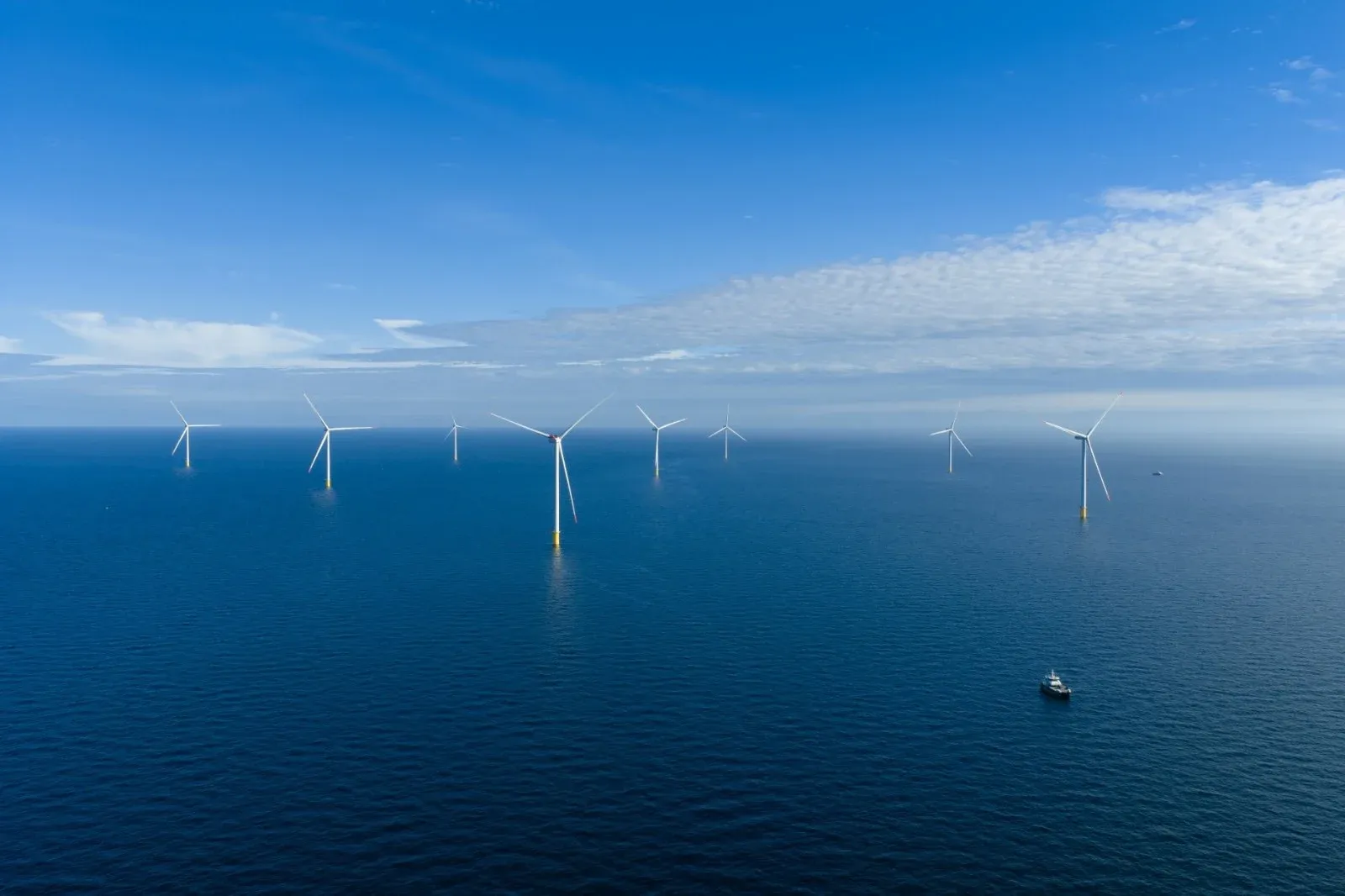
Baltic Power is getting closer to full operation. ORLEN and Canadian company Northland Power have completed the installation of all 76 turbines at Poland’s first offshore wind farm. This marks the end of the largest installation campaign yet carried out in Poland’s Baltic Sea waters.
This does not yet mean the end of the entire project. The current phase involves starting up each turbine, testing them, and gradually integrating them into the national electricity grid. Power from the farm is already being fed into the grid, with full operation expected within the next few months.
76 turbines, each with 15 MW capacity
The scale of Baltic Power is significant even by European standards. The farm has a capacity of 1.2 GW and consists of 76 Vestas turbines, each with a capacity of 15 MW. The structures themselves are over 250 meters tall from sea level to the top of the blades. Each blade is approximately 115 meters long, and the rotor’s swept area is about 43,000 square meters, which is equivalent to more than six football fields.
The turbines are built on foundations that can be up to 100 meters long. Recycled steel was also used in parts of the towers. Baltic Power was the first project to employ such solutions on this scale. The installation of the last turbine concludes a campaign that involved around 7,000 workers and 110 vessels.
Each turbine must undergo a 240-hour test
The completion of installation does not mean that all 76 turbines will start operating normally immediately. Commissioning takes place in stages. Individual turbine arrays are integrated with offshore power stations and then connected to the national grid.
Each turbine goes through a series of tests, one of the most critical being a 240-hour reliability test. Only after passing this is the unit handed over to the team responsible for its subsequent operation. The first turbines of Baltic Power are already generating electricity. This is possible even before all work is completed, as subsequent parts of the farm are activated sequentially.
Up to 4 TWh of energy per year
Once fully operational, Baltic Power is expected to generate up to 4 TWh of electricity per year. According to investors, this amounts to about 3% of Poland’s current electricity demand. Such an amount would be sufficient to power over 1.5 million households.
The wind farm is being built in the Baltic Sea, about 23 km from the shore, in the area of Łeba and Choczewo. The electricity is transmitted to land via transmission infrastructure and then into the national power grid. This is Poland’s first offshore project that has already entered the stage of actual electricity generation.
A significant portion of the investment came from Poland
Baltic Power is also the first major project in which Polish companies gain experience in building offshore wind energy on such a scale. Over one third of the turbine nacelles were produced at Vestas’ new factory in Szczecin. Baltic Power was one of the first projects handled by this facility.
Throughout the farm’s life cycle, Polish companies’ contribution to costs is estimated at around 21%. Domestic firms were involved in tasks such as producing steel structures, cables, and turbine components, working on foundations and power stations, as well as in logistics and construction services. Companies involved in the project included Grupa Przemysłowa Baltic with Stocznia Gdańska, Smulders Polska, Protea, Enprom, Erbud, and MEWO.
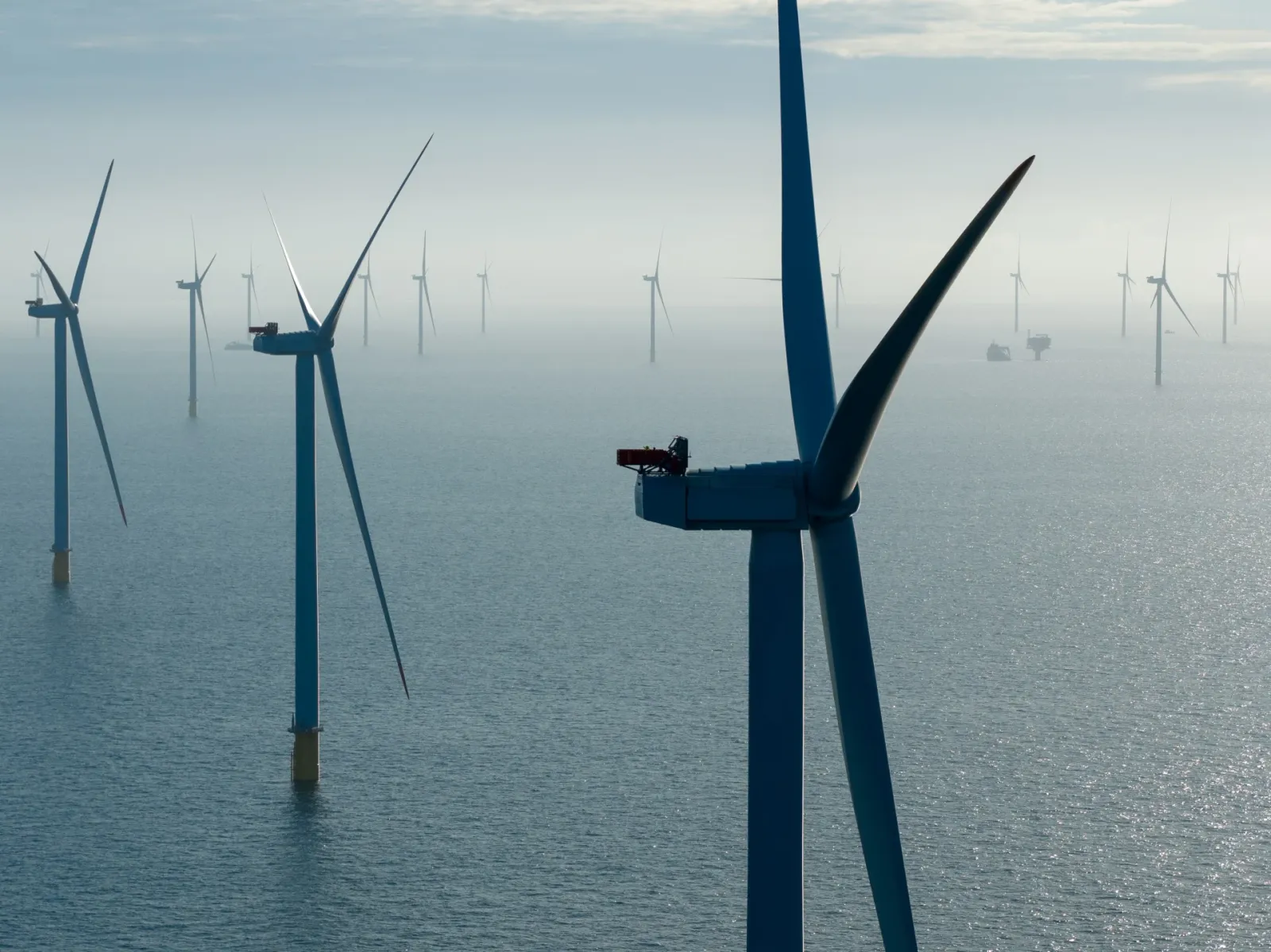
The significance of this investment extends beyond electricity generation alone. The companies working on Baltic Power gain experience that can be applied to future wind farms built in Poland’s Baltic Sea region.
Łeba to become a base for decades
Some of the infrastructure will remain after construction is complete. An operational and maintenance base has been established in Łeba, from where the wind farm will be serviced throughout its operational life. Around 100 permanent jobs are set to be created there. This base will be needed for the technical maintenance of turbines, transporting staff and parts, logistics, and ongoing servicing tasks.
Baltic Power is designed to operate for about 30 years, so along with the facility in Łeba, there will also be long-term demand for services from local transportation, technical, and municipal companies.
Baltic Power is just the beginning of offshore activities in Poland’s Baltic Sea
For ORLEN, this first wind farm marks the start of broader activities in offshore energy. The company is preparing additional projects in the Baltic Sea, and the experience gained from Baltic Power will be utilized in future investments. This is also important for supporting industries. The establishment of turbine component production in Szczecin, the development of installation and maintenance ports, and Polish companies’ participation in this first project all lay the foundation for additional wind farms that are set to be built in the coming years.
ORLEN is simultaneously developing other areas of energy transformation. The company invests in things such as onshore renewable energy, energy storage, electric vehicle charging networks, and hydrogen production and utilization. One such project is the development of hydrogen infrastructure for transportation. A facility ready for producing hydrogen for public transport has been established in Szczecin, and ORLEN is also expanding a network of stations that allow for the refueling of this fuel. For passenger cars, hydrogen remains a niche solution, but it can find much broader applications in buses, heavy transport, and industry.
The largest phase of Baltic Power construction has already been completed
The installation of all 76 turbines marks a symbolic milestone for the entire project. After just under two years of work at sea, the main components of the wind farm are now in place. The next critical steps will be conducting tests successfully and gradually connecting additional turbines to the grid. Once commissioning is complete, Baltic Power will transition from the construction phase to regular, long-term operation.
For Poland’s energy sector, this means the introduction of a new power source comparable in capacity to a large conventional power plant, but one that generates electricity from wind in the Baltic Sea. For Poland’s growing offshore sector, it represents the first project where experience can be gained for future wind farms.
Piotr Sobczyk
