
Italians and Chinese want to jointly revive the mass car segment.
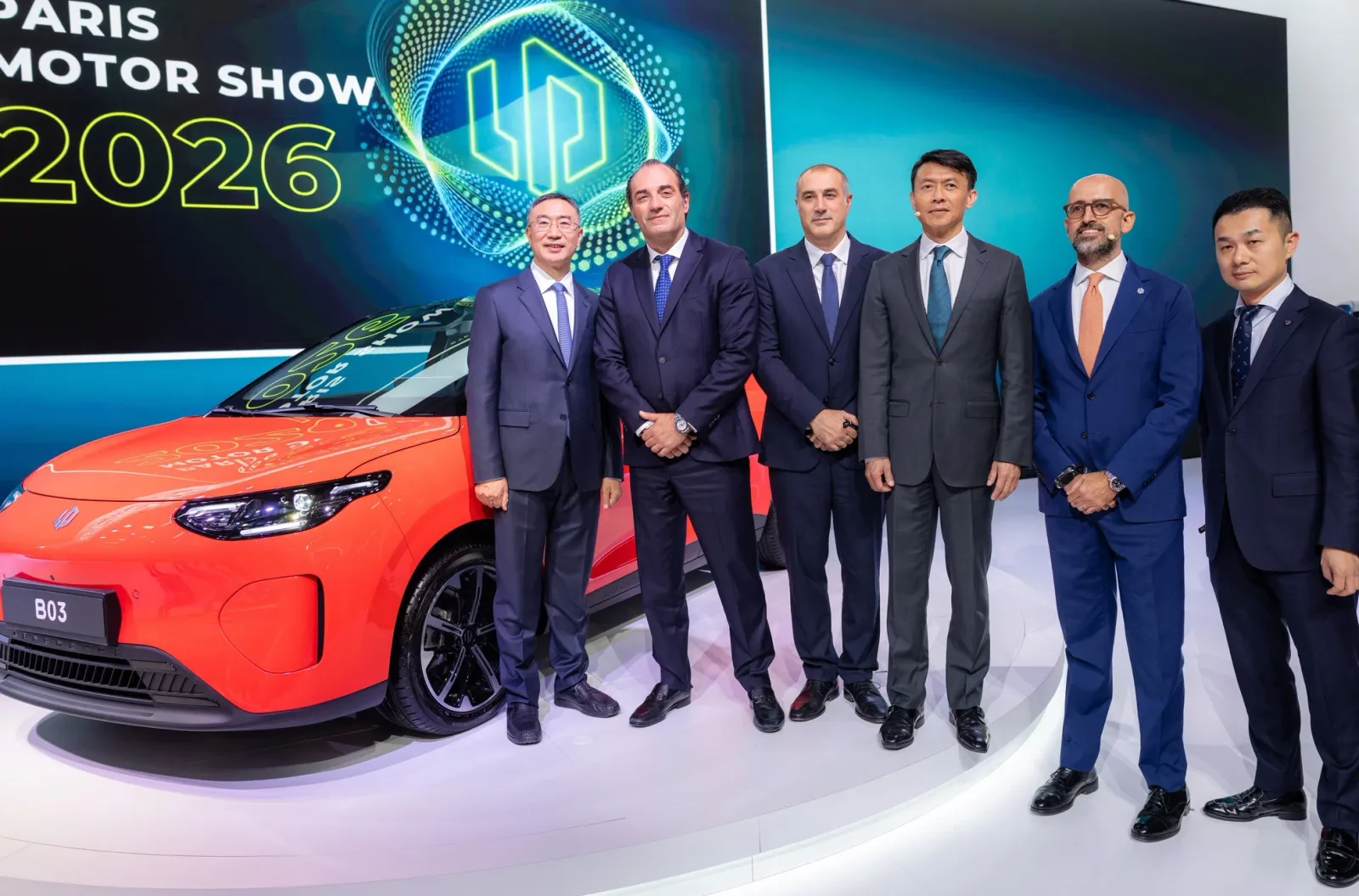
The European automotive market has been grappling with an unusual problem for several years. The cheapest cars are gradually disappearing from showrooms, and rising production costs, stricter regulations, and electrification have significantly narrowed the range of vehicles available to average consumers. We covered this recently, citing an ADAC market analysis. Now Stellantis wants to change this situation and plans to do so with the support of its Chinese partner, Leapmotor.
At the Paris auto show, Stellantis’ head of technology, Ned Curic, confirmed that the company plans to produce small electric cars at its factory in Pomigliano, Italy. The new models will be based on the e-car platform being developed jointly with Leapmotor at the Mirafiori plant in Turin, according to Reuters.
As Curic emphasized, the project has already begun, with engineers from both companies working together. “We have joint teams in Mirafiori, where our engineers and theirs sit together. We teach them how to build a European urban vehicle platform, while at the same time learning from them how to develop new models very quickly,” said a Stellantis representative, as quoted by the agency.
According to Curic, the European manufacturer has extensive experience in designing small cars, but it is learning from its Chinese partner how to shorten the development time for new models. He admitted that Leapmotor can develop a car in just two years, which is still considered an exceptionally short period in traditional automotive manufacturing.
The Italians’ budget is 15,000 euros
The stakes in this market game are the creation of a new category of vehicles known as e-cars. According to Reuters, these will be inexpensive electric cars priced at around 15,000 euros, or about 65,000 zlotys. This price level was practically unattainable just a few years ago for full-fledged battery cars offered on the European market (editor’s note).
Stellantis plans to develop at least two models using the new architecture. Production is set to begin in Pomigliano, with a market launch expected in 2028. One of them will be a modern interpretation of the Citroën 2CV, whose concept was first unveiled during the current edition of the Paris auto show.
This is not a random choice. The original Citroën 2CV ranks among the most important cars in European history. Produced from 1948 to 1990, it was designed to provide transportation for residents in rural France and sold in over 5 million units. For many French people, it was what Volkswagen Beetle meant to Germans and Fiat 500 meant to Italians. Today, Stellantis aims to capitalize on this sentiment by pairing the iconic name with a modern electric powertrain, according to industry experts.
A hatchback version will also be available.
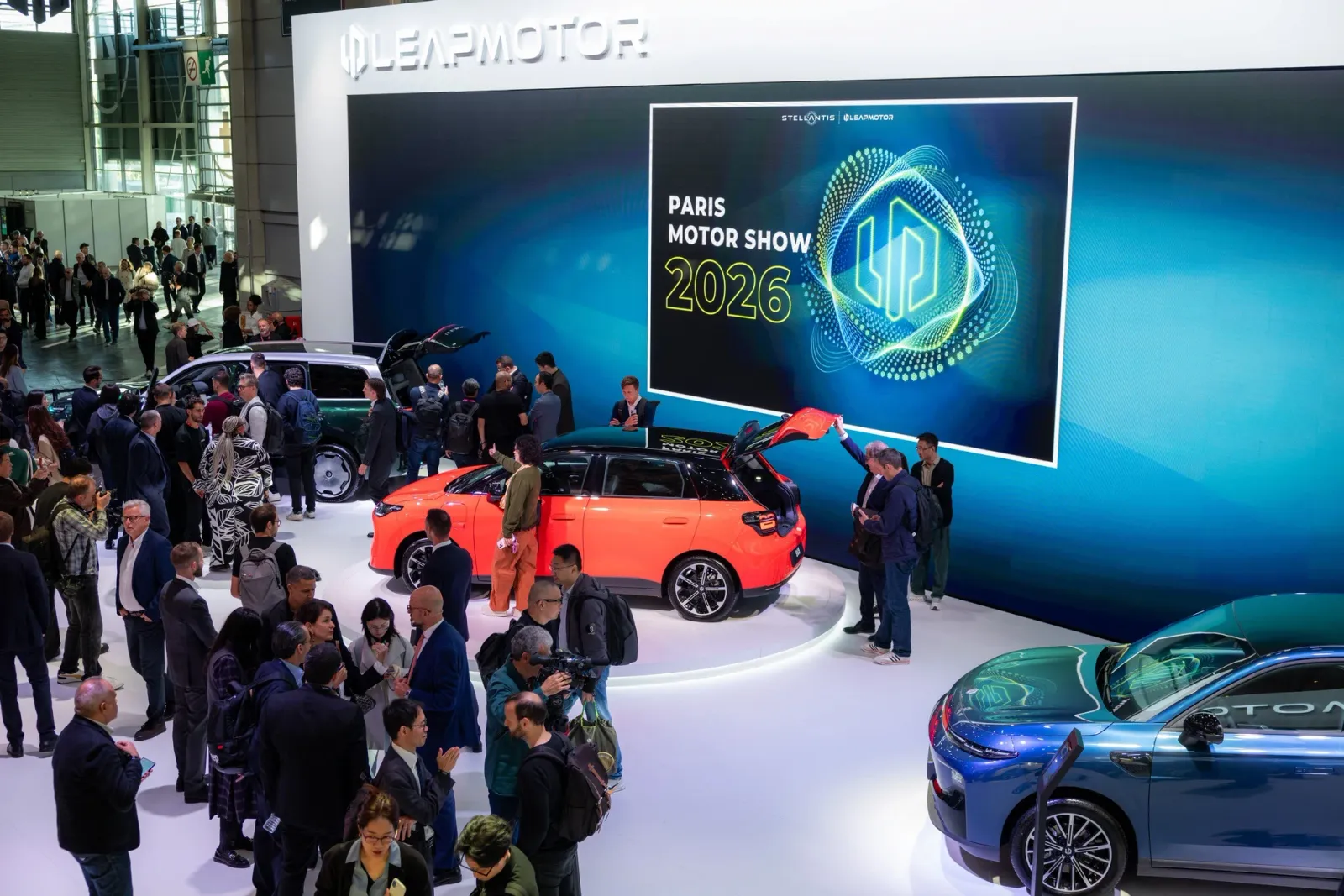
Meanwhile, Leapmotor unveiled further elements of its European strategy in Paris. In a press release, the company announced the European debut of its urban hatchback, the B03, as well as the launch of its flagship SUV, the D19. The manufacturer also reported that production of the electric B10 model has begun in Zaragoza, Spain. This is the brand’s first European manufacturing facility and a key part of its strategy for localizing production.
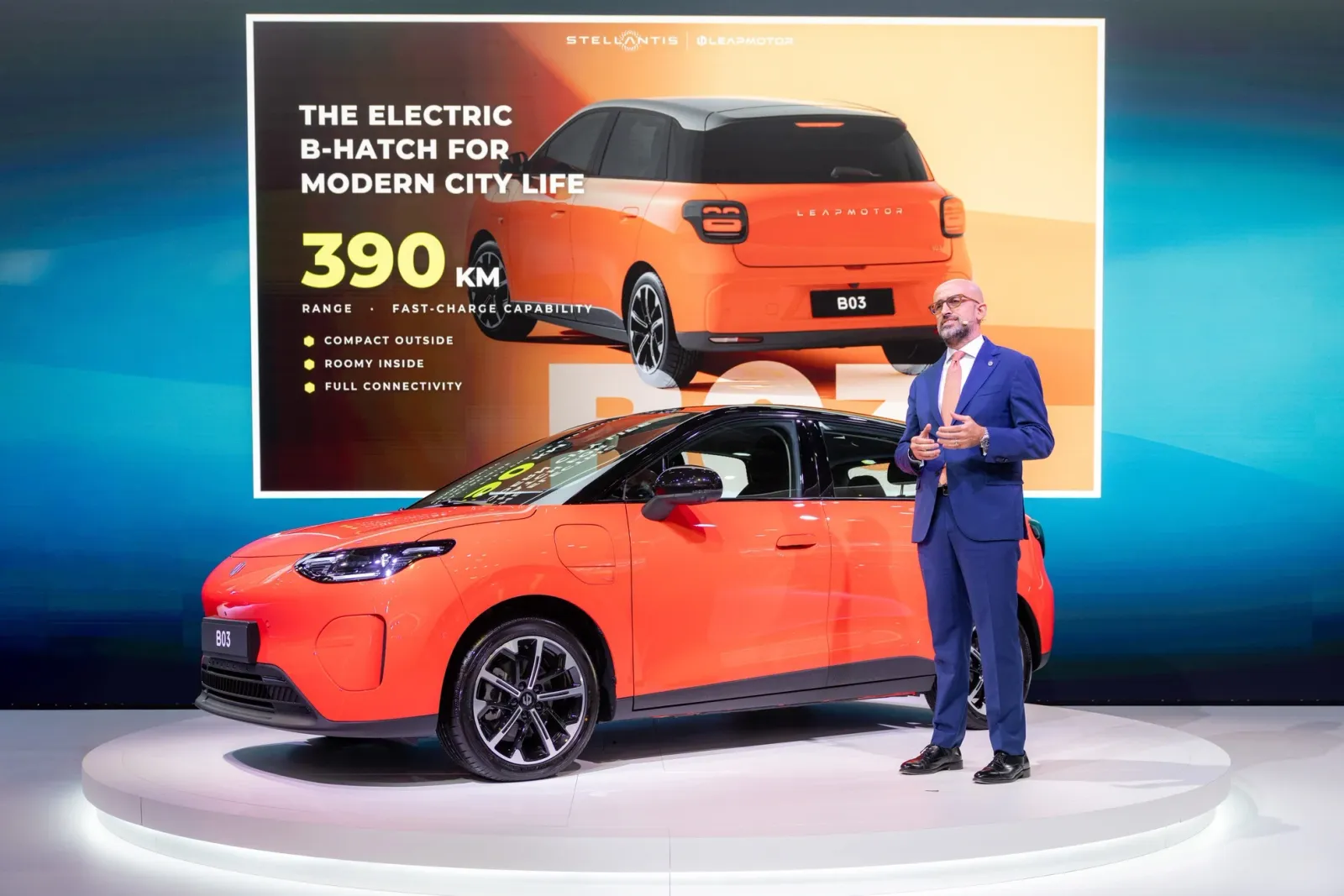
The new Leapmotor B03 is particularly interesting. This compact hatchback is said to offer a range of up to 390 km according to the WLTP standard, along with the ability to charge the battery from 10% to 80% in 21 minutes. The manufacturer also highlights the presence of 21 driver assistance systems and advanced digital features based on the latest version of the Leap OS.
It’s time for conclusions soon
The Chinese manufacturer does not hide its ambitions. Just two years after entering Europe, the brand now offers an increasingly wide range of models, expands its sales network, and benefits from access to Stellantis’ Free2move Charge charging ecosystem, which includes over a million public charging stations across the continent.
For Stellantis, the partnership with Leapmotor could prove just as important as entering the Old Continent for the Chinese company, because while most manufacturers seek ways to reduce costs associated with electrification, this Italian-French-American giant gains access to Chinese expertise in rapid product development and cost efficiency. Meanwhile, Leapmotor gains European factories, production experience, a robust sales network, and no tariff barriers for “electric” vehicles labeled “Made in China.”
Oskar Włostowski