
Winduction to charge electric buses – using tyres
ETH Zurich spin-off Winduction has developed an inductive charging system that supplies electric buses with power through their wheels at bus stops. This could allow for smaller batteries, reducing both energy demand and operating costs. A pilot project is planned for 2028.
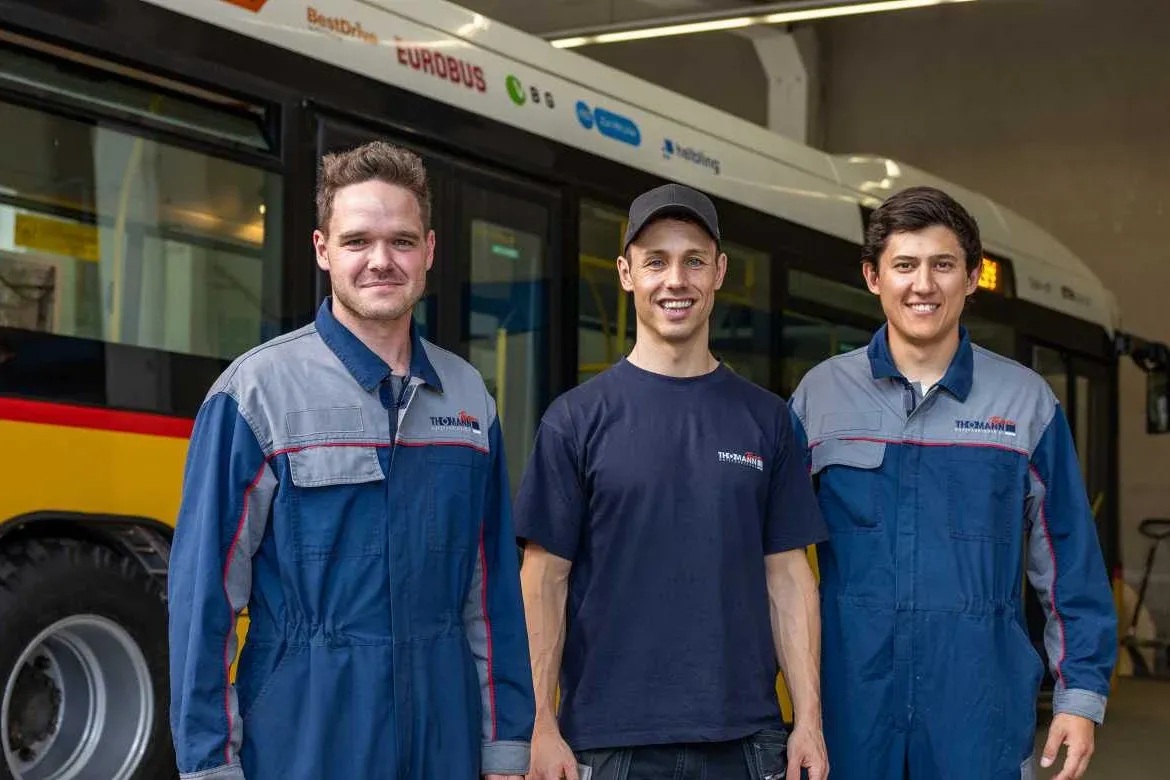
The three founders of Winduction in front of their electric bus: Laurin Schwitter, Sylvain Fricker, and Sonam Bhuka (from left to right)
Image: Winduction
Winduction’s approach to inductive charging does not rely on a coil mounted on the vehicle’s underbody. Instead, it uses the wheel. A charging plate is embedded in the road surface, while a second coil is integrated into a specially developed bus tyre. When the bus stops over the plate, energy is transferred via a magnetic field from the ground, through the wheel, and into the vehicle’s battery.
The technology is designed to enable electric buses to top up their batteries during short stops at bus stops throughout the day. This could allow the vehicles to operate with smaller batteries, which, according to Winduction, would not only reduce acquisition costs and vehicle weight but also free up more space or increase payload capacity.
This method addresses a drawback of conventional inductive systems, where energy must be transferred across the gap between the road and the vehicle’s underbody – a distance that can vary depending on the vehicle type. Winduction reduces this gap by integrating the vehicle-side coil directly into the wheel. According to the company, the system achieves an efficiency of over 90 per cent between the ground plate and the vehicle.
Inductive charging is also gaining importance for other applications. Honda is working with Taisei and Taisei Rotec on a Dynamic Wireless Power Transfer System, which supplies vehicles with power via coils embedded in the road while they are in motion. The first demonstrations are planned for the Japanese fiscal year 2027, with the partners aiming to test charging powers of up to 150 kW for heavy-duty commercial vehicles. In contrast, Winduction’s system charges buses while stationary at stops, transferring energy through the wheel.
Winduction plans pilot operation from 2028
The tyres themselves present a technical challenge. Conventional bus tyres contain steel belts that would react with the magnetic field, converting some of the energy into heat. Winduction is therefore collaborating with partners to develop a steel-free tyre for the charging system. The company estimates that the higher tyre costs would play only a minor role in the overall lifecycle costs of a bus.
To determine the actual savings that are achievable, Winduction is currently working with a number of transport companies, and cites the route between Zurich Airport and Zurich Oerlikon as an example. According to the startup’s calculations, charging plates would only be needed at two of the 24 stops. Over a 16-hour operating day, the buses would collectively charge for around three hours.
For comparison, Winduction notes that the electric buses currently operating on this route require around five hours of simultaneous charging at the depot overnight. Daytime charging could, in the company’s view, not only enable the use of smaller batteries but also reduce peak loads. Additionally, it could allow for greater utilisation of low-cost solar power during the day.
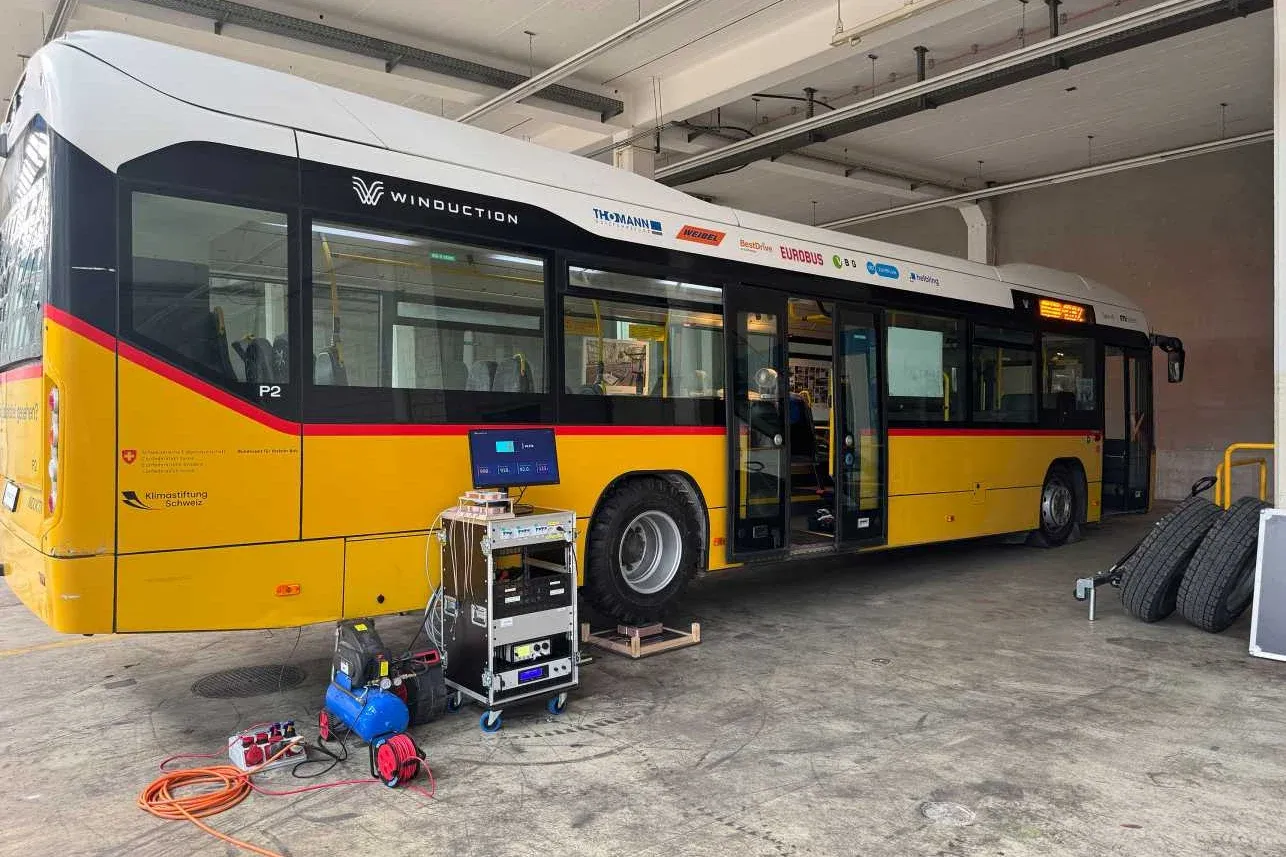
Supported by the Swiss Federal Office of Transport and the Swiss Climate Foundation, the ETH spin-off is currently building a test infrastructure in Winterthur. This will include a test laboratory and a dedicated test stop. The next step for Winduction is to integrate all components in a near-industrial form and build a fully converted electric bus.
A first pilot operation under real-world conditions is planned for 2028. According to the company, discussions with several Swiss transport operators are already underway, including for a potential deployment in the Zurich Airport region. The planned pilot coincides with a growing e-bus fleet in Zurich. The transport operator VBZ has recently decided to procure 20 additional electric buses from Yutong and Daimler Buses, which will be needed from mid-2027.
