
VW will build electric vehicles and internal combustion engines more flexibly together
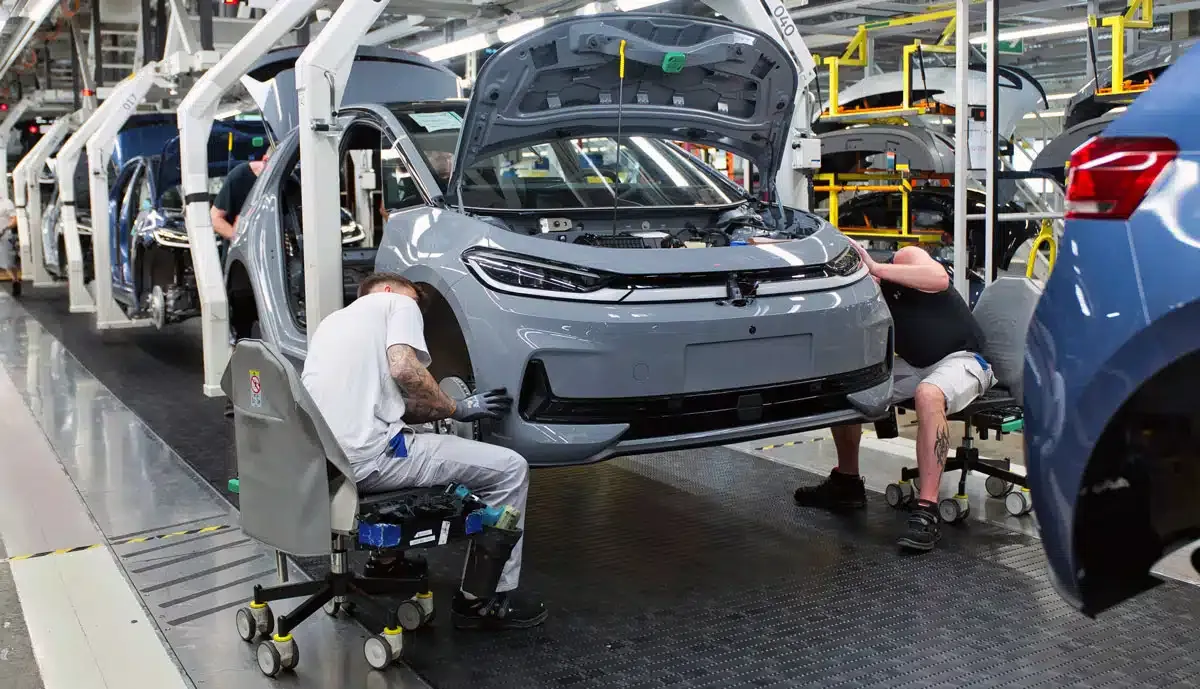
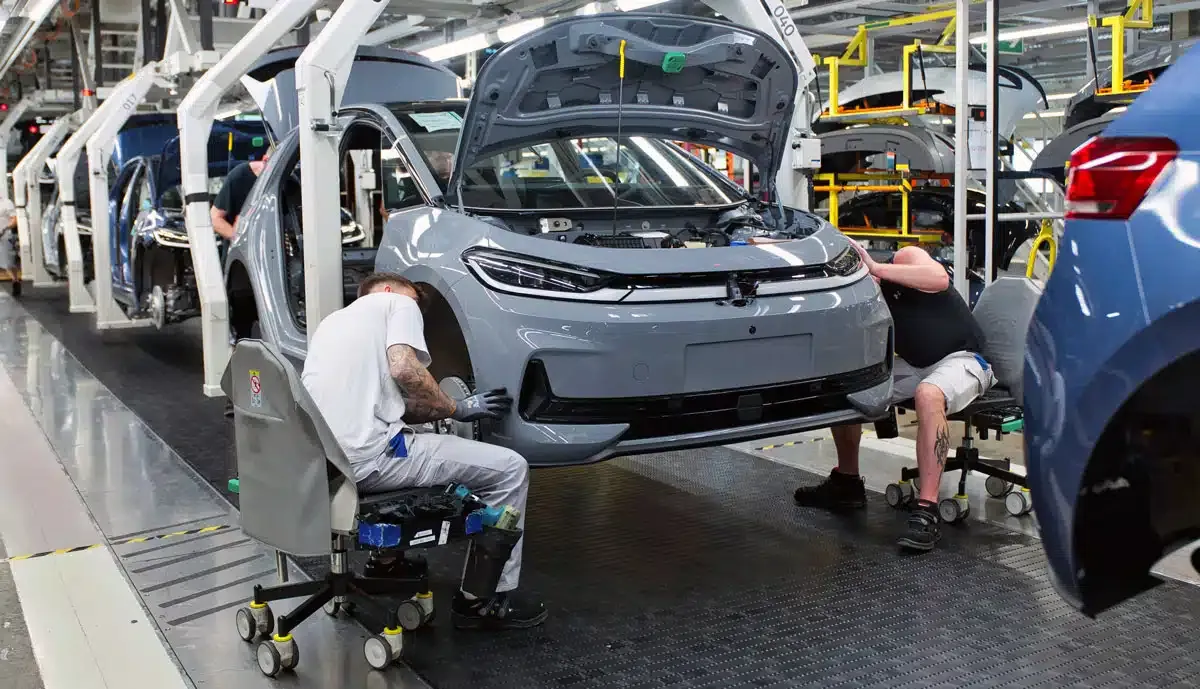
Image: VW (illustrative)
Volkswagen plans to focus more on its vehicle production capabilities, enabling flexible manufacturing of both electric vehicles and internal combustion engines in the same factories. Production chief Christian Vollmer said in an interview with Automobilwoche that shifting the Emden and Zwickau facilities entirely to electric vehicles was, in retrospect, a move that wouldn’t be repeated with today’s level of knowledge. At the time, the company assumed the transition to electric mobility would progress much faster.
"In principle, the plants should be able to manufacture both internal combustion engines and electric vehicles," explains regional manager André Kleb regarding the future direction. Volkswagen cites its plant in Pamplona, Spain, as an example of this flexibility. There, production can be shifted between internal combustion engines and electric vehicles depending on demand: if demand for electric cars temporarily drops, more internal combustion engines can be produced, while rising demand for electric vehicles allows production to be adjusted accordingly. Production manager Vollmer describes this capability as a major advantage of the location.
In plants with only one production line, Volkswagen plans to operate it as a mixed-line facility until the transition to electrification is complete. If a site has multiple lines, it enables the necessary flexibility within the plant. In Spain’s Martorell, two lines produce internal combustion engines and plug-in hybrids, while a third line has been converted to manufacture electric vehicles for the compact models VW ID. Polo and Cupra Raval. In Palmela, however, the production version of the ultra-compact ID.Every1 is set to be built on the same line as the new T-Roc.
Production of electric compact cars is being centralized in Spain
The Iberian Peninsula plays a key role in electric vehicle production. There, Volkswagen manufactures the four models of the “Electric Urban Car Family” — VW ID. Polo, VW ID. Cross, Cupra Raval, and Skoda Epiq — at its facilities in Martorell and Pamplona. The participating brands worked together early with a shared product team to decide in Spain on the conversion of the plants and their integration into existing facilities. The goal was to utilize existing structures rather than building new halls.
Vollmer estimates that the Electric Urban Car Family will save around 600 million euros over its lifetime. In deciding on locations for the four models, factors such as lower manufacturing costs in Spain, the short distance between Pamplona and Martorell, potential synergies, and reduced logistics costs played a role. Additionally, the factories on the Iberian Peninsula were already designed for vehicles in the A0 segment. Vollmer also emphasizes that cost, capacity, and the timing of model launches must align when making such production decisions.
Wolfsburg is also set to be able to combine electric vehicles with internal combustion engines. Vollmer announces that the Tiguan will be produced on Line 1 alongside the electric compact car VW ID.3 Neo. If the main plant reduces its production from four lines to two after moving the Golf production there, one of the remaining lines must provide this flexibility. The Czech plant in Mladá Boleslav could also operate with a similar product mix.
Volkswagen also relies on grouping similar vehicles and platforms. According to Vollmer, a single-brand factory can remain sensible for a model or platform with 250,000 to 300,000 units produced annually over its entire lifecycle. Otherwise, models from different brands should be able to be flexibly combined under one factory roof. With the Electric Urban Car Family, variations are reduced, and identical parts are used in all four models, thereby cutting material costs. The future production version of the ID.Every1 built in Palmela is also said to be based essentially on the same platform as the four models in the Electric Urban Car Family.
Also interesting
About the author
Thomas Langenbucher is an expert in electromobility with professional experience in the automotive industry and finance sector. Since 2011, he has been covering electric vehicles, sustainable technologies, and mobility solutions for ecomento.de. Learn more.
Reader interactions
