
The Volkswagen ID. Tiguan is entering the market. With a range of up to 600 km and three powertrain options.
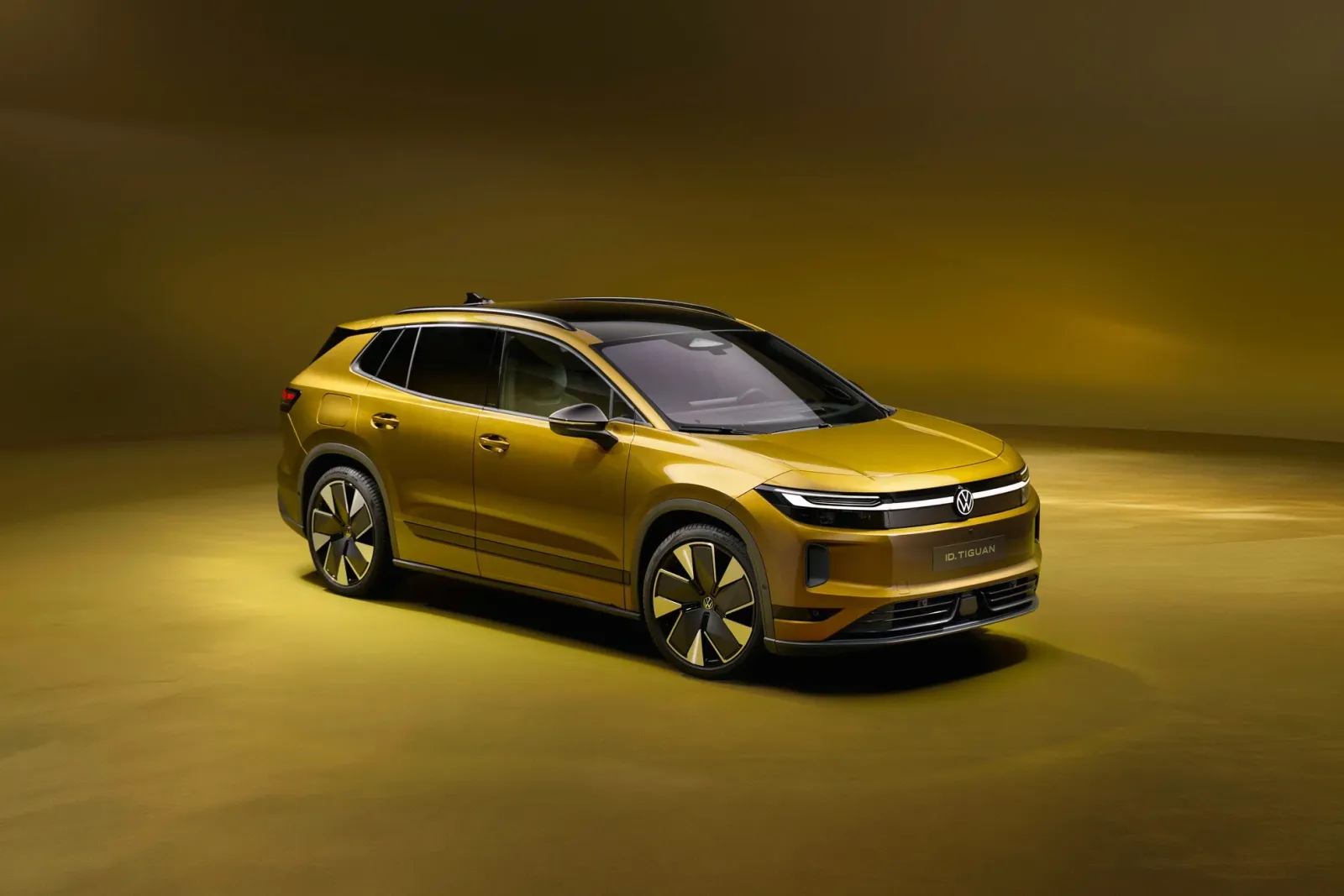
Volkswagen is streamlining one of the most important segments of its electric lineup. By early 2027, the ID.4 and ID.5 will be replaced by a single model – the ID. Tiguana. This is not just a name change; the body and interior are new, and the vehicle utilizes the advanced MEB+ architecture. Volkswagen is also changing the way it’s operated, expanding its functionality, and offering three powertrain options. However, the technical foundation remains an evolution of the design used in the ID.4, ID.5, and Skoda Enyaq for years.
58 or 77 kWh and up to 299 HP
The ID. Tiguan will be available in three powertrain versions. The base model features one engine at the rear axle, producing 190 horsepower and 350 Nm of torque. It accelerates from 0 to 100 km/h in 8.5 seconds, reaches a top speed of 160 km/h, and uses an LFP battery with a capacity of 58 kWh. The range is up to 450 km, and the maximum DC charging power is 105 kW.
At the higher end of the range is a rear-wheel-drive version with 286 horsepower and 545 Nm of torque. It accelerates to 100 km/h in 6.6 seconds, can reach a top speed of 180 km/h, and its NMC battery with a capacity of 77 kWh is expected to provide a range of up to 600 km. DC charging is possible at a power of up to 165 kW.
The top-tier 4MOTION version has two engines and all-wheel drive. The total power output is 299 horsepower, with 134 Nm of torque at the front and 350 Nm at the rear. It accelerates to 100 km/h in 6.3 seconds, with a maximum speed of 180 km/h. The 77 kWh battery is sufficient for a driving range of 560 km.
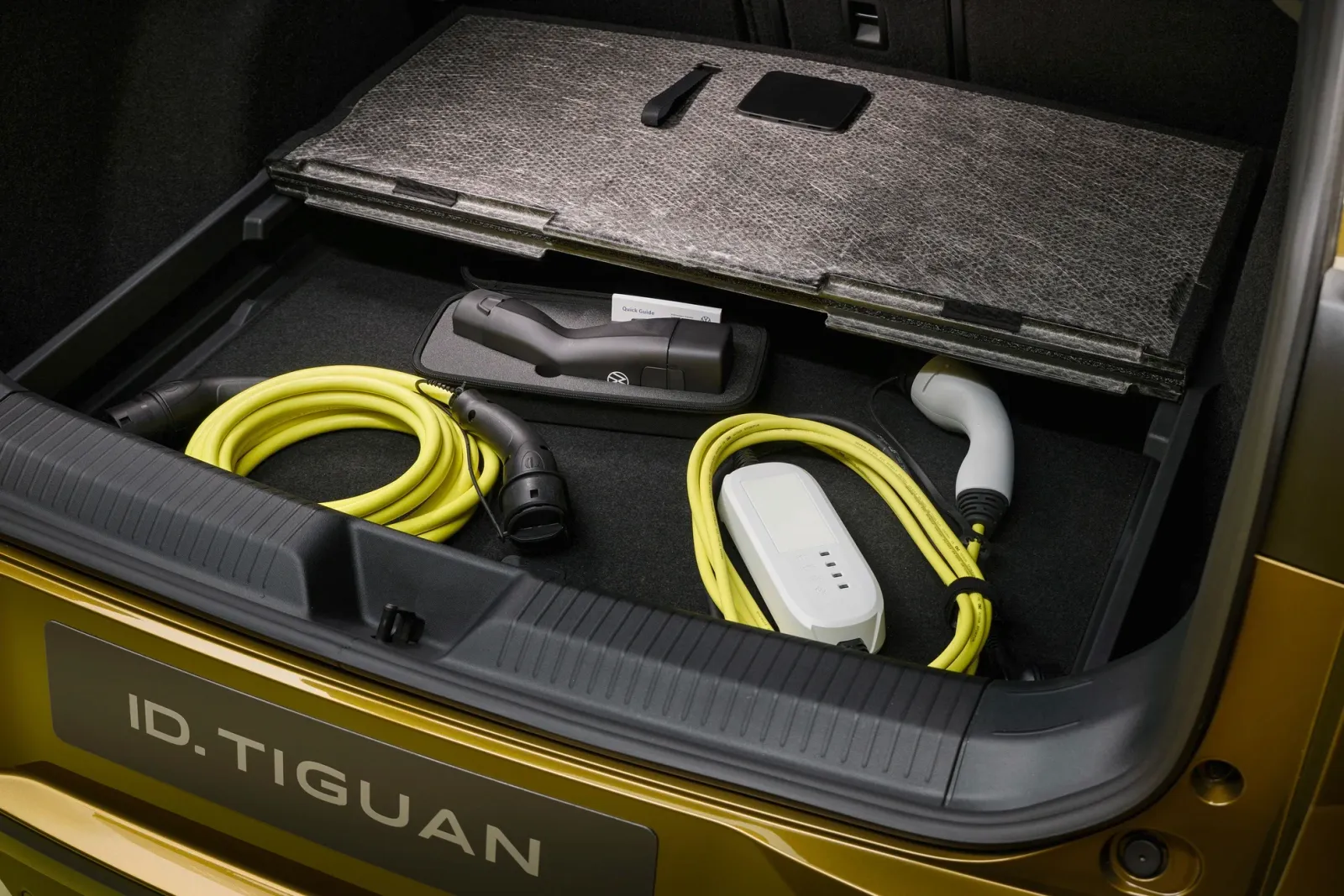
For this ID. Tiguan model, V2L functionality will be available, allowing it to power external devices using the traction battery, along with One Pedal Drive featuring strong regenerative braking. The base version can tow a trailer up to 1.8 tons, while the two more powerful versions can tow up to 2.0 tons.
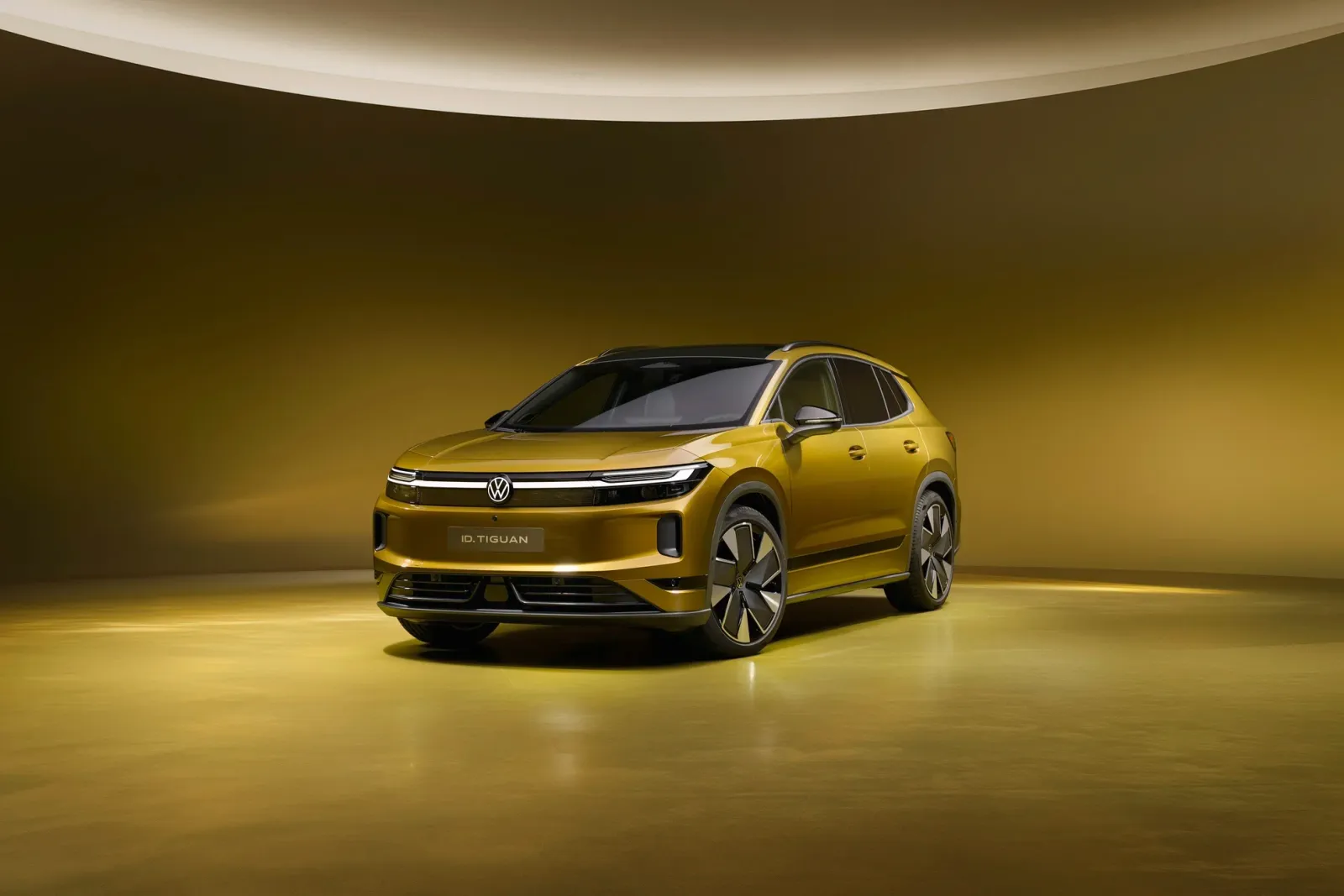
The ID. Tiguan is designed to be an electric vehicle for everyday family use.
Volkswagen emphasizes heavily the specifications that are not always mentioned first when introducing electric models. These are the practical aspects. The trunk has a capacity of up to 534 liters, and there is an additional 32-liter frunk under the hood. The base version can tow up to 1800 kg, while models equipped with a 77 kWh battery increase the maximum trailer weight to 2000 kg.
This is more than many electric SUVs of this size offer, and it can be significant for those who tow camping trailers. Another novelty is Vehicle-to-Load technology. The PowerSocket adapter allows drawing power from the traction battery to power external devices.
One-pedal driving finally arrives in Volkswagen
The ID. Tiguan will come standard with one-pedal driving. Regeneration can brake the car all the way to a complete stop. Connected Travel Assist has also been enhanced. The system can assist with things like changing lanes on the highway, and the car can automatically stop in front of a red light. Additionally, there’s a digital key that can be sent to another person via app, message, or email. These are features that customers of competing electric vehicles have known about for some time now.
Volkswagen has improved the user experience
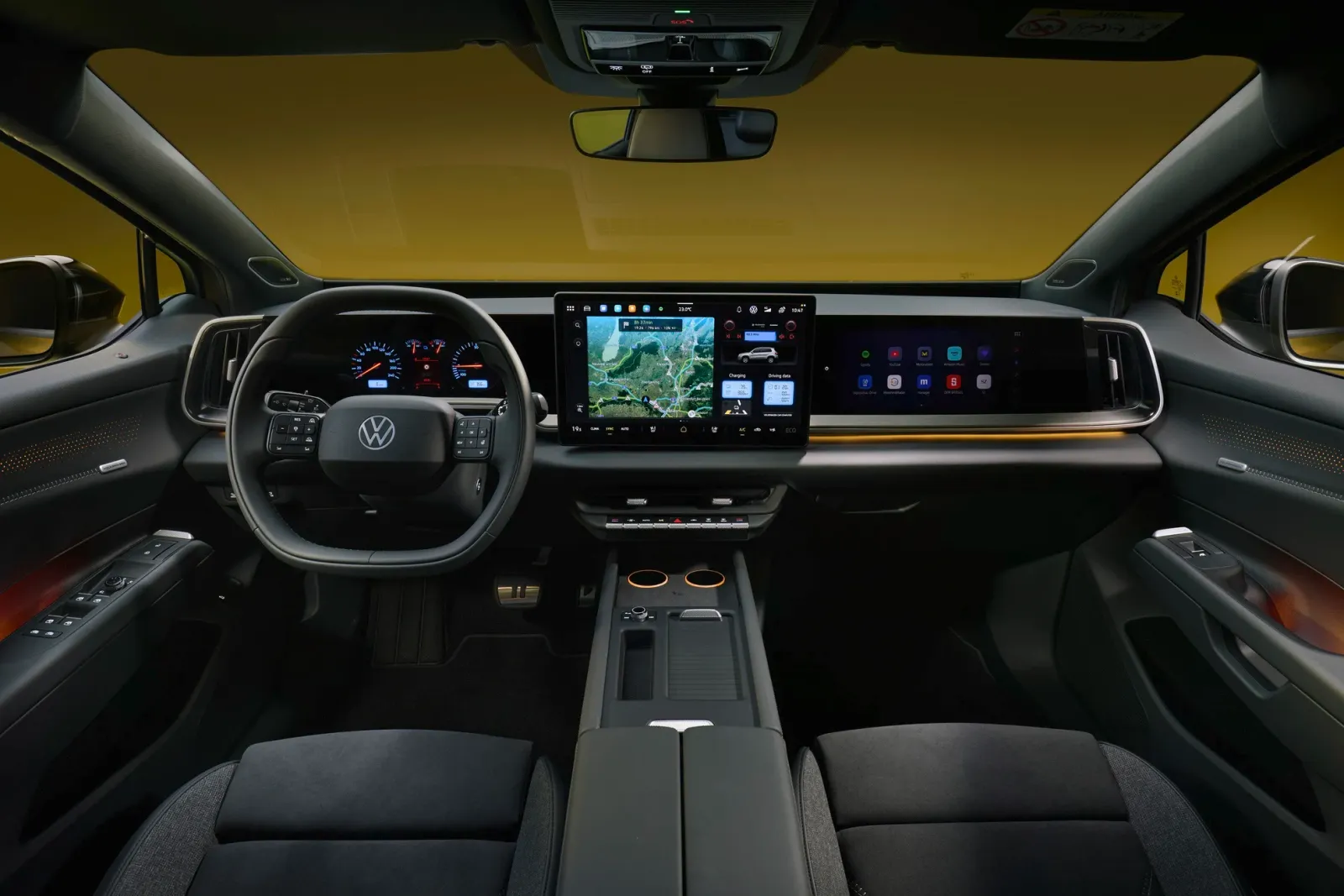
The interior is completely different from that of the ID.4 and ID.5. The central screen is 15 inches, the gauge cluster is 10 inches (it can display images mimicking retro clocks such as those from older Golfs), and the optional passenger screen is 12 inches. At the same time, Volkswagen is moving away from some of the concepts used in the first ID series vehicles. Physical buttons have returned to the steering wheel, basic climate control has its own panel, and a classic knob for adjusting things like volume is located on the center console.
The competition is much stronger today than it was in 2020.
When the ID.4 debuted six years ago, the electric SUV market was much less crowded. By 2026, the ID. Tiguan is entering a market filled with highly competitive rivals.
The Tesla Model Y costs 189,990 PLN in Poland and offers 525 km of WLTP range in its base version. The Renault Scenic E-Tech electric, with an 87 kWh battery, achieves around 620 km of WLTP range, and its listed price for the 220 KM version starts at 209,900 PLN.
The Kia EV5 comes with 81.4 kWh of battery capacity, 217 KM of power, and up to 530 km of WLTP range. Additionally, there are models like the Ford Explorer, which is technically related to the VW model, as well as other electric SUVs produced by Chinese brands.
Therefore, Volkswagen is not entering a blank market. Its advantages may lie in its well-known brand name, extensive sales and service network, as well as features typical of a family SUV.
The price starts at the level of the Tesla Model Y
In Germany, the ID. Tiguan costs from 42,695 euros, which is around 187,000 zł. The Polish price list has not been released yet. If the price of the base version here remains in a similar range, Volkswagen will be competing very closely with the Tesla Model Y at 189,990 zł.
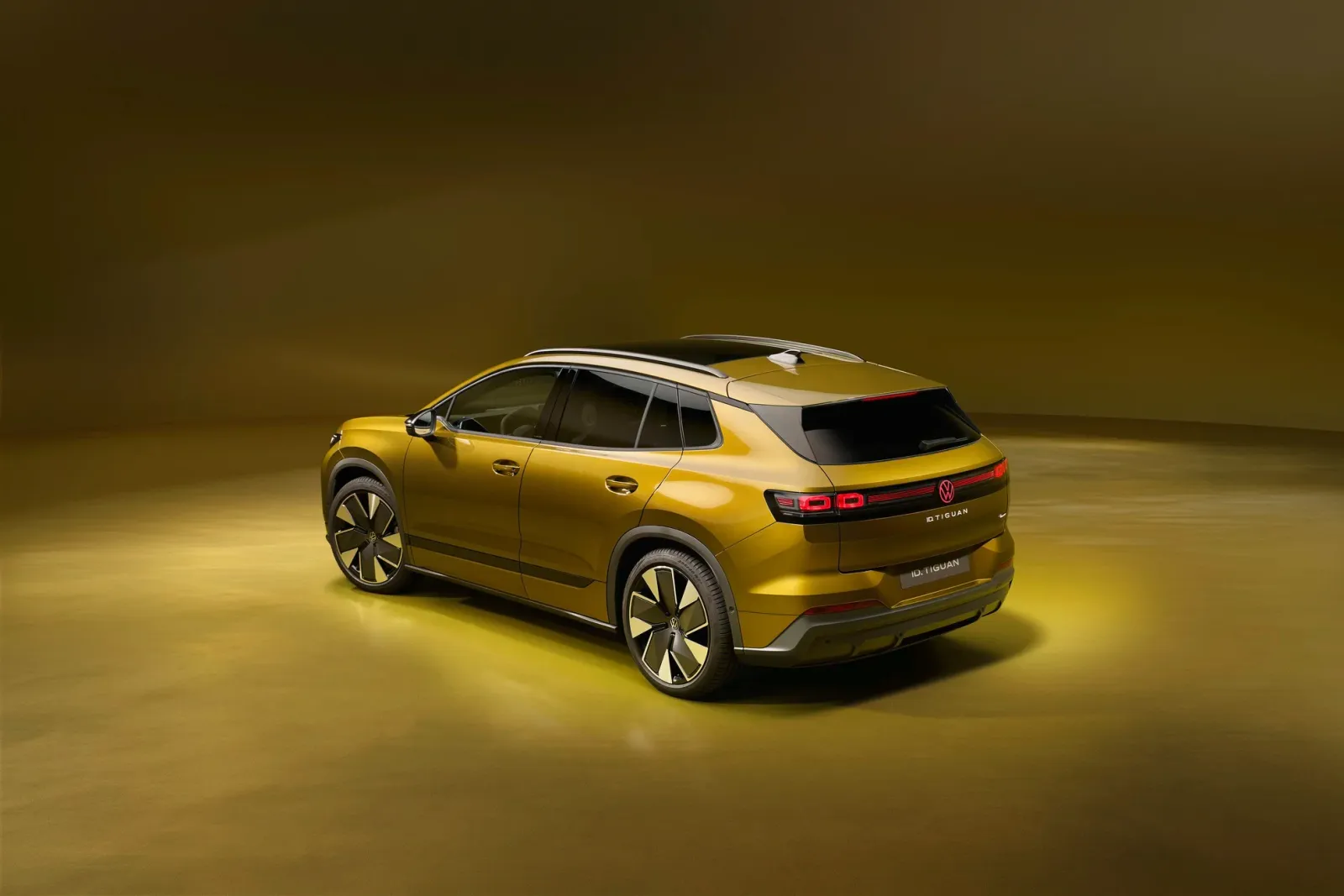
This could be one of the most important battles in this segment. The ID. Tiguan isn’t trying to be a niche electric vehicle or an expensive technological showcase. It simply aims to take over from the ID.4 and become one of Volkswagen’s main family SUVs — just with electric powertrains. Pre-orders will open on October 13 in the first European markets. The vehicles will be produced in Emden, with deliveries starting in early 2027.
Piotr Sobczyk