
Volkswagen ID. Tiguan review: the ID.4 and ID.5 get a worthy successor
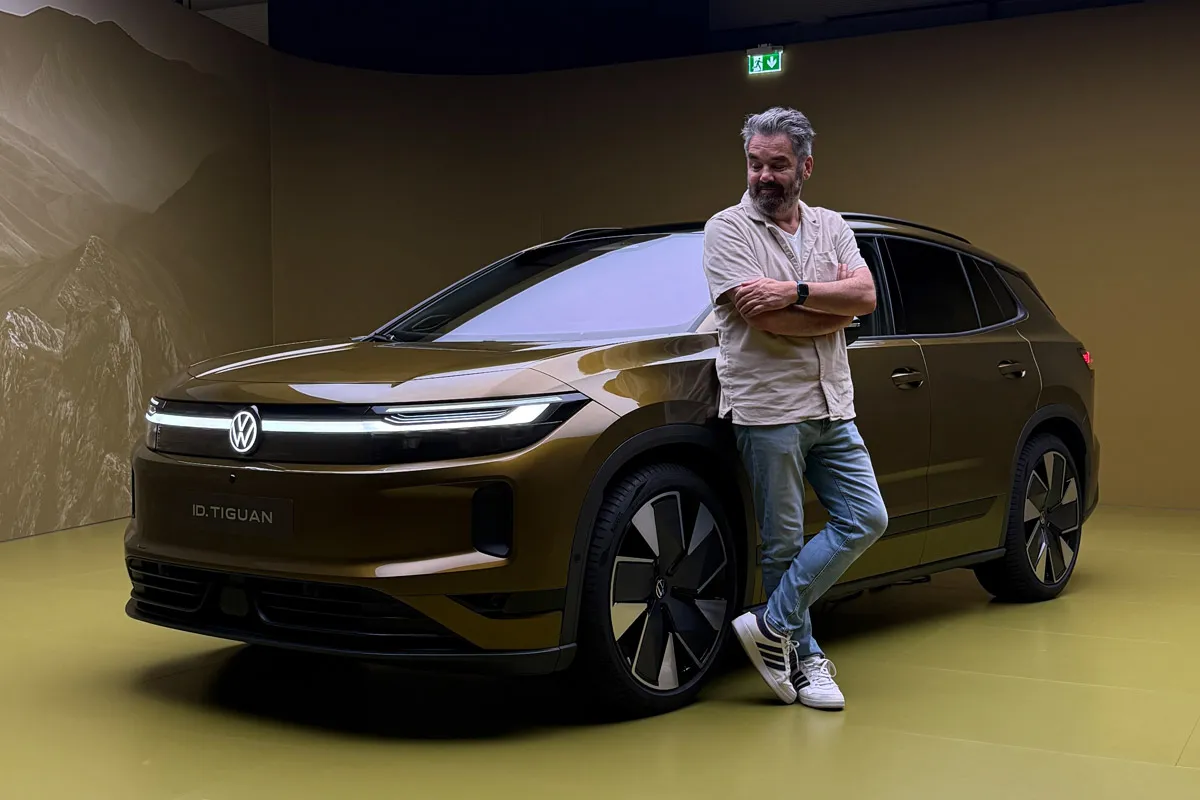
Volkswagen ID. Tiguan review: we tested the electric successor to the ID.4 and ID.5 for a short time. Volkswagen has thoroughly revamped the interior with better materials, improved usability, and finally normal buttons again. The familiar technology was largely retained. Is that enough?
From ID.4 and ID.5 to the new ID. Tiguan
The Volkswagen ID.4 and ID.5 were certainly not bad electric cars. They offered plenty of interior space, comfortable driving, and excellent electric powertrains. The ID.4 in particular evolved into an attractive electric family car. Yet we also had some concerns during our earlier tests. Not so much with the driving, but primarily with the interior. Volkswagen packed way too many functions into the touchscreen. The touch-sensitive buttons on the steering wheel and the complicated operation of the side windows also failed to impress us. These are minor irritations that one often encounters in everyday use.
With the Volkswagen ID. Polo, we already saw that it can be done differently—actually much better, as it made a remarkably positive impression during our first encounter and clearly showed that Volkswagen took criticism of the ID.3 series seriously. The controls were more logical, the finish better, and its driving performance was convincing as well. With the new ID. Tiguan, Volkswagen is pursuing the same approach, but in the segment of larger electric SUVs.
The ID.4 and ID.5 will be replaced by a single model that retains their strong features while addressing the less successful choices in terms of interior design. For this, Volkswagen has opted for a well-known name. Since 2007, over 8.3 million units of the Tiguan have been sold worldwide. Naturally, its recognition is much greater than that of the ID model numbers.
Incidentally, the regular Tiguan will not disappear. It will continue to exist alongside the electric ID. Tiguan, available with options such as gasoline and plug-in hybrid powertrains. Volkswagen will thus offer two different Tiguans in the future: the familiar SUV with a combustion engine and the new, fully electric version.
Almost everything on the outside is new
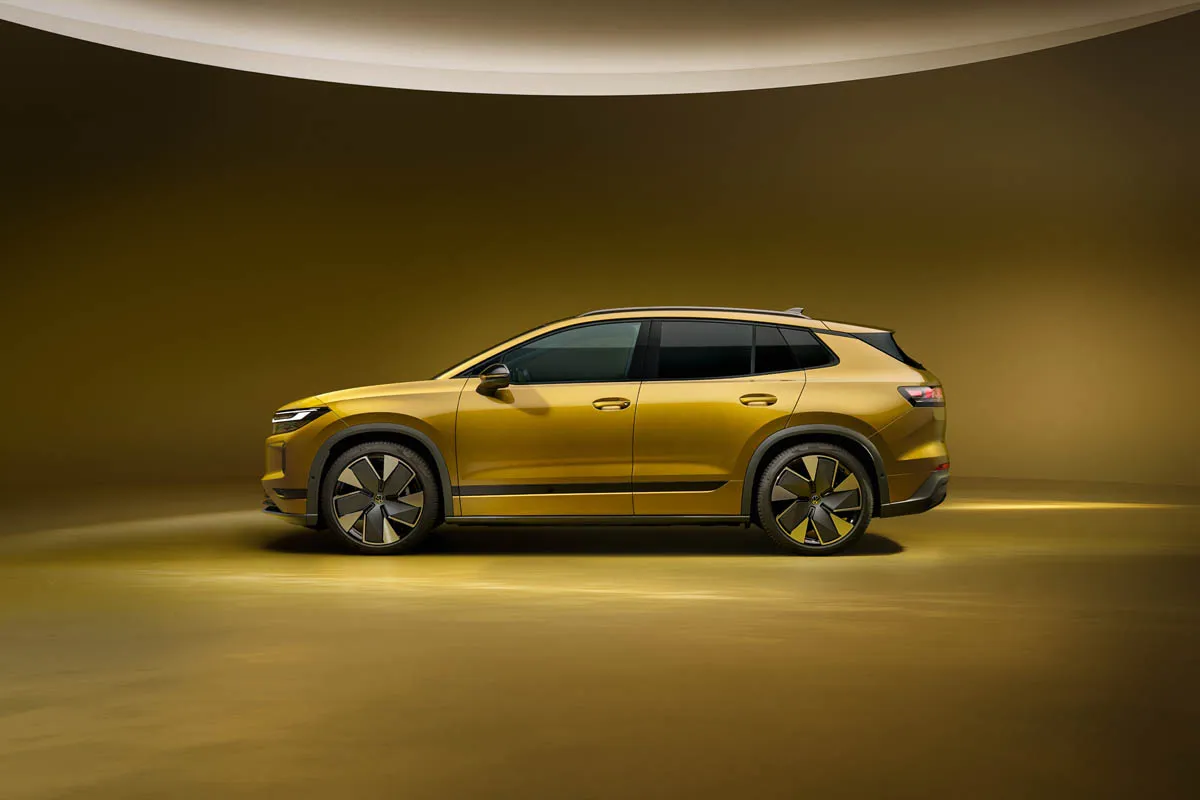
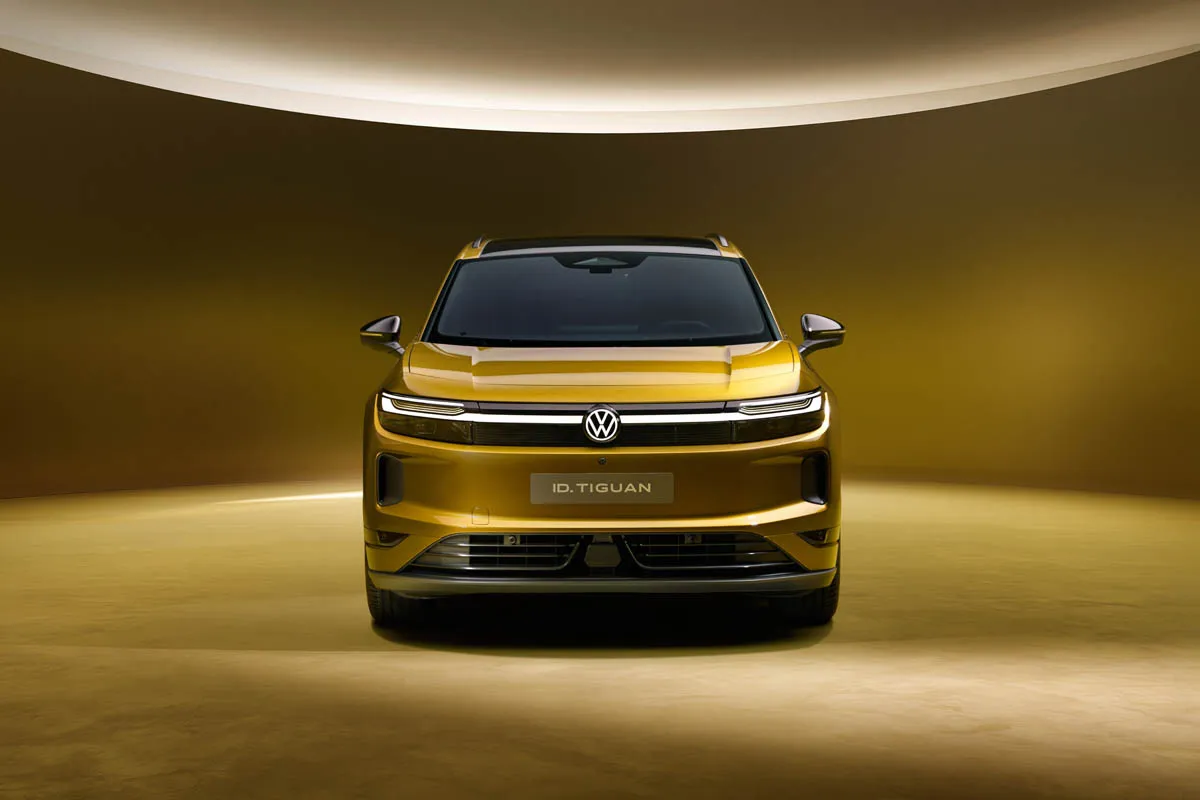
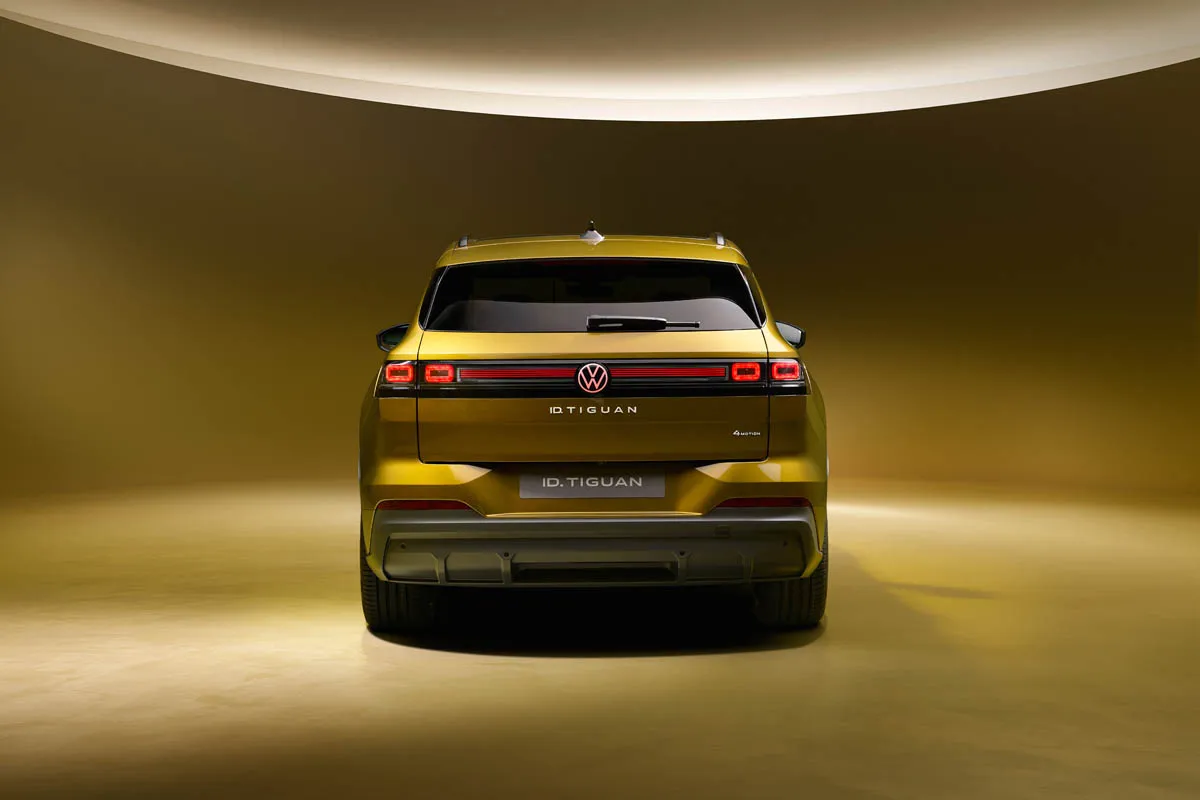
The new ID. Tiguan is barely recognizable as an ID.4. Almost the entire bodywork has been redesigned, with only the roof remaining unchanged. The car is slightly longer at 4.62 meters and has a more upright front end. Its design follows that of the new ID. Polo and ID. Cross, featuring sharper lines and less prominent details.
The semi-submerged door handles from the ID.4 have also disappeared, replaced by regular handles. It might seem less exciting on paper, but it is more convenient for everyday use.
There’s no lack of space. The trunk can hold 534 liters of luggage, and this increases to a maximum of 1,577 liters when the rear seats are folded down. Under the hood, there’s now a 32-liter frunk, large enough to store the charging cable. It’s a simple addition that we would have liked to see in the ID.4 as well.
A missed opportunity is the rear seats. They aren’t adjustable, whereas the regular Tiguan does have this feature. Such extra flexibility would be welcome in a spacious family SUV.
Interior significantly improved
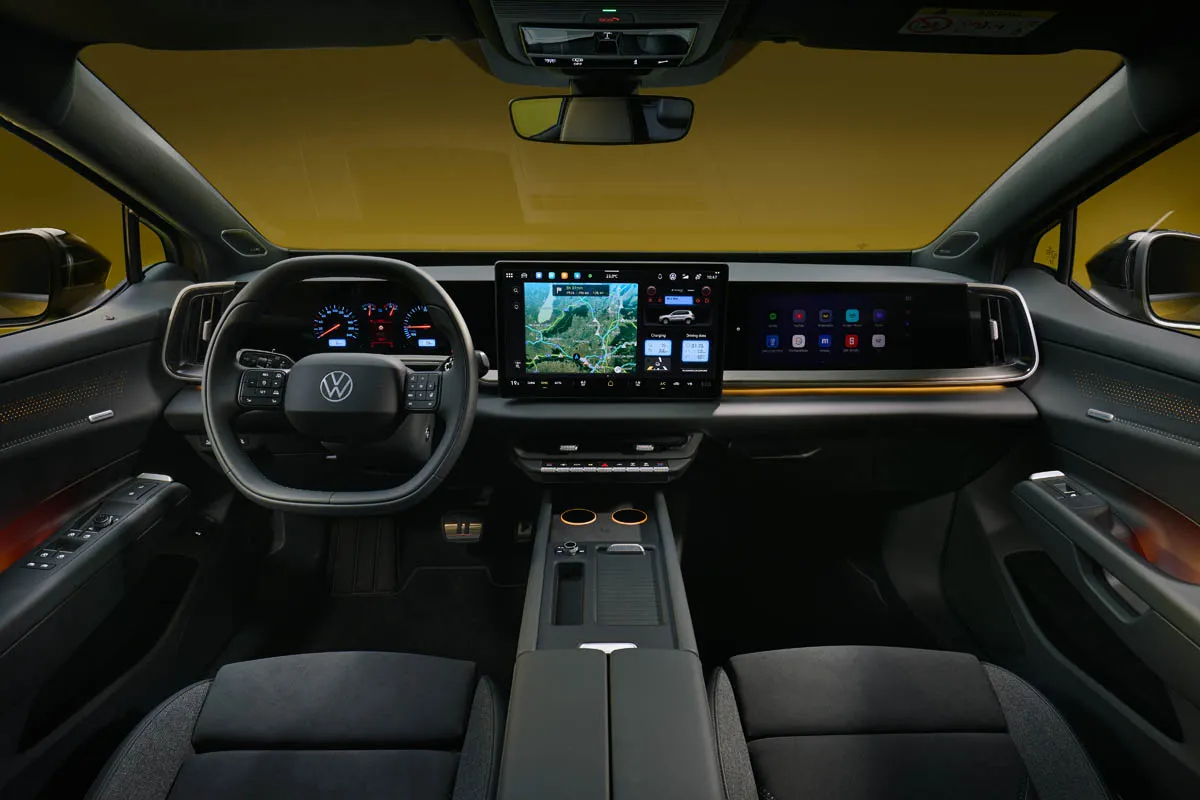
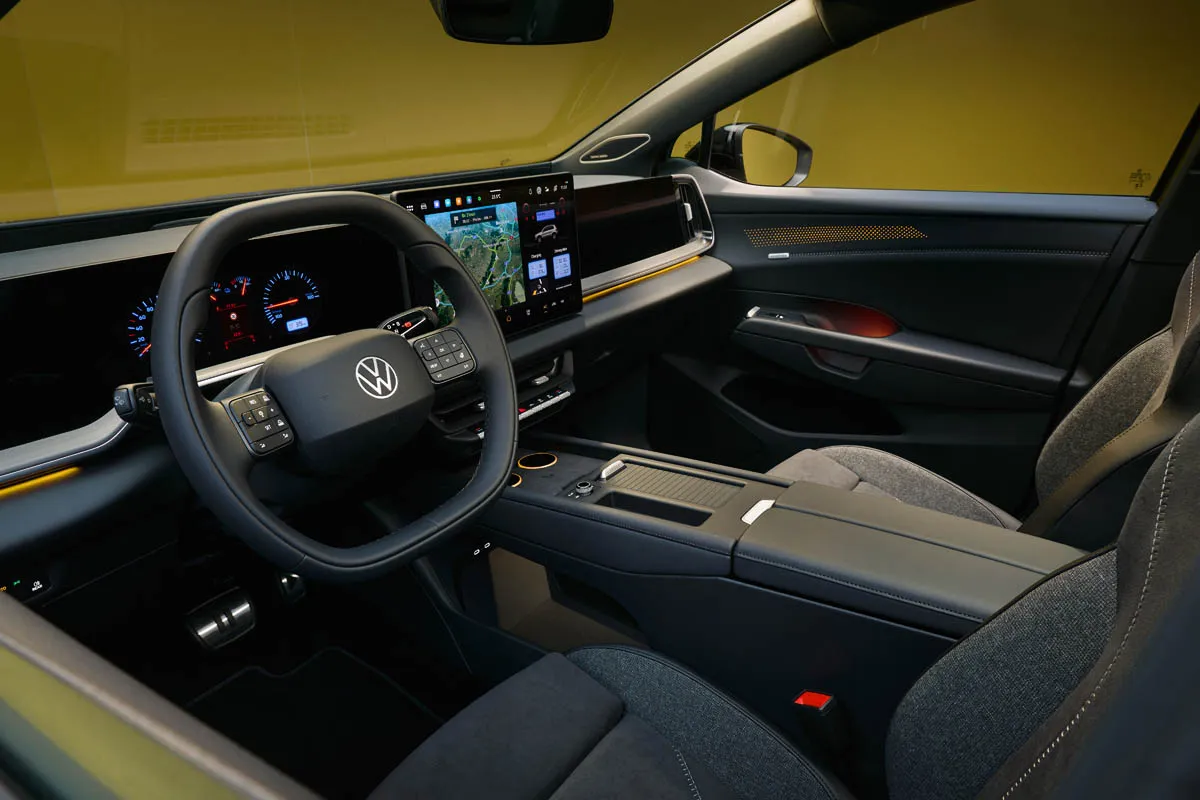
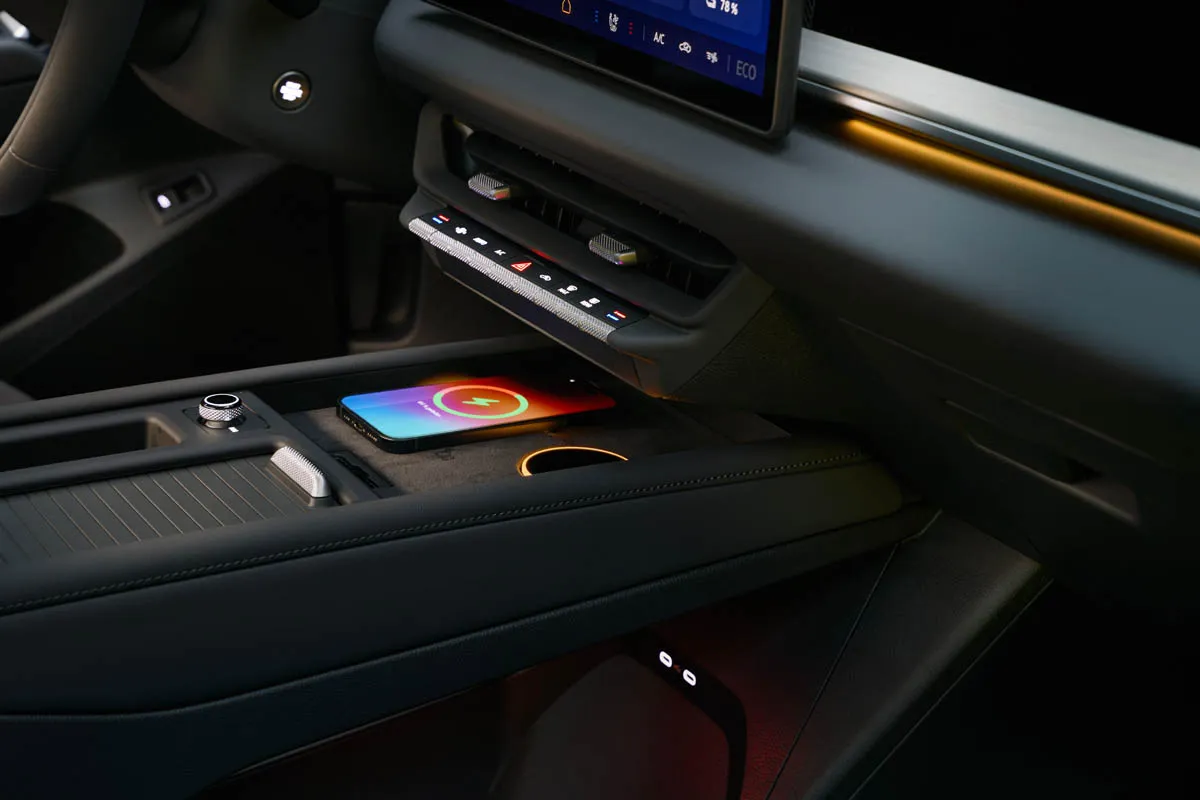
The biggest changes are found inside. Volkswagen has completely revamped the dashboard and made the controls much more user-friendly. There are again regular buttons on the steering wheel, each side window has its own switch, and separate buttons have returned for climate control. You can also adjust the audio volume using a physical knob on the center console.
This is exactly the direction Volkswagen should have taken earlier. The ID.4 was sometimes unnecessarily complicated to operate while driving. A function you use regularly should be easy to find without having to search.
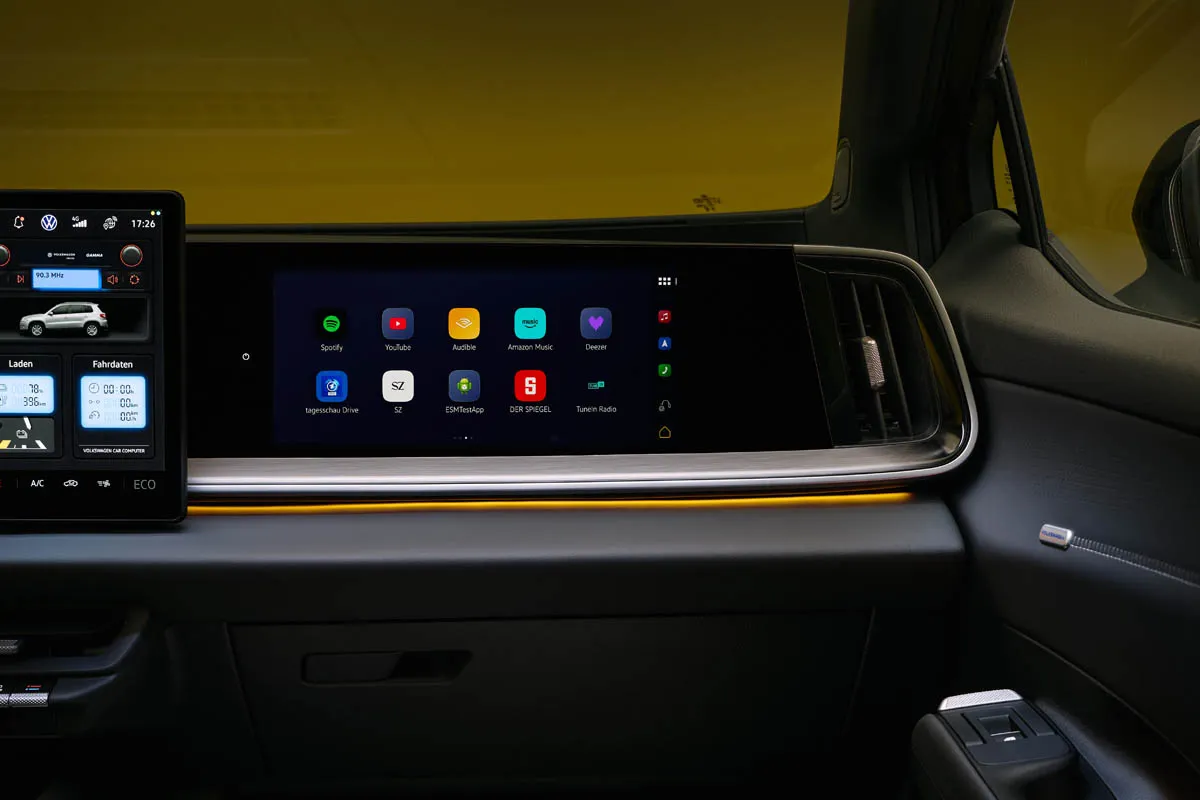
The ID.4’s small instrument cluster has been replaced by a 10-inch screen behind the steering wheel. At the center is a 15-inch touchscreen, and optionally, the front passenger can have their own 12-inch screen. We doubt that third screen adds much value. A well-organized dashboard with a few useful buttons is preferable to an interior that consists mostly of displays.
The materials used also appear more premium, and the finish gives a better impression. Volkswagen has added a nice detail as well: on the digital instrument cluster, you can bring up the blue dials from the Golf IV. It’s fun for those who lived through that era, but more importantly, the basic controls now work properly.
Volkswagen ID. Tiguan review: how does it drive?
We had the chance to briefly drive a pre-production version of the new ID. Tiguan. It wasn’t a full-scale test drive, but enough to see how much of the familiar ID.4 character remains. Actually, quite a bit. The handling feels familiar, the car responds predictably, and the suspension is clearly tuned for comfort. The ID.4 already performed quite well in this area, and thankfully Volkswagen didn’t make unnecessary changes to it. However, the ID. Tiguan seems a bit more agile at handling minor bumps. We’ll pay closer attention to this during a longer test for a better comparison.
The powertrain is also familiar: quiet, smooth, and with sufficient power. The base version already has 190 horsepower, while the Pro and Pro 4MOTION models deliver 286 and 299 horsepower respectively.
We are less enthusiastic about the brake pedal. The first press of the pedal feels quite long before braking force builds up significantly. Volkswagen has adjusted the brakes to reduce friction between brake pads and rotors. This may help improve efficiency slightly, but it doesn’t immediately enhance the braking feel. We hope the final production model will be more convincing in this regard.
For now, we can mainly conclude that Volkswagen has retained the comfortable driving experience of the ID.4. The biggest improvements aren’t in the chassis but in everything the driver deals with on a daily basis.
Range of up to 605 kilometers, but fast charging still falls short
Beneath the new bodywork, much remains the same as before. The ID. Tiguan still relies on the MEB architecture of the ID.4 and uses largely the same powertrain technology. It continues to use a 400-volt system. The Pure model comes equipped with a 58 kWh LFP battery pack, while the more powerful versions use a 77 kWh NMC battery pack. Thanks in part to an improved aerodynamics design and more efficient drive system, the rear-wheel-drive Pro model can travel up to 605 kilometers according to Volkswagen.
We see less progress in fast charging. The Pure model can achieve a maximum charging rate of 105 kW, while the Pro and Pro 4MOTION models reach 165 kW. It takes 26 minutes to charge from 10% to 80% for the Pure model and 29 minutes for the Pro and Pro 4MOTION models. This is usable, but not particularly fast for a new electric SUV in 2026. Especially since more and more competitors are shifting to 800-volt technology.
The ID. Tiguan features Vehicle-to-Load capability, allowing you to power external devices. It’s also equipped for two-way charging. Vehicle-to-Home (V2H) and Vehicle-to-Grid (V2G) will likely become more useful as the technology and related infrastructure become more widespread.
190 to 299 hp: here are the differences
Specification
Pure
Pro
Pro 4MOTION
Power
190 hp
286 hp
299 hp
Drive Type
Rear-wheel drive
Rear-wheel drive
All-wheel drive
Battery Capacity (net)
58 kWh
77 kWh
77 kWh
Battery Technology
LFP
NMC
NMC
WLTP Range
Up to 455 km
Up to 605 km
Up to 560 km
DC Fast Charging
105 kW
165 kW
165 kW
Charging 10-80%
26 minutes
29 minutes
29 minutes
0-100 km/h
8.5 seconds.
6.6 seconds.
6.3 seconds.
Towing capacity
1,800 kg
2,000 kg
2,000 kg
Range based on Volkswagen’s preliminary WLTP figures. Final values may vary by version and equipment.
All versions can be charged via 11 kW AC, feature a 32-liter frunk, and have a cargo space of 534 liters.
Starting at €40,990, available for order soon
The ID. Tiguan starts at €40,990 in the Netherlands. There are four trim levels: Trend, Life, Style, and R-Line. Orders can be placed starting October 13, 2026, with the first vehicles delivered in mid-February 2027.
For caravan owners, the towing capacity is particularly attractive. The Pro and Pro 4MOTION models can tow up to 2,000 kilograms. Later in 2027, a more powerful version will be released with over 400 horsepower, an announced WLTP range of just over 700 kilometers, and a towing capacity of 2,200 kilograms. This makes the ID. Tiguan an interesting option even for those who regularly tow heavy caravans.
A worthy successor with a better interior
After this first review of the Volkswagen ID. Tiguan, we can conclude that Volkswagen has focused on improving the less successful aspects of the interior. The comfortable driving characteristics of the ID.4 remain intact, while the interior has made significant progress. The return of physical buttons, improved materials, and a more intuitive dashboard make the ID. Tiguan more pleasant to use in daily driving. Of course, there are still areas for improvement. The charging speed could be faster, and the braking feel requires further attention. But the foundation was already good, and it has now been enhanced in key areas. Just like with the ID. Polo, it seems Volkswagen has learned the right lessons from its first generation of electric models.
The ID. Tiguan doesn’t need to make people forget about the ID.4 and ID.5. It must especially show that what’s good can be even better. And after our first few kilometers, it seems to have succeeded quite well.
Text by: Marc Verweij