
Electric car: in apartment buildings, access to a charging station is always a barrier (but not the only one)
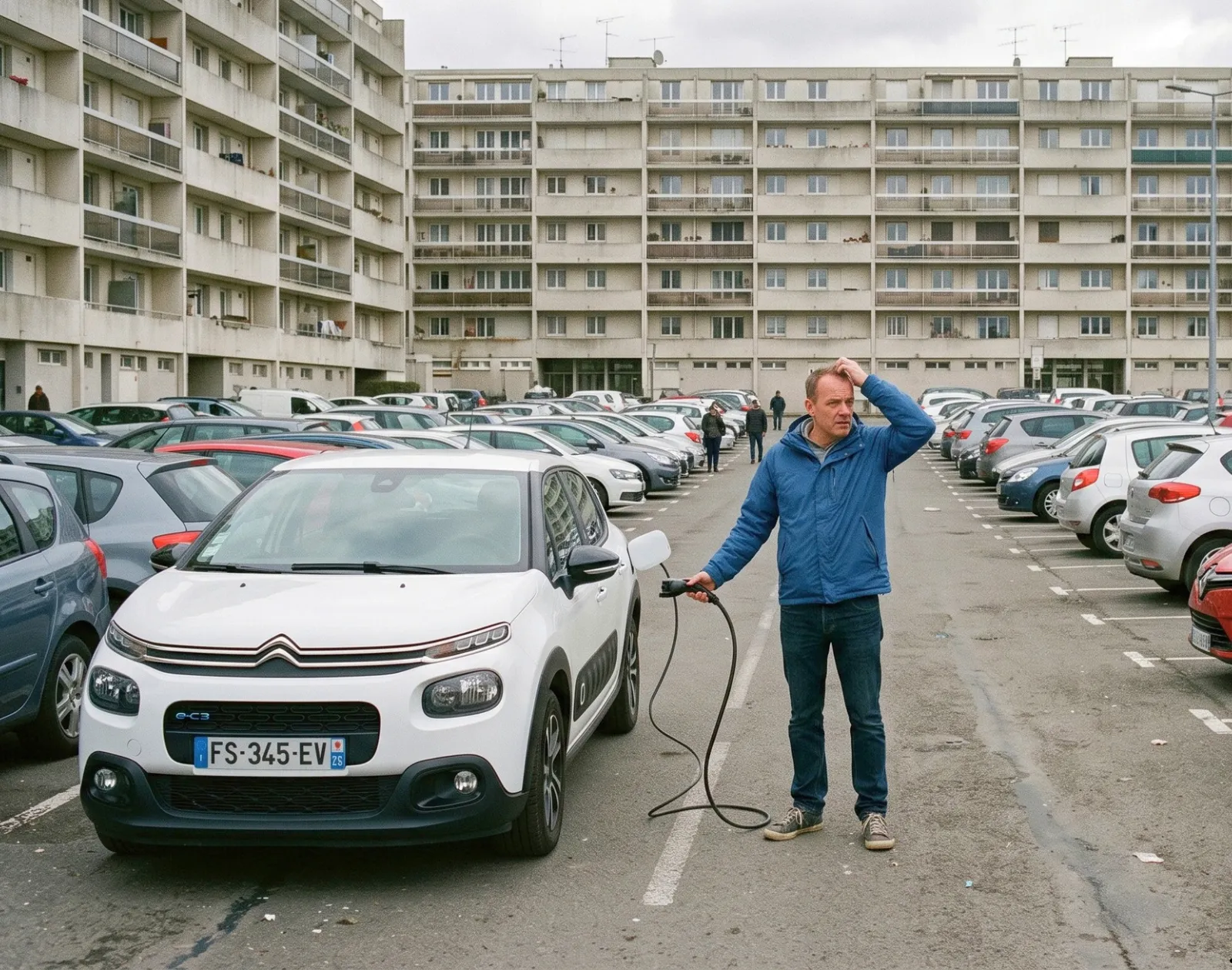
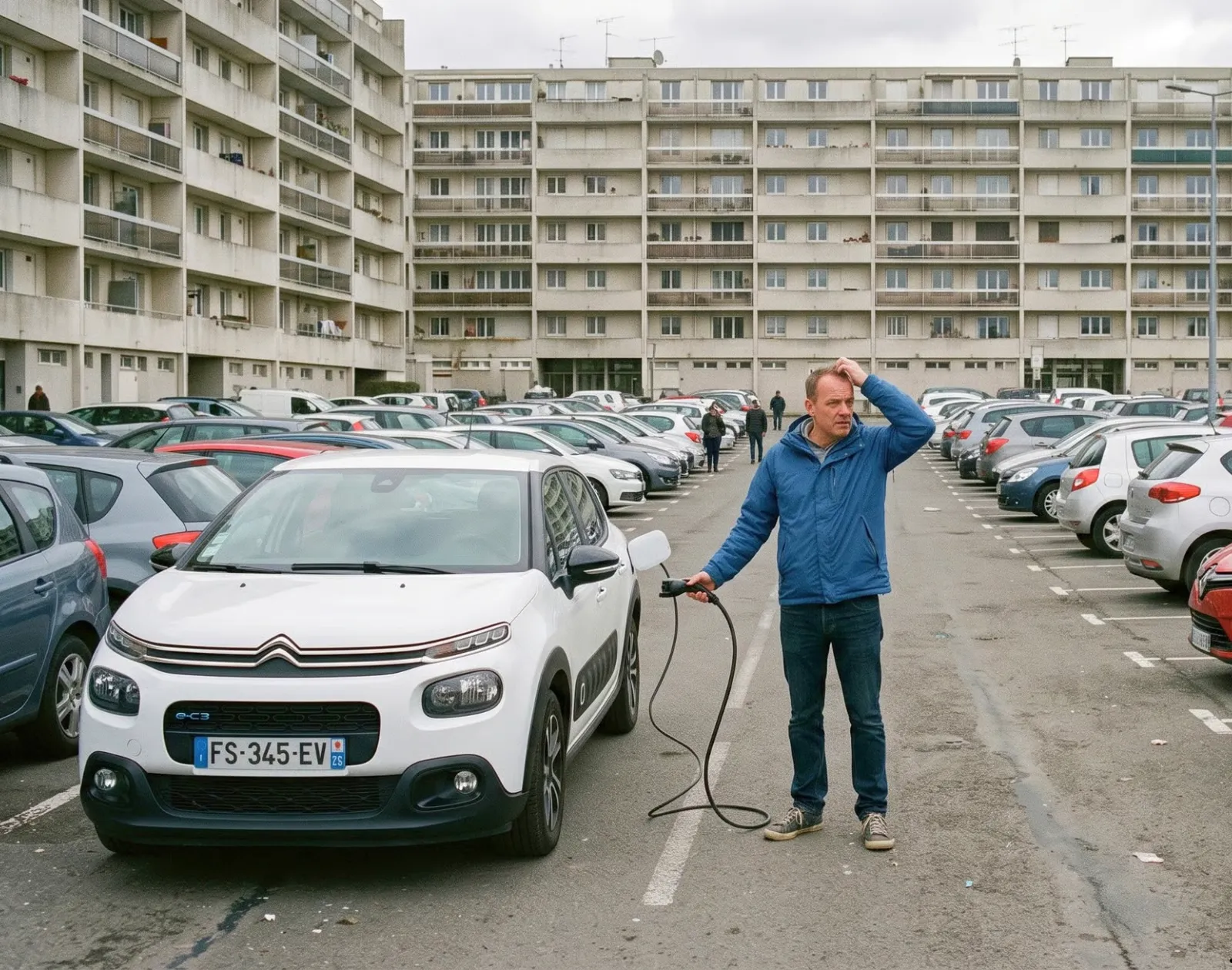
Charging an electric car isn’t a problem for those living in houses with their own parking spaces. It’s a much different challenge for the roughly 30 million French people who live in apartments. A recent study by Logivolt confirms the expectations of residents in communal housing regarding access to charging facilities, but not only that. Simply filling apartment complex parking lots with charging stations wouldn’t be enough to make electric cars more accessible to everyone.
Living in an apartment seriously complicates life for those considering electric cars. This is confirmed by a survey conducted by Ifop for Logivolt, a subsidiary of Caisse des Dépôts focused on financing charging infrastructure in residential buildings, published on October 6. According to the study, which surveyed French people living in apartment buildings (with no further details provided on the sample), having a charging station that is “easily accessible, close to their home, available, and offered at an attractive price” would convince 88% of those who say they are ready to switch to electric vehicles, and even 41% of those not currently considering it.
Also read
Charging stations in condominiums: where are we in France as of 2026?
Myths about electric cars still persist among the public
So, would equipping all parking spaces in apartment complexes and social housing with charging stations be enough to get the whole of France running on electric vehicles? Not so fast. Only 58% of residents in buildings surveyed said they had a “positive view” of fully electric cars, compared to 74% for plug-in hybrids. After all, easy and inexpensive access to daily charging points isn’t the only obstacle. The vehicle’s purchase price remains the top cited barrier (58%), followed by limited range (42%) and concerns about battery lifespan (36%).
Next are the issues related to charging: charging time (34%), the lack of charging solutions at home (33%), and the inconvenience of public charging stations (30%) are also cited as problems. In total, 67% of respondents mentioned at least one obstacle related to charging stations or charging time, a figure that rises to 73% when charging costs are taken into account. It should be noted that some of these arguments reflect a low level of general knowledge about the characteristics of electric vehicles and how to charge them.
Also read
Charging stations in buildings: things are getting better, but...
Charging as a decisive factor for future buyers
For those who are already convinced by electric vehicles, the issue of charging comes up, unsurprisingly, very early in the purchasing process. 53% of potential buyers consider this factor even before thinking about purchasing a vehicle, while 40% take it into account when choosing a model. In other words, many give up or delay their plans due to uncertainty about where they will charge their car on a daily basis.
Currently, the charging method preferred by French residents living in apartments (whether already equipped or considering it) relies on external infrastructure. 46% of them favor public charging stations located “near their home,” 33% prefer public parking lots, and 30% choose those at their workplace. Only 28% of respondents consider charging points in the apartment building’s parking lot for individual chargers, and 26% for shared chargers.
Also read
Charging stations in apartment complexes: they’ll cost less thanks to increased subsidies
Strong interest in charging inside buildings, but complex procedures
The low installation rate isn’t due to a lack of interest, at least among half of those surveyed. Among residents with unpaved parking spaces, 46% say they’re interested in having a charging station installed. This figure rises to 73% among those considering a purchase. The real obstacles lie elsewhere: installation costs (49%), approval from the apartment association (36%), and technical constraints (34%).
More than four in ten respondents cited a lack of information and the perceived complexity of the procedures as main issues. In fact, the idea of a communal infrastructure installed in the building, with each resident subscribing individually when needed, appeals to 72% of those surveyed, and as high as 89% among potential buyers.
