
A German court rules that using a card cannot be more expensive than using the app.
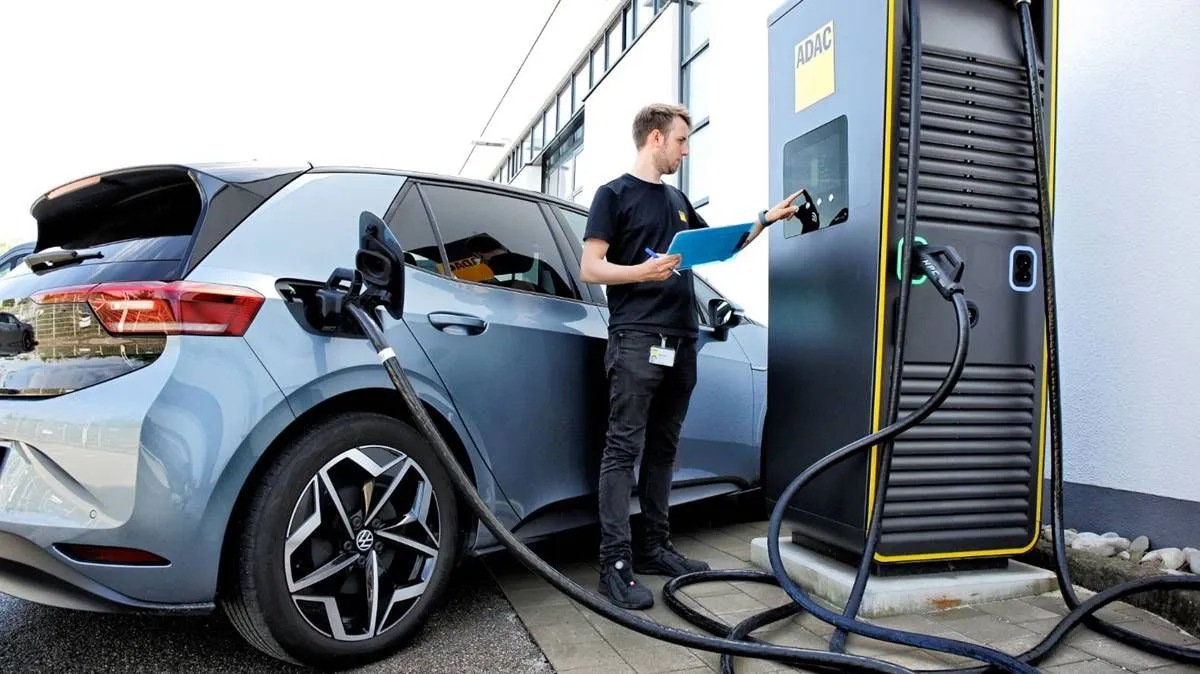
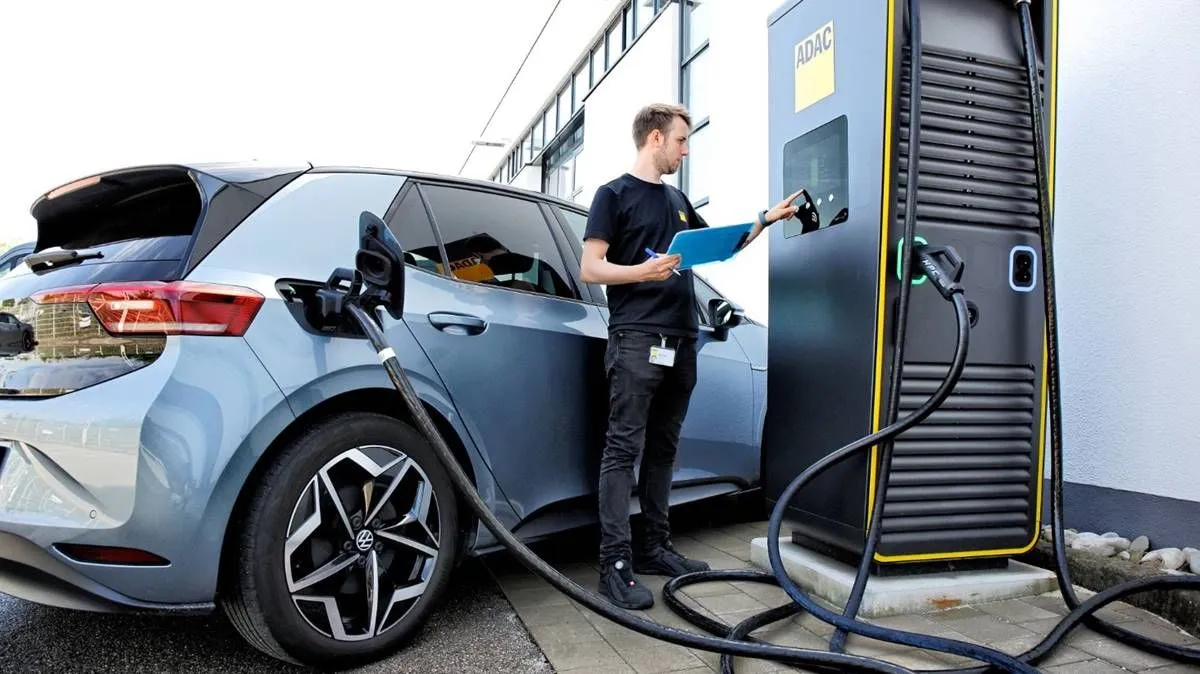
Charging an electric car at a public station can turn into a real lottery depending on how it’s paid for. The same station may offer one price through its own app, another if paid directly with a card, and yet a different price if a recharge card from another company is used. This absurdity confuses or frustrates many customers, and now it may be running out of time.
The source of the conflict lies between Digital Charging Solutions (DCS), the company that manages charging services for manufacturers like BMW and Mercedes-Benz, and EWE Go, one of the charging station operators in the German market. The dispute has reached the Regional Court of Munich I, which has just ruled on an issue that could have consequences far beyond Germany.
The judgment, issued on October 6, 2026 and not yet signed, holds that EWE Go cannot charge DCS rates higher than those applied to its own customers if such a difference is not objectively and proportionally justified. This is a particularly significant interpretation of the EU’s AFIR Regulation and may force a review of how many operators calculate their prices for roaming services.
The same charger, three different prices
The situation is particularly easy to understand if one looks at the rates in effect on EWE Go as of January 1, 2025. For its own registered customers using the app, the company charged 0.52 euros/kWh. For those who made occasional top-ups without a contract, the price rose to 0.79 euros/kWh. However, when top-ups were made through a mobility service provider like DCS, the wholesale rate called Offer2All reached 0.837 euros/kWh.
The problem for DCS was obvious. The company had to buy electricity from EWE Go at a price even higher than what the operator charged a customer who went to the station and paid directly. After that, DCS had to add its own costs and profit margin to offer the service to its customers. This made it very difficult to compete with the charging network itself, since the operator could supply electricity at a much lower price.
DCS decided to take the case to court, arguing that this price difference violated Article 5, Paragraph 3, of the AFIR Regulation. European law stipulates that operators of public charging points must not discriminate through pricing between end-users and mobile service providers, nor between different mobile service providers. Price differences are allowed, but they must be objectively and proportionally justified.
The Munich court ruled in favor of DCS. EWE Go can no longer apply the higher tariffs that were the subject of the lawsuit to DCS’s own contract customers. In practice, the court also considered a comparison with those direct customers, thereby establishing a much broader interpretation of the non-discrimination obligation under AFIR.
The lawsuit also included a blocking fee of 0.10 euros per minute that EWE Go applied at the time to mobility service providers, but not to its direct customers or those who paid on a pay-as-you-go basis. The court also took this difference into account within the dispute.
The most important point is that the ruling does not require all prices to be identical. The European Commission itself explains that the AFIR Regulation allows for price differences when there are real distinctions between customers' situations and when such a difference is objectively justified. What is prohibited is using such differentiation to set different prices without sufficient justification.
And this is where the case could become a problem for other operators. EWE Go argued that the differences could be justified by factors such as administrative costs, customer service, business risks, or contract terms. However, the court did not consider these arguments sufficient to explain the gap between 0.52 euros/kWh for its customers and 0.837 euros/kWh imposed on DCS.
The potential impact is not limited to future tariffs. The court has also ruled that EWE Go must compensate DCS for the damages resulting from this practice starting from April 13, 2024, when the AFIR Regulation came into effect. The amount has not yet been determined, though DCS estimates it could reach several million euros. The obligation to pay compensation is not final either, as the judgment can be appealed.
But there is still a long way to go. The ruling applies to a specific case, it is not final, and it does not automatically mean that charging rates will drop across Europe. What it does do is set an important precedent on how the AFIR anti-discrimination rule should be interpreted when an operator competes indirectly with its own charging services.
And the timing could not be more relevant. The European Commission plans to review the operation of the AFIR Regulation in 2026, including specifically the pricing mechanism for public charging stations. The EWE Go-DCS case can provide a judicial reference of great importance for that discussion.
