
An installer provides an update on charging and double meters at home
A installer provides an update on home charging and the issue raised in recent days regarding double meters. As well as the alleged impossibility of charging using energy produced by solar panels...
A photovoltaic system installer explains...
I’m pleased to follow you; I am a photovoltaic system installer and owner of an electric car. I wanted to respond to the call for action in the article “Don’t charge your car with solar power? Never mind...”. From what’s written, it seems to me that the person who mentioned this difficulty has a photovoltaic system connected to the grid via a meter separate from the one at home. In other words, there were two systems at home, each with its own connection to the national electricity grid: one for household use and one for the photovoltaic system. This configuration was required under certain incentives with the first electricity bills (2006–2010). The dual system is no longer required in any residential installation, as far as I remember, since 2012.
“Too many pedantic and outdated technicians”
In my experience, it has happened several times that installers or designers who are not well-informed or overly pedantic have applied this configuration, even when it wasn’t necessary. A photovoltaic system designed in this way feeds all its electricity production into the grid. As a result, for household consumption, one has to buy that energy back from their utility provider. The consequence is losing self-consumption and on-site energy exchange, while also incurring the costs of a second grid connection. A well-designed photovoltaic system from the past 10 years generates energy that can be used locally for all household needs, including car charging, without the need to sell and repurchase energy from the national grid.
Two meters do not mean two grid connections
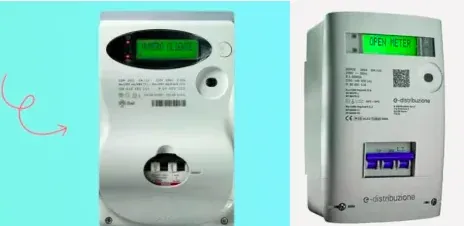
I would like to clarify that having two meters does not necessarily mean having two connections to the grid. But in most cases, it means you have a production meter (M2) and a distribution meter (M1). The grid connection and installation are unique, but there are two meters. Dual meters were required in all photovoltaic cases until 2018, if I’m not mistaken. And even today in some configurations (CERs required before ARERA Decision 57186, systems with bidirectional batteries, etc.).” Sergio Greco
An explanation from another reader using Spring
We have received several emails on the same topic, explaining the alleged impossibility of charging with self-generated renewable energy. For example, Renzo writes: “I have a photovoltaic system for 3 years (6kW with a 9.6 kWh battery), an electric Dacia Spring that’s been around for 4 years, and an induction cooker. In my own garage (in a condo), I normally charge my car using my Enel meter from the apartment. I’ll hazard a guess about the issue mentioned in the article... It probably refers to the need to install a second meter to power the battery charger. Of course, this second meter cannot use energy from the photovoltaic system. Only the apartment’s meter is authorized by Enel to handle incoming and outgoing energy flows. If the electrical line (properly sized) that powers the car’s battery charger is connected to”
The apartment meter has no legal restrictions. There are limits on the maximum power absorbed. You must charge using powers that match the house’s consumption. To balance the consumed loads (besides manually), there are countless devices and apps available on the market.How little they pay for electricity in Spain with renewables: article + VIDEO
Previous Article
Darkness Surrounds Luce (Ferrari) – What happened to it?