
The EU has tested two-way CCS charging. EV4EU concludes four years of operation.
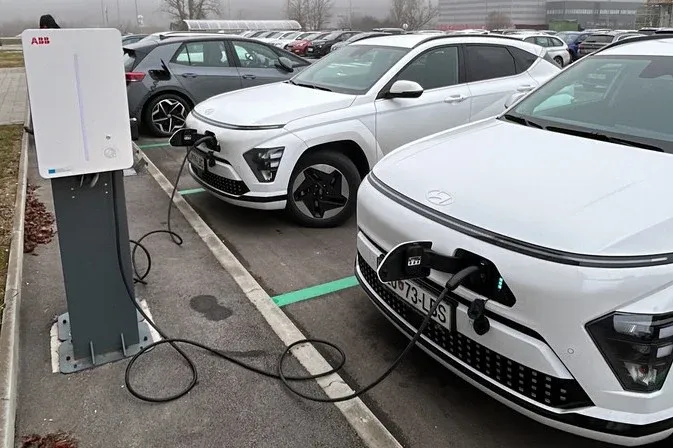
The European EV4EU project concluded on October 10, 2026, four years of work on two-way charging for electric vehicles. Partners developed a functional CCS charger prototype, created open-source software, and conducted tests in four countries. The European Union allocated approximately 9 million euros to the project.
EV4EU was coordinated by the Portuguese research institute INESC-ID. Sixteen partners and six associated organizations took part in the project. The goal was simple to describe but difficult to implement: an electric vehicle should not only draw power but also supply energy where it is needed.
Two-way CCS works, but it requires a complete ecosystem
The most tangible result is a fully functional prototype of a two-way DC charger using the CCS connector. Open-source software for station operators has also been developed, handling the communication needed for intelligent and two-way charging.
V2X encompasses various ways to utilize energy from batteries. V2G allows energy to be fed back into the grid, V2H powers homes, while V2B powers office or public buildings. V2L, already known from many mass-produced electric vehicles, is used to power devices such as tools and camping equipment, but it does not stabilize the grid on its own.
EV4EU also tested whether multiple cars could be connected to form a virtual power plant, allowing collective management of the battery capacity available to them. Project coordinator Hugo Morais suggested that such a model could increase revenues and bring direct benefits to users. A key requirement is that the cars must remain connected during designated hours, and drivers must agree to more flexible control over charging and discharging.
Four countries demonstrated various V2X applications
Tests were conducted in Portugal, Slovenia, Greece, and Denmark. In Portuguese homes and public facilities, smart and two-way charging reduced the average energy cost for households by 8.6%. Meanwhile, the use of renewable energy increased by as much as 21.9%.
In Slovenia, cars collaborated with virtual power plants and local energy trading platforms in schools and offices. Tests showed V2X to be superior to regular smart charging, which merely shifts electricity consumption to another time. In Athens, dynamic pricing and flexible power contracts helped reduce overload in public charging locations. The Danish pilot project involved groups of chargers in parking lots, where algorithms reduced uneven phase loading and improved local use of renewable energy.
The technology has thus passed practical testing, but widespread deployment still requires compatible cars, chargers, communication systems, billing rules, and incentives for drivers. Control systems must also take into account planned trips and additional battery usage. The next step is to develop larger installations tailored to the regulations and energy markets in various countries.
LovEV Newsletter
Want more content like this?
Sign up — we’ll send you a weekly summary once the newsletter starts.