
The EU and China will restrict the influx of hybrids. It is not about cutting existing exports by 50%.
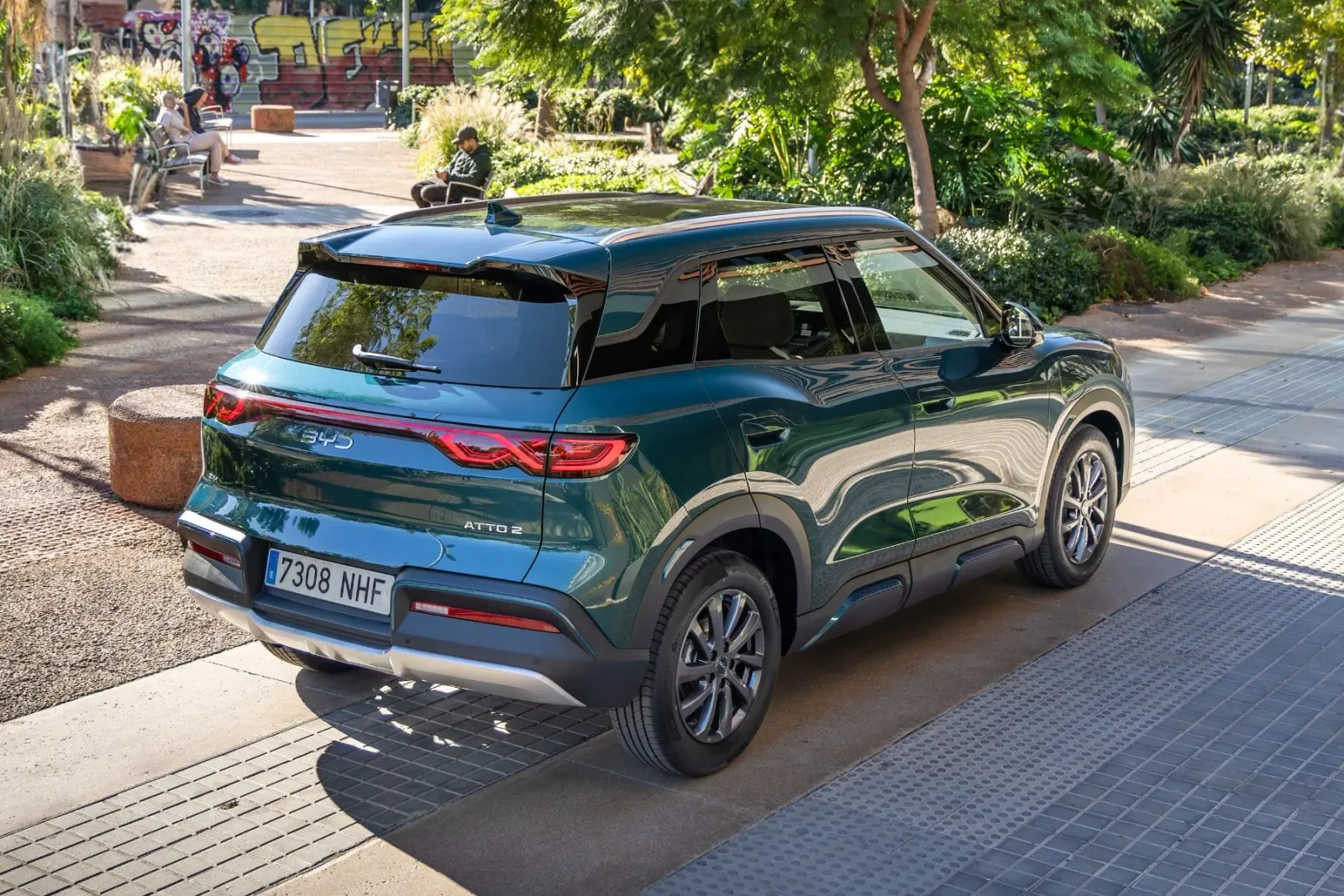
China and the European Union reached an agreement on October 9 regarding the export of Chinese hybrids to Europe. Over the next four years, their influx is set to be more than half lower than previously projected by the European Commission. This does not mean an immediate 50% cut in current exports, however.
Talks took place on October 8 and 9 in Beijing. Chinese Trade Minister Wang Wentao and EU Commissioner for Trade and Economic Security Maroš Šefčovič attended. The details of the mechanism have not yet been released, but both sides declare that the solution will comply with the rules of the World Trade Organization.
There will be fewer Chinese hybrids, but still higher than predicted
Initial reports suggested that exports of HEV and PHEV vehicles from China would simply be cut in half. Šefčovič’s explanations paint a more complex picture. Over the next four years, the number of vehicles sent to the EU is expected to be over 50% lower than the European Commission’s internal forecast, not compared to current export levels.
The difference is crucial. If the Commission had assumed continued rapid growth in deliveries, the agreed mechanism could only slow down the expansion rate without resulting in a real decline relative to 2026. The commissioner spoke of millions of vehicles but did not disclose either annual limits or the baseline level used in the calculations.
Schefčovič must now present the results of discussions with the European Commission president and member state leaders. The implementation rules for the agreement are set to be published only after EU procedures are completed. At this stage, it is unclear whether quantitative limits, tariff quotas, minimum prices, or other import control mechanisms will be introduced.
Brussels has previously considered several solutions. In September, it planned to ask China to voluntarily restrict exports, to which Beijing responded that such a move would violate WTO rules. According to Bloomberg, the Commission was also preparing protective measures based on tariff quotas. These would allow a certain number of cars to be imported under current conditions, with higher tariffs taking effect once the limit is exceeded.
PHEVs from China quickly dominated the European market
The talks did not emerge out of nowhere. According to CPCA data, in the first eight months of 2026, China exported 1.56 million cars to the EU. Among them were 630,000 electric vehicles, 490,000 plug-in hybrids, and 270,000 conventional hybrids. PHEV exports increased by 179% year-on-year, while HEV exports rose by 142%.
ACEA states that in the first half of 2026, Chinese brands already held a 14% share of the European hybrid market. Their share in the plug-in segment reached 25%, compared to around 2% in 2024. Meanwhile, Reuters reported an 86% increase in PHEV imports into the EU over the 12 months ending in September 2026. More than half of these cars came from China.
Hybrids have become a way for Chinese manufacturers to continue expanding after the EU imposed additional tariffs on electric cars produced in China. New talks do not end that dispute. Beijing and Brussels are still working on price commitments from manufacturers that could partially replace anti-subsidy tariffs with minimum import prices.
A separate element of the agreements concerns the supply of rare earth metals and permanent magnets. China has pledged to maintain what is known as the green channel, which aims to speed up the issuance of export licenses for materials destined for the EU. This is important for electric motor manufacturers, but again, no new deadlines or guaranteed volumes have been set.
The next ministerial meeting is scheduled for January 2027, with the third regular trade mechanism meeting planned for March. It will be only after the rules are published that it will become clear whether the EU will actually limit the number of Chinese hybrids or primarily curb their projected sales growth.
LovEV Newsletter
Want more content like this?
Sign up — we’ll send you a weekly summary once the newsletter starts.