
It has 24,000 kWh, equivalent to 400 electric cars: Astilleros Ría de Vigo is building the ship with the world’s largest battery
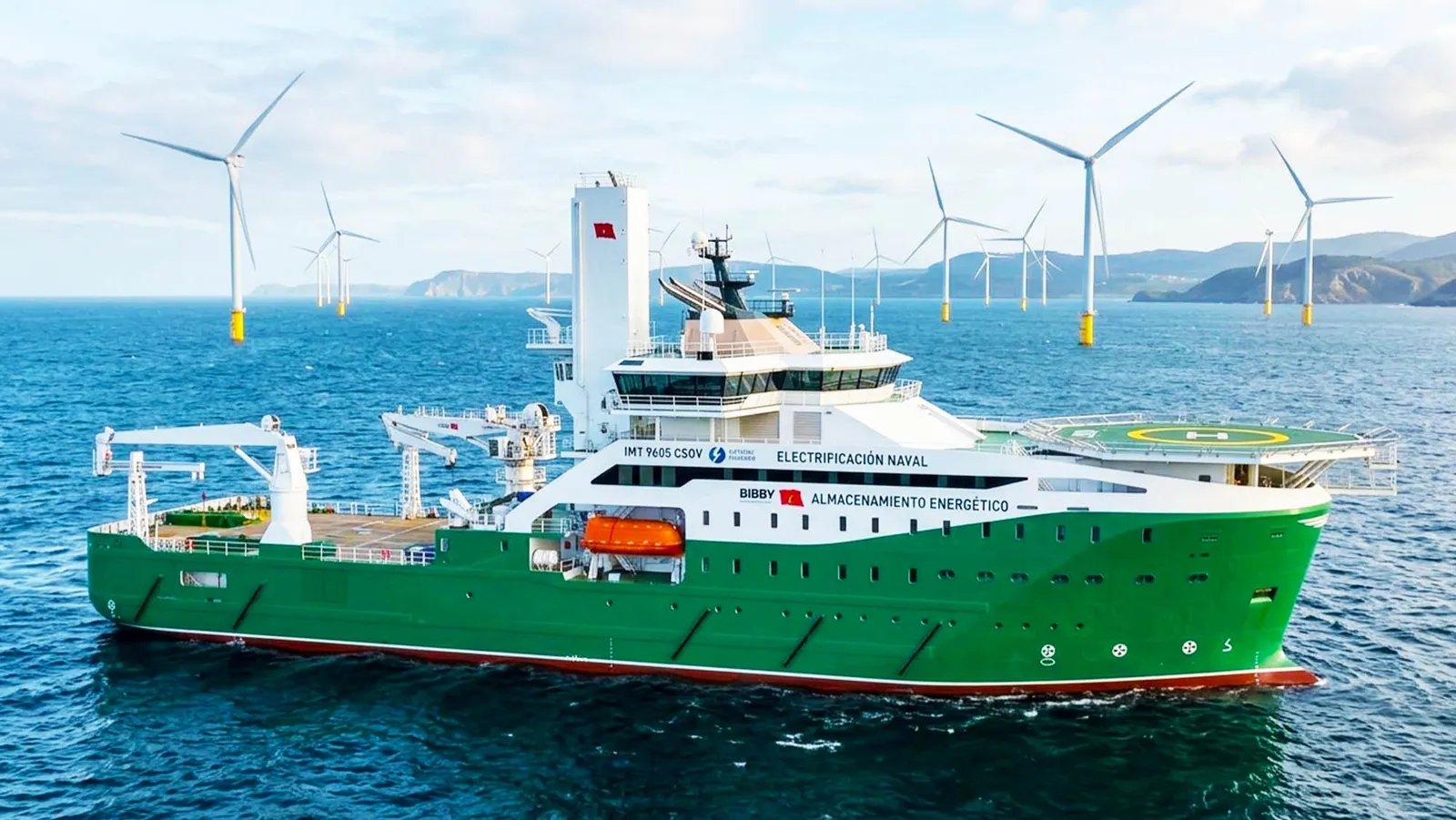
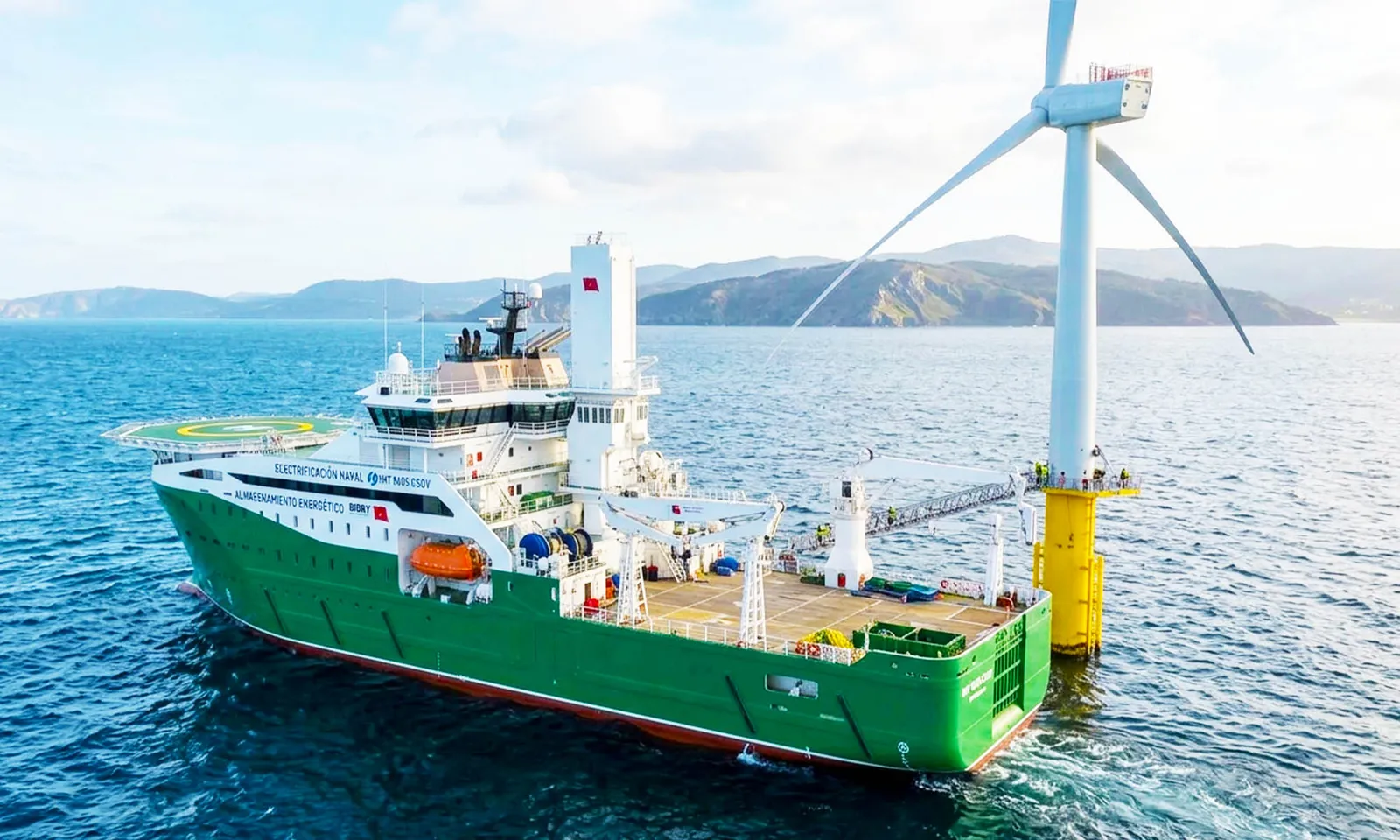
Vigo is building an electric ship designed to become a global benchmark for the maintenance of offshore wind farms. It is an Electric Commissioning Service Operation Vessel (eCSOV) developed for the British company Bibby Marine, designed by Seaplace, and currently under construction at Astilleros Ría de Vigo, part of the Armón Group.
The project has received support from Iberdrola, whose executive president, Ignacio Galán, visited the Vigo facilities to oversee the progress of the ship and its propulsion and energy storage systems.
Over 24 MWh of battery capacity
The goal is to bring electrification to an activity that is essential for the operation of offshore wind farms: transporting workers, equipment, and materials, as well as providing support to wind parks located at sea.
The most striking feature of the ship is its massive storage system. The project is equipped with a battery capacity of over 24 MWh, which, according to its proponents, will give it the largest electrical storage capacity in its class.
There is a discrepancy between the figures published at different stages of the project. Cesce specified a system of 24.8 MWh, while Bibby Marine’s current technical specifications list a 22.4 MWh LFP battery. Iberdrola’s latest announcement again states that the capacity exceeds 24 MWh.
The lithium-iron phosphate battery will power the ship’s electric propulsion system. The system also includes two generator sets of 3,480 kW each, designed to use methanol and diesel, along with two azimuth thrusters of 2,000 kW each.
The design allows the batteries to be charged at sea using electricity generated by the wind farms themselves. This enables the ship to reduce the need to return to port solely for refueling or recharging.
A ship built to operate for days at sea
The eCSOV is approximately 89.6 meters long, 19.8 meters wide, and has a draft of five meters. It has a load displacement of around 2,250 tons and a gross tonnage of approximately 6,750 tons. It features about 500 m² of cargo deck space and dedicated areas for storing electrical equipment.
Your mission is to operate as a support vessel for offshore wind farms. It can transport specialized personnel, tools, spare parts, and equipment needed for the commissioning, maintenance, and repair of wind turbines.
Bibby Marine offers an electrical autonomy of up to 24 hours, while its combined energy systems enable extended periods of operation at a wind farm. Cesce states in the project financing information that the operational autonomy can reach up to 28 days.
The use of methanol-powered auxiliary engines provides exactly the necessary backup when weather conditions or infrastructure availability prevent electrical recharging at sea.
66 million euros in funding
The vessel also holds significant industrial and financial importance. Bibby Marine signed the contract for its construction with Astilleros Ría de Vigo in November 2024.
The project received approximately 22 million euros in subsidies from the UK’s Zero Emission Vessels and Infrastructure (ZEVI) program. This amount is supplemented by Bibby Marine’s own funds and bank financing. HSBC UK provided a loan backed by Cesce through a buyer’s credit insurance policy.
The construction of this ship makes Vigo one of Europe’s centers capable of handling highly complex technological naval projects related to the decarbonization of maritime transport.
Iberdrola’s interest in this project is directly linked to the growth of its offshore business. The company currently has 3,200 MW of offshore wind capacity installed in the United Kingdom, the United States, Germany, and France, associated with investments of around 13 billion euros.
An additional 2,700 MW will be added through the East Anglia 2 and East Anglia 3 projects in the United Kingdom, as well as the Windanker project in Germany. The additional investment expected is around 10 billion euros.
The development of this infrastructure requires an increasingly sophisticated logistics chain. Operation ships are a crucial element because they allow technicians and equipment to remain at the wind turbines for extended periods, reducing travel time and increasing the availability of the installations.
Iberdrola also has a new project ready for the British market. East Anglia 1 North, with a capacity of around 900 MW, already has the necessary permits and is prepared to compete in upcoming offshore wind auctions in the UK.
The company is also working on projects in other markets, including Australia, as it continues to expand its international offshore wind portfolio.
Meanwhile, Iberdrola’s strategic plan includes an investment of 21 billion euros in renewables and customers, with 38% allocated to offshore wind. The company aims to reach over 60 GW of installed capacity by 2028, with 90% being emission-free.