
It’s 13 years old and has over 400,000 km on it: this is the current state of the Tesla Model S battery that defies time.
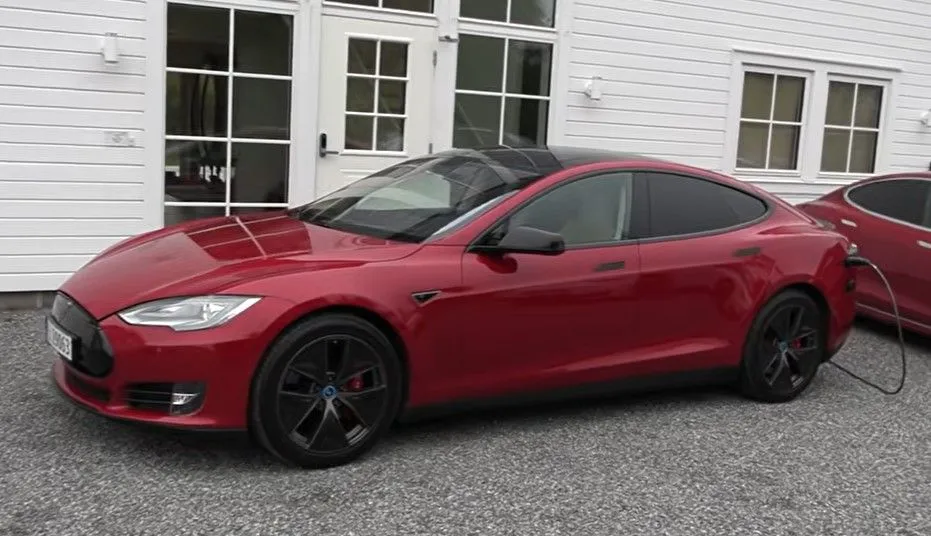
There are cars that age well and others that seem to refuse to do so at all. The Tesla Model S in this story clearly belongs to the latter group. When it hit the market in 2013, it represented a true revolution with its combination of range, performance, and technology, to the point where it became one of the electric cars that helped change perceptions about this type of vehicle.
More than a decade later, the car known as the Millennium Falcon, owned by Norwegian YouTuber Bjørn Nyland, is still in use. And it’s not just sitting around as a collectible in a garage. The Model S has already covered over 416,000 kilometers, though its current battery hasn’t traveled that distance since the original pack was replaced when the car was barely a year old and had only covered about 86,000 kilometers.
The result of the latest test is particularly interesting because it shows how one of the first mass-produced electric cars ages. Nyland had already subjected this same Model S to a range test five years ago, and now he repeated the experiment to see what had happened since then.
Over 400,000 kilometers and a battery with plenty of life left
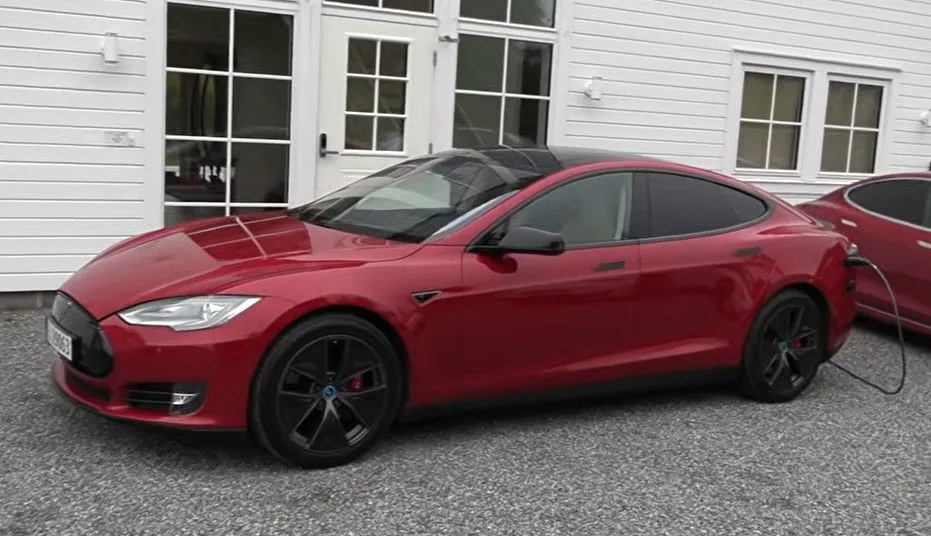
Nyland’s Tesla Model S P85 is one of the first units produced. The model began deliveries to Europe in Norway in 2013, a market that from the start became one of Tesla’s key expansion areas. The first European delivery took place in Oslo on August 7 of that year, and the Model S arrived with specifications that were far ahead of most other electric vehicles at the time.
In that first generation, there were 60 and 85 kWh versions, along with the P85 and P85+ variants. The P85 featured a single electric motor located at the rear axle and stood out for its performance, while the large battery size of that era allowed for long-distance trips with a confidence that was still uncommon among electric cars.
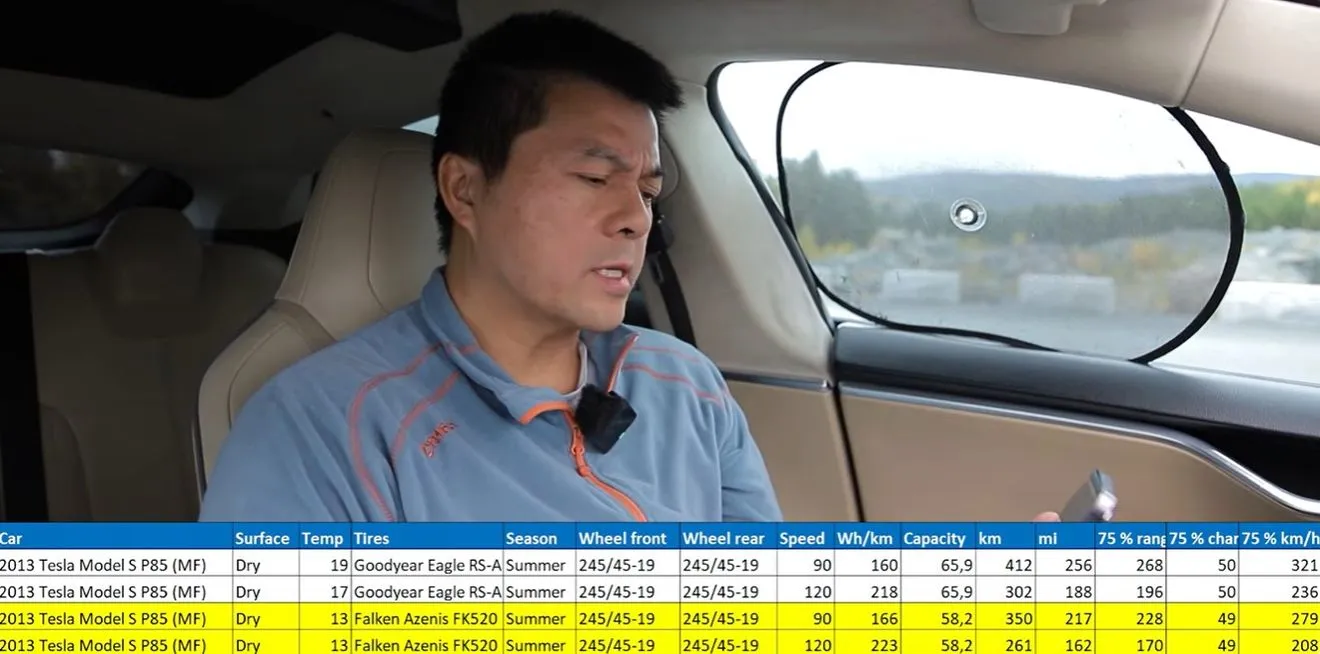
Nyland’s car underwent its first autonomy test in 2021. At that time, the battery degradation was estimated to be around 11%. Five years later, the reading is much less favorable: the degradation is now around 21%, leaving approximately 79% of the original capacity available.
There is an important detail that changes the perspective of these figures. The battery currently installed in the Model S is not the one that came out of the factory. The original battery was replaced after about 86,000 kilometers, meaning the battery installed now has traveled approximately 330,000 kilometers.
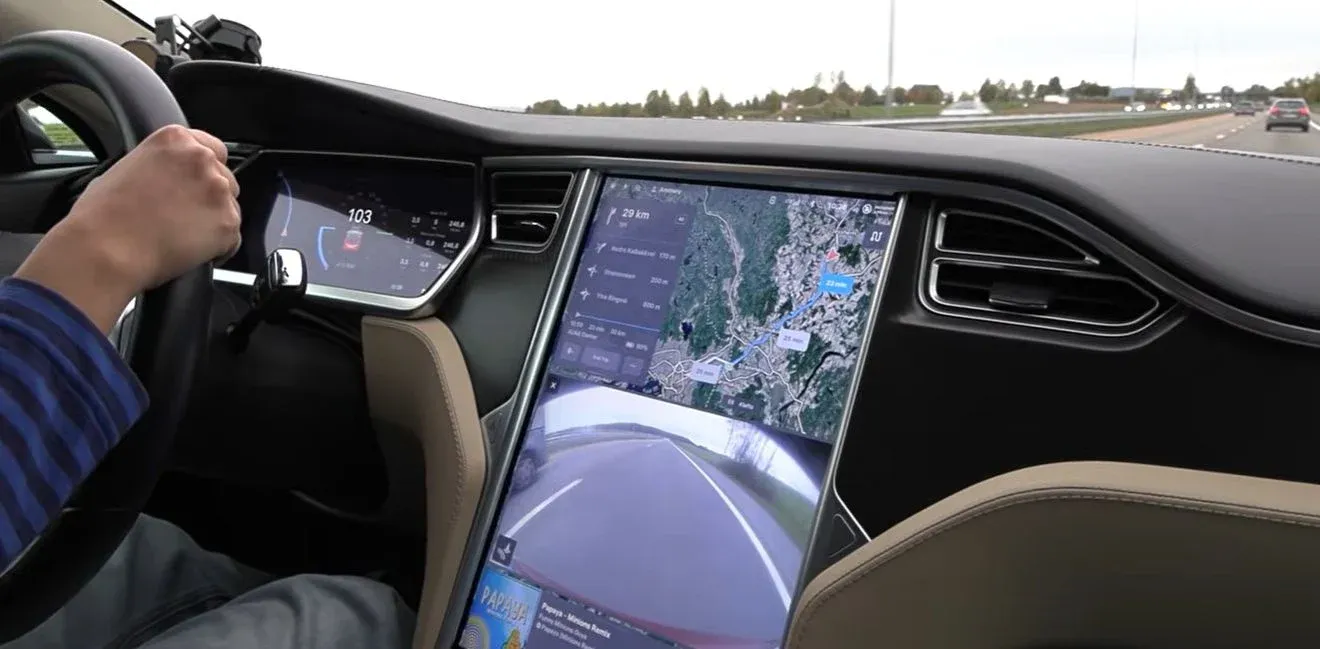
During the test, Nyland managed to obtain a capacity reading of around 58 kWh, compared to the original approximate 85 kWh. The tester himself warns that these figures can be affected by losses during charging and by the conditions under which the measurement is taken, so they should not be interpreted as laboratory-grade readings.
There is also a possible explanation for the deterioration observed in recent years. The owner admits that the battery was left at an extremely low charge level for an extended period, which they believe may have accelerated its degradation. This is an important detail, as battery wear does not depend solely on the number of kilometers driven—time, temperature, and usage and charging habits also play a role.
The fuel consumption test yields a much more positive conclusion as well. At 90 km/h, the Model S recorded a corrected consumption of approximately 16.6 kWh/100 km, a solid figure for a 5-meter-long sedan from that era.
At 120 km/h, the corrected fuel consumption was around 22.3 kWh/100 km, although Nyland admits that the driving conditions were affected by traffic and he couldn’t always maintain the intended speed exactly. In any case, the results show that the battery’s aging has not resulted in a noticeable decline in the car’s energy efficiency.
In fact, that is probably one of the most interesting conclusions from the entire test. The Model S is still able to move with reasonable fuel consumption despite having a rear induction motor from a much older generation than the systems currently used by Tesla and other manufacturers.
Aerodynamics also work in its favor. The original Model S had an aerodynamic coefficient of around 0.24, a figure that was already extraordinarily good when it was introduced and that continues to have a very noticeable effect when driving at constant speeds. The car may not have the efficiency of newer models, but it isn’t starting from a poor base either.
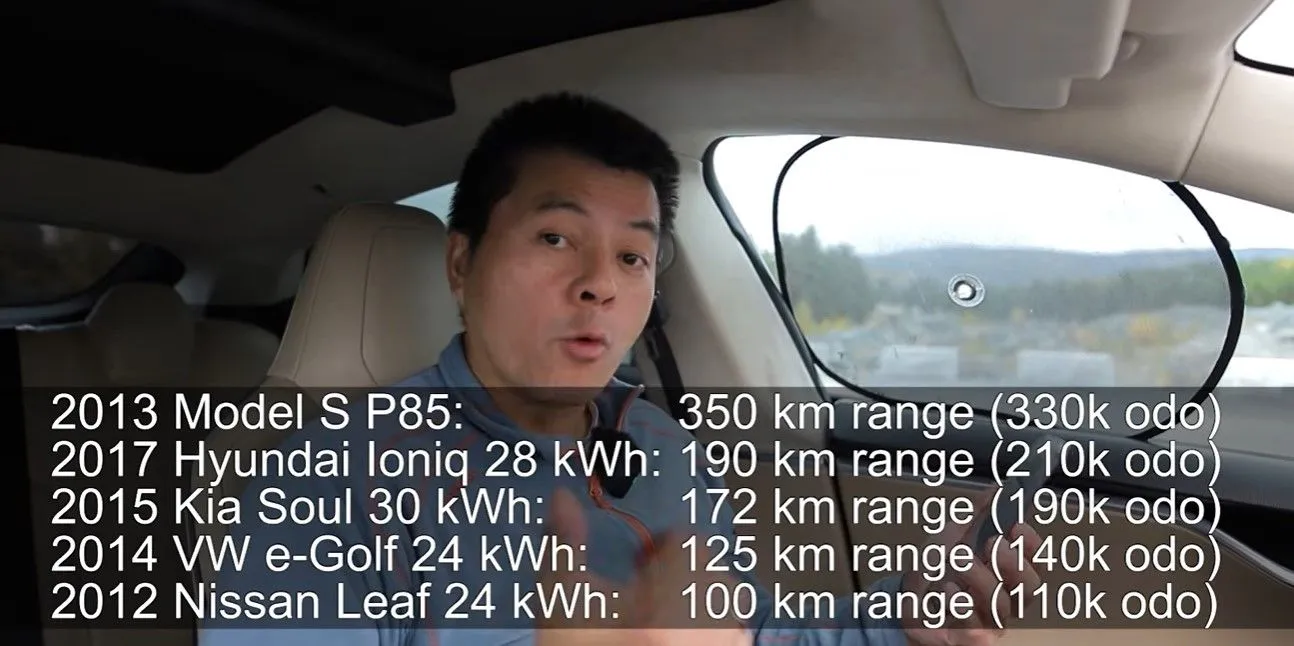
In the test, the Model S achieved a real-world range of nearly 350 kilometers under typical testing conditions. For a 2013 car with over 400,000 kilometers driven and a battery that has lost a significant portion of its capacity, the result is hard to consider poor.
Especially when we consider what it was compared against. When the Model S launched, other electric cars such as the Nissan Leaf, Kia Soul EV, or Volkswagen e-Golf offered much more limited driving ranges. The Model S combined a large battery, spacious body, high efficiency, and a charging network that made long trips much easier. That initial advantage still has lasting effects more than a decade later.
Nyland himself admits that although the battery has lost some capacity and its charging speed is not what it was when the car was new, the Model S remains fully functional for long trips and especially for everyday use. In his case, the range available is more than sufficient for most trips, and he usually doesn’t even need to charge outside the home.
Fast charging also reflects the passage of time. During testing, the car managed to exceed 100 kW at times, though it needs its battery to be at a sufficiently high temperature to achieve the best results. Another aspect that shows how technology has evolved, even in a Tesla that has somewhat stagnated in this regard.
In terms of technology, one of the biggest differences lies between a car’s outdated technological level and its ability to remain useful. This Model S lacks many features that we consider standard today. It has no adaptive cruise control or the advanced driving assistance functions found in modern Teslas. It also lacks much of the hardware that was introduced later in the model lineup.
However, it retains features that will age much more slowly: a large body, an enormous trunk opening, good aerodynamics, a high-capacity battery, and a propulsion system that remains sufficiently efficient.
Nyland even suggests replacing the current battery pack with a 90 kWh battery in the future. According to him, this option would allow for a significant increase in range without encountering the weight and certification issues associated with an even larger battery. In certain 90 kWh versions, the charging power could also be higher than what’s currently available in its car.
The story of the Millennium Falcon is therefore much more interesting to explore than just looking at the distance it has traveled in kilometers. The Model S has not been spared by the passage of time. It has lost about one-fifth of its current battery capacity and now faces limitations that did not exist years ago, yet after over 416,000 kilometers, it remains a fully functional car.
And that is precisely what is striking when viewed from 2026. The Model S that arrived in Europe in 2013 was designed at a time when electric cars were still considered primarily an urban alternative. Thirteen years later, one of those early models continues to travel long distances, proving that a degraded battery does not necessarily mean an electric car has reached the end of its useful life.
Nyland’s Model S P85 is far from perfect, and its battery no longer has the capacity it had when it was new. But after over four hundred thousand kilometers, it can still travel hundreds of kilometers on a single charge and maintain energy consumption that many modern electric cars couldn’t match by a huge margin. For a car designed over a decade ago, it’s not bad at all.
