
It has a range of 1,008 km and an energy consumption of 11.5 kWh/100 km; BYD’s best electric car is about to be unveiled.
11/10/2026 20:30
Updated to
11/10/2026 20:30
After months of anticipation, BYD will finally launch its new electric flagship on October 13, 2026: the BYD Da Han. Ahead of its debut, two key figures have been revealed: an aerodynamic coefficient of 0.197 Cd and an official fuel consumption of 11.5 kWh/100 km for the rear-wheel-drive version with a range of 1,008 km. For a sedan over five meters long, these are quite impressive figures.
The BYD Da Han launched its pre-order campaign in China last August with prices ranging from 249,900 to 299,900 yuan, which is equivalent to between 32,487 and 38,987 euros based on the current exchange rate. BYD will announce the final selling prices on the day of launch, with the first deliveries to customers arriving within two weeks. It should be noted that the launch will initially be limited to the Chinese market, although BYD is considering exporting it in the future.
Elegant exterior and luxury interior
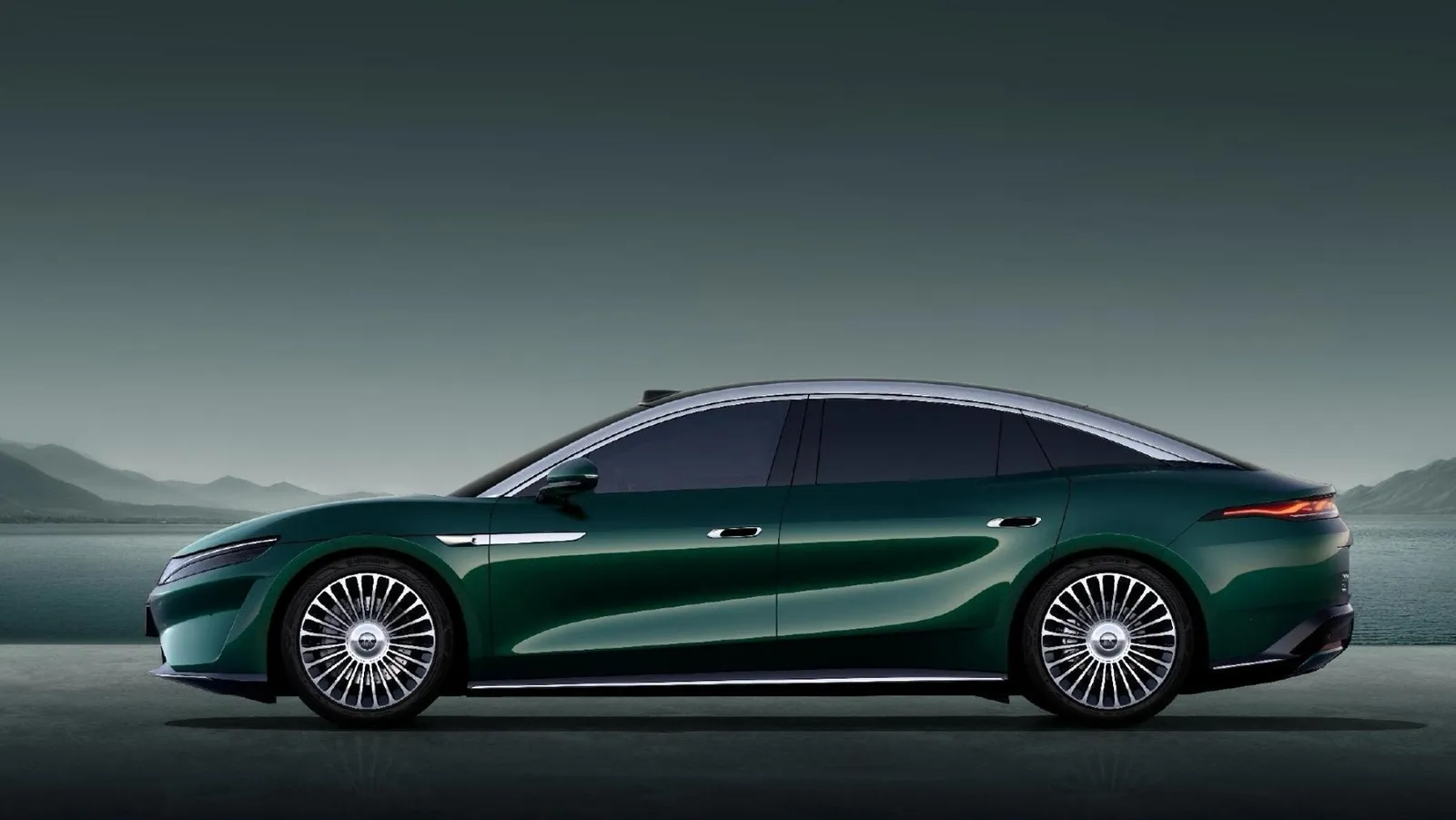
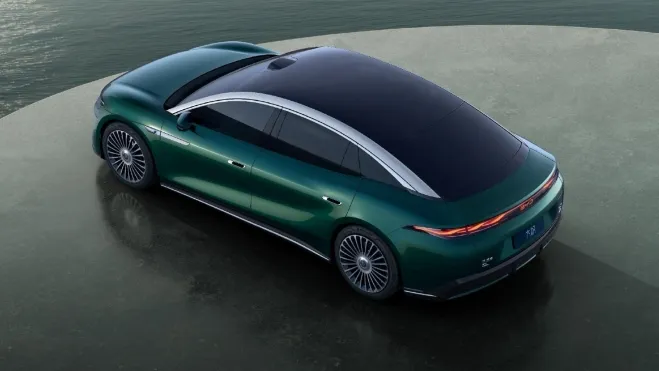
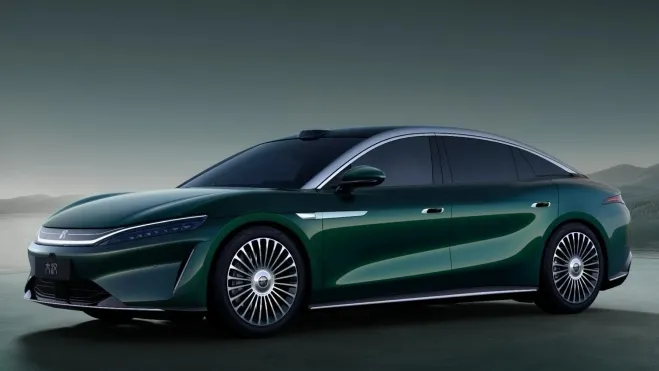
The Da Han is BYD’s largest sedan. It measures 5,256 mm in length, 1,999 mm in width, and 1,510 mm in height, with a wheelbase of 3,130 mm. Its aerodynamic coefficient of 0.197 Cd is one of the model’s most notable efficiency figures and helps explain the fuel consumption and range numbers reported by BYD.
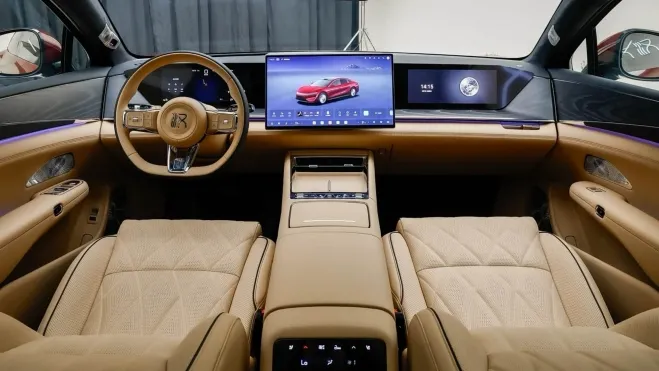
Inside, the Da Han features a 17.3-inch floating central screen with 3K resolution and the DiLink 300 system. The audio setup includes a Devialet 7.1.4 system with 31 speakers. Standard amenities consist of Nappa leather upholstery, zero-gravity front seats, and an active fragrance system. The driving assistance uses BYD’s DiPilot system, marketed in China as God’s Eye 5.0, equipped with a laser radar (LiDAR) on the roof. It offers highway and urban navigation assistance, as well as automated parking.
Three versions powered by a 102.3 kWh Blade battery
The Da Han was designed to be entirely electric. All versions are equipped with a second-generation Blade battery made of lithium iron phosphate (LFP), boasting a capacity of 102.3 kWh. The range comes in three configurations:
1008km RWD Premium: It features a 503-horsepower engine with 500 Nm of torque. It accelerates from 0 to 100 km/h in 4.9 seconds and has an approved fuel consumption of 11.5 kWh/100 km, along with a CLTC range of 1,008 kilometers (about 820 km under WLTP).
1008km RWD Flagship: It offers the same powertrain but includes additional features for the rear passengers. It also has an official CLTC range of 1,008 kilometers.
880km AWD Flagship: it is the most powerful model in the car lineup. It features a twin-motor system with 775 horsepower and 910 Nm of torque, enabling it to accelerate from 0 to 100 km/h in 3.3 seconds. Its fuel consumption reaches up to 13.1 kWh/100 km, with a range of 880 kilometers according to the CLTC standard (around 715 km under WLTP).
Charging in nine minutes and rear-wheel drive
Equipped with the latest generation of in-house batteries, the BYD Da Han is fully compatible with ultra-fast charging systems (Flash Charging). The battery can go from 10% to 97% of its capacity in just nine minutes at compatible high-power charging stations. Combined with a WLTP range of over 800 kilometers in the rear-wheel-drive versions, BYD’s offering aims to eliminate concerns both about range and charging time.
BYD has confirmed that chassis hardware and driving assistance features will be standard across the entire range. All Da Hans are equipped with a rear-wheel steering system with a turning radius of 4.95 meters. This is paired with a dual-chamber DiSus-A air suspension system.
A successor for a declining Han family
BYD positions the Da Han above the current Han electric vehicle, whose sales have plummeted this year. The standard Han sold between 7,000 and 8,900 units per month by the end of 2025, but in 2026 sales dropped to around 3,000 units. In August, only 2,997 units were delivered, a 61.4% year-on-year decline. The Han L saw an even steeper drop: 205 units in August, a 90.7% decrease.