
Tesla: An investigation reveals how Elon Musk is pressuring Europe to adopt his autonomous driving system FSD
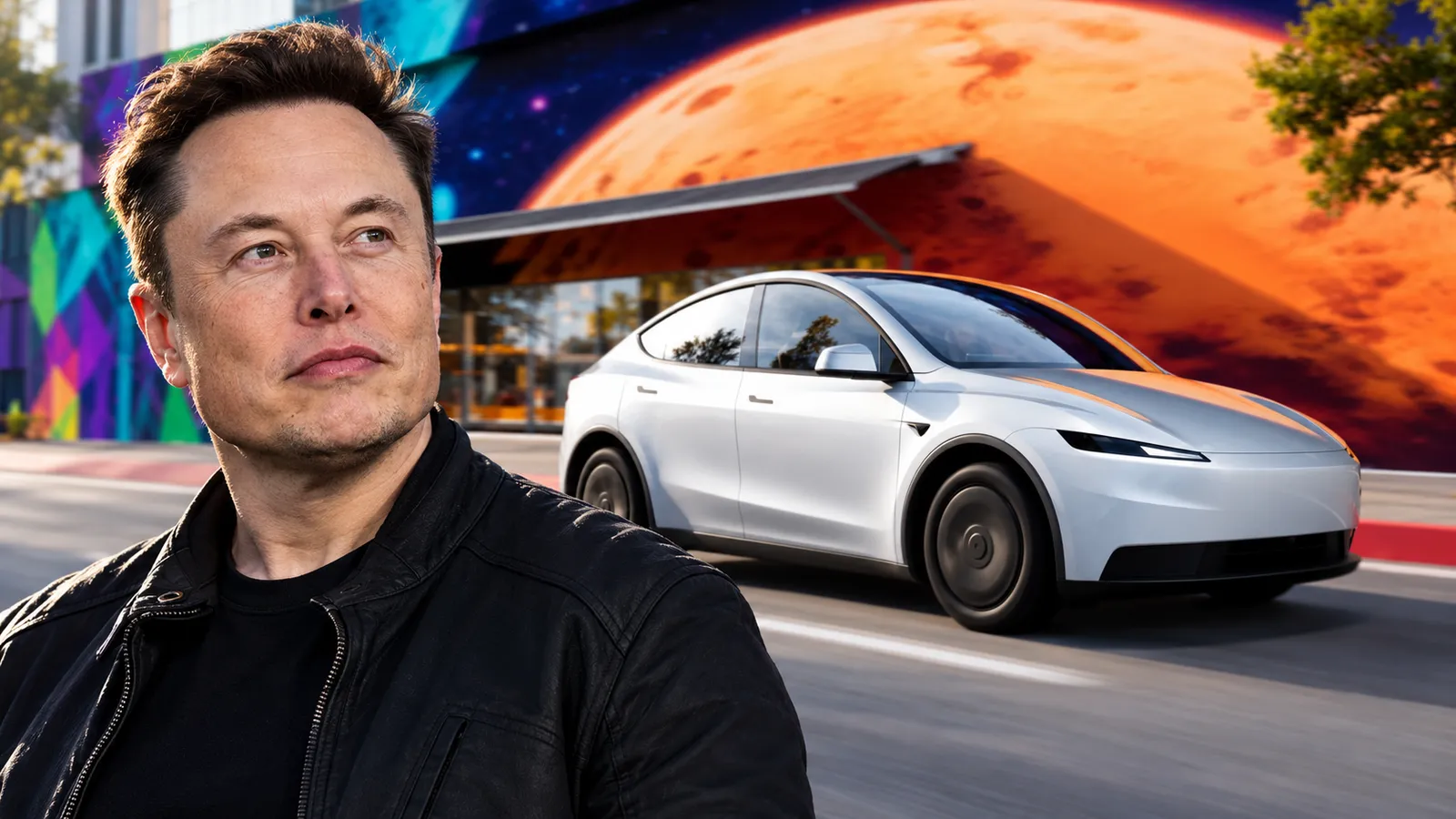
Tesla aims to obtain approval as soon as possible to deploy its autonomous driving system (the well-known FSD) across Europe. To achieve this, the American automaker has exerted significant pressure on authorities, particularly in the Netherlands, while presenting safety arguments disputed by several researchers. A Reuters investigation reveals the behind-the-scenes efforts of this campaign, which also directly affects France.
Tesla has yet to receive the necessary approval to offer its Full Self-Driving (FSD) on a large scale within the European Union. However, the company seems determined to speed things up. A Reuters investigation, based on hundreds of pages of correspondence between Tesla and several national authorities, reveals the methods used by the company to persuade regulators.
Tesla reportedly secured concessions in the Netherlands
The Netherlands plays a central role in this matter. The RDW (Rijksdienst voor het Wegverkeer), the local certification agency, granted approval for the deployment of FSD, thereby paving the way for an EU approval process. But the documents obtained by Reuters raise questions.
In April 2025, the Dutch regulator issued a bill of 365,000 euros to Tesla, covering five months of work from November 2024 to March 2025. Tesla considered this amount excessive and refused to pay the bill until RDW provided a detailed breakdown of the hours worked, hourly costs, and the qualifications of the staff involved. A week later, RDW offered Tesla to reduce or adjust the scope of certain inspections in order to lower costs. This raises questions about the independence of the approval process.
Tesla didn’t just dispute the costs. The company also requested to know in advance the exact nature of certain tests. It demanded that written approval from Tesla be obtained before those tests were carried out...
Safety figures that don’t convince
To defend its system, Tesla regularly claims that FSD could prevent many accidents and save lives. But the seven road safety researchers consulted by Reuters believe that the European data presented by the automaker does not allow these benefits to be proven.
The internal study conducted by Tesla relies mainly on indirect indicators, such as sudden braking, rapid acceleration, or the use of the horn. Another limitation cited by Reuters is that the vehicles equipped with FSD were driven by professionals who were particularly familiar with the system. Therefore, these results are not sufficient to establish that FSD actually reduces the number of fatal accidents.
Finally, the investigation shows that Tesla did not merely negotiate directly with regulators. At the shareholders’ meeting in November 2025, Elon Musk publicly encouraged European Tesla owners to pressure their authorities to speed up the approval of FSD. Reuters found dozens of messages sent to Swedish and Norwegian officials, among others.
Some drivers echoed the manufacturer’s arguments, accusing authorities of putting lives at risk by delaying the rollout of the system. A Norwegian official even admitted that this campaign forced his department to spend a lot of time responding to uninformed drivers...
Elon Musk Also Exerts Pressure on France
This offensive has also crossed our borders. In July, Tesla’s CEO directly criticized French Transport Minister Philippe Tabarot following his reservations about the deployment of FSD. Musk believed that delays in approving it could cost lives. Since then, the French minister’s stance has changed.
In September, Philippe Tabarot mentioned constructive discussions with Elon Musk and potential changes that could allow France to support the approval. Was he influenced by Elon’s objections?
Germany backs Tesla
Especially since Tesla has just received significant support. On October 6, 2026, Germany’s Transport Minister, Steffen Bilger, announced his intention to accelerate the approval of FSD across Europe. After several discussions with the company in September, Berlin believes it has found common ground on technical and regulatory issues. This turn of events is quite favorable to Musk, who praised the announcement on X.
Also read
Tesla FSD: Speeding issues that could complicate its rollout in Europe
The agreement stipulates that the system may exceed speed limits by up to 10%, an issue that had previously been controversial. Tesla also proposed renaming its feature “Tesla Assisted Driving,” a name less misleading than “Full Self-Driving” that could reassure European authorities.
In short, with Germany’s support and the evolving French stance, Tesla seems to be in a strong position in its pursuit of European approval. But nothing is yet guaranteed. The vote originally scheduled for October has been postponed and is not expected until December 2026. Stay tuned!