
Tesla is preparing another revolution in its production: it now wants to simplify a key part of the car
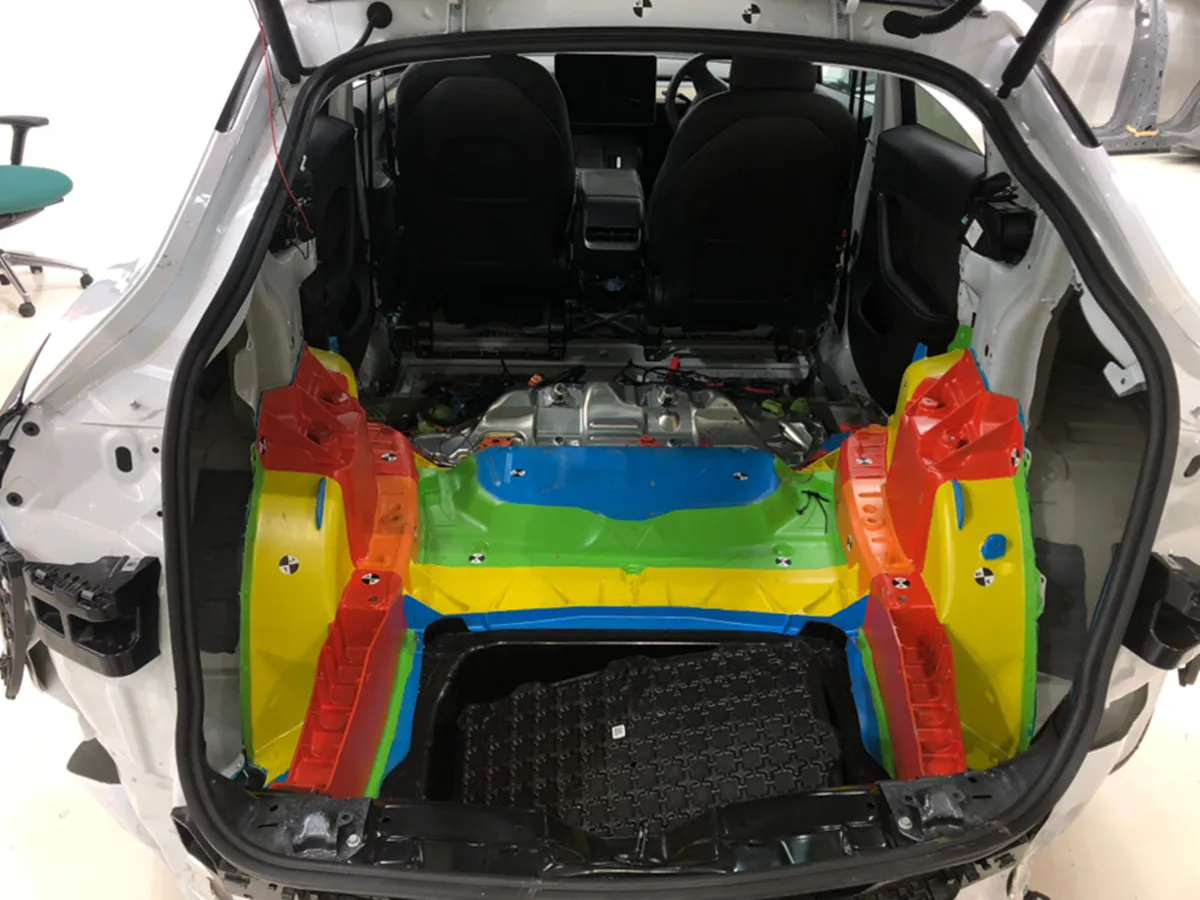
For Tesla, simplifying the manufacturing of its cars is almost an obsession. The company has been seeking new ways to reduce the number of parts needed to build its vehicles for years, with solutions such as gigacasting, which allows large sections of the body to be manufactured as a single piece using a massive press. Now, a new patent suggests that the American manufacturer could apply this same philosophy to another less visible but important area of the vehicle’s structure.
The proposal focuses on the firewall panel that separates the cabin from the front compartment, located in the driver’s foot area. This is a structural element that traditionally requires numerous metal parts and welding operations to complete its fabrication. Tesla proposes an integrated solution that could reduce this complexity and simplify the production process.
The goal is to decrease the number of components, limit welding operations, and ease work on assembly lines. A simpler structure might also help improve manufacturing precision and reduce weight, though the actual benefits will depend on how the proposal is implemented and whether it makes it to production models.
The goal: fewer parts and simpler manufacturing.
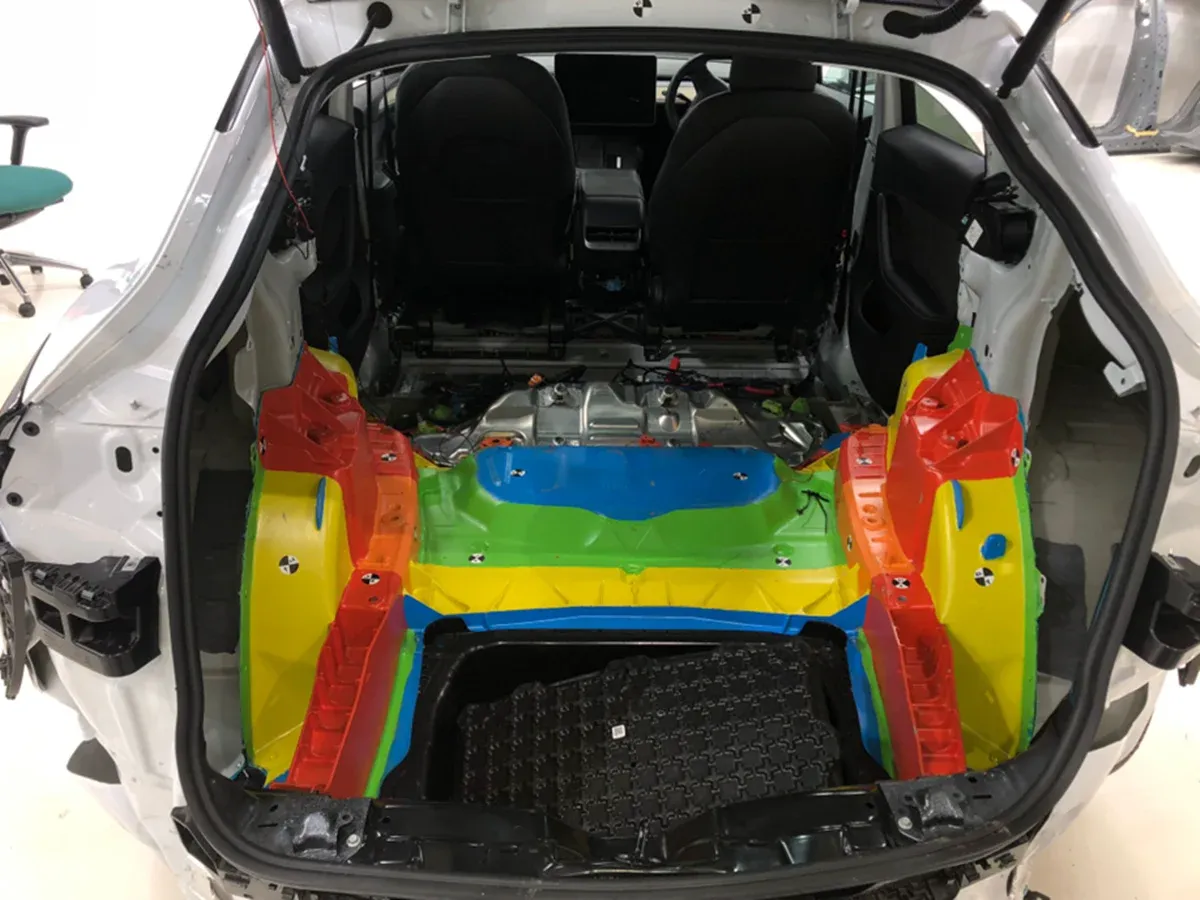
This approach aligns with the strategy Tesla has been using in its factories for some time. Gigafounding allows replacing sets of stamped and welded parts with large components manufactured all at once. If this same logic is applied to other areas of the vehicle body, the manufacturer could reduce the number of operations needed to assemble each car, resulting in time and cost savings.
Reducing joints could also enhance the rigidity and precision of the assembly, while helping to lighten the vehicle. However, these benefits are not guaranteed just by using an integrated part—they depend on the design, materials used, and how the structure performs under various conditions. There is also no data available to quantify exactly how much weight or cost Tesla could save with this solution.
Tesla might be exploring a new way to simplify its vehicles, though it remains unclear whether this approach will make it to mass production and in which models it might be introduced. The question is how far the brand is willing to take its integration strategy: after large body panels, which other components will end up forming a single unit?