
Tesla Executive: Why the Company Wants to Manufacture Batteries in Grünheide
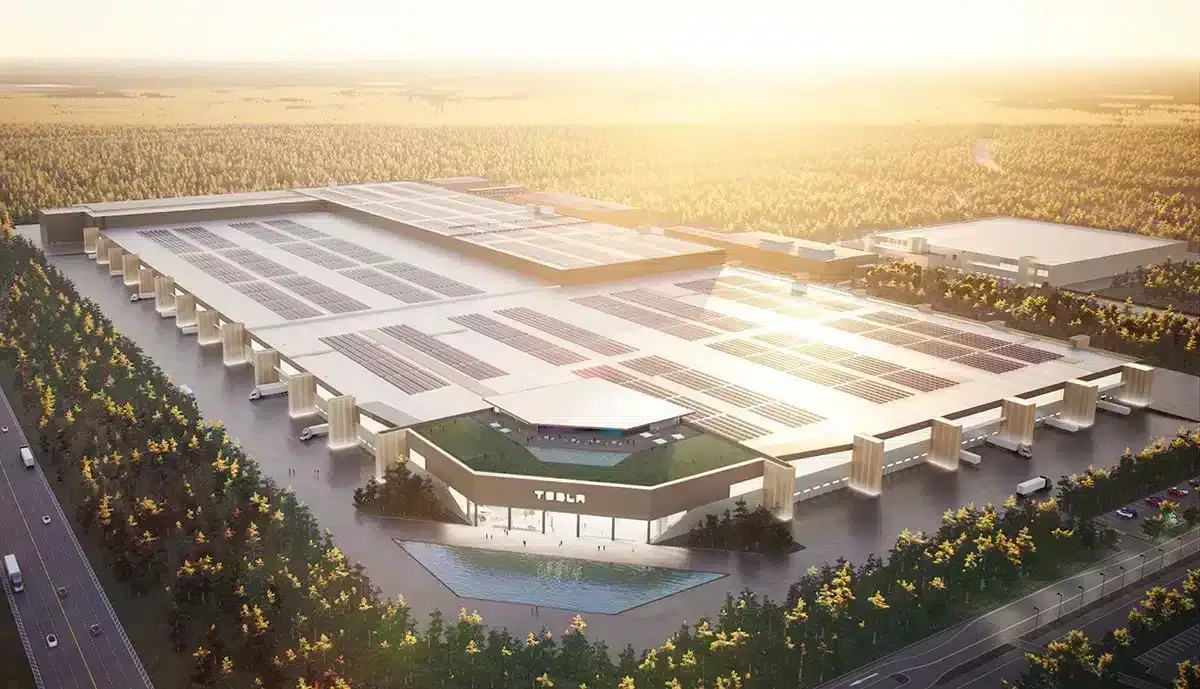
Image: Tesla
Tesla will begin producing its own 4680 battery cells at its factory in Grünheide, Brandenburg, starting in 2027, aiming to increase capacity to up to 18 GWh per year. Robert Meyer, Cell Factory Lead at Tesla Manufacturing Brandenburg, discussed this in detail with Battery-News.de.
Cell production is part of the strategy to build supply chains locally and closely integrate manufacturing steps. This approach will enable the production of batteries and finished vehicles at a single location in Grünheide. The 4680 cell format, which will also be produced in Germany going forward, is Tesla’s latest proprietary battery design.
According to Tesla, direct cost comparisons make it difficult to assess cell manufacturing in Europe at present. Nevertheless, the U.S. electric vehicle manufacturer remains committed to this plan, citing resilience, reduced dependencies, and the development of deeper manufacturing capabilities and expertise. “From a purely cost perspective, it’s not very worthwhile. But for us, it’s a strategic decision,” Meyer told Battery-News.de.
Focus on rapid production scaling
Tesla considers transferring complex manufacturing processes to high-volume production crucial for building its cell factory. The company emphasizes adequate quality, high output, and a shortest possible ramp-up time. For Grünheide, it plans to leverage the experience gained from producing 4680 cells at its sister plant in Texas, where the associated challenges have already been resolved according to Meyers.
A key component of the planned production is the dry-electrode process, in which electrodes are manufactured without using the conventional solvent-based wet process. Since energy-intensive drying ovens can be eliminated, the space required, investment costs, and energy demand are expected to decrease. Additionally, costs associated with recovering toxic solvents are avoided. Meyer notes positive effects on production costs and the environmental impact of manufacturing.
Tesla also points to differences between Europe and the established battery ecosystems in Asia. While the factory in Shanghai sources cells from Chinese manufacturers, there is no comparable ecosystem of potential suppliers in Europe. Additionally, the company believes Europe is at a disadvantage in competition with China and the U.S., citing in particular the lack of output-based incentives for battery cells in the EU.
To manufacture cells at its Grünheide facility, Tesla plans to hire more than 1,500 additional workers. Experience in cell production is explicitly not a requirement for employment. Tesla relies on employees from various industries, career changers, as well as internal training programs.
For Meyer, speed is particularly important when launching a “Gigafactory” successfully: “Speed is critical. We must learn quickly from our mistakes and constantly question whether a problem can be solved even faster.”
Also interesting
About the author
Thomas Langenbucher is an expert in electromobility with experience in the automotive and financial industries. Since 2011, he has been covering electric cars, sustainable technologies, and mobility solutions on ecomento.de. Learn more.
Reader interactions
