
T&E: Europe has discovered the recipe for a zero-emission boom. Nearly 40 new projects in the first half of the year
In short:
A record number of new models are arriving at dealerships
The first half of 2026 saw nearly 40 new electric vehicle launches
The number of cheaper cars, priced around 25,000 euros, is increasing
This segment could become a driver for further electrification
A change or relaxation of CO₂ reduction targets could pose a threat, notes T&E
Europe is recording record sales figures. Affordable “electric cars” are driving the market
Until recently, manufacturers argued that European consumers were not ready for a mass shift to electric vehicles. Something seems to have changed, as this year’s data show a completely different market picture. According to the latest report by Transport&Environment (T&E), both the number of available models and electric vehicle sales, especially those at more affordable prices, are growing rapidly.
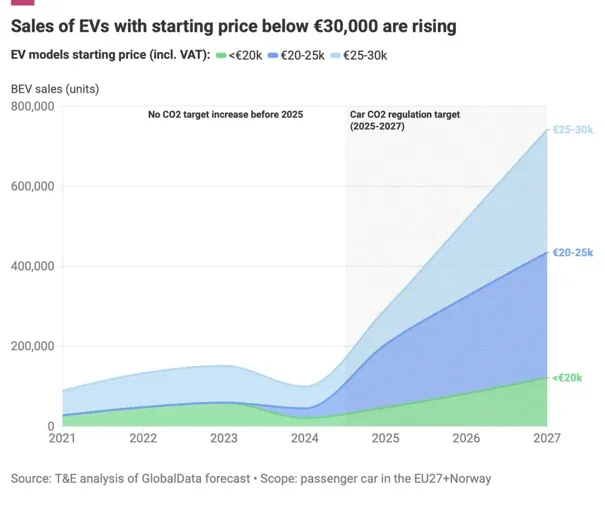
The “EV Progress Report: Don’t Stop Me Now, the EV Transition Is Delivering” shows that sales of battery-powered vehicles with a starting price below 25,000 euros, or around 110,000 złoty, are set to increase sevenfold this year compared to 2024. This is due to the rapidly expanding range of offerings from manufacturers and EU emission regulations that encourage companies to bring new vehicles to market.
Note that the first half of 2026 saw nearly 40 new electric vehicle models launched. As a result, the number of mass-produced battery electric vehicles (BEVs) exceeded 150. By the end of the year, manufacturers plan to introduce another around 60 models. For comparison, between 2021 and 2025, an average of about 15 new electric vehicles were launched each year.
A particularly significant change is occurring in the segment of cheapest cars. The number of models priced at less than 25,000 euros has doubled, meeting the expectations of customers who have long sought more affordable alternatives to gasoline-powered vehicles.
As Lucien Mathieu, head of automotive at T&E, notes: “European drivers are finally starting to get the small, affordable electric cars they’ve been waiting for. The oil market crisis has further increased consumers’ interest in cheap electric vehicles. The Volkswagen ID. Polo sold out instantly, with over 40,000 orders and a waiting list stretching ten months long. Manufacturers had long complained about a lack of demand. Today, it’s clear that the problem wasn’t demand but supply. The interest in small, affordable electric cars undermines manufacturers’ previous arguments.”
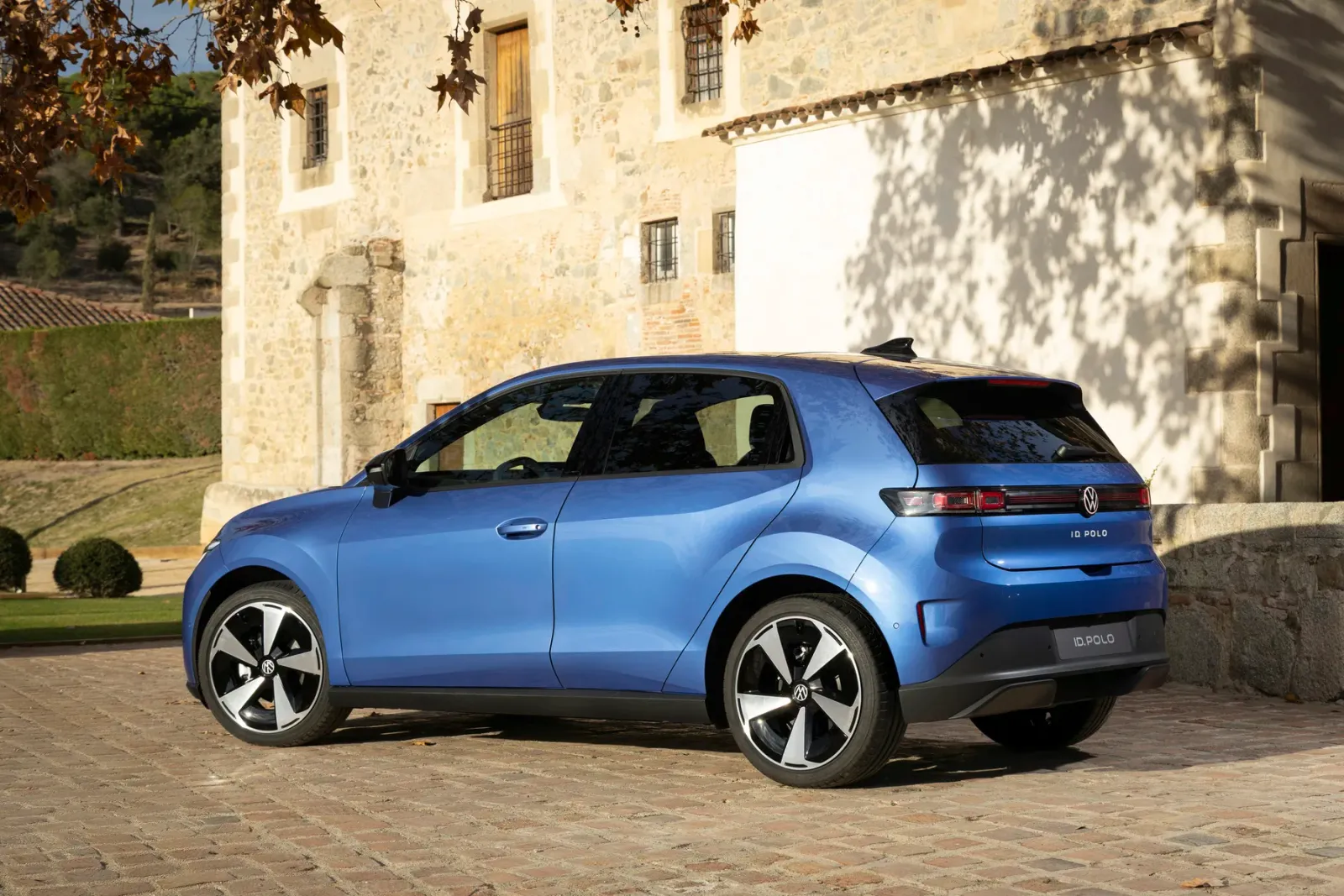
Volkswagen’s example shows that the market responds quickly to the introduction of cheaper models. For instance, the ID.Polo has received over 40,000 orders, with delivery times reaching ten months.
Rising fuel prices boost electric mobility
The report also highlights a significant economic factor influencing Europeans’ purchasing decisions. It is no secret that rising oil and fuel prices have substantially increased the costs of using gasoline-powered cars. According to T&E, the price shock in the oil market cost road transport users in the European Union around 53 billion euros, or nearly 232.7 billion złoty. The organization notes that filling a 50-liter fuel tank cost 30 euros more in mid-September compared to before the war with Iran. This means an increase of about 131.7 złoty per filling!
The organization also calculates that a driver who switched to an electric car at the start of the fuel crisis would have saved around 350 euros in operating costs by mid-September. Converted at a rate of 1 euro = 4.39 złoty, this amounts to approximately 1,537 złoty in savings.
Sales Records and the Advantage Over Gasoline
An increasing range of new models along with high prices for oil-based energy are driving record sales of electric vehicles in Europe. Data from the European Association of Automobile Manufacturers (ACEA), cited by T&E, shows that from January to August 2026, 1.64 million battery-powered cars were sold in the European Union. This represents a 45 percent increase compared to the previous year.
The second quarter of 2026 also brought a historic moment for the market. Electric vehicles sold better than cars equipped only with gasoline engines for the first time, accounting for 22 percent of the market share.
According to the report’s authors, all European automakers should meet the emission standards in effect from 2025 to 2027. It is these regulations that are cited as the main driver for introducing more electric models. From 2021 to 2024, when emission targets remained unchanged, manufacturers had much less incentive to invest in cheaper electric vehicles.
Warning about changing regulations
T&E also argues that the current market development momentum could be slowed down by a relaxation of emission targets planned for 2030–2035. According to the organization, this would particularly hit the segment of most affordable vehicles.
“The EU targets for the automotive sector expand consumers’ choices, reduce costs of transitioning to electric mobility, and give European manufacturers a chance to compete effectively in the global electric vehicle market. Weakening the 2030 target could reduce the number of affordable models by almost three-quarters precisely at the time they reach consumers, while also perpetuating millions of Europeans’ dependence on expensive oil,” summarizes Lucien Mathieu.
Oskar Włostowski
