
Switzerland to introduce toll for e-trucks in 2031 – initially with a discount
Switzerland will end the full exemption of emission-free trucks from the LSVA toll from 2031. Electric and hydrogen trucks will then be gradually integrated into the toll system, initially receiving high discounts. Both chambers of the Swiss Parliament have now definitively approved the reform.
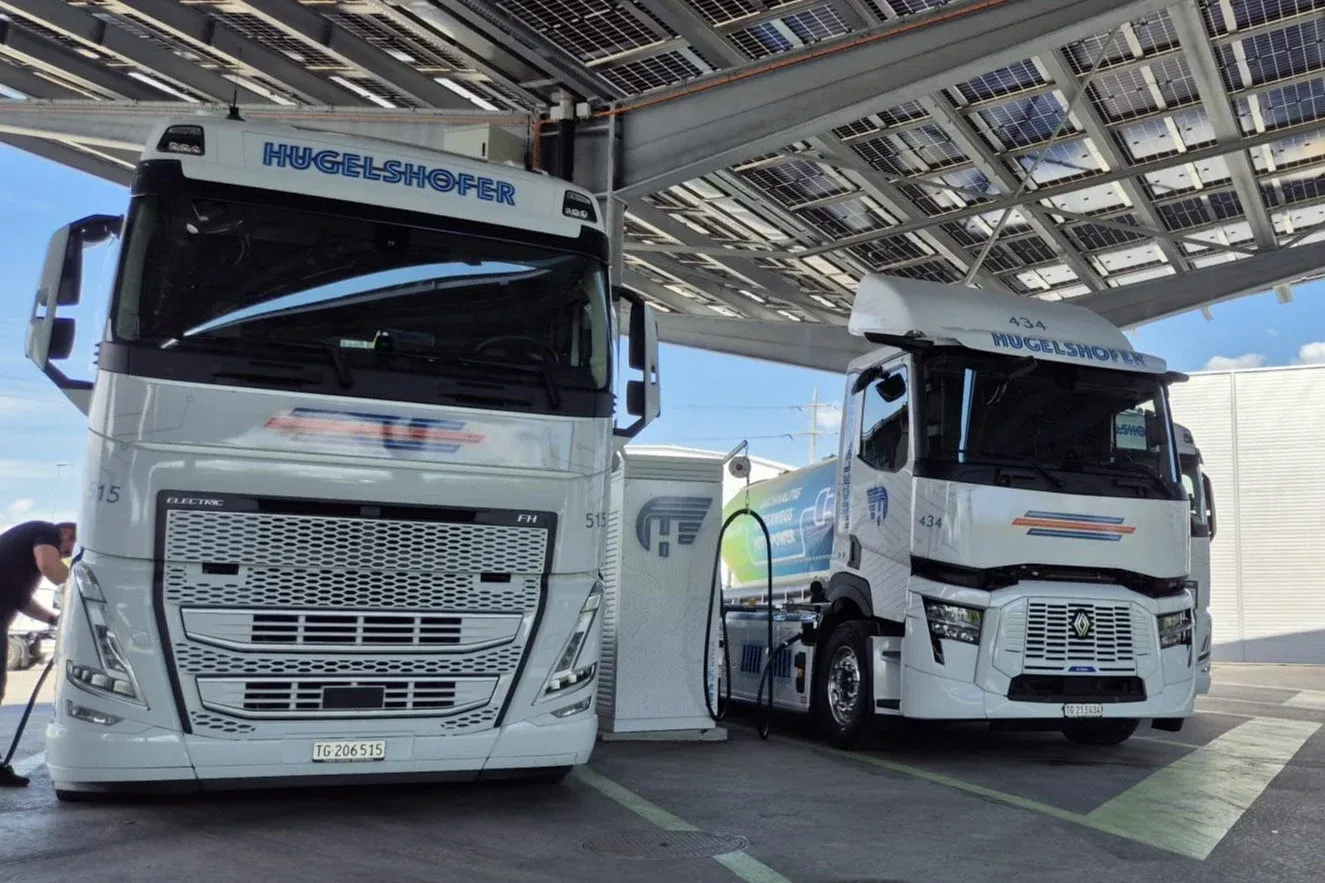
E-truck of Swiss freight company Hugelshofer (symbolic image)
Image: Hugelshofer
Switzerland is reforming its heavy vehicle fee system. On 2 October, the National Council and the Council of States adopted the revision of the Heavy Vehicle Fee Act in the final vote, concluding parliamentary deliberations. The performance-based heavy vehicle fee (LSVA) is a toll that generally applies to goods transport vehicles with a permissible gross weight exceeding 3.5 tonnes. A special rule applies to emission-free delivery vans: if their gross weight, due to the additional weight of the emission-free drivetrain, is at most 4.25 tonnes, they remain exempt from the LSVA.
The LSVA must be paid for the use of the entire Swiss road network. The toll therefore applies not only to motorways but also to ordinary main and secondary roads. The amount of the LSVA depends, among other factors, on the distance travelled, the permissible gross weight, and the emission class.
For battery-electric trucks and hydrogen-powered trucks, the full LSVA exemption will remain in place until the end of 2030. From 2031, these vehicles will also become subject to the fee, effectively introducing an e-truck toll in Switzerland. This ends an important indirect financial incentive for companies transitioning their fleets to emission-free commercial vehicles. Switzerland adheres to the principle of not permanently linking the LSVA to the respective energy source. During parliamentary proceedings, it was explicitly noted that a fee system dependent on the type of drivetrain or fuel would be administratively complex.
Discounts to gradually decrease until 2035
At the same time, Switzerland will not immediately increase the financial burden for emission-free trucks to the regular level. For 2031, a 70 per cent discount is planned, followed by 50 per cent in 2032. The discount will then decrease annually to 30 per cent in 2033, 20 per cent in 2034, and 10 per cent in 2035. From 2036, the discount will be completely phased out. The legally stipulated reductions apply to both fully electric and hydrogen-powered vehicles.
For the transport industry, it is already clear today how a significant cost factor will evolve after the end of the LSVA exemption. The Swiss Commercial Vehicle Association ASTAG had particularly emphasised the importance of long-term planning certainty. For heavy commercial vehicles with long amortisation periods, changes in toll fees can significantly impact the economic viability of an investment.
Euro 6 trucks to be reclassified
The reform does not only affect emission-free drivetrains. The most widespread Euro 6 trucks are to move from the cheapest to the second-cheapest LSVA category. New Euro 7 vehicles will also be assigned to this category. For Euro 7 trucks, discounts are planned until 2035 to differentiate them from Euro 6. The specific design of these tariffs has not yet been fully determined.
Another innovation aims to provide more planning certainty: changes to the classification of vehicles into LSVA categories must in future be announced with a seven-year lead time. For hauliers, this means they can factor changes in toll costs into procurement and amortisation decisions much earlier. This regulation was initially controversial between the National Council and the Council of States but ultimately became part of the compromise.
Federal council must finalise tariffs
With the final vote, the reform has been politically approved, but many details remain to be resolved. The Federal Council must adapt the implementing ordinance, including setting the specific LSVA tariffs and the final classification of various vehicle types into the fee categories. There is therefore still room for manoeuvre in the specific treatment of Euro 7. Additionally, the reform will not enter into force immediately after the parliamentary final vote: a period for an optional referendum must first elapse.
