
Switzerland doubles funding budget for commercial truck chargers
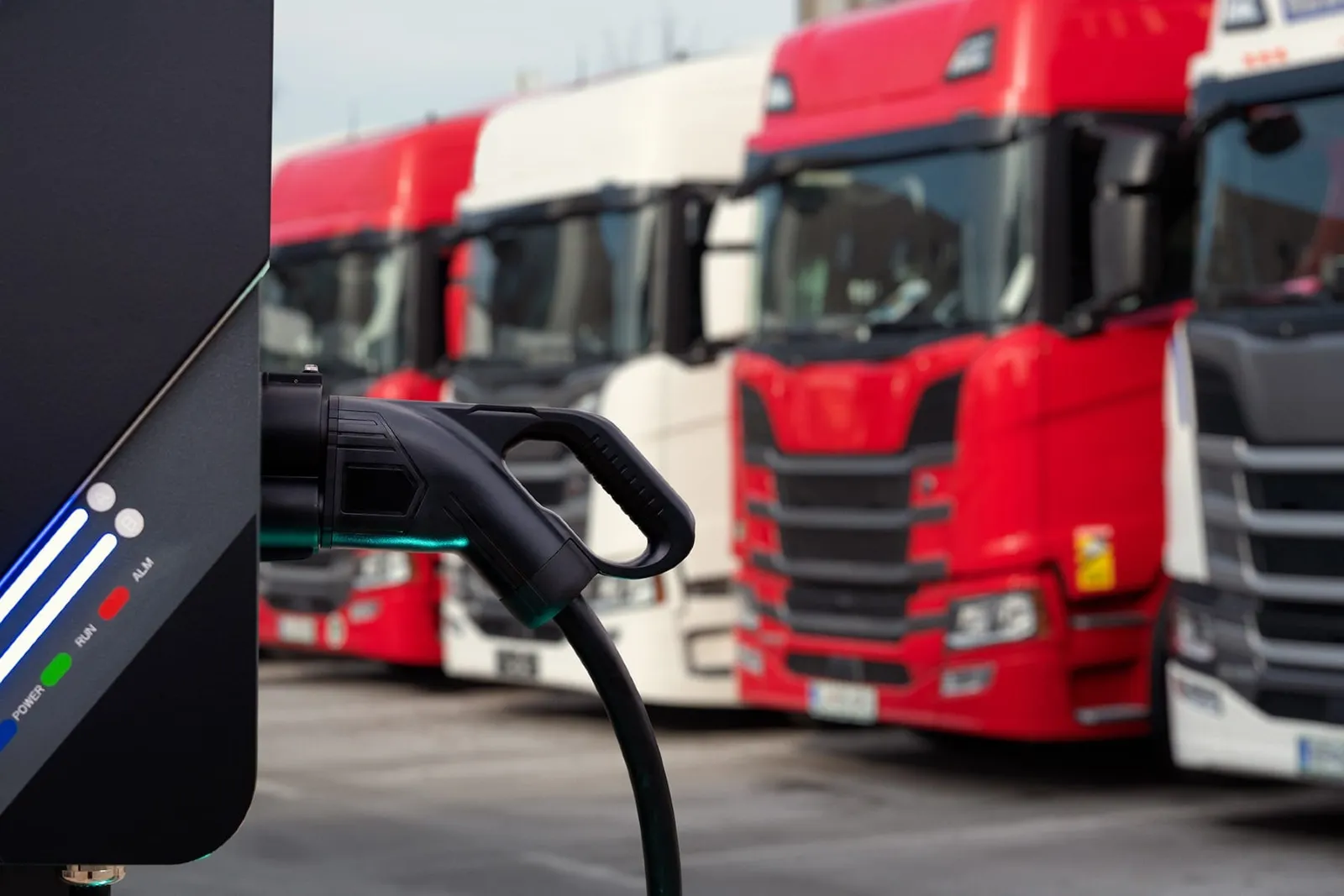
Applications for subsidies for truck chargers have been so overwhelming that the Swiss goverment has expanded the funding program for the installation of truck charging infrastructure that was introduced at the beginning of 2026. Initially 20 million Swiss francs (approximately 21.5 million euros) was allocated to support truck electrification, but this amount has now been almost doubled with an additional 20 million Swiss francs released.
Image: Spirii
In Switzerland, the Federal Office of Energy (BFE) has approved the expansion of the sector programme “in charge”. Thanks to additional funds from the Climate Protection Act (KlG), the Swiss transport industry now has nearly 40 million Swiss francs (around 43 million euros) available for developing charging infrastructure for electric trucks. The programme is managed by the commercial vehicle association ASTAG (“Association Suisse des Transports Routiers”).
Under “in charge”, only businesses with up to 250 employees—small and medium-sized enterprises (SMEs)—remain eligible to apply. For each company, the programme covers a maximum of 40% of the costs for planning, grid connection, supply lines and charging equipment. ASTAG, in cooperation with EBP Schweiz, is responsible for the entire administration of the sector programme, including funding approval, monitoring and communication.
Switzerland currently has the highest share of electric truck registrations in Europe. According to the latest figures from the European Automobile Manufacturers’ Association (ACEA), the electric share in the first half of the year stands at 26% (for vehicles over 16 tonnes gross vehicle weight). One in every four newly registered heavy trucks in Switzerland during the first six months of the year was battery-electric. Contributing factors include the toll exemption for electric trucks, which remains in place until 2031 — this is particularly beneficial for logistics companies given Switzerland’s high toll rates. Nevertheless, the initial procurement of electric trucks involves significant investment, and the country specifically aims to support smaller businesses in this regard.
At the beginning of the year, the Swiss Confederation commissioned the commercial vehicle association ASTAG to implement the new funding programme. The initiative aims to incentivise the development of depot charging infrastructure at companies. Initially, funding of 20 million Swiss francs was available for a programme duration from 2026 to 2030, equivalent to around 21.5 million euros. However, ASTAG reports that this budget is already “nearly exhausted” due to high demand. One possible reason is that operators in Switzerland want to take advantage of the toll-free period, as it has recently been confirmed that electric trucks will also become toll-liable in Switzerland after 2031.
Switzerland is now increasing the corresponding funding pool. “The high demand shows that our industry is ready to invest in climate-friendly technologies. With the additional funding, more transport companies will have the opportunity to advance the development of charging infrastructure and gradually electrify their fleets. This creates investment security and strengthens the competitiveness of our SMEs,” said Thierry Burkart, Councillor of States and Central President of ASTAG.
The commercial vehicle association has also presented a concrete interim funding report that underscores the rush for subsidies. Between the start of the year and early October, 224 funding applications were submitted, of which 135 have already been approved. As a result, nearly 19 million Swiss francs of the originally available funding have already been allocated. At the same time, the projects to date impressively demonstrate the programme’s impact. According to ASTAG, the original targets are already being met or exceeded. The approved charging projects will enable the deployment of around 687 electric trucks and are expected to contribute to a reduction of around 52,088 tonnes of CO₂ per year.
The funding coordinators are also satisfied with the programme’s other objectives, explaining, “The sector programme was launched with the goal of replacing around 600 diesel trucks with electric vehicles, providing around 60 megawatts of charging capacity and saving approximately 14 million litres of diesel annually. The results to date show that the industry has embarked on this path with high dynamism and is actively shaping the transformation.” For ASTAG, the increase in funding volume is an important signal. After all, it is clear that: “The transformation of road transport presents companies with major technical, organisational and financial challenges. Practical instruments that enable investments and provide companies with planning security are therefore all the more important.”