
Expensive sneakers from 749,900 kroner
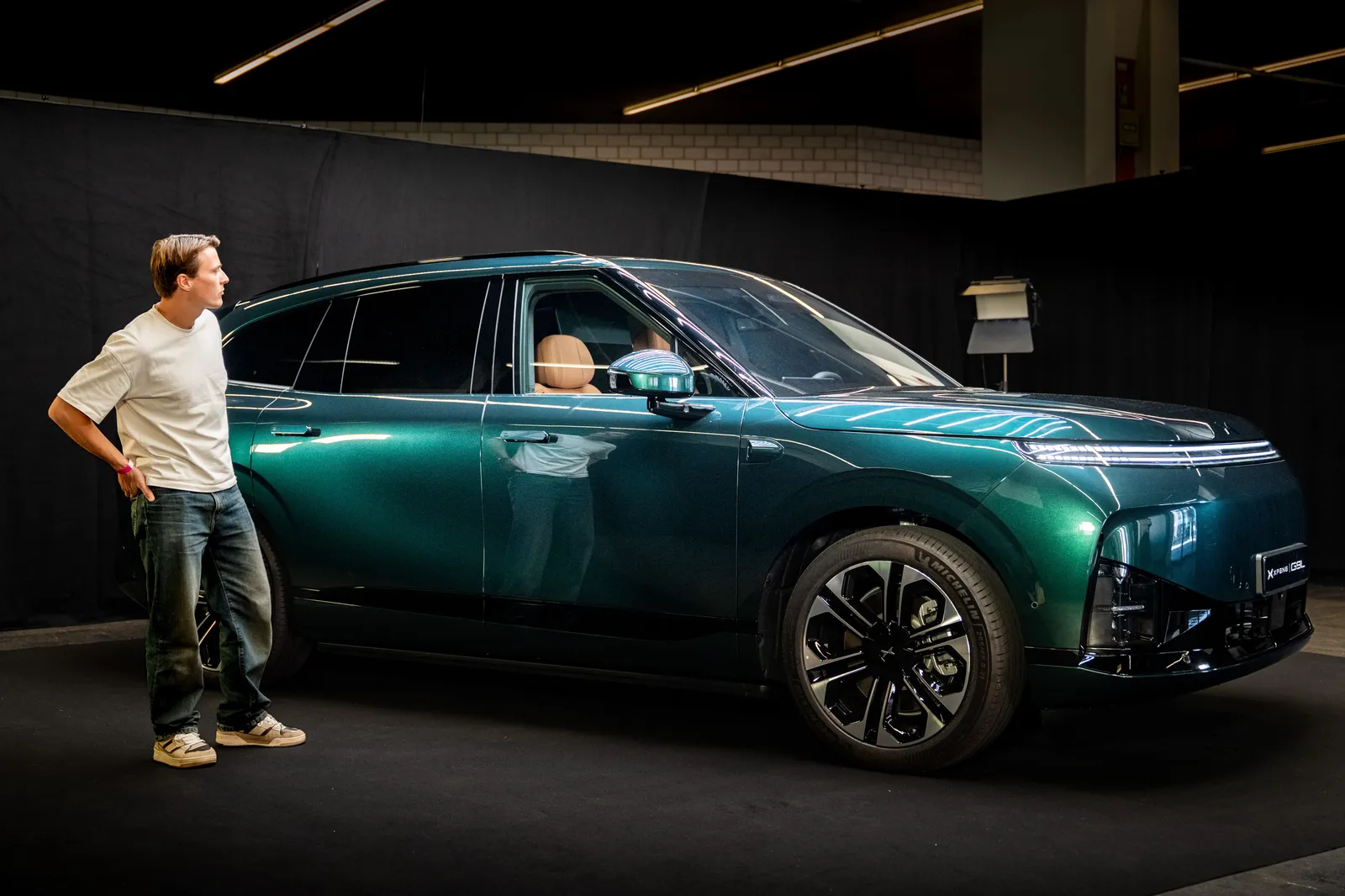
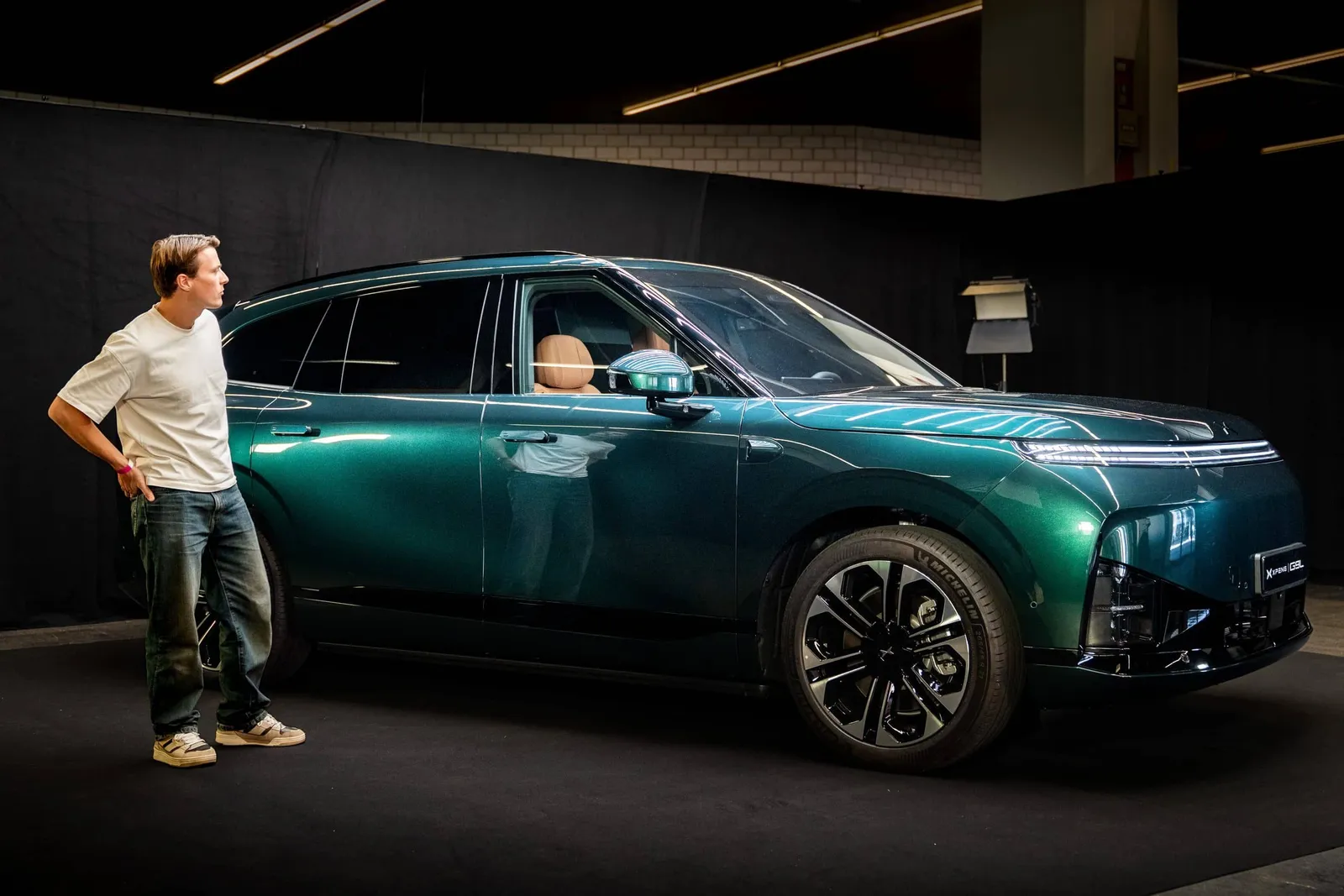
A TV is mounted on the roof and lights are embedded in the asphalt. Xpeng’s new luxury six- and seven-seater SUVs start at a high price point.
13.10.2026 07:02 | Updated 09:43
While we were in Basel testing the Xpeng L03, we also got an early look at the market’s new top model, the G9L.
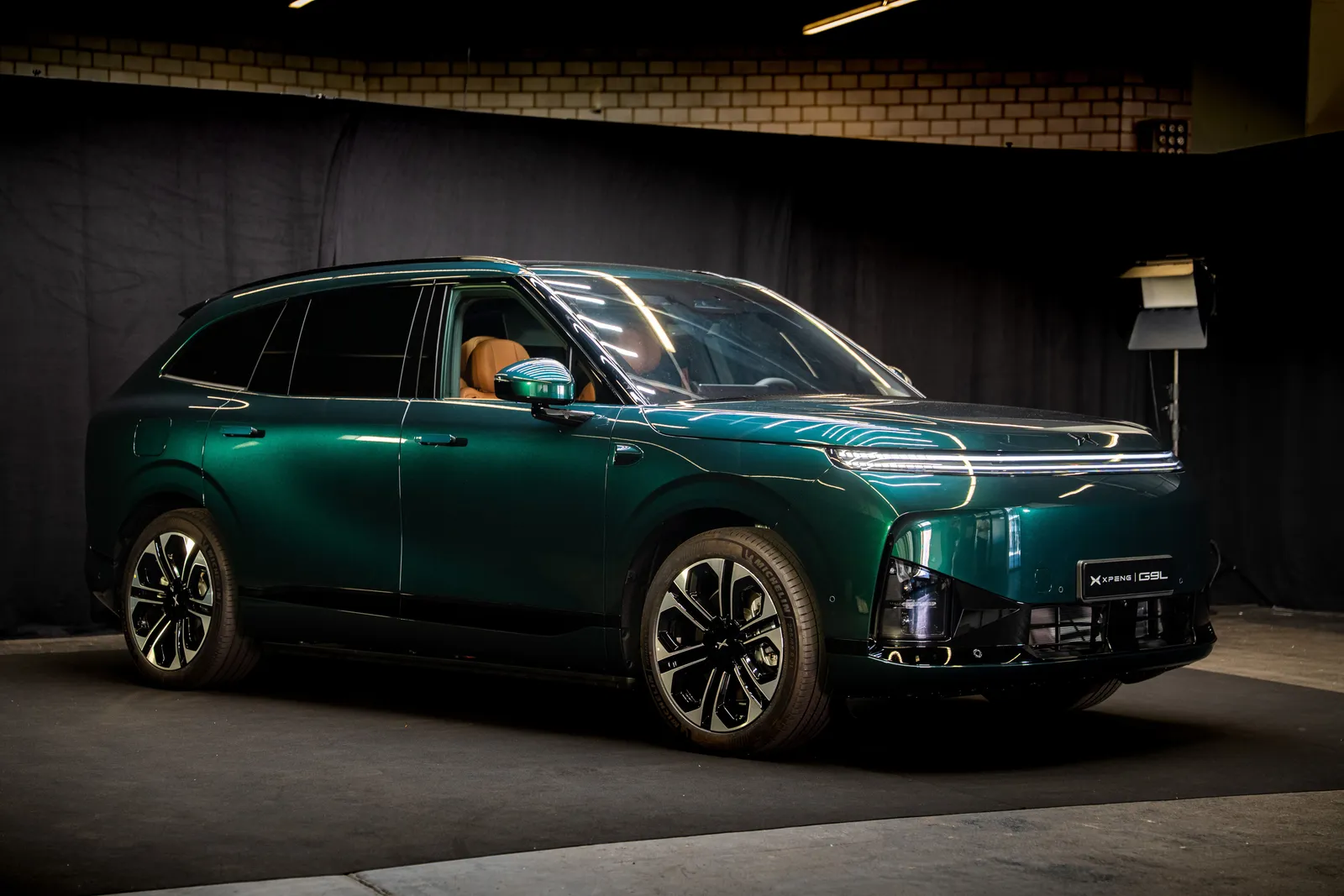
The 5.12 meter long SUV features a classic Chinese design style filled with technological innovations, typically found in the luxury segment.
It includes a TV on the roof, a fridge, automatic steps, and front lights that can project live symbols onto the rear surface.
The “L” stands for luxury – but length also counts
The G9L is 5.12 meters long with a wheelbase of 3.10 meters. This makes it approximately 20 centimeters longer than today’s G9, but still about 20 centimeters shorter than the multi-purpose Xpeng X9.
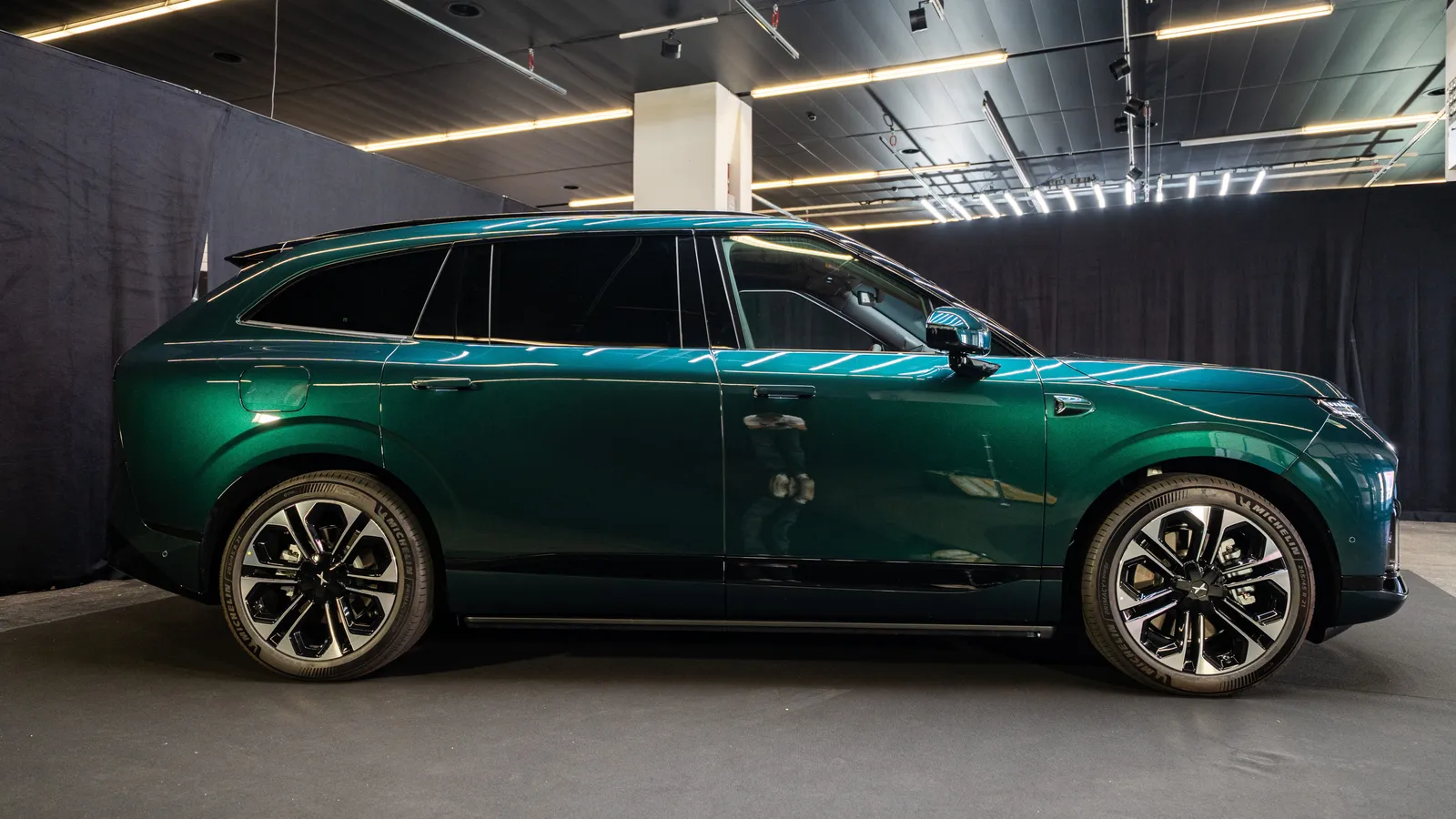
The model is scheduled to be positioned above the G9, which will remain in production.
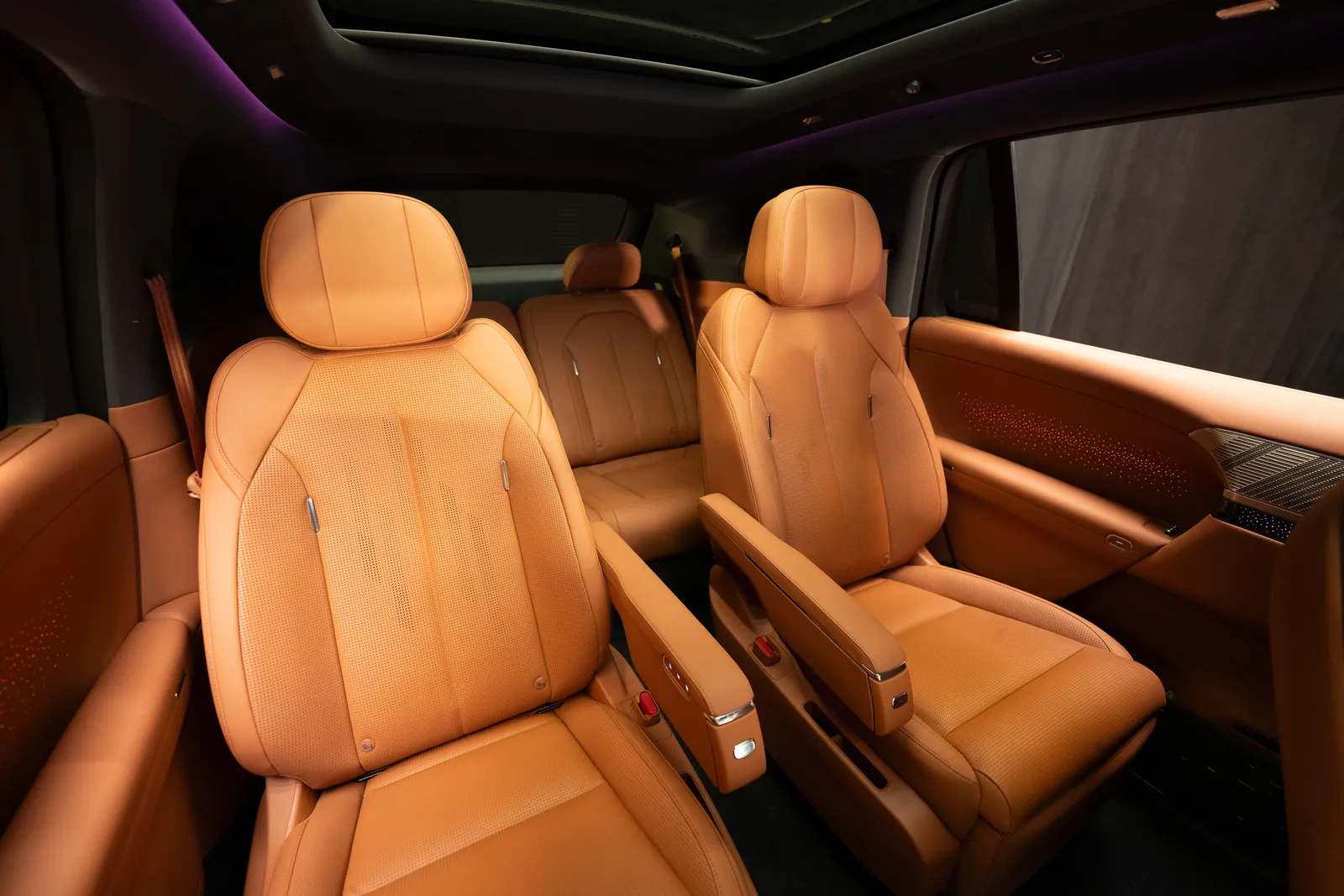
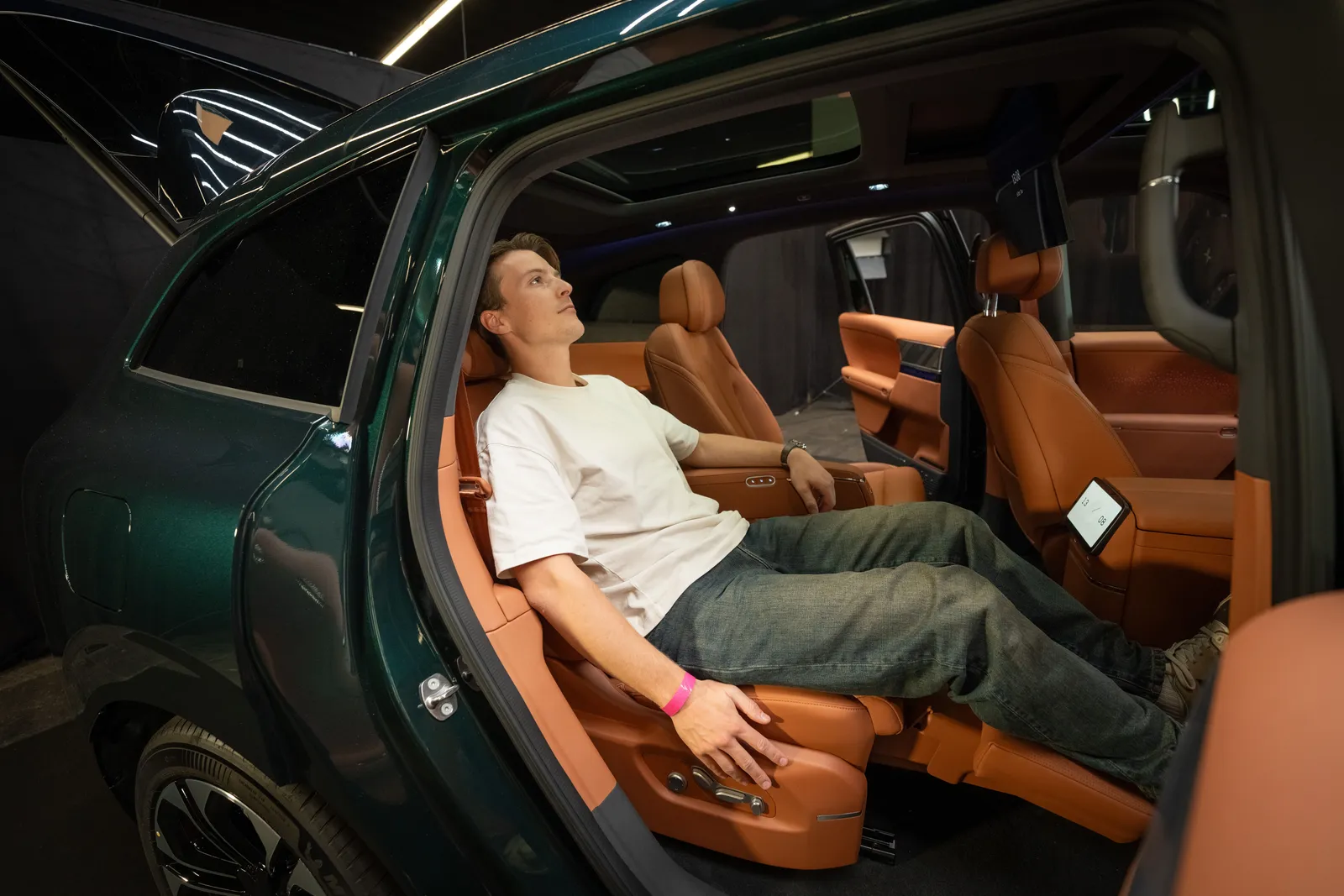
In Norway, the G9L is planned to be offered in both six-seater and seven-seater configurations. The six-seater version features two separate captain seats in the second row, while the seven-seater model comes with a traditional three-row bench. Both versions have two rear seats.
The seven-seater is the cheapest
The Norwegian version of the seven-seater starts at 749,900 kroner, whereas the six-seater version costs from 769,900 kroner.
The explanation is that the six-seater model comes with the Premium package as standard. On the five-seater version, the package costs an additional 39,990 kroner, raising the price to 789,890 kroner if selected.
The package includes items such as projector headlights, fully electric doors, illuminated steps, and more advanced seats.
Electric folding mirrors cost 12,900 kroner, while metallic paint costs 10,000 kroner. White is the standard color without any extra cost.
Features ahead of the vehicle
All Norwegian G9L models come equipped with matrix LED headlights. The digital DLP projector headlights that were demonstrated to us in Basel, however, are part of the Premium package. Thus, they are standard on the six-seater model and optional on the five-seater version.
In addition to the camera, the system should also be able to display lines indicating the vehicle’s width before the driver drives into a narrow space. It can also project symbols and mark a parking area at the rear.
It is not yet clear which of these features will be activated and approved for use in Norwegian cars. As a result, the sofa might end up being more than just a party trick.
Step ladder, fridge, and TV
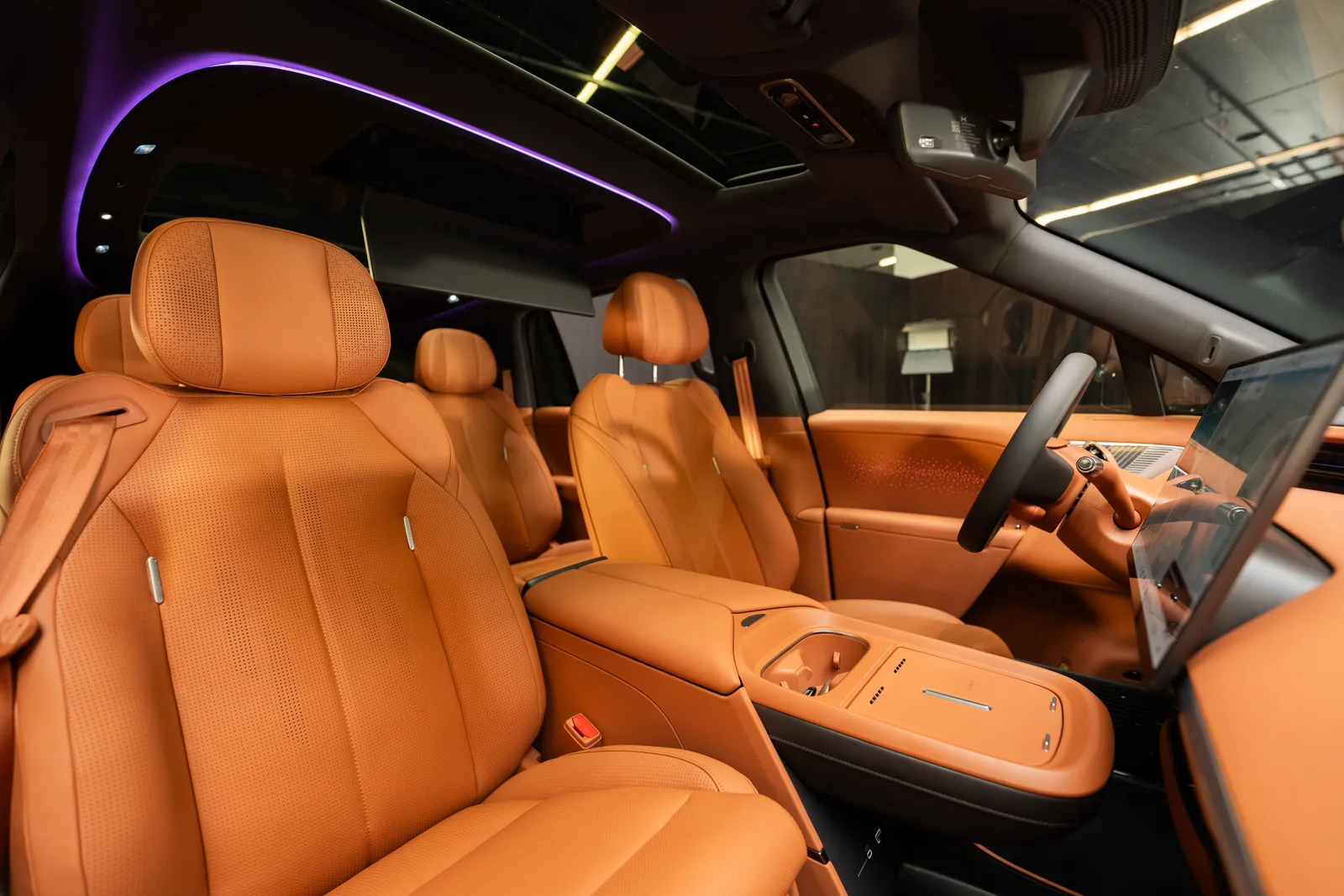
When the doors open, a wide step ladder unfolds on the car we saw. On the SUV model, both the step ladder and the all-electric doors are part of the Premium package. Thus, the six-seater model comes with these as standard.
Standard equipment includes a 21.4-inch 3K screen that can be lowered from the ceiling. The compartment under the center console has a capacity of 12.5 liters and can cool, freeze, or heat its contents.
In the six-seater model we saw, the captain seats in the second row could be retracted far back into a dedicated reclining mode. These seats come with heating, ventilation, and massage functions.
Xpeng also uses the term “physical AI” to describe seats that can adjust their backrest and side support based on the person sitting next to them.
Whether this is useful in practice or merely a technological novelty will have to wait until the car can be tested drive.
Adequate trunk space
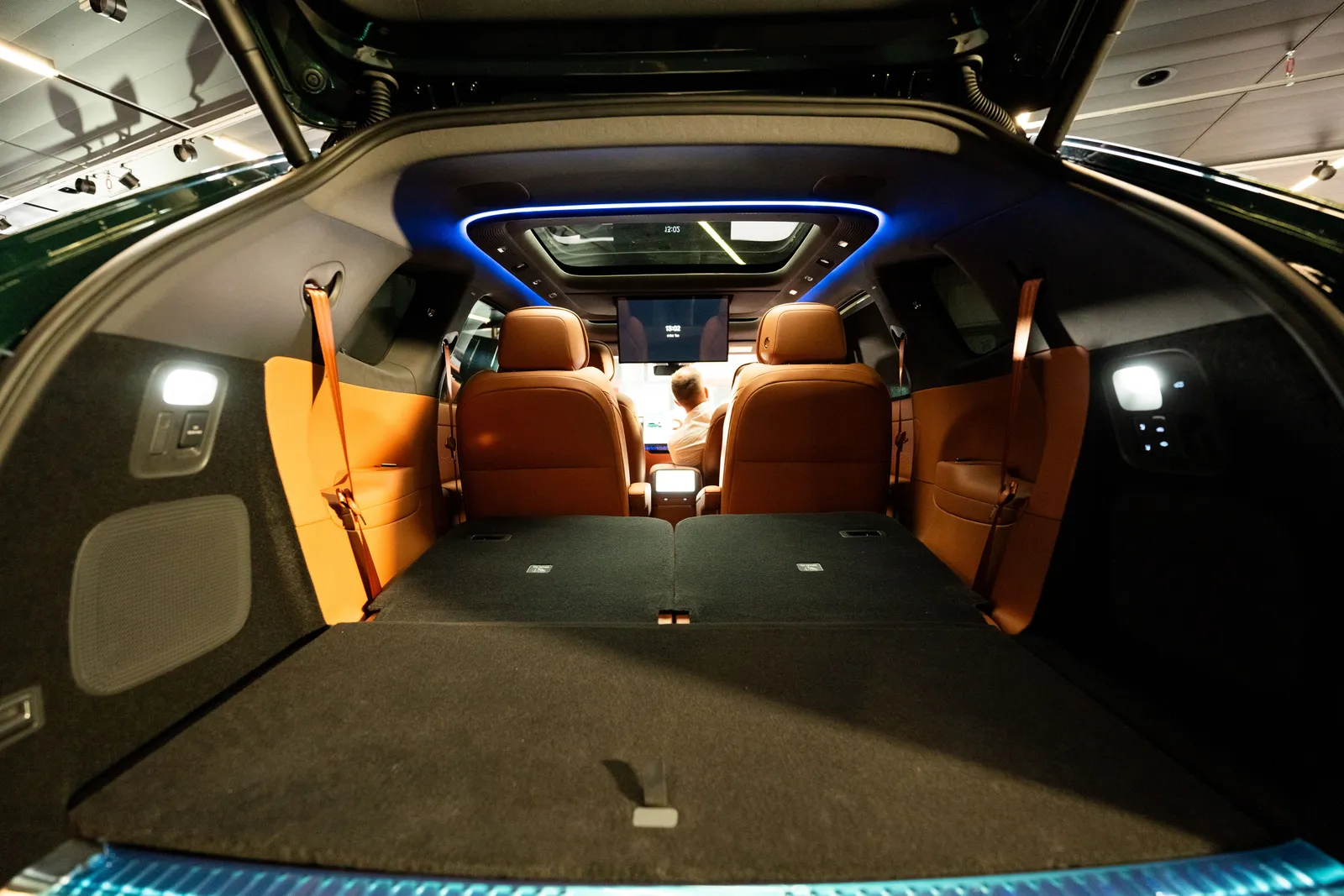
With all seats in use, the trunk offers 259 liters of space above the floor. Including the storage area under the floor, this increases to 367 liters.
With the third row folded down, the six-seater configuration provides up to 1,330 liters of space. For the five-seater version, it’s 935 liters.
In front, there is a separate storage area of 65 liters. This should be sufficient for charging cables and some smaller items.
G9L can tow a load of up to 2,000 kilograms, 500 kilograms more than the X9. An electrically deployable tow hitch is available as an option for 12,900 kroner.
585 horsepower and fast charging
Norway will initially receive the four-wheel-drive Ultra version. It has 585 horsepower and 695 Nm of torque, accelerates from 0 to 100 km/h in 4.9 seconds, and has a top speed of 200 km/h.
The battery has a peak capacity of 110 kWt, while the range is stated at 553 kilometers according to WLTP standards.
The reported fuel consumption is 22.5 kWt per 100 kilometers.
The maximum charging power for fast charging is 540 kW. Under optimal conditions, it takes 11 minutes and 42 seconds to charge from 10% to 80%.
There are already some 500 kW chargers in Norway, including Tesla’s new V4 facility at Hellerudsletta and Evinys charger at Vinterbro.
The latter provided the Xpeng G9 with a peak power of 452 kW, but the charger’s current capacity prevented the vehicle from reaching its maximum efficiency. Even with the G9L, the actual charging curve and time to reach 80% charge are therefore more important than the short-term peak of 540 kW.
Twin air suspension, adaptive dampers, and rear-wheel steering are standard features.
The rear wheels can swivel up to five degrees, and Xpeng claims a turning diameter of 11 meters. How this large and heavy vehicle actually performs on Norwegian roads will only be known once it can be tested.
The first vehicles are expected by the end of the year
The G9L will make its Norwegian debut at the Oslo Motor Show from October 23 to 25. The first customer vehicles are expected in Norway by the end of the year.
Xpeng offers an additional warranty if you order a car from them before the end of November.
The G9L will be produced in both Austria and China, but it is not yet clear where the first cars for Norwegian customers will come from.
The list of features is almost comically long, but what’s most interesting for Norwegian families is simpler: the G9L features up to seven seats, all-wheel drive, a range of 553 kilometers, and a towing capacity of two tons.
More like this?
Sign up for our newsletter
– get electric car news straight to your inbox!
Also read
The post Luxury seats from 749,900 kroner appeared first on Norsk elbilforening.