
Supertest of the Volkswagen ID.3 Neo 58 kWh: measured fuel consumption and range — as efficient as a city car!
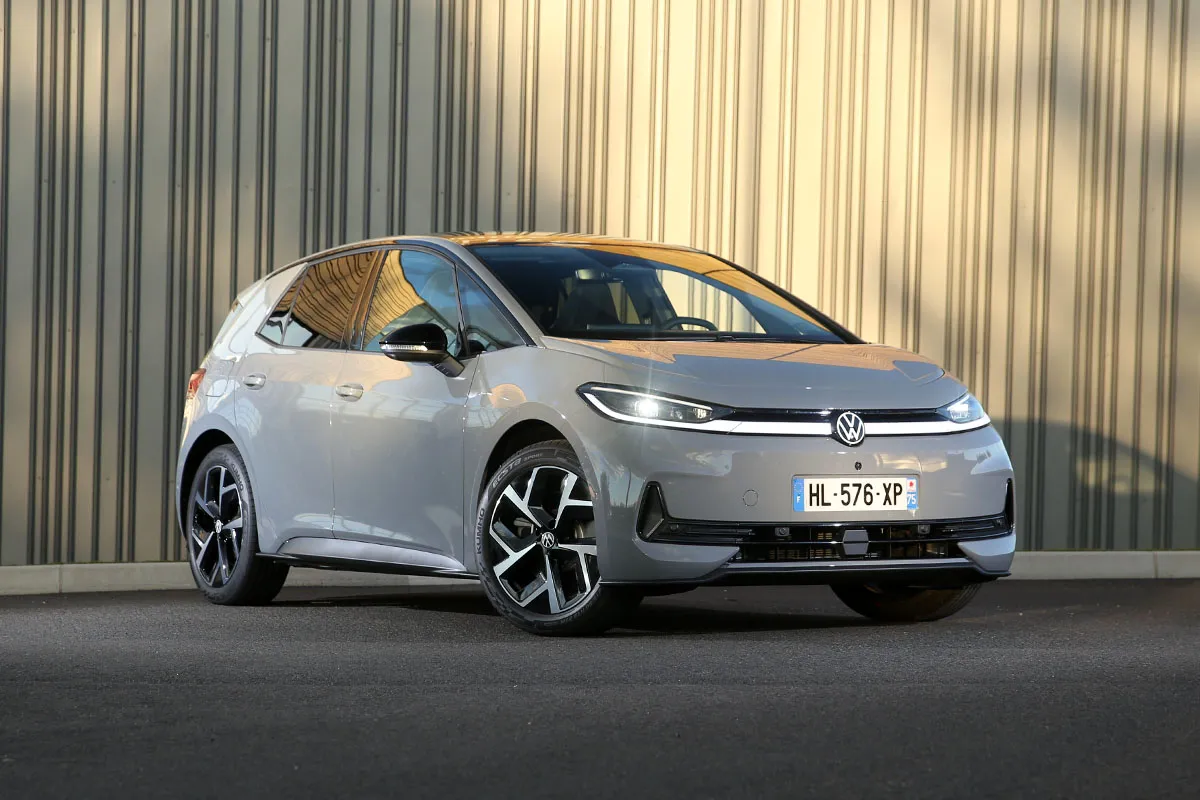
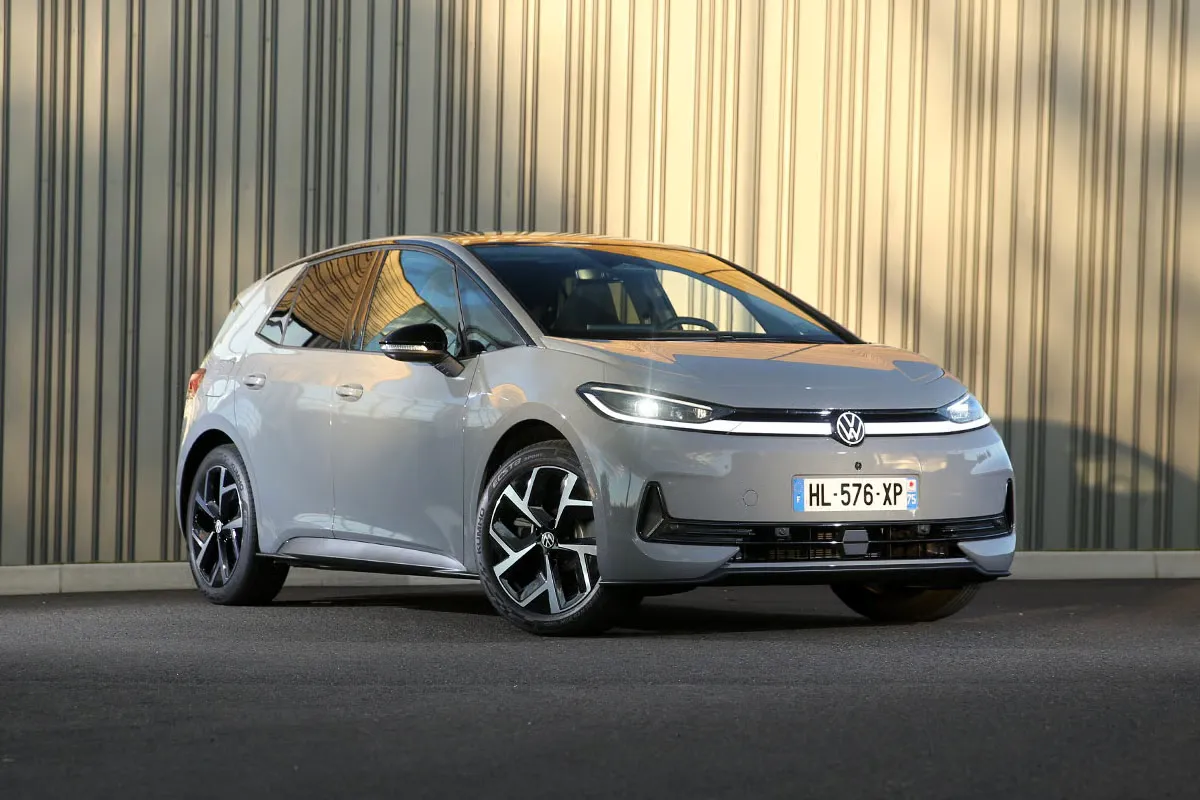
The Volkswagen ID.3 Neo introduces an even more efficient powertrain. We tested its claims in real-world conditions.
While an ID.Golf remains a possibility, the already-known ID.3 undergoes another facelift. In addition to significant cosmetic updates, this compact electric vehicle gets a new powertrain featuring a new LFP battery and an optimized electric motor. We put it through rigorous testing.
Also read
Volkswagen ID.3 Neo review: Has this compact electric vehicle fixed its flaws?
Introduction to the Volkswagen ID.3 Neo
The Volkswagen ID.3 Neo stands out easily from its previous versions with its revised front end that reflects the brand’s new styling language. Beneath this exterior, the compact vehicle still relies on the MEB platform designed for 100% electric powertrains.
While the top-tier version retains its 79 kWh NMC battery, the lower-end versions are equipped with 50 and 58 kWh LFP batteries. In the latter configuration, it powers an electric rear motor codenamed APP350, capable of delivering 140 kW (190 hp) and 350 Nm of torque. This highly optimized motor is also fitted with a silicon carbide inverter—a cutting-edge and expensive component typically reserved for high-end 800 V models, which helps reduce energy consumption.
The approval data serves as proof of this. On the WLTP cycle, the new generation promises a minimum fuel consumption of 13.9 kWh/100 km, compared to 15.3 kWh/100 km for the previous ID.3 Pro equipped with the APP310 electric motor. In the best case, the Volkswagen ID.3 Neo aims for a maximum WLTP range of 492 km. Due to its equipment level, our test model is rated at 478 km with a fuel consumption of 14.4 kWh/100 km. Let’s move on to the measurements.
Additional Specifications for Volkswagen ID.3 Neo 58 kWh
Peak power: 190 hp – 140 kW
Net power (field P.2): 95 hp – 70 kW (-50 %)
Administrative power (field P.6): 5 hp
Operating weight (field G.1): 1,817 kg
Weight-to-power ratio (PVOM): 10.0 kg/hp
WLTP range: 478 km
WLTP fuel consumption: 14.4 kWh/100 km (12.1 kWh/100 km net)
AC charging speed: 11 kW
DC charging: 105 kW – 26 min. (10-80 %)
Tires: Kumho Ecsta Sport – 215/50 R19 – B, A, 72 dB
All our fuel consumption measurements for the Volkswagen ID.3 Neo
Combined range: 400 km (14.6 kWh/100 km)
With an average outside temperature of 14 °C and an interior temperature of 20 °C, as per our protocol, the Volkswagen ID.3 Neo achieved an average final fuel consumption of 14.5 kWh/100 km. Given its net capacity of 58 kWh and the energy loss observed over this 100 km distance, this results in a theoretical total range of nearly 400 km, representing a 17 % difference from the WLTP value, well within the average range of our measurements. The ID.3 Neo is thus among the most fuel-efficient cars tested in our Supertest, on par with electric city cars like the Peugeot e-208.
Highway
Motorway
City
Total
Average fuel consumption (kWh/100 km)
14.2
16.5
13.1
14.6
Theoretical total range (km)
408
352
443
397
Mixed range – 14 °C outside temperature.
Long-distance driving on highway: 300 km (19.5 kWh/100 km)
On our typical 500-km route entirely on the highway from Lyon to Paris via A6, the electric compact car consumed 19.5 kWh per 100 km. This results in a theoretical total range of 300 km, or 210 km when the battery is at 80 to 10% charge. Its efficiency is confirmed here, with the car still ranking among the best.
Also read
Supertest of MG 4 Urban 54 kWh: measured fuel consumption and range, with some records broken!
Instantaneous fuel consumption at high speeds
Aesthetic tweaks do not significantly improve aerodynamic performance; according to our information, this compact model has a Cx value just above 0.26, with an SCx of nearly 0.63 m² per our estimates. This helps control fuel consumption at high speeds: at 110 and 130 km/h, the calculated fuel consumption is 16.4 and 20.4 kWh/100 km respectively. This suggests a theoretical minimum range of 285 km on the highway at top speed.
90 km/h
110 km/h
130 km/h
Average consumption (kWh/100 km)
13.3
16.4
20.4
Instantaneous consumptions
Eco-driving mode: 585 km (9.9 kWh/100 km)
The Volkswagen ID.3 Neo features an Eco mode that limits power output from the battery to just over 100 kW, sets the top speed at 130 km/h on the dashboard (128 km/h according to GPS), and reduces air conditioning load. Depending on conditions, the car can drive in free-wheeling mode or slow down automatically with the B mode, which has two adjustable levels. In this configuration, we managed to achieve a minimum fuel consumption of 9.9 kWh/100 km.
All our performance measurements for the Volkswagen ID.3 Neo
Acceleration and deceleration
With this new drive train, the Volkswagen ID.3 Neo loses 10 kW of power (190 hp compared to 204 hp before) but retains 350 Nm of torque. Additionally, due to the LFP chemistry, the total weight increases slightly (1,817 kg compared to 1,740 kg). Performance is logically affected, with a 0-100 km/h time of 7.7 seconds and a 400 m acceleration time of 15.7 seconds. However, the difference is only noticeable when checking the timing, as the times and acceleration performance remain very close. In Eco mode, power is limited, and the car cannot reach 130 km/h according to the GPS.
It’s worth noting that this compact vehicle accelerates just as quickly as one with a more favorable weight-to-power ratio. Furthermore, the Neo is slightly more durable and suffers much less from reduced performance at low battery levels thanks to its LFP battery. Even when the battery is nearly depleted, acceleration remains decent, with a 80-120 km/h time of 5.6 seconds.
Mode
0-100 km/h
0-130 km/h
80-120 km/h
90-130 km/h
400 m
Eco
10.9 s
–
7.7 s
–
18.0 s
Normal
7.7 s
12.7 s
5.3 s
6.1 s
15.9 s
Sport
7.7 s
12.5 s
5.3 s
6.1 s
15.7 s
Performance in stop-and-go driving at 80% load
Braking and energy recovery
Contrary to what some claim, the drum brakes in this MEB platform have never affected braking performance. Our tests prove this, as the Volkswagen ID.3 Neo was able to stop in 60 meters from 130 km/h. It ranks among the best; the Mercedes CLA leads with 58 meters.
In terms of regenerative braking, the vehicle offers four distinct modes. The first level, in B mode, is a free-wheeling mode that can apply force based on the slope. The Auto mode activates alongside the eco-driving advice feature. Finally, B mode (One-Pedal), accessible via the drive control, can be adjusted to two levels through the touchscreen. However, these two levels differ very little in terms of braking power and stopping distance. At 80 km/h, the first level achieved a stopping distance of 153 m, while the second reached 121 m. In the latter case, the performance was similar to that of the Tesla Model Y LR (119 m). Still, a greater difference between these two levels would have been appreciated.
Mode
90-0 km/h
80-0 km/h
60-0 km/h
Mode B level 1
194.9 m
153.0 m
86.9 m
Mode B level 2 (One Pedal)
162.4 m
120.7 m
61.4 m
Regenerative braking when releasing the pedal
If the Volkswagen ID.3 faced initial setbacks at the start of its career, it has improved over time. The first facelift already enhanced its perceived quality and performance. All that was left was for it to receive a solid technical upgrade. That has now been achieved with the Neo version, which reaches maturity equipped with a new SiC inverter that is significantly more efficient than the previous APP310 unit, and just as efficient as the excellent APP550 found in the higher-end model. The ID.3 Neo is not only one of the most efficient compact cars but also one of the electric vehicles on the market with the lowest energy consumption. What remains to be seen is how it performs at fast charging stations and during long trips. We’ll discuss this in the second part of this Supertest next week.