
SuperPanther founder: “The era of internal combustion engines is coming to an end”
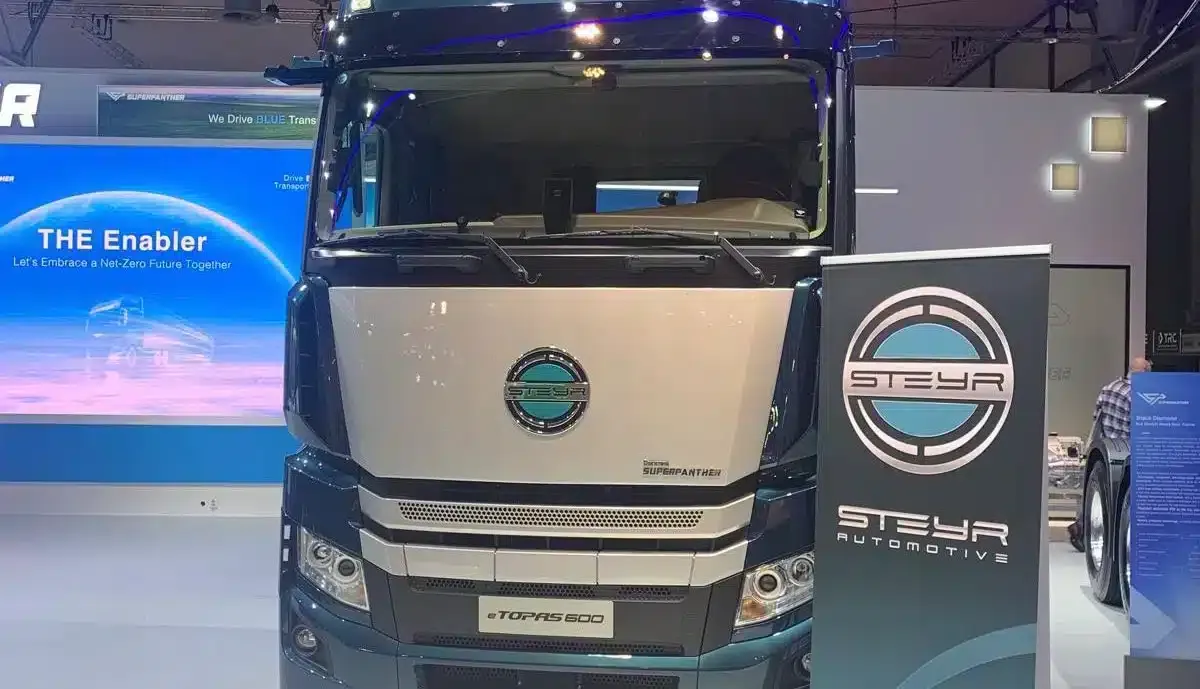
Image: SuperPanther
SuperPanther was founded in 2022 by former Continental, Stihl, and Daimler executive Chao Liu. The Chinese company is now bringing the electric truck eTopas 600 to the European market. In an interview with Edison, Liu describes SuperPanther not primarily as a traditional competitor to truck manufacturers but rather as a technology company in a phase of continuous learning. The company focuses on software, “intelligence,” and specially developed electric vehicle architectures.
"The era of internal combustion engines is coming to an end," said Liu. SuperPanther focuses on electric heavy-duty long-haul trucks because, according to him, there are particularly high demands for energy density, overall efficiency, and total operating costs in this sector. The company’s technologies have been used in commercially operational electric trucks for Chinese customers for over two years, according to the company. Additionally, SuperPanther involves customers such as the DHL Group early in the product development process.
The eTopas 600 is a fully homologated 4×2 tractor unit with European vehicle type approval and is already in daily fleet use. Its battery pack has a capacity of 621 kilowatt-hours (kWh) and is designed to provide up to 560 kilometers of range in real-world conditions, with a consumption of around 0.94 kWh per kilometer. Two CCS2 ports that can be used simultaneously enable charging at up to 660 kW. The high-voltage architecture is also prepared for the Megawatt Charging System (MCS).
The eTopas 600 will be assembled for Europe at Steyr Automotive in Austria. Liu describes this decision as a strategic approach based on the “Local for Local” principle, highlighting Steyr’s experience in vehicle manufacturing as well as its production quality and validation capabilities. According to him, Steyr has a production capacity of up to 50,000 units per year.
For the production rollout, SuperPanther is pursuing a controlled “Safe Launch.” Around 100 eTopas 600 units are expected to be delivered by the end of this year, with a total of 1,000 vehicles planned for 2027. The first units are already in use in Germany, Austria, the Netherlands, Switzerland, Poland, and Czechia. The company explicitly does not aim to position itself as a low-cost provider but rather differentiates itself through system efficiency and overall economic value.
To reduce operating costs, SuperPanther views trucks as part of an energy ecosystem and equips the eTopas 600 with Vehicle-to-Grid capability (V2G) out of the box. This enables the electric truck to store energy, feed power back into the grid during peak loads, or provide grid services.
Together with DHL Freight, SuperPanther aims to test “Truck Brain” under real-world conditions. The system uses an AI model to “anticipate” shipping orders, weather, terrain, and traffic based on context. Technologically speaking, Liu believes fully driverless Level 4 trucks are feasible within three years. “But until regulations and public acceptance are ready, we focus on Truck Brain-powered L2+ systems that make highway driving and lane changes safer and more comfortable for drivers.”
Also interesting
About the Author
Thomas Langenbucher is an expert in electromobility with professional experience in the automotive industry and finance sector. Since 2011, he has been covering electric vehicles, sustainable technologies, and mobility solutions on ecomento.de. Learn more.
Reader Interactions
