
Stellantis patents the most radical solution against a battery fire: getting rid of it and running away
11/10/2026 08:00
Updated to
11/10/2026 08:00
There are many ways to deal with an overheating electric vehicle battery, but Stellantis seems to have followed the Chinese manual: instead of trying to cool it down, they simply get rid of it. A recently published patent owned by FCA US describes a system capable of electrically and physically disconnecting the high-voltage battery from an electric vehicle. And better still, the car itself can then use its 12-volt battery to drive away from the abandoned battery pack.
The patent, titled “High-Voltage Battery Rapid Release System for Vehicles,” was published by the United States Patent and Trademark Office (USPTO) on September 17. FCA US is listed as both the applicant and owner, and the document describes the system as a solution to situations where a high-voltage battery overheats, gets damaged, or otherwise causes a thermal event. This is undoubtedly a safety issue that has occurred repeatedly in real life.
A Chinese research center already presented a similar idea
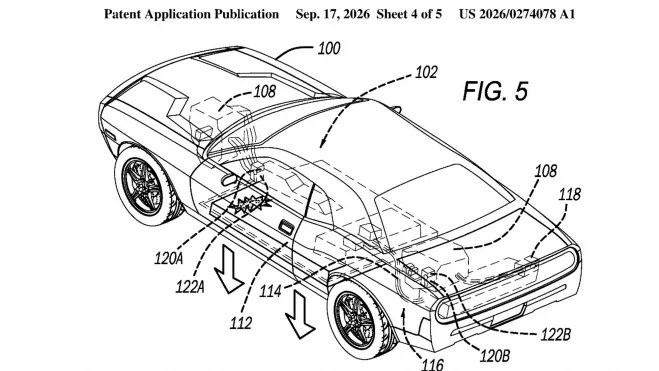
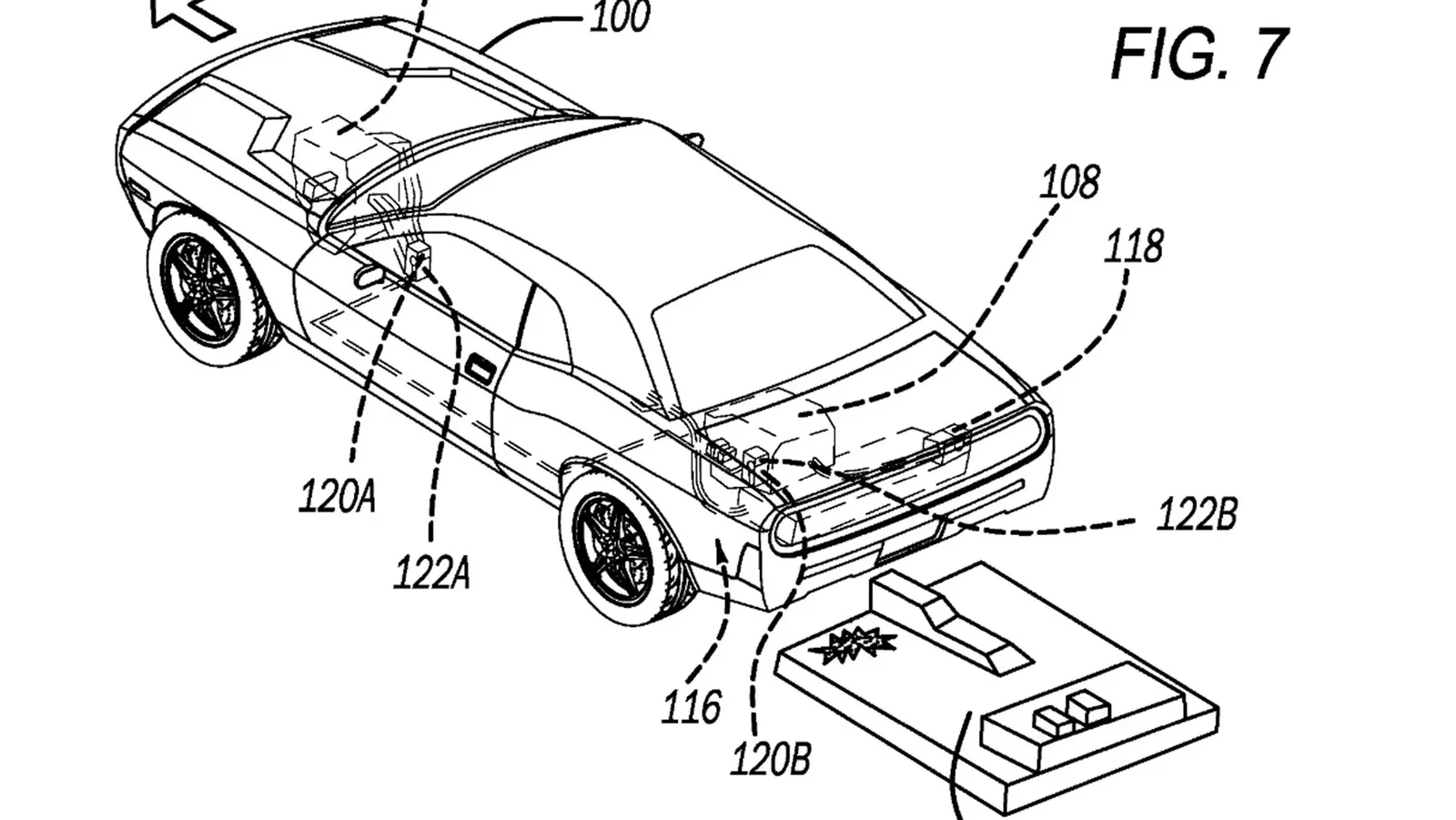
Stellantis’ solution essentially involves removing the battery and allowing the car to drive away on its own. A Chinese research center had already presented a similar concept about a year ago. The process described in this patent is particularly interesting: first, the driver, a passenger, emergency services, or another person must activate a quick-release switch. The car, in theory—and at least according to the patent—disconnects the high-voltage battery and physically separates it from the vehicle.
The disengagement system could use various methods to separate the car’s battery, including sections of the chassis that slide apart or, more dramatically, “pyrotechnic elements.” If that doesn’t sound like a scene from a Hollywood movie, we don’t know what would. Stellantis is also considering the possibility of having more than one release switch.
One of those switches could be located inside the cabin, while another might be in the trunk, allowing someone outside the vehicle to activate the system. The switches themselves could take the form of a lever, a physical button, a touchscreen control, or a toggle switch. And now comes the most incredible part, as strange as it may sound. Once the battery is removed, the car would be able to drive away from the scene.
The 12-volt battery: the key to staying away from danger
That’s where the 12-volt battery comes in. According to the patent, the auxiliary battery would provide enough power to move the vehicle a predetermined distance away from the potentially burning pack. The document details how the controller instructs the engine to propel the vehicle away once the high-voltage battery has been disconnected. That said, there are still some unanswered questions.
Stellantis does not specify how far the vehicle could travel; it is reasonable to expect that distance to be in the range of a few hundred meters rather than several kilometers. It is also unclear how seriously the company is considering implementing this system in a production vehicle. The patent does clarify, however, that it could work on all types of vehicles, bringing it a step closer to becoming a reality rather than remaining indefinitely shelved. In any case, it represents a truly innovative approach to eliminating the threat of battery-related fires, with the goal of saving both the vehicle and its occupants.