
Shell and FAW Trucks are advancing submerged cooling for truck batteries
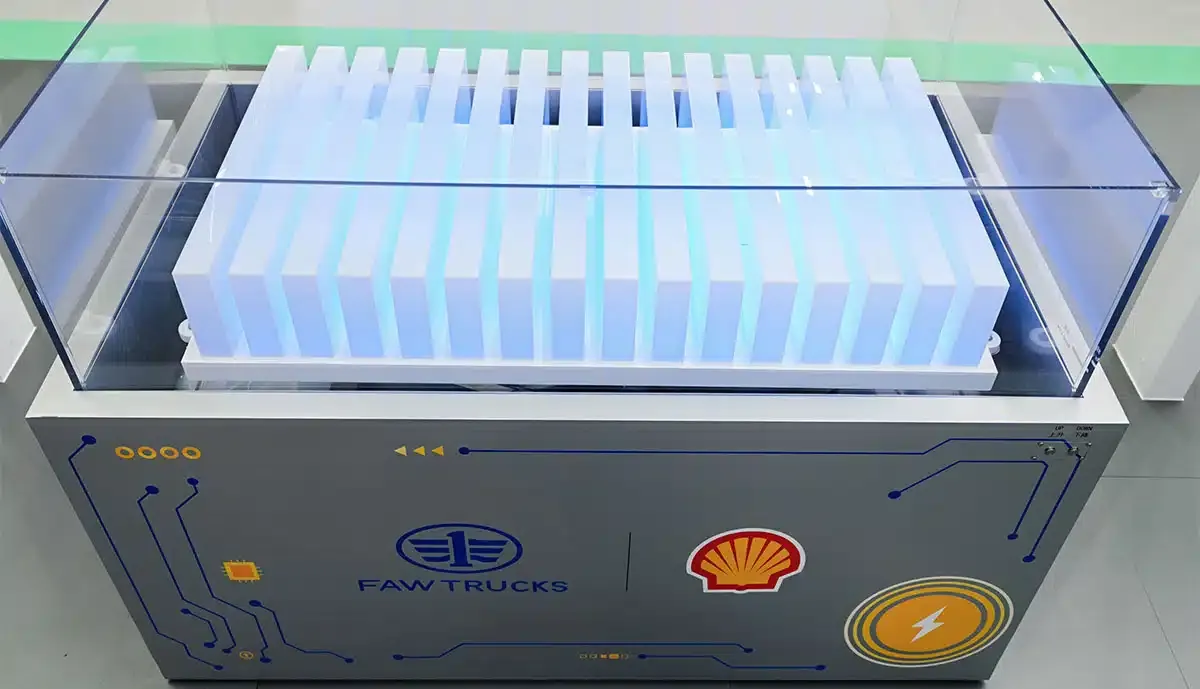
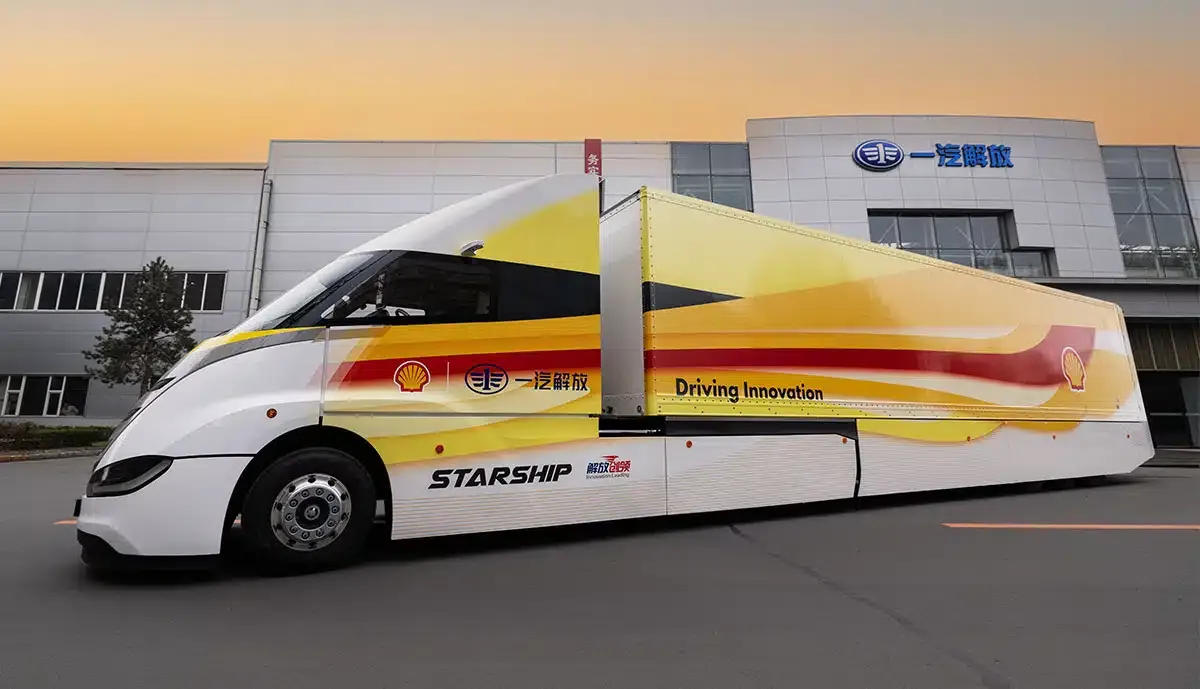
Image: Shell
Shell Lubricants and FAW Trucks from China have jointly developed a battery pack with Shell’s liquid cooling technology for commercial vehicles. The system was tested in the concept truck Shell Starship 3.0 Hybrid (pictured) and is intended for potential future use in electrified commercial vehicles from FAW Trucks.
According to the companies, following industry-standard tests, the battery pack was integrated into the Starship Hybrid for vehicle validation under demanding operating conditions, including continuous high-power charging and discharging.
Shell’s electrically insulating immersion cooling fluid surrounds the battery cells directly, enabling more effective heat management than conventional cooling methods according to the company. While traditional systems cool the battery mainly from below, this fluid comes into contact with the cells over a much larger surface area. This is intended to improve heat transfer and temperature uniformity across the battery cells, as well as enhance battery performance under demanding operating conditions.
According to Shell, initial results from vehicle validation indicate a potential increase in maximum climbing ability by up to 98 percent, an improvement in energy efficiency of 0.8 percent, and a possible extension of battery life by up to 32 percent.
Shell plans to further develop the cryogenic fluids for additional commercial vehicle applications, drawing on experience from the Starship program. The Shell Starship 3.0 Hybrid is a technology demonstration platform jointly developed by Shell and FAW Trucks to test technologies aimed at higher vehicle efficiency and lower CO₂ emissions.
"Battery thermal management is becoming increasingly important as commercial vehicles demand more power, higher efficiency, and faster charging capabilities," says Wang Jianyu, president of the Commercial Vehicle Development Institute at FAW Trucks. The validation on the Starship Hybrid brings this technology closer to commercial application and holds potential to improve performance, durability, and safety in future hybrid commercial vehicles.
Also interesting
About the author
Thomas Langenbucher is an expert in electromobility with experience in the automotive and financial industries. Since 2011, he has been covering electric vehicles, sustainable technologies, and mobility solutions for ecomento.de. Learn more.
Reader interactions
