
The Renault E-Space aims to revive the family van segment. This electric concept returns to 1984.
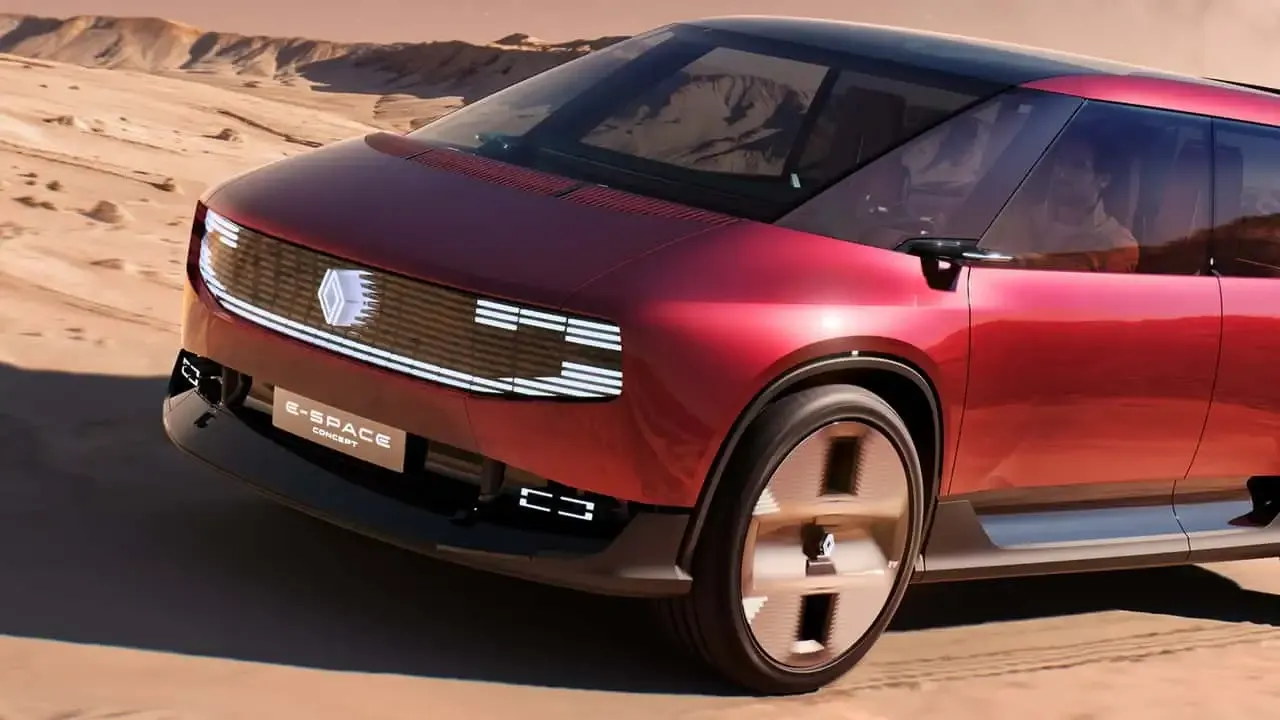
Renault will unveil the electric E-Space Concept on October 12 at the Paris auto show. The van is 4700 mm long, drawing inspiration from the original Espace from 1984, and so far there is no revealed interior or powertrain specifications.
Espace returns as an electric concept
The E-Space Concept inherits primarily the boxy silhouette and massive glass area from its predecessor. Renault refers to it as having nearly 360 degrees of transparency. There is even a small window near the sharply angled A-pillar, which was one of the distinctive features of the original Espace.
The front end looks entirely modern. Its main feature is a wide U-shaped light bar, though the overall proportions aim to resemble the rectangular face of the 1980s model. At the back, the D-pillar running around the roof catches the eye and is visually separated from the rest of the bodywork.
In addition to these, there are cameras instead of mirrors, hidden handles, and huge wheels with very low-profile tires. The last feature looks impressive in photos, but in a production family car it might quickly be outweighed by comfort issues, tire costs, and road conditions.
Renault describes the E-Space as “a vision of the original car directed toward the future” and its “restart.” However, the manufacturer notes that it is merely a concept car. The interior, battery capacity, power output, range, or even the seating arrangement have not been revealed.
The biggest mystery lies in the interior
The first Espace was developed in collaboration with Matra and didn’t gain popularity just because of its appearance. Despite having a relatively compact body, it could seat up to seven people; the rear seats could be removed, and the front seats could be rotated. This allowed the car to be transformed into a small van or a space for eating during camping trips.
This practical aspect of the Renault has not yet been shown. The electric drive offers many possibilities for arranging the cabin, but the information available does not indicate how the seats will be positioned or whether the E-Space will retain the flexibility of its predecessor.
The company admits it is exploring “possible futures,” and a production-ready electric van would fit into the Futuready strategy. This is still a long way from confirming production. Thus, the E-Space joins Renault’s lineup of nostalgic projects, alongside the electric Renault 8 Gordini and the restomod R17. It will be the October 12 presentation that shows whether there is more than just a stylistic exercise behind this impressive body design.
LovEV Newsletter
Want more content like this?
Sign up — we’ll send you a weekly roundup once the newsletter starts.
