
Renault E-Space Concept: The Espace returns as an electric van
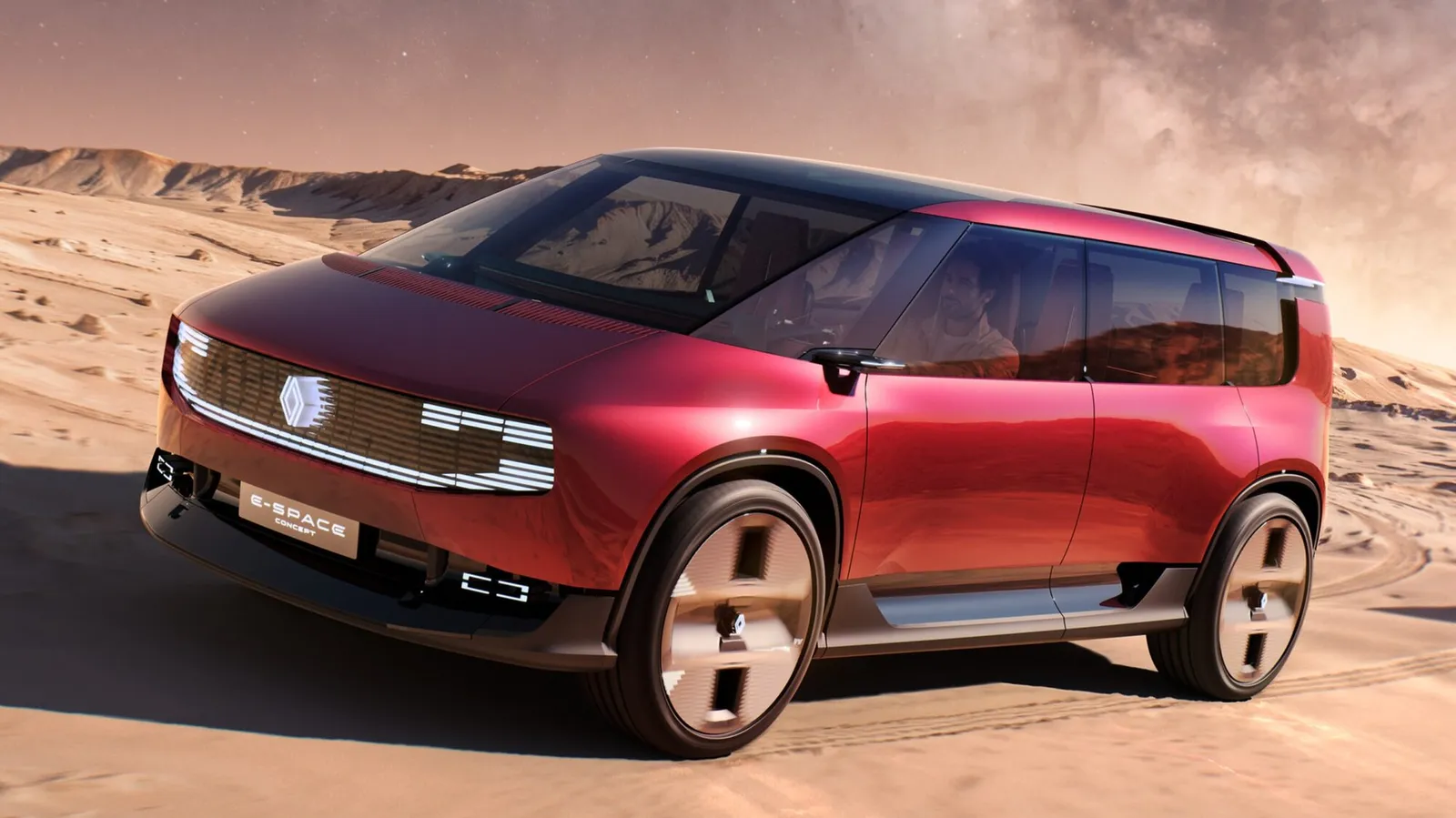
At Paris, Renault presents the E-Space Concept, an all-electric minivan that serves as a modern interpretation of the 1984 Espace. This concept vehicle features six swiveling individual seats, a glass cabin, and the new OpenR panoramic display set to appear in the Rafale and Scenic models.
Advertisement
Renault will showcase the E-Space Concept at the 2026 Paris Motor Show as a study of a fully electric minivan. This concept vehicle builds on the original Renault Espace from 1984, which is considered the first European minivan. Renault explicitly positions this concept as a contrast to the currently dominant SUVs and sedans. Key features include a flexible interior layout, large glass areas, and a new user interface intended for use in future production models.
Dimensions and Design
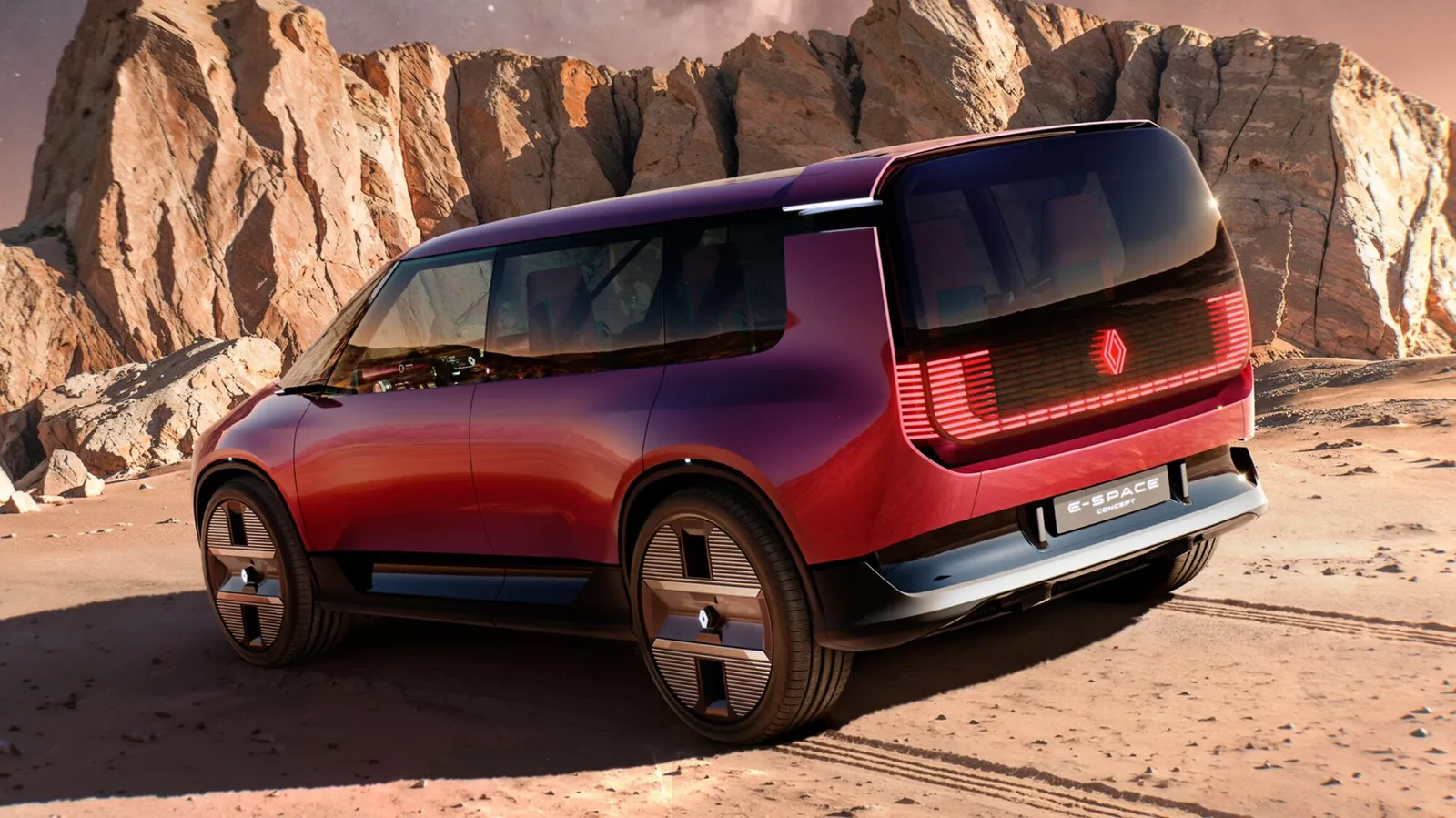
The E-Space Concept is 4.70 meters long, 2.02 meters wide, and 1.67 meters high. According to Renault, the height and length-to-width ratio are based on the original Espace. Unlike the predecessor, the 23-inch wheels are positioned far out at the corners of the vehicle, resulting in shorter overhangs.
The roofline is low, and the ground clearance is moderate. The windshield transitions almost seamlessly into the hood, echoing the wedge-shaped profile of the original Espace. A splitter on the front bumper can be lowered at higher speeds to improve aerodynamics. At the rear, a roof spoiler recalls the second and third generations of the Espace.
In the lower part of the sides, a black element stands out, which Renault calls a “skateboard.” It is intended to reference the battery and aerodynamic components while visually stretching the side profile. The lighting design is also new: a U-shaped light strip surrounds the front grille, with a lit brand logo at its center.
Exterior
Glass cabin and interior
According to the designers, they first created the interior design and then shaped the body around it. Renault cites Bauhaus architecture, specifically Ludwig Mies van der Rohe’s Farnsworth House, as inspiration for the nearly entirely glass-covered passenger compartment. The glass roof and side windows extend down to below the waistline, with the C-pillar being visually separated.
Access is provided through doors mounted at the rear without a B-pillar. On the flat floor of the vehicle, there are six identical individual seats arranged in three rows, each capable of rotating around its own axis. The two seats in the second row can be rotated 180 degrees, allowing them to form a four-seater group with the third row. Alternatively, they can be folded down to serve as a table for passengers behind them.
Folding tables with 12.3-inch screens are integrated into the backrests of the front seats. A remotely controlled console that can be moved along the center of the vehicle includes an air purifier, a small refrigerator, game controllers, and a “Four in a Row” game. Armrests on the doors are unnecessary because the elbow can rest directly on the door frame thanks to the low window line.
Cockpit with OpenR Panorama and Steer-by-Wire
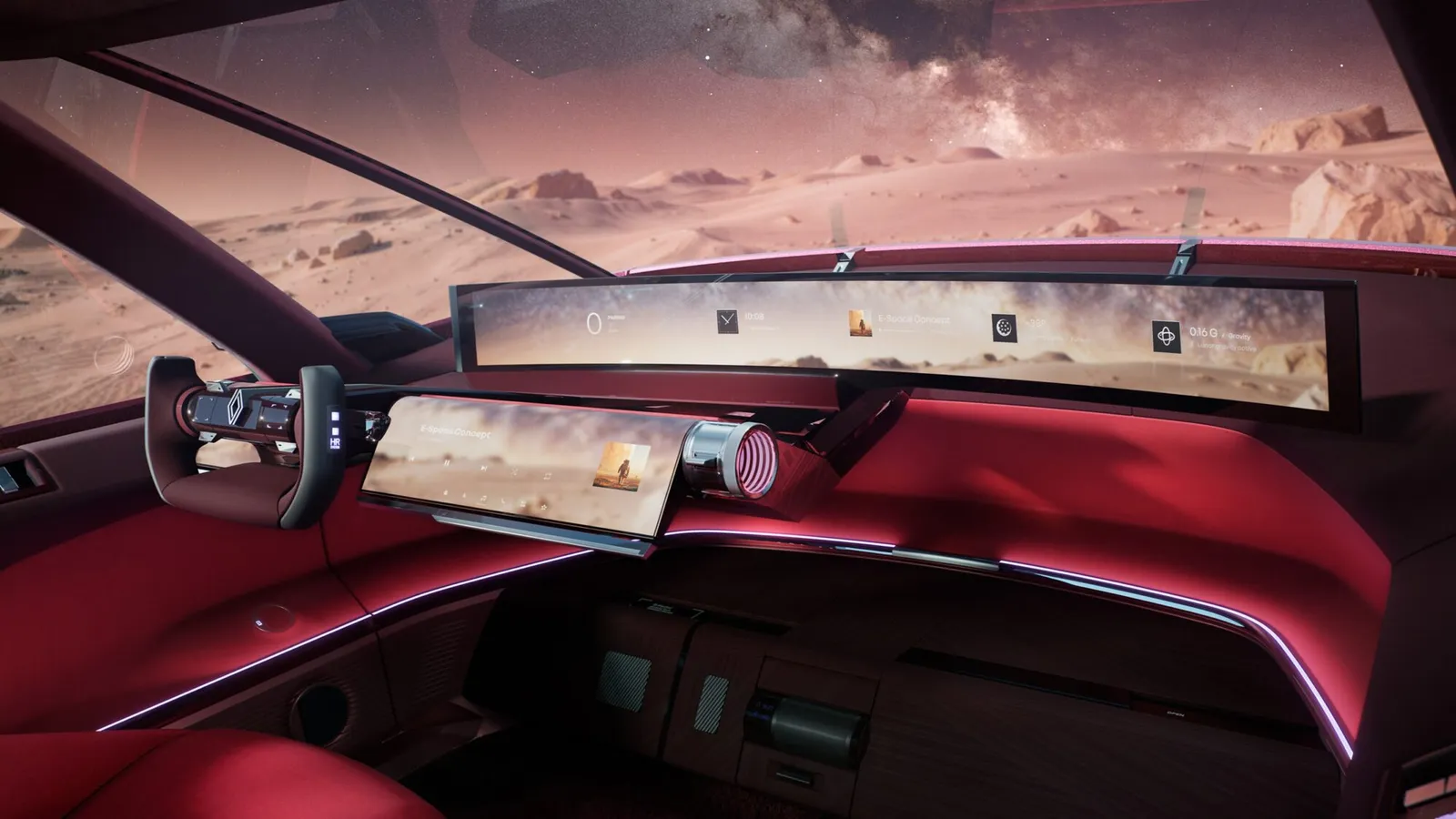
The new “OpenR Panorama” display is particularly significant for series production. This curved screen measures 1,130 x 110 millimeters and spans the entire width of the dashboard. It replaces the traditional gauge cluster but is not a touchscreen. Renault positions it as close as possible to the driver’s line of sight toward the road. This system is set to be installed in future generations of the Rafale and Scenic models.
The display is controlled via two flexible touch screens that can be rotated around the tubular steering column. The compact steering wheel uses steer-by-wire technology, meaning it has no mechanical connection to the steering system, allowing the steering angle to be adjusted freely. The pedals are integrated into a curved console beneath the dashboard.
Colors and Materials
The interior features red tones ranging from scarlet to garnet, echoing the colorful Renault interiors of the 1970s. The floor is covered with a three-centimeter-thick carpet with coral-colored patterns.
Renault relies on bio-based materials instead of leather and wood for its components. The trim is made from colored straw, while the carpet is 100 percent wool. The interior paint contains 18 percent bio-based resin, and the steering wheel cover includes 26 percent castor oil and 25 percent organic cotton. The tires contain an average of 19 percent natural rubber. Across the group, Renault aims for 30 percent recycled materials in its model lineup.
Advertisement