
Renault E-Space Concept: the electric MPV is back
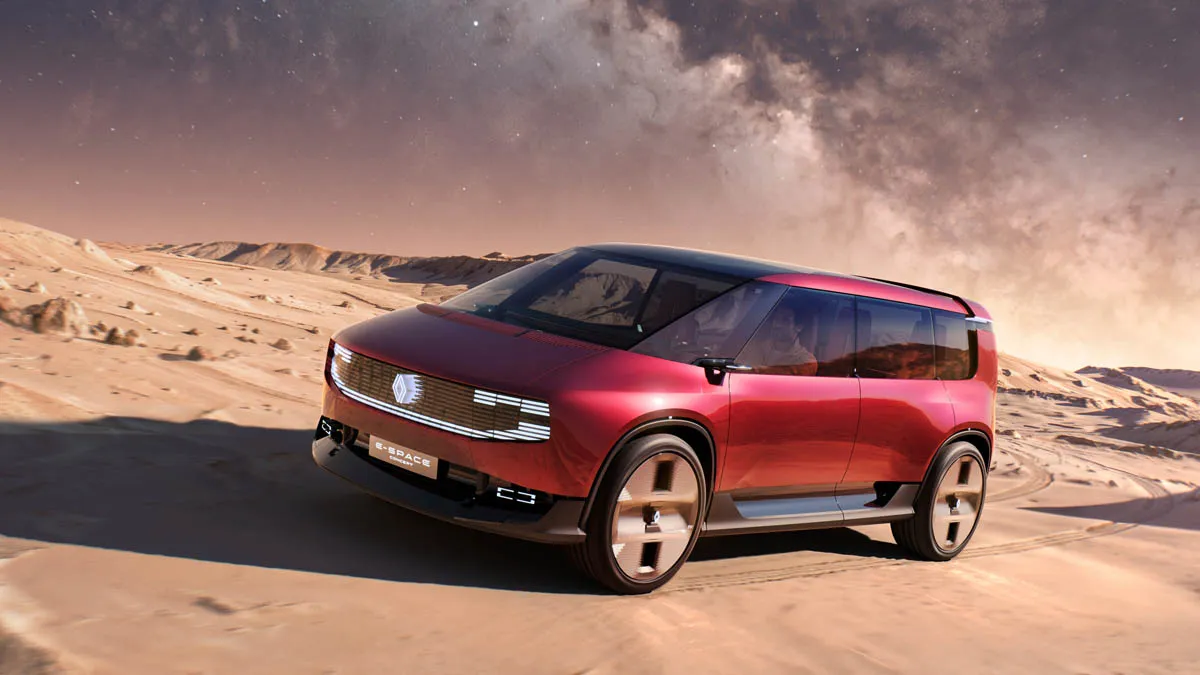
The Renault E-Space Concept draws inspiration from a time when family cars were primarily expected to be spacious, comfortable, and practical. With this striking electric concept car, Renault demonstrates that the classic MPV format is far from obsolete. In fact, it might be time for a comeback.
Back to the 1984 Espace
Those who still remember the first Renault Espace from 1984 know how extraordinary that car was at the time. It featured a high chassis, large glass areas, plenty of interior space, and seats that allowed movement in all directions. With the Espace, Renault helped shape an entirely new car segment back then. Later, MPVs gradually lost ground to SUVs—a trend we discussed earlier in relation to the transformation of the Renault Scenic. That is precisely why the arrival of the Renault E-Space Concept is so interesting.
Renault clearly chooses not to go for yet another large SUV with a rugged appearance. The French brand returns to the original idea behind the Espace: a car where the needs of its occupants matter more than its exterior. This might sound obvious, but looking at current offerings shows that design often takes precedence over practicality these days.
The fully electric Renault E-Space Concept is currently just a design study. Renault presents it as a new interpretation of its famous “voiture à vivre,” roughly translated as a car for living in. At the same time, this concept car shows the direction the brand aims to take with future models. And that direction is quite interesting.
Renault E-Space Concept prioritizes space over SUV styling
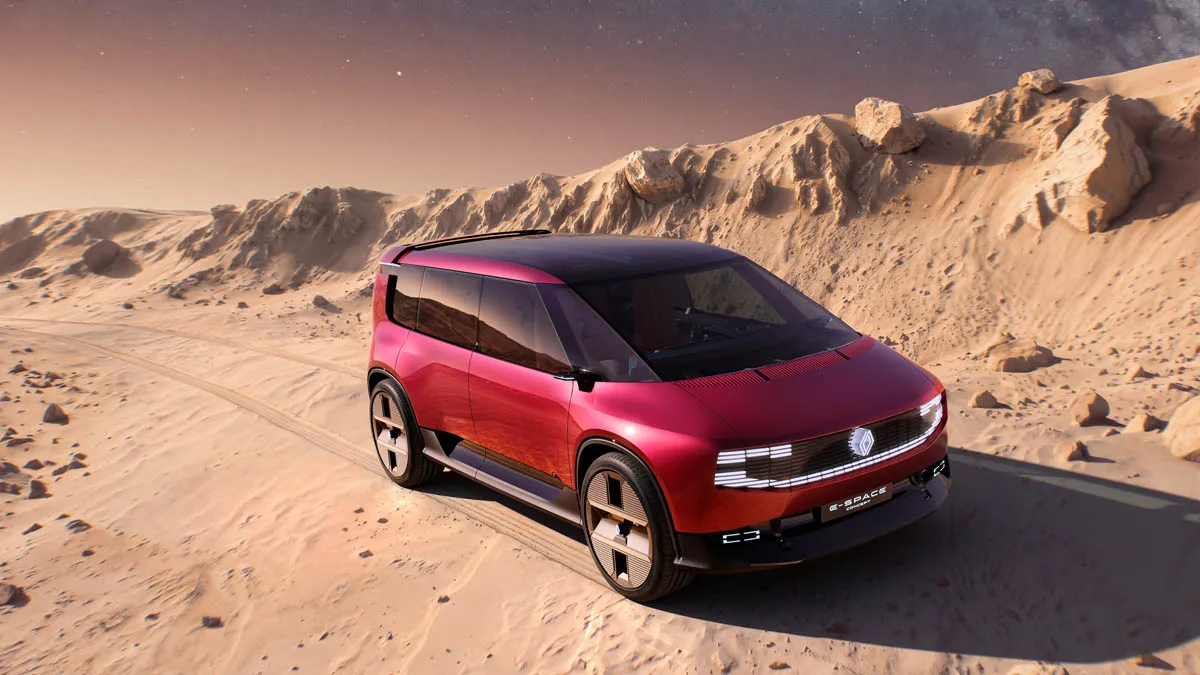
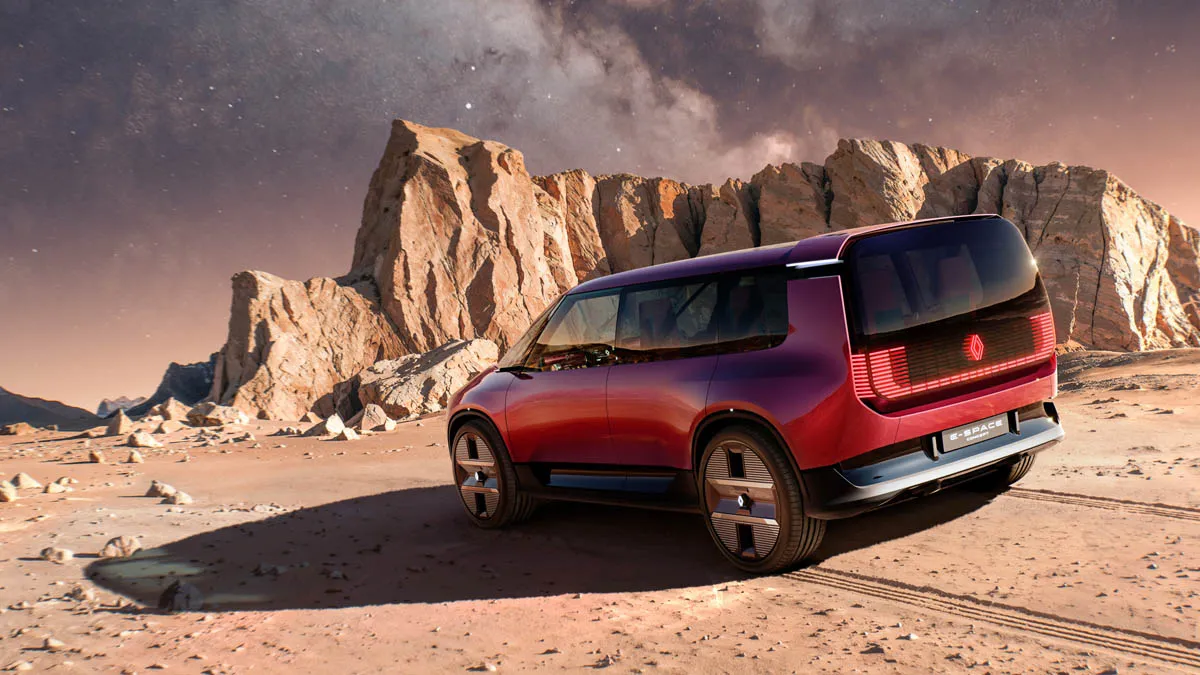
With a length of 4.70 meters, a width of 2.02 meters, and a height of 1.67 meters, the E-Space Concept is a sizable car. Yet it appears considerably lower and more streamlined than an average SUV. This is largely due to the low window line, short overhangs, and the huge 23-inch wheels positioned far out at the corners of the body. The result is proportions that clearly recall the original Espace, but with a modern look.
The abundance of glass is particularly striking. The front windshield forms almost one continuous unit with the hood, while the large side windows and glass roof create a remarkably open feel. Renault even tried to minimize the transition between glass and bodywork as much as possible. The outcome is a car where you can already see from the outside just how much space is available inside.
At the front, a large U-shaped lighting pattern draws attention, with a lit Renault logo in the center. The rear also features its own lighting design, while a movable element under the front bumper is intended to reduce air resistance at higher speeds. Despite these technical details, the design remains strikingly understated. There are no excessive sharp folds or overly aggressive shapes, just a streamlined body that prioritizes functionality.
Six Seats and an Adaptable Interior
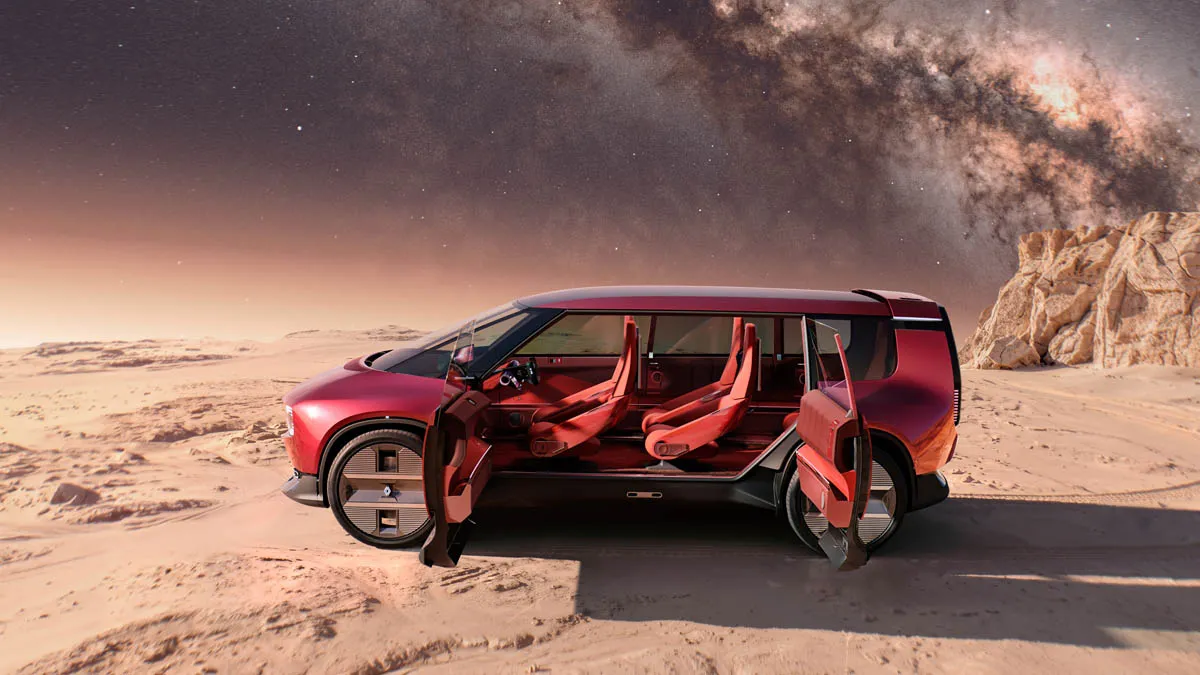
The biggest surprise lies inside. Renault designed the E-Space Concept from the inside out. First, they determined how to make the available space work optimally, and only then was the car body given its final shape. This becomes evident as soon as the large, rear-hinged doors open. Without a B-pillar, there is an exceptionally wide entrance to the interior.
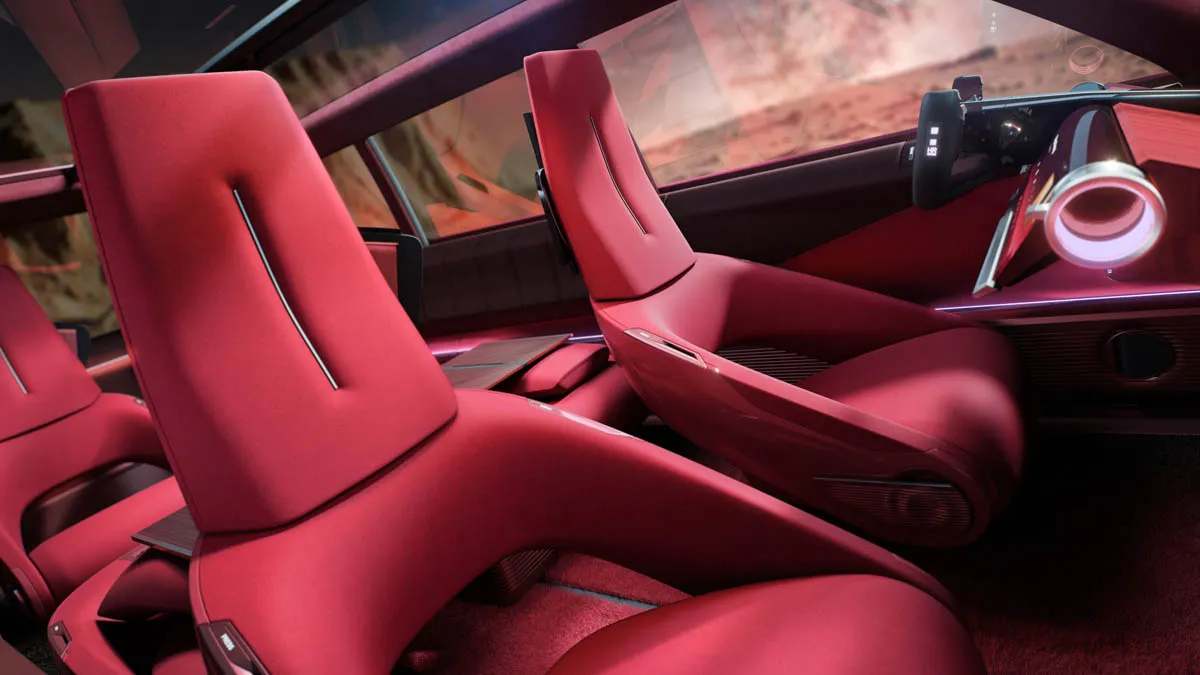
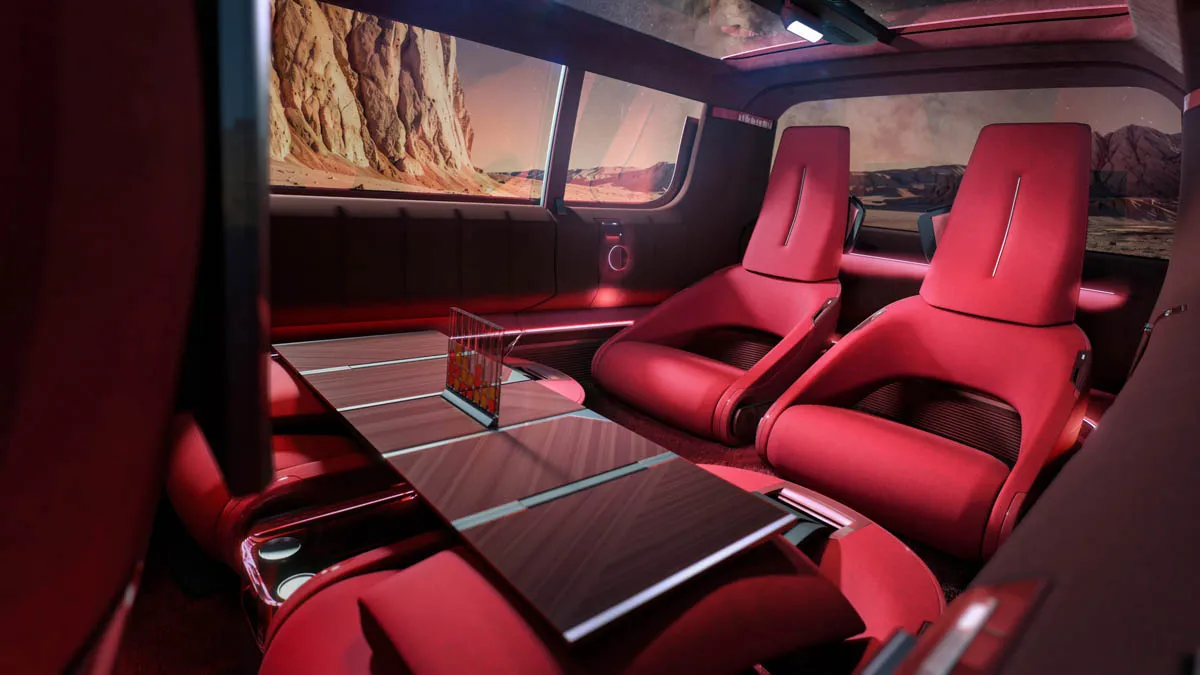
Inside, there are six separate chairs on a completely flat floor. They all have the same size and are designed to be remarkably slim, with Renault drawing more inspiration from furniture design than from traditional car seats. This not only gives it a light aesthetic but also makes the interior particularly flexible.
The two chairs in the middle row can rotate 180 degrees, allowing four passengers to sit face to face. This resembles a seating arrangement on a train and fits perfectly with the idea that a car can also be a place to spend time together. Those who prefer more working or playing space can fully fold down the middle chairs, which then form a large table for the rear passengers.
That’s not all. There are 12.3-inch screens in the backrests of the front seats, and various features can be added through a sliding center console. Think small refrigerators, air purification systems, game controllers, and even a classic solitaire game. Not everything will make it to the production version, if one does come out, but Renault is using this to show what’s possible when flexibility is the guiding principle.
A dashboard over a meter wide
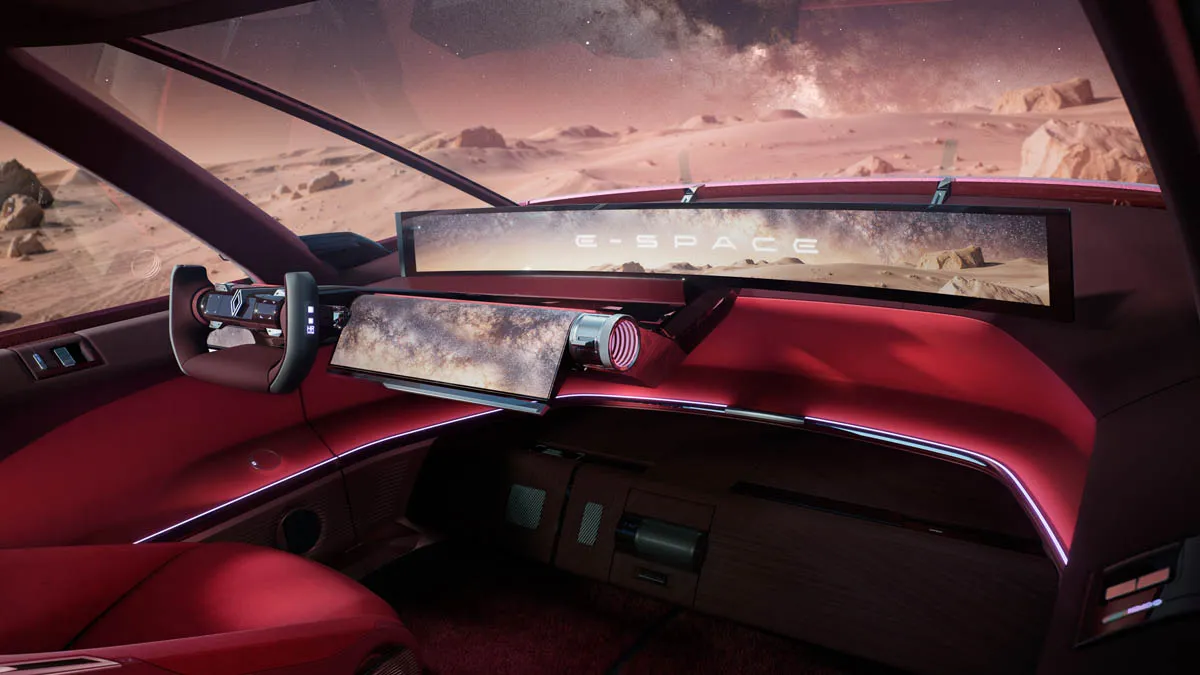
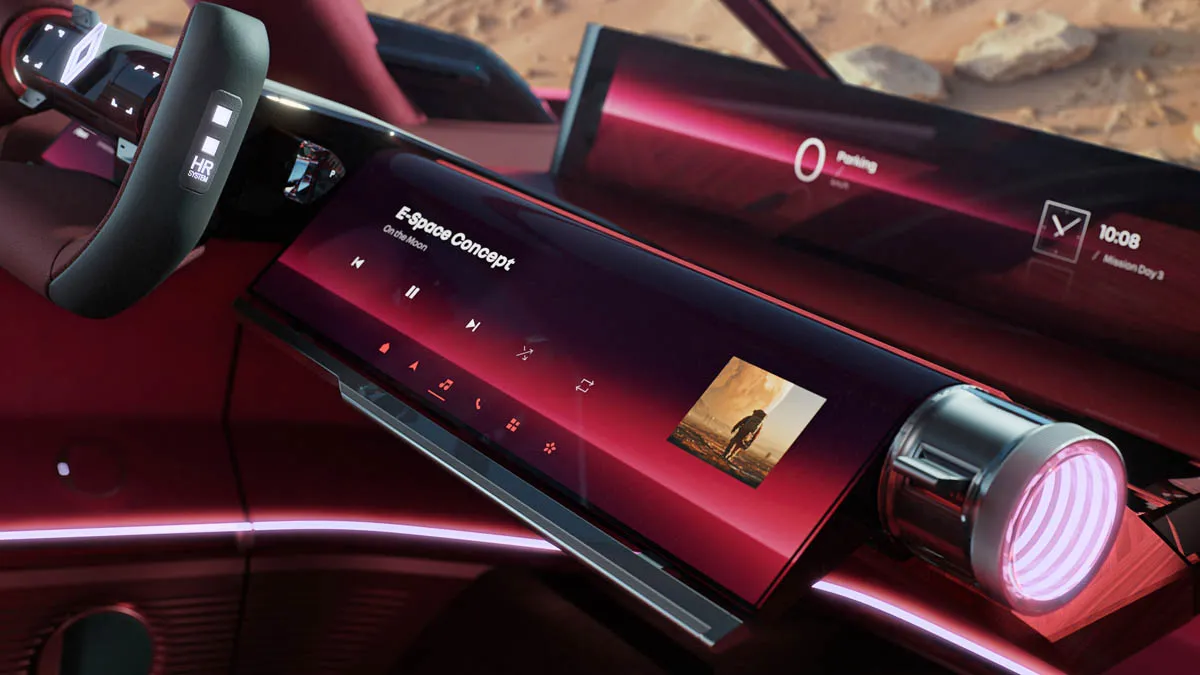
Renault has also largely abandoned the traditional layout in the front area. The most notable feature is the OpenR Panorama display, a curved screen that is 1,130 millimeters wide and 110 millimeters high. It spans almost the entire width of the dashboard and replaces the traditional instruments. However, it is not a huge touchscreen that requires constant tapping. The large screen is actually non-touch sensitive.
The controls are accessed through two smaller, flexible screens surrounding the steering column. This allows the driver to view information and operate functions without having to reach across the dashboard constantly. The compact steering wheel also contributes to a clear layout. It utilizes steer-by-wire technology, which eliminates a mechanical connection between the steering wheel and the front wheels. This gives designers more freedom to arrange the available space.
Interestingly, the OpenR Panorama display was not developed solely for this concept car. Renault confirms that this technology will also be applied to future production models. The next generations of the Renault Scenic E-Tech electric and the hybrid Rafale are among the first models to be equipped with it. This gives us a glimpse of what we can expect in other Renault vehicles in the future.
Red, wool, and even straw
Those who think future electric cars will mainly consist of black plastics and large screens will get a very different view at Renault. The interior of the E-Space Concept is finished in various shades of red, from bright coral to deep garnet. Combined with plenty of natural light, this creates a warm atmosphere that differs significantly from the often business-like design of modern cars.
The floor is covered with a carpet that is as thick as three centimeters and made entirely of natural wool. Renault also made special choices for the other materials. For example, the decorative finish on various interior parts is made of colored straw, while in other areas bio-based resins and materials made from castor oil and organic cotton are used.
These are interesting experiments that show Renault that sustainable material choices don’t necessarily lead to a minimalist interior. At the same time, such a thick woolen carpet naturally raises questions about its practicality in a family car. Anyone who’s been on the road with children and muddy shoes understands why. But a concept car can afford to be a bit exaggerated.
Will the electric Renault Espace get a sequel?
It remains unclear whether the E-Space Concept is truly a precursor to a new electric Espace. Renault explicitly refers to it as a design study and has not yet announced any concrete production plans. Technical details such as the battery pack, engine power, range, and charging speed are also missing. So nothing meaningful can be said yet about its performance or potential price tag.
Yet this concept car is more than just a striking design. The electric drive indeed offers possibilities to arrange the interior differently. Without a large combustion engine and with a battery pack under the floor, there is more freedom to truly dedicate the available space to the passengers. Renault makes full use of these possibilities here, demonstrating that an electric family car doesn’t have to be an SUV.
And perhaps that is the most appealing aspect of the Renault E-Space Concept. While almost every manufacturer continues to expand its model range with more and more SUVs, Renault is once again seriously considering the advantages of MPVs. Whether this will ultimately lead to a new electric Espace remains to be seen. But a spacious, versatile family car without excessive SUV aspirations would, in our opinion, be a welcome addition.
Text: Marc Verweij