
What is the difference between kW and kWh? The simple explanation you need
There are two units that appear frequently when discussing electric cars but still cause quite a bit of confusion: kW and kWh. We encounter them in technical specifications, at charging stations, and even on electricity bills. Although their names are very similar, they represent different things, and understanding them helps in better interpreting both a car’s performance and the cost of using it.
The difference is simpler than it seems, and no electrical knowledge is required to understand it. Just keep one thing clear: kW measures power, while kWh indicates an amount of energy. With that in mind, concepts such as battery capacity, charging speed, and consumption become less confusing.
kW: power, or the rate at which energy is used
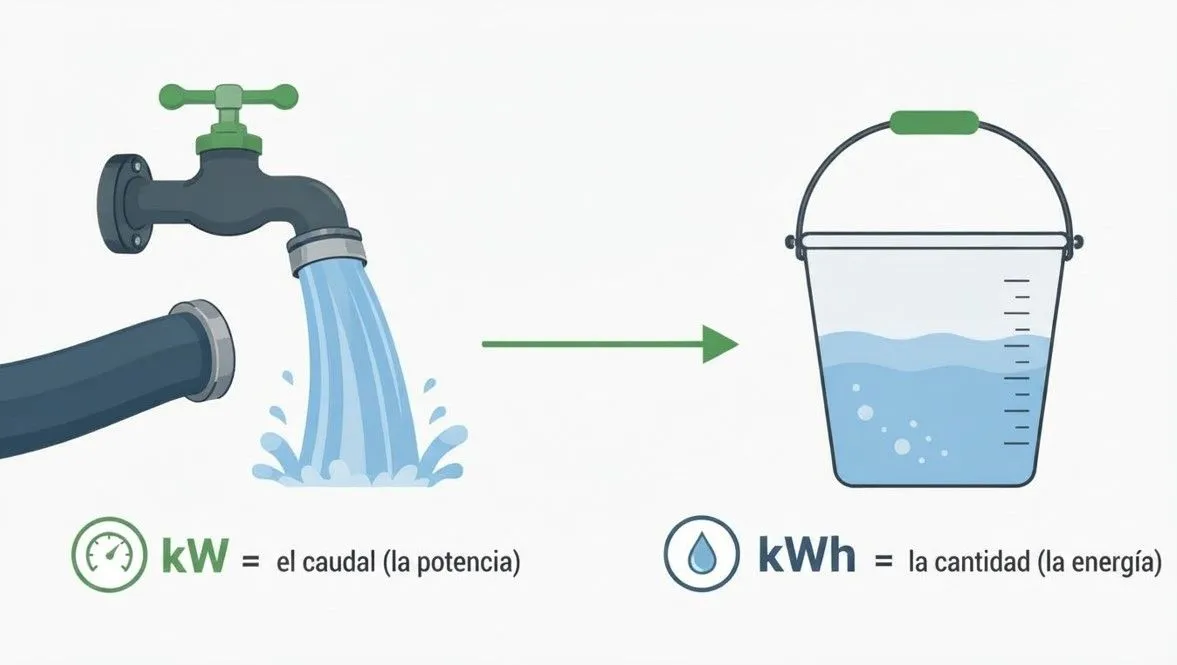
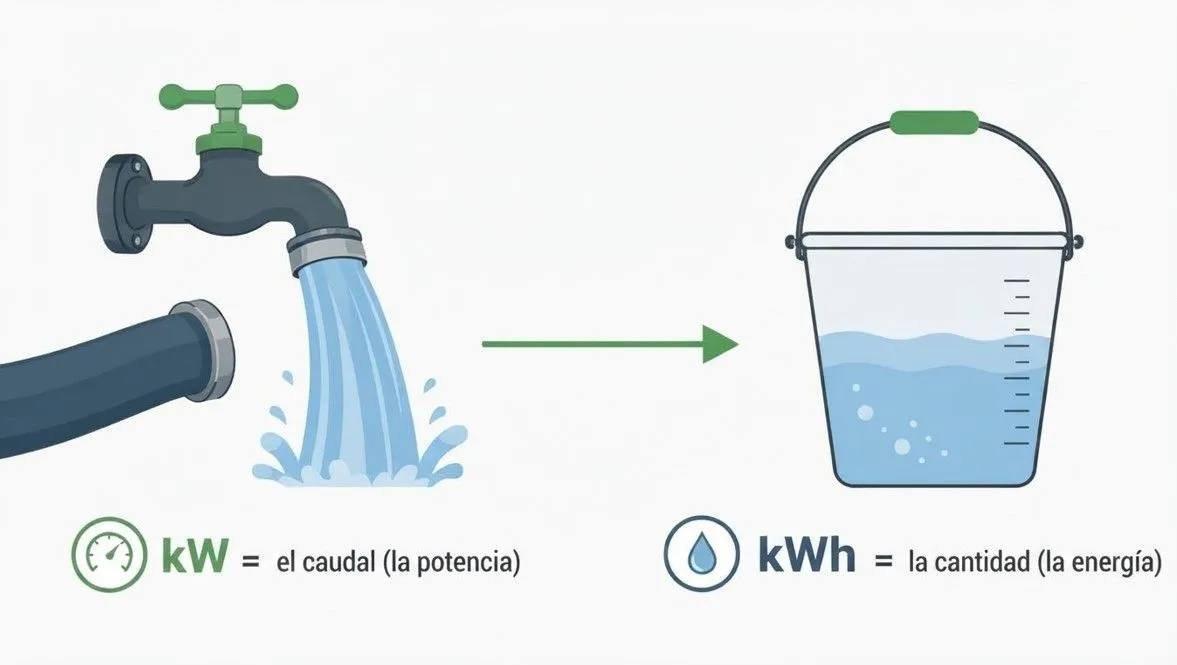
Kilowatt (kW) is a unit of power. To understand it simply, we can imagine a faucet from which water flows. The kW represents the flow rate at any given moment: the higher the power, the more energy a device can use in a specific instant. One kilowatt is equivalent to 1,000 watts.
We can find very clear examples at home. A water boiler usually has a power rating of around 2 kW, while an electric radiator can range from 1 to 2 kW. In the case of electric cars, a home charger may provide 3.7 or 7.4 kW of power, whereas fast charging stations on the road offer much higher levels of power.
The key point is that power alone does not indicate the total amount of energy consumed. A 2 kW device running for a few minutes may use less electricity than a lower-power device that stays on for several hours. To determine the cumulative consumption, we need another unit: kilowatt hour.
kWh: the amount of energy consumed or stored

Kilowatt hour (kWh) measures a quantity of energy. Continuing with the faucet example, we are no longer talking about flow rate but rather the amount of water that ends up accumulating in a bucket. The longer the faucet remains open, the more water will be collected, assuming the flow rate stays constant.
The relationship between these two units is simple. A device operating at a power of 1 kW for one hour consumes 1 kWh. If it operates at 2 kW for half an hour, it will also consume 1 kWh. Therefore, the energy consumed depends both on power and on the duration of operation.
This is exactly the unit that appears on the electricity bill. The receipt records the kWh consumed and applies the corresponding price based on the terms of the contracted tariff. The power we have contracted at home, on the other hand, determines how many appliances we can use simultaneously without exceeding the available limit.
The formula that relates these two units is very easy to remember: energy (kWh) = power (kW) × time (hours). For example, a 2 kW oven that remains on for 30 minutes consumes approximately 1 kWh. An internet connection with a constant consumption of 15 W, running for a month of 30 days, would cost around 10.8 kWh.
We can also see this with a light bulb. A 10 W LED lamp requires much less power than an old 60 W incandescent bulb to provide comparable lighting. However, the total consumption will depend on how long each one stays on.
In a residential setting, the meter and the contracted power also play an important role. Contracted power is usually expressed in kW, while apparent power is measured in kVA. If we connect too many appliances at once and exceed the available limit, a power outage may occur. In contrast, the consumption we pay for at the end of the month is calculated in kWh, and the fixed charge on the bill depends, among other factors, on the contracted power.
What do kW and kWh mean in an electric car

In an electric car, both units appear frequently, but each serves a very specific purpose. The battery capacity is expressed in kWh, while the engine power and charging power are indicated in kW. They are not interchangeable figures, although they are related.
The battery capacity is comparable to the size of the fuel tank in a conventional car. A battery with more kWh can store more energy, but this does not guarantee greater range on its own: factors such as consumption, aerodynamics, weight, temperature, and driving speed also play a role.
For reference, an urban electric car may have a battery capacity of around 40 kWh, while many family models range from 60 to 80 kWh. Larger electric cars or those designed for long-distance travel can exceed 90 kWh. In all cases, capacity is just one part of the equation: to determine how many kilometers we can travel, we also need to know the energy consumption.
It’s worth remembering that 1 kWh equals 1,000 Wh. That’s why electric bikes typically use batteries whose capacity is expressed in watt-hours, whereas cars usually use kilowatt-hours.
Charging power is measured in kW
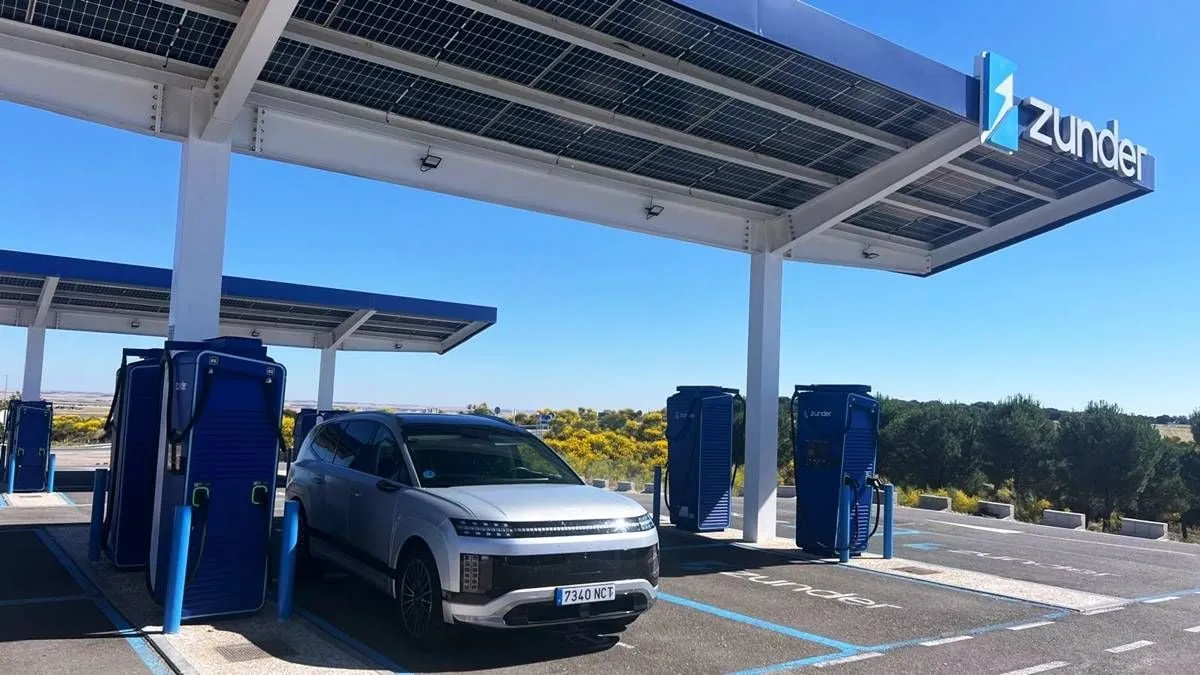
When connecting an electric car, the charging power indicates the rate at which it can receive energy. A conventional household outlet can provide around 2.3 kW, while a higher-powered outlet can reach up to 3.2 kW. A home charger can offer 7.4 kW in a single-phase setup or up to 22 kW in certain three-phase setups, as long as both the electrical system and the car allow it.
On the road, DC fast charging stations typically offer powers of 50 kW or more, with the most powerful ones capable of reaching 350 kW or even higher. This allows for faster energy replenishment, which is especially important during long trips.
But there is one detail to keep in mind: the power advertised by the charging station is not necessarily the same as what the car will receive. If a station can deliver 150 kW, but the vehicle can handle up to 100 kW under those conditions, the charging will be limited by the car itself. Additionally, the actual power depends on the battery percentage, its temperature, and the vehicle model’s charging curve.
The power of an engine is also expressed in kW. In Spain, however, we still commonly use horsepower (HP), so it’s useful to know the equivalence: 1 kW is approximately equal to 1.36 HP. Thus, a 70 kW engine has around 95 HP; a 100 kW engine has about 136 HP; a 150 kW engine has roughly 204 HP; and a 200 kW engine has approximately 272 HP.
It is important not to confuse the engine’s kW with that of the charging system. A car may have a high-powered engine but accept a relatively modest charging capacity, or the opposite may be true. These are different characteristics, each serving a distinct purpose.
Electric consumption is measured in kWh/100 km
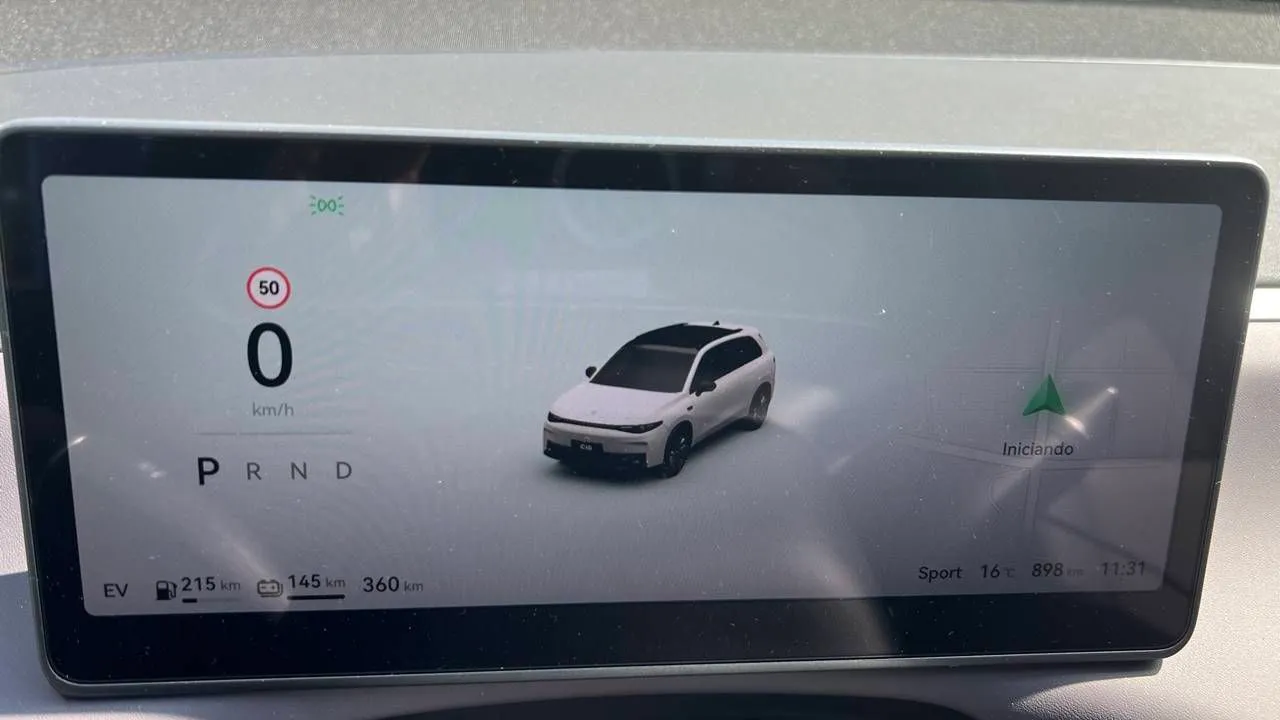
The unit used to compare the energy consumption of different electric cars is kWh/100 km. It functions similarly to liters per 100 kilometers, which we use to discuss gasoline or diesel consumption. The lower the figure, the less energy the car needs to cover the same distance, assuming equivalent comparison conditions.
An efficient electric car can have a consumption of around 15 kWh/100 km under certain conditions, while a large SUV can exceed 20 kWh/100 km. Speed, wind, outside temperature, terrain, and driving style can significantly affect the result.
With this data, we can make a simple estimate of range. If a car has a 60 kWh battery and consumes 15 kWh per 100 km, the calculation yields 400 kilometers. However, this is a theoretical figure: the actually usable energy may be lower than the nominal capacity, and consumption varies depending on driving conditions.
Therefore, to assess the range of a model, it’s not enough to look at the size of its battery. It’s also advisable to check the certified consumption rate and, when possible, tests conducted under real-world conditions.
How long does it take to charge an electric car?
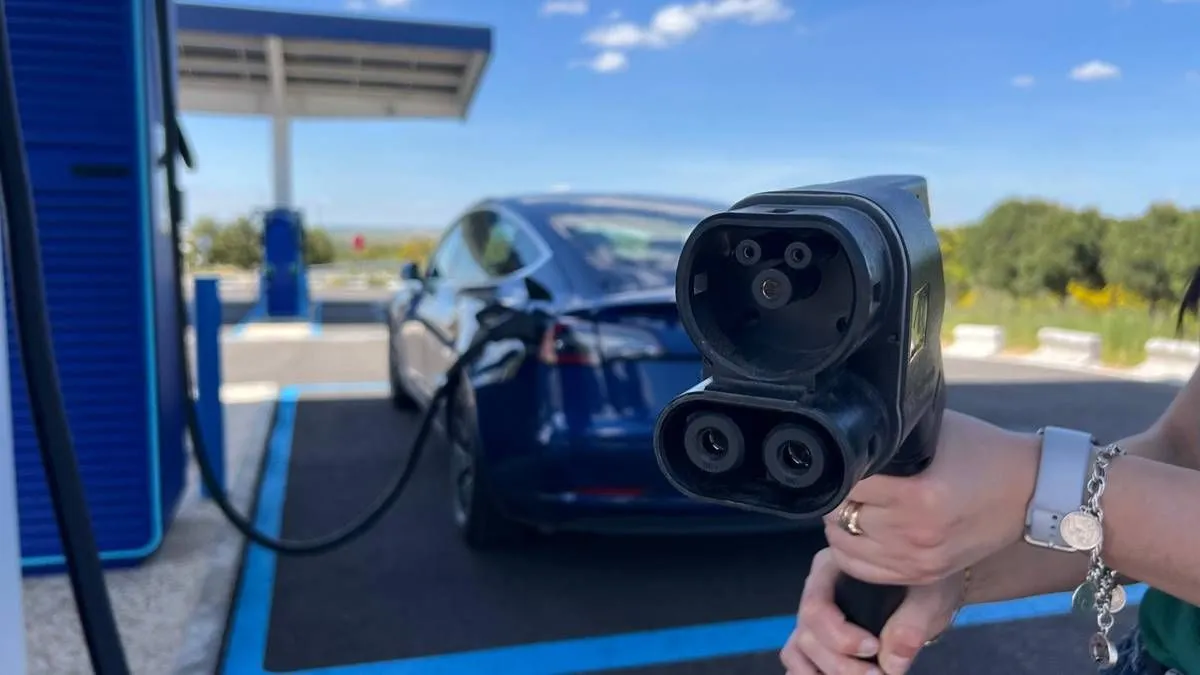
The relationship between kW and kWh also allows for an approximate calculation of how long it takes a car to recharge its battery. The process involves dividing the energy desired to be restored, expressed in kWh, by the charging power, measured in kW.
For example, a 50 kWh battery connected to a 7.4 kW home charger would take about 6 hours and 45 minutes to go from 0% to 100% under ideal conditions. If a standard 2.3 kW outlet is used, the same calculation would result in over 21 and a half hours.
In practice, the times can be longer. Energy losses occur during charging, and the car does not necessarily maintain maximum power throughout the session. Additionally, with direct current, the power usually decreases as the battery approaches its maximum capacity, especially during the final stages of charging.
For this reason, the calculated figures serve as a reference only and should not be interpreted as a guarantee of the time it will take to charge. To estimate this more accurately, one must consider the vehicle’s power capacity, the initial and final battery levels, temperature, and the conditions at the charging station.
In short, the difference between kW and kWh boils down to two concepts: power indicates the rate at which energy is used or supplied, while kWh indicates how much energy is consumed or stored. Understanding this helps in correctly interpreting technical specifications, comparing battery capacities, and calculating both the energy consumption and charging times of an electric vehicle.