
Ford Explorer autonomy test at 120 km/h
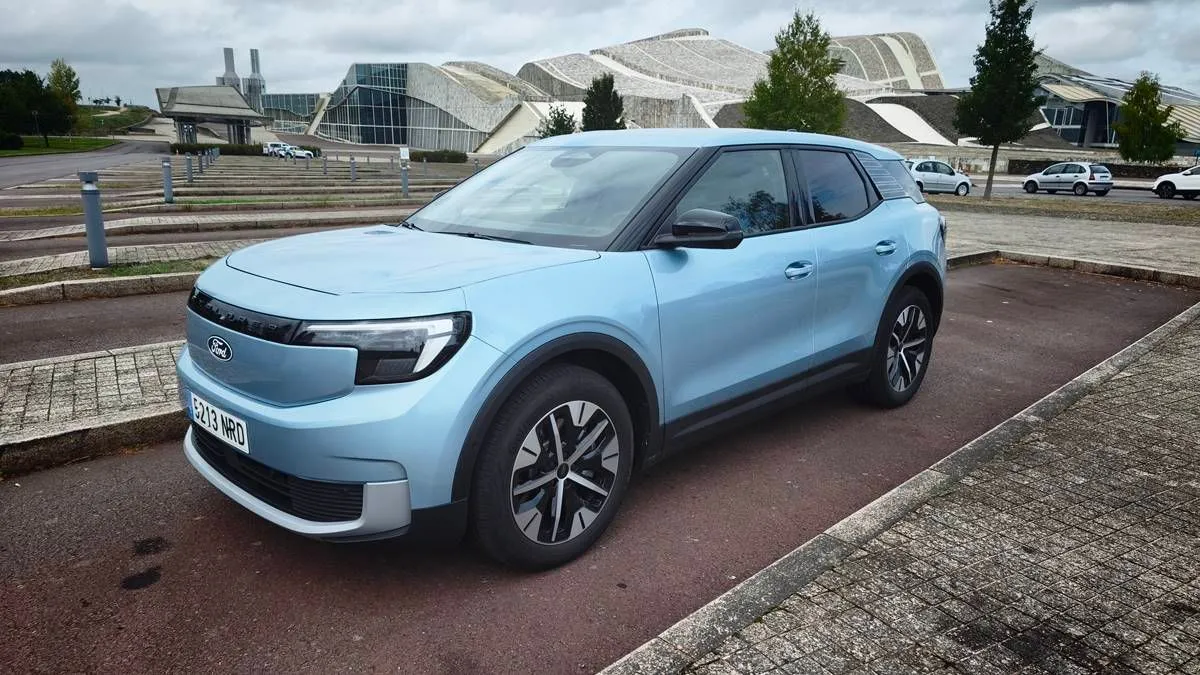
Ford’s path to an electric Explorer hasn’t been overly complicated. They needed an electric car, and they needed it quickly. So to speed things up, they decided to partner with Volkswagen and use its MEB platform. It’s a fairly old architecture, but it’s cost-effective and ready to use. The result is a Volkswagen with Ford’s design, which surprisingly manages to outperform the original in almost every aspect.
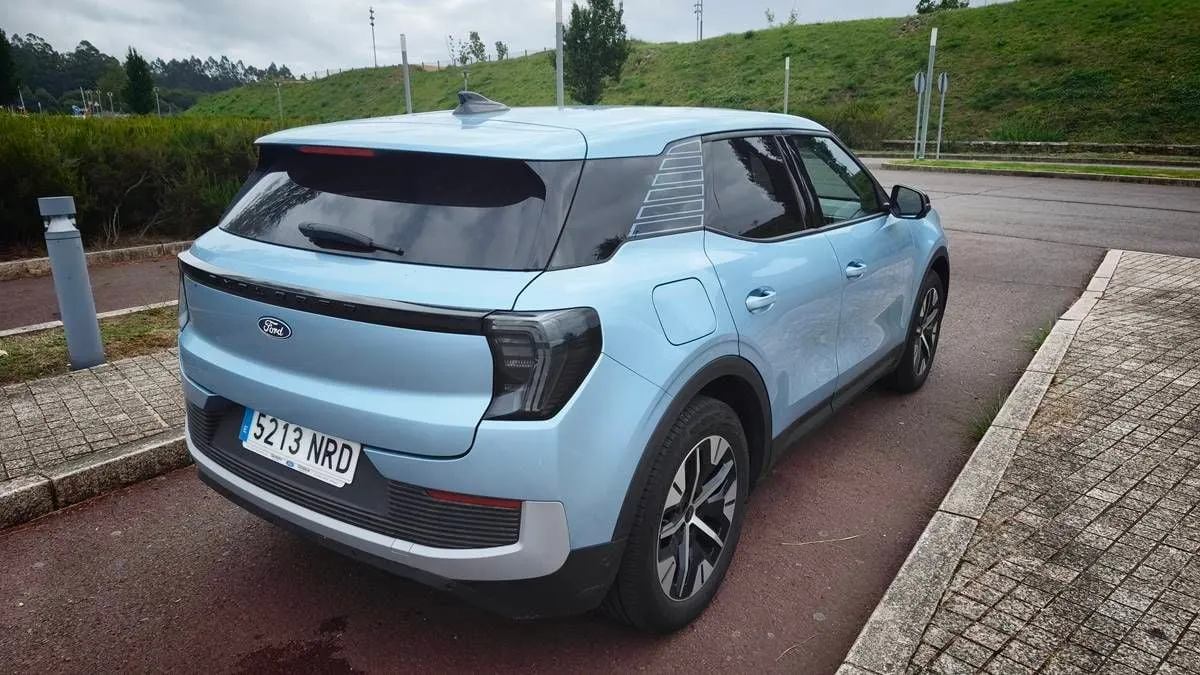
The first thing that stands out, as is obvious, is the design. It’s much more personalized and eye-catching than the ID.4. That’s a advantage for Ford, as it takes advantage of the Germans’ lack of imagination in this regard.
But that’s not all by any means. Ford has managed to launch a car based on the ID.4 platform, but with a more compact body. The Explorer is 4.46 meters long in total, compared to the ID.4’s 4.58 meters. This makes a big difference when parking. Speaking of parking, I was pleasantly surprised by the car’s good turning radius of 9.7 meters, which allows us to park it much more easily than I expected from an SUV of this size.
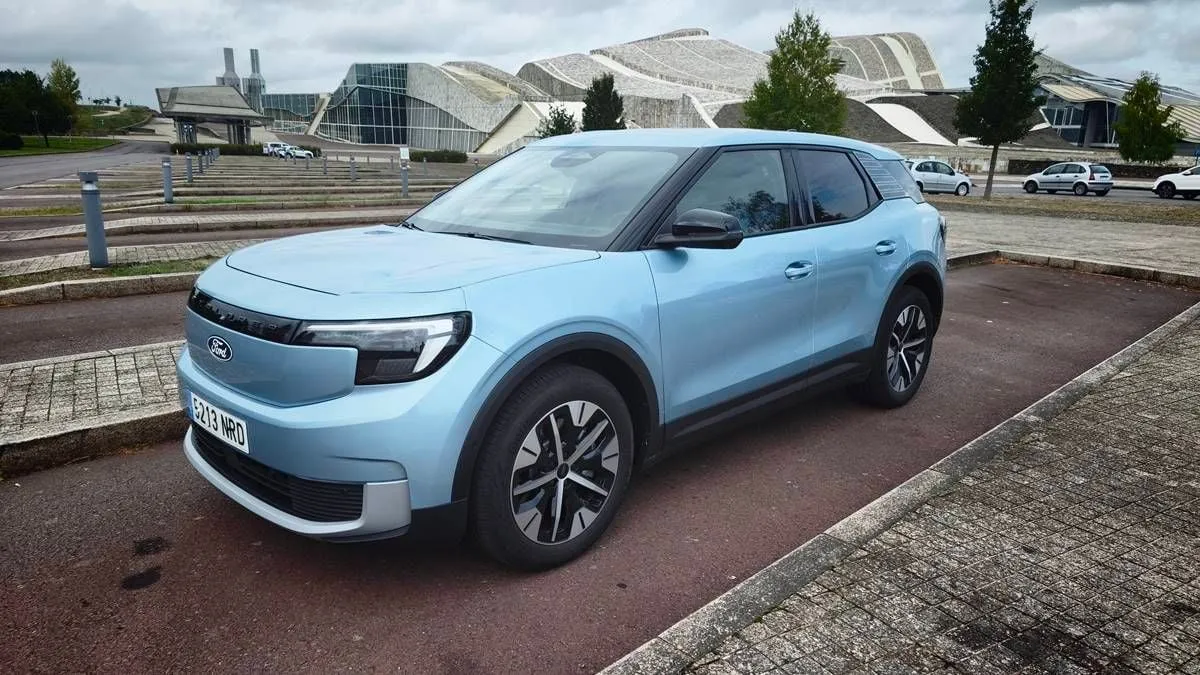
This smaller size has its advantages, with few disadvantages. The trunk capacity is barely affected. We go from 543 liters in the ID.4 to 532 liters in the Explorer. That’s more than enough space to carry all kinds of cargo, such as bicycles, groceries, or large items. The downside for both is that the MEB platform lacks a front trunk. And this, in a rear-wheel-drive car, speaks to Volkswagen’s lack of foresight.
The rear seating isn’t affected by the smaller size, and we still have plenty of knee space, along with a comfortable position and soft seats that allow for long trips without any comfort issues.
Inside, we encounter the first signs of poor decisions by Ford. The screen is the first example—a vertical panel that deviates from the standard horizontal layout and fails to offer any advantages. Reaching certain areas of the screen is difficult, especially those far from the driver, causing unnecessary distractions.
The navigation system is outdated, belonging to an older era that makes the car appear older than it actually is, forcing users to rely on alternative systems like Android Auto or Apple Carplay. Of course, if you enter an address into Google Maps’ navigation, you won’t know what range and charge level you’ll have upon reaching your destination.
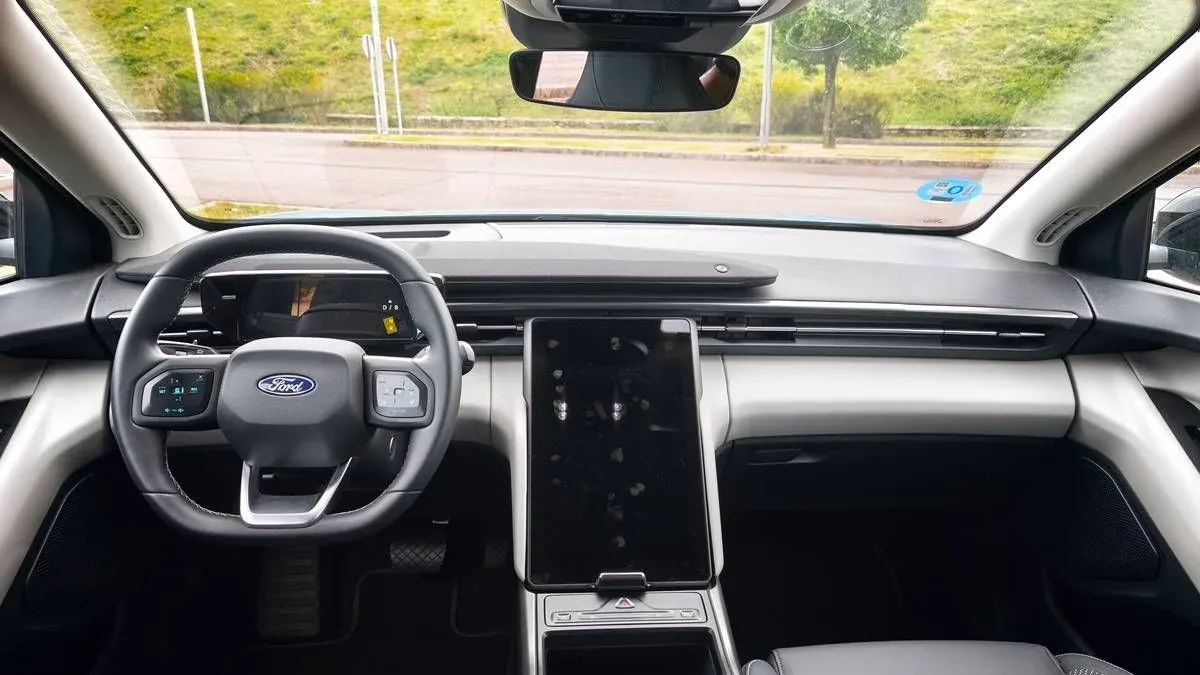
The good thing about the screen is that Ford has placed shortcuts on it for the most frequently used controls, such as one that turns off the speed limit warning. This way, we can eliminate that noise with just two clicks.
The most interesting part is that the menu itself indicates we can perform this action directly on the steering wheel with a single click. The problem is that no one knows how to configure it. At the dealership, which deserves its own chapter, they say it’s a function that isn’t available, but the menu clearly shows it is there.
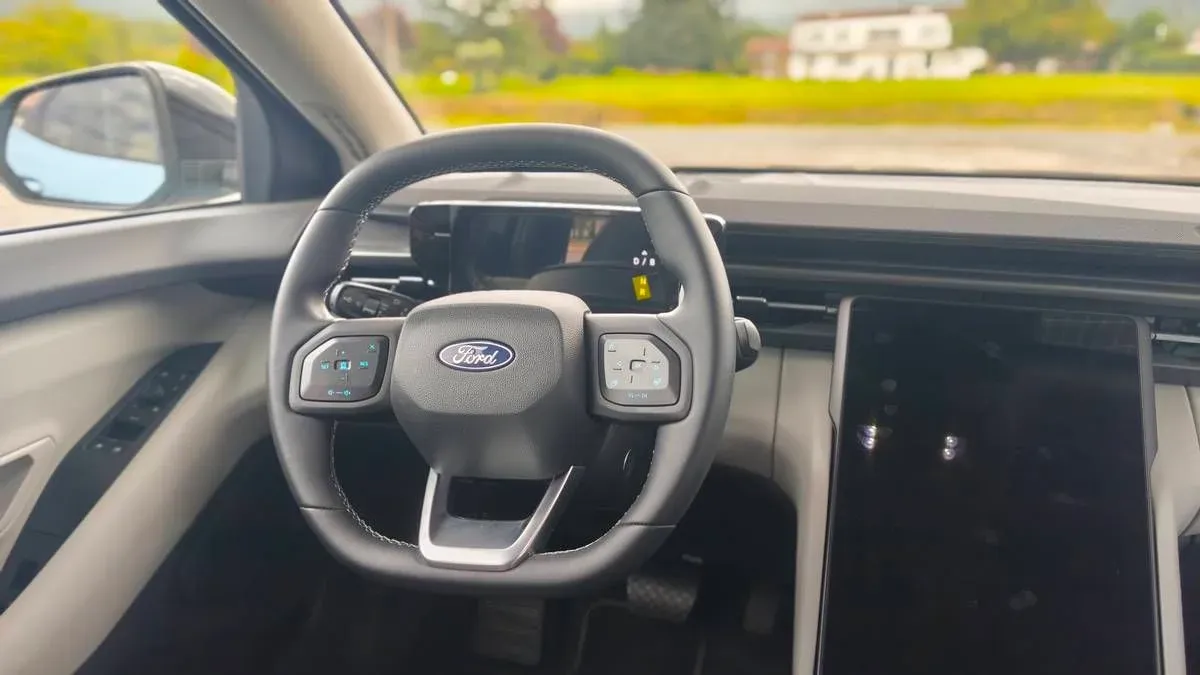
I also really disliked the button system on the steering wheel. It combines the infamous capacitive buttons from the ID.3 with traditional buttons, resulting in a system that mixes the worst of both worlds. It’s uncomfortable to press, imprecise, and hinders simple tasks like adjusting the speed limiter in increments. Setting it to 10 km/h per step isn’t a problem, but trying to increase it by just 1 km/h is a real test of patience.
These details indicate that these cars were designed by people who don’t want to design electric vehicles, or by those who don’t test their creations.
The damn software
For me, the Ford Explorer’s software could be a reason not to buy it. These days, releasing a car with this level of errors is completely unjustifiable. It’s not that the car has flaws per se, but this version has more issues than the previous one. An update they released not only fails to fix problems but actually exacerbates them. This likely stems from the negligence shown by technicians and executives at some brands toward electric vehicles. No wonder they can’t sell anything.
They’re not serious errors that affect driving, but for a car at this price point in 2026, they’re utterly unforgivable. I only had the car for a weekend, but that was enough to drive me crazy.
For example, while you're driving, the radio suddenly changes to stations from another country. Or it simply stops receiving local stations. It's a trivial issue, but it's annoying. The sound settings—you spend some time adjusting your preferences...and then the car decides they're not good enough and changes them. It doesn't reset them; it just replaces them. The driver's seat is another key element where you need time to find your ideal position. Once you do, you save it...just like in most cars these days. The next day, you get in and the car has changed the settings again, so you have to adjust everything from scratch.
These are details that aren't acceptable in a car at this price point and somewhat ruin the overall experience. It's not a Ford-specific problem; it stems from Volkswagen's software disaster that affects many other cars in the same group.
Ford Explorer electric: driving experience
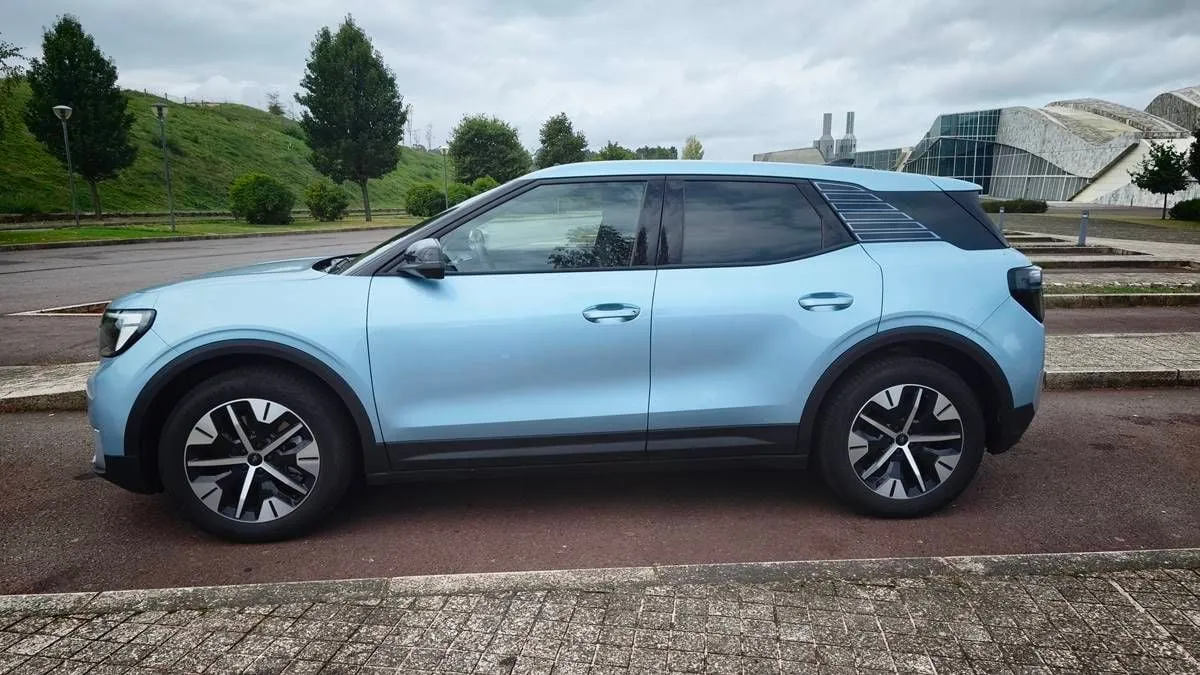
One of the most favorable aspects of the Explorer is undoubtedly its driving experience. It’s an extremely comfortable car with a very soft suspension. So soft, in fact, that when stopped at a traffic light, we can even notice it swaying back and forth. This has its advantages in terms of daily comfort, which is something we would greatly appreciate given the poor condition of our roads and the uncontrolled expansion of speed bumps.
Fortunately, this suspension issue doesn’t significantly affect handling in corners, where Ford has worked hard on a well-tuned chassis that allows the engine’s 286 HP to be fully utilized. With the engine mounted in the rear axle, it accelerates from 0 to 100 km/h in 6.4 seconds, which is three tenths faster than the Volkswagen ID.4 with the same engine.
It’s not an extremely intense acceleration, as progressivity has been prioritized. However, it delivers good recovery performance, enabling the vehicle to move its 2,090 kilograms with relative ease. If more power is desired, there’s a version with two engines and 340 HP, which operates in a completely different class.
The handling is quite comfortable, but the braking could use significant improvement. The brake feel is very soft, forcing us to apply pressure lower than is typical these days. It’s a matter of getting used to it, but after three days with the Explorer, the first thing I noticed when returning to my car was much faster and firmer braking.
Among the various configurations, there’s one that applies automatic braking as we approach curves. It’s a fairly innovative system that works very well. The car detects the curve’s intensity and acts on the brakes in advance to ensure proper entry into the turn. And the timing is usually perfect—neither too fast nor too slow.
Regarding driving assistance features, the speed control and lane centering systems work more or less correctly. But not always. Occasionally the car drives too close to the left edge of the lane, which scares some cars that overtake us. Then there’s the system that monitors whether we have our hands on the steering wheel, which is quite heavy and imprecise. From time to time it thinks we’re not holding the wheel, alerts us, but since we are actually holding it we ignore it...until it applies a slight braking maneuver as a warning. A rather annoying alert.
Ford Explorer electric: range
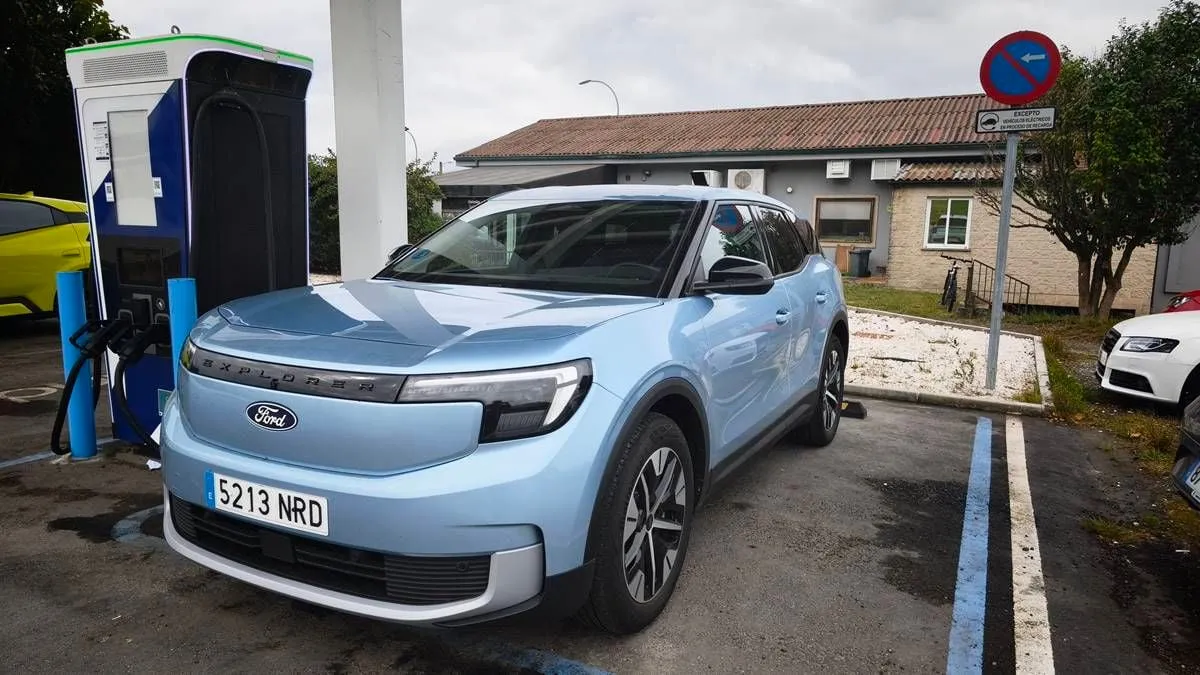
As usual, we put the Explorer through our highway range test at 120 km/h. This is a test we always conduct on the same route—a 33 km stretch of highway that we drive in a loop at between 100% and 5% battery charge—to determine the fuel consumption and range of different models under similar conditions.
It’s a quite demanding route with constant uphill and downhill sections, where cars must give their best to achieve the highest possible figures. The Explorer managed to cover 386 kilometers, with an average fuel consumption of 19.4 kWh per 100 km according to the dashboard display.
This places the Ford Explorer just below the BMW i4 eDrive 40, a sedan, and above the rear-wheel-drive Tesla Model Y Long Range, which managed 363 kilometers despite slightly colder conditions.
Despite this, it’s at least curious that with the same usable battery capacity of 79 kWh, the Explorer manages to travel 23 km more than the Model Y. This is despite Tesla’s supposed higher efficiency, its lower consumption according to the meter, and especially its better aerodynamics. This suggests that the fuel consumption figures in electric cars are unreliable and often misleading.
In fact, even though the Model Y faced slightly colder weather, its certified consumption is lower than that of the Ford. The meter’s reading is also lower, yet it still managed to achieve greater range.
The conclusion is that the Explorer’s engine, Volkswagen’s APP550, is a very efficient powertrain. Just as efficient, if not more so, than Tesla’s engine, which has a well-deserved reputation for its performance numbers. But few people associate Volkswagen—or in this case, Ford—with efficiency. Yet there’s data to support it.
Fast charging is probably one of the main challenges the Explorer must overcome. That’s despite it having improved its performance over the past year by raising its peak power from 135 to 183 kW. Still, 400V systems have their limits—charging the car from 10% to 80% still takes about half an hour. This time is far behind 800V models, which can already achieve charging times under 20 minutes, and in some cases are approaching 10 minutes, such as the Xpeng G6’s 12 minutes.
But this is the limitation of a platform designed over six years ago, which debuted in 2020 with the ID.3 but has roots from earlier years of development. And of course, in an era where Chinese manufacturers are updating their models every year or even less frequently, the pace of traditional automakers means their products quickly fall behind technologically.
Price and conclusion
The main conclusion is that the Ford Explorer is the typical car that someone buys because they want it. It has its own design and approach, but they don’t care that for the same price, or less, there are technologically more advanced options available. It targets a smaller and smaller market segment of people who buy it purely out of passion without thoroughly considering other factors.
By 2026, a Ford Explorer with a 400V architecture priced at 50,657 euros, before any discounts or promotions, is completely out of reach for the market. This is even more true given that the delivery times are utterly absurd, indicating that orders for the prototype version will be delivered in March or April 2027.
But if you want to get it sooner, you have the option of a pre-configured unit in the attractive sky blue color, which will be delivered in October. That is, at a price of 51,765 euros before any promotions.
It’s an inflated pricing strategy that they then “fix” at the dealership with a discount of 11,721 euros, which only serves to scare away customers who don’t even consider it. That’s why the Explorer is Ford’s least sold electric car, with only 466 units sold in Spain this year, keeping the brand outside the top 10 of electric car sellers in Spain — despite its extensive distribution network and marketing spending.
In an era where competition is fierce, and even with maximum effort you might not sell, if you hold back, the outcome is inevitable.
Key points
MEB platform: shares its architecture with the Volkswagen ID.4.
Design: more attractive and personalized than the ID.4.
Size: it measures 4.46 meters and offers 532 liters of trunk space.
Engine: 286 horsepower, rear-wheel drive, and 0-100 km/h in 6.4 seconds.
Battery: 79 kWh NCM battery
Comfort: very comfortable suspension and good handling in corners.
Range: 386 kilometers at 120 km/h between 100% and 5% battery level.
Efficiency: the APP550 engine offers very competitive fuel consumption.
Charging: 400 V architecture with up to 183 kW; about 30 minutes to reach 80% charge.
Software: numerous errors and unintuitive functions.
Price: 50,657 euros before discounts.
