
Peugeot unveils homage to brand icons with coupé and rally-inspired electric models
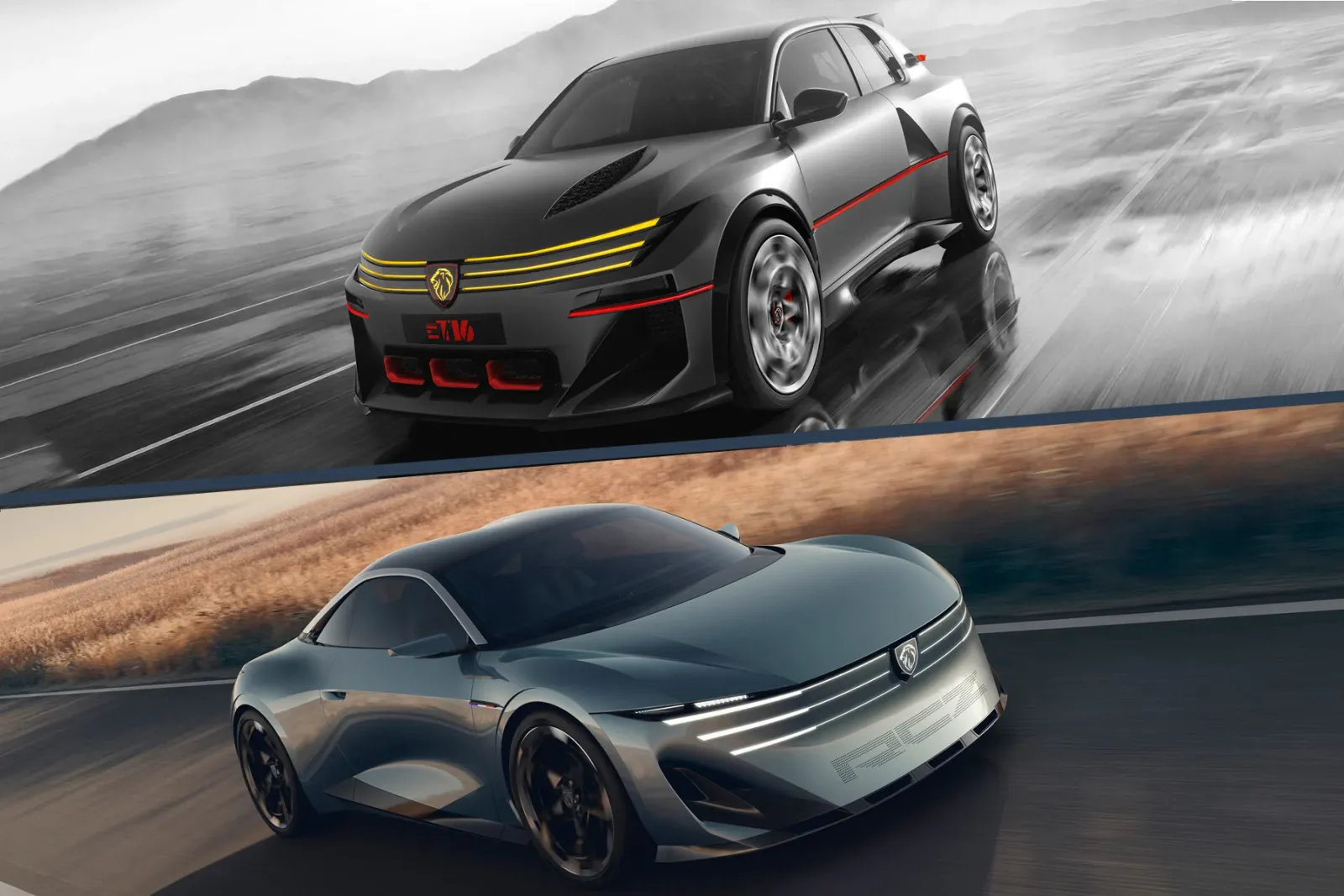
Peugeot had presented two electric concept vehicles at the Paris Motor Show: The E-T16 Concept draws inspiration from the 205 T16 rally car and is said to reference the new E-208 in its interior. The RCZ Vision represents an electric reinterpretation of the RCZ Coupe, featuring a solid-state battery.
Bilder: Peugeot / Collage: electrive
Peugeot is delving into its iconic model archive for its premieres at the Paris Motor Show. The E-T16 Concept and the RCZ Coupé are both based on vehicles that have shaped the brand. The former is a 600 kW electric compact car designed to bring the spirit of the 205 Turbo 16 into the present day. Four decades ago, Peugeot became double world champion with this cult car in the 1985 and 1986 World Rally Championships. The newly unveiled electric reinterpretation, presented in Paris, sports plenty of rally attributes, while its interior also offers a first preview of the upcoming E-208.
Peugeot has presented the second concept vehicle, the RCZ Vision, as the electric successor to the RCZ Coupé. The four-seater coupé was part of the French manufacturer’s lineup between 2009 and 2015, and was produced by Magna Steyr in Austria. Now, it returns as an electric coupé based on the STLA One platform, featuring, among other things, a 1,000-volt electric architecture and a solid-state battery developed in collaboration with Factorial Energy.
The second most powerful Peugeot of all time
So much for the brief overview. Let’s take a closer look at both electric concept cars. Peugeot describes the E-T16 Concept as an electric hyper-hatch, developed in collaboration with Peugeot Sport. This one-off features three electric motors with a combined output of 600 kW and can accelerate from 0 to 300 km/h in 16 seconds. The French manufacturer notes that this makes the Peugeot E-T16 Concept one of the most powerful Peugeots of all time — only surpassed by the Peugeot 208 T16 Pikes Peak prototype, which set a record in 2013 at the Pikes Peak International Hill Climb in Colorado, USA.
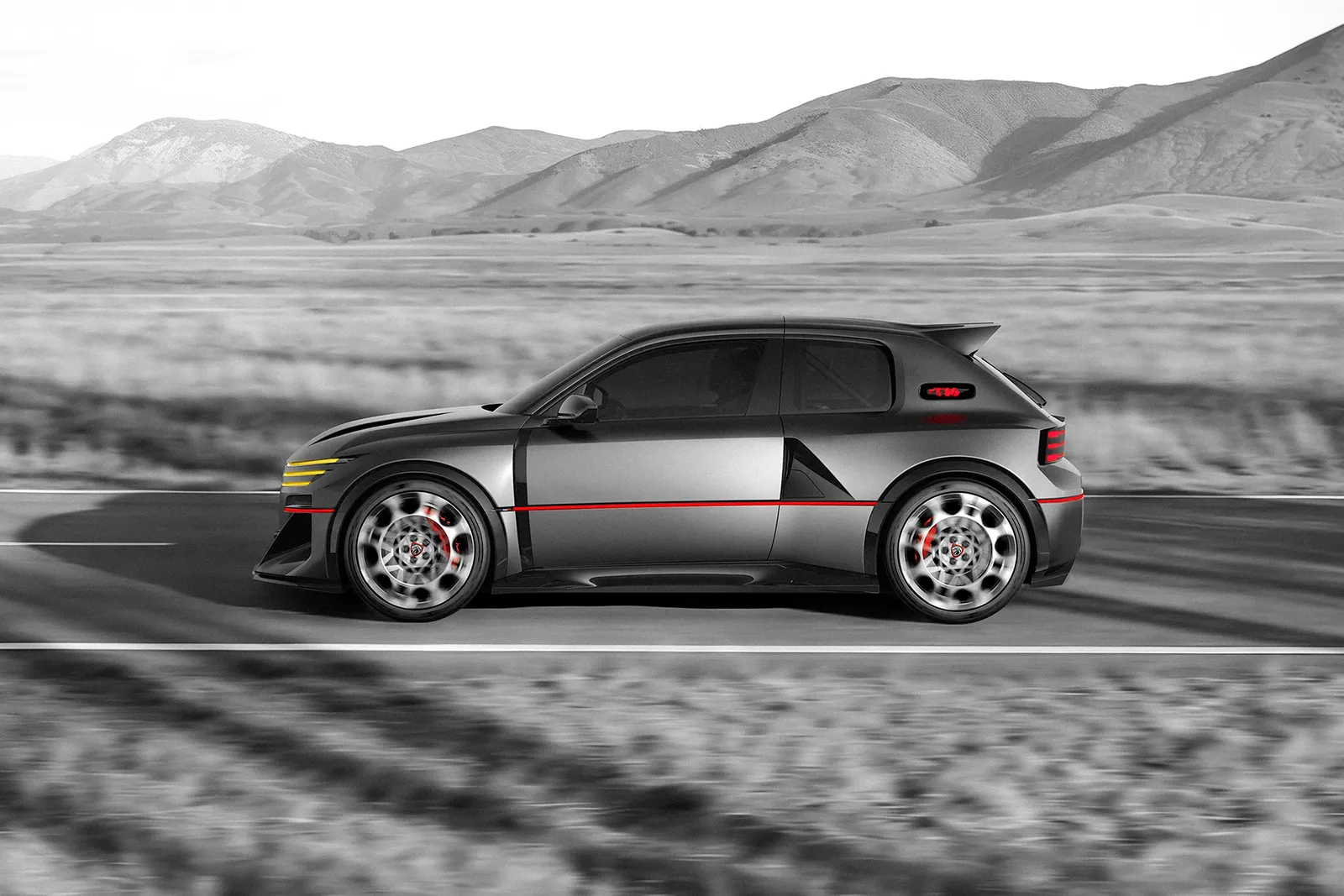
Image: Peugeot
- 1/7
- 2/7
- 3/7
- 4/7
- 5/7
- 6/7
- 7/7
The E-T16 Concept uses an 800-volt architecture and an 85 kWh battery that provides a range of up to 400 km in the WLTP cycle and, according to Peugeot, can be charged from 10 to 80 per cent in less than 15 minutes. While this electric sports car offers a certain degree of everyday practicality, the manufacturer naturally emphasises the extraordinary performance of 600 kW beneath its bodywork. Two electric motors are located at the rear axle, and one at the front. The sports car accelerates from 0 to 100 km/h in 2.5 seconds. Peugeot promises that the driving performance remains consistently available even under high demand.
The developers have placed particular emphasis on battery cooling. Peugeot says this prevents performance reduction, where power is throttled to protect against overheating. This is achieved with motorsport technology called “Side Cooling”, where the battery cells are cooled via the side walls rather than the floor, as is usually the case. In performance mode, the electric rally car is said to complete three laps of the Nürburgring Nordschleife without any power limitation.
Innovative square steering wheel
What else? Thanks to its torque vectoring system, the E-T16 Concept’s electric drivetrain distributes torque in real time between the axles and wheels. There are also three driving modes that adjust power delivery, torque distribution between the two axles, and suspension settings, including a “Track” mode for challenging terrain. A fourth mode can be fully customised by the driver.
The concept is steered using a performance-oriented steer-by-wire system, complemented by an advanced i-Cockpit featuring a “Hypersquare” steering wheel. This includes a configurable central display that shows information such as speed and lap times. The steering wheel’s unusual shape and design are meant to excel in sporty driving situations. What remains to be seen is how well the functions can be controlled via the steering wheel in practice. After all, the most important functions are supposed to be accessible at the fingertips within four ring cutouts in the steering wheel.
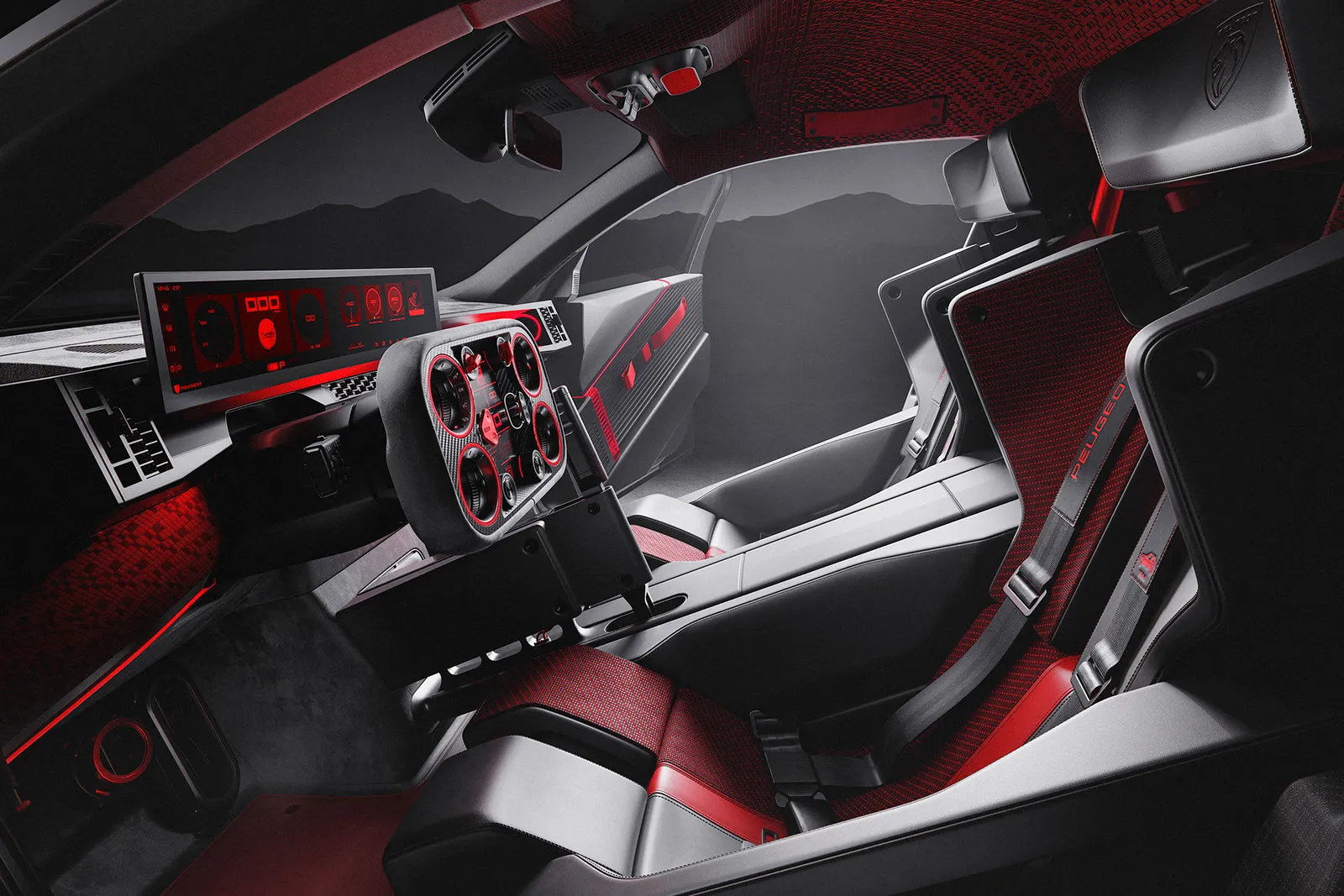
Image: Peugeot
- 1/4
- 2/4
- 3/4
- 4/4
As befits a homage to a legendary rally car, the E-T16 Concept naturally places a strong emphasis on design, alongside the more technical aspects. This design draws on the 205 T16 as its central reference point, while Peugeot is also testing its new design line, “Feline Future,” which, like certain cockpit features of the concept, will debut in the next Peugeot E-208. So, many elements are set to make it into series production. Peugeot describes its new design language as radical and futuristic.
Peugeot has also reimagined the three-claw light signature at the front and rear. The “claw mark” now runs horizontally in three long, sweeping light bars. The vehicle exudes the desired dose of aggression and athleticism with its pronounced wheel arches, large air intakes at the front, and a rear wing at the back. There are numerous nods to the 205 T16, such as the floating C-pillar, the grey body colour, and the red backlit line that runs around the entire vehicle. And in the air intake in front of the rear wheel — which in the original was used to cool the combustion engine — the concept features the charging port and door-opening mechanism. Analogous to the 205 T16, the entire rear body section can also be flipped upwards, revealing the vehicle’s tubular roll cage.
RCZ Vision also adopts the “Feline Future” look
The second new Peugeot concept vehicle in the exhibition halls in Paris does not come with a racing roll cage, but it does share the same design philosophy. The RCZ Vision also showcases the new feline-inspired design language, “Feline Future”—though in a more elegant form. The electric coupé delivers a more production-ready 368 kW of power and a range of up to 600 kilometres. As forward-looking technical highlights, the RCZ Vision features a 1,000-volt electric architecture and a solid-state battery. And the coupé’s consumption is said to be just 11.5 kWh/100 km.
The RCZ Vision is based on Stellantis’ STLA One platform. This recently announced, overarching “mega-platform” is designed to consolidate five previous architectures into a single system. Peugeot will be the first brand in the group to use the STLA One platform.
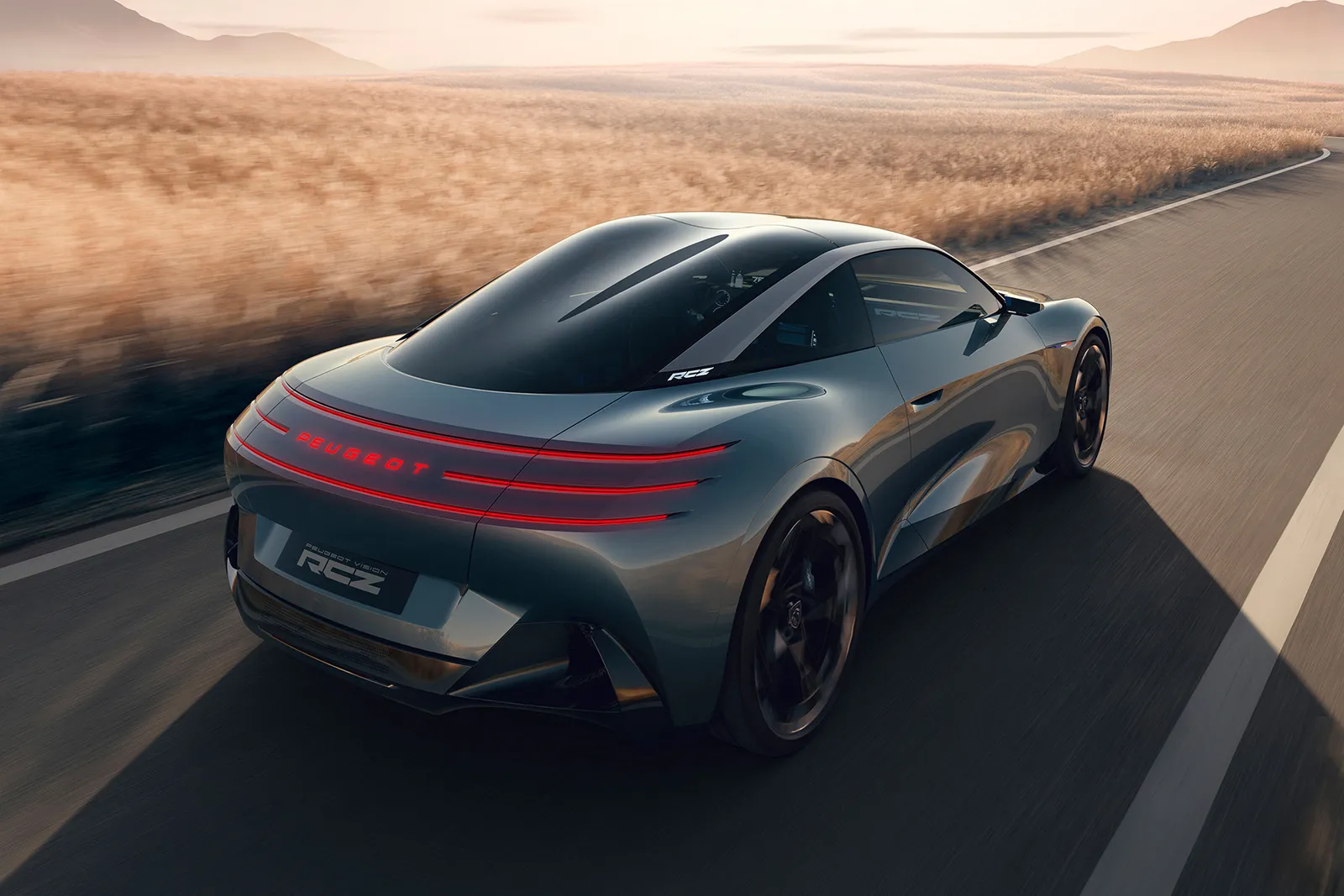
Image: Peugeot
- 1/10
- 2/10
- 3/10
- 4/10
- 5/10
- 6/10
- 7/10
- 8/10
- 9/10
- 10/10
In the RCZ Vision, this architecture meets the legacy of the Peugeot RCZ, which was discontinued over a decade ago and shaped the brand’s style with its low-slung silhouette and sporty orientation in the early 2010s. The concept picks up on the flowing lines, with the active spoiler, just like in the original RCZ—remaining invisible when stationary and only deploying during driving. The “bubble roof” glass dome roof and the cockpit arches are also a homage to the original RCZ, though the electric concept takes this further by extending the “bubble” from the bonnet to the rear of the vehicle. Peugeot says this emphasises the iconic double-bubble roof to optimise space on the rear seats.
Ultrathin battery and 1,000-volt architecture
Overall, the RCZ Vision appears broad and deeply sculpted, yet remains elegant. The front and rear, like the first concept vehicle, feature the horizontal “claw lines.” The wheels are sized at 21 and 22 inches. The streamlined shape is so pronounced that consumption is said to be just 11.5 kWh/100 km. A key factor here is the “ultrathin” battery with a thickness of just 110 mm, although Peugeot hasn’t gone into further detail about the battery at this point, meaning we also won’t get to know much about the capacity of the solid-state battery in the electric coupé at this point. The only mention is of a battery with high energy density. Peugeot specifies a charging time of ten minutes to charge from 10 to 80 per cent.
As for the cockpit, the RCZ Vision also features the next-generation i-Cockpit mentioned earlier, combined with the “hypersquare” steering wheel and an advanced steer-by-wire system. The concept also provides a preview of Level 2++ automated driving, which is said to allow hands-free driving in the city and on rural roads.
Peugeot has not commented on the production prospects for the RCZ Vision. The company describes the concept as an “emotional manifesto of the brand,” aiming to enhance emotions and driving pleasure without compromising efficiency or on-board comfort. This does not sound like an immediate series successor but rather an inspiration for Peugeot’s future generation of electric passenger cars.