
Peugeot revives the RCZ with 500 HP, 600 km of range, solid-state battery, and a 10-minute charge time
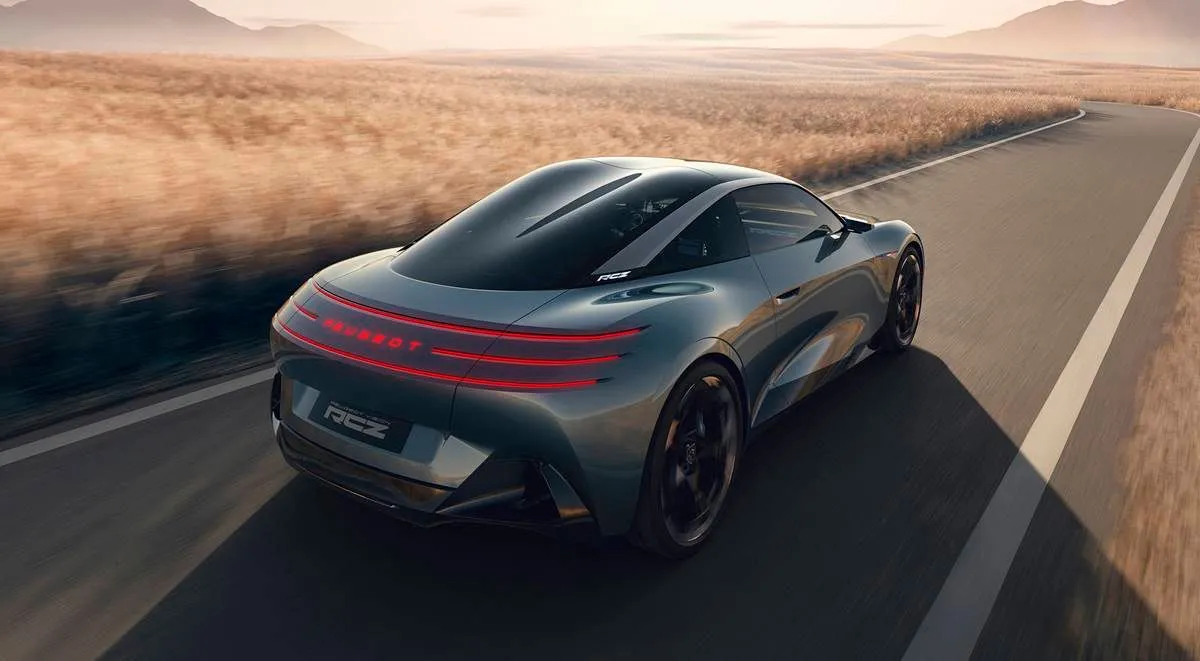
Peugeot has revived one of its most recognizable names from its recent history to showcase a vision of what its next models will look like. The new prototype combines a highly sporty design with technological solutions aimed at restoring something that sometimes seems to have taken a backseat in the industry: the joy of driving.
The Peugeot RCZ Vision is not just a design exercise to attract attention, though that too. The French brand uses it as a showcase for its future technologies, from a new generation of cockpit design to advancements in batteries and electronic steering and braking systems. All of this is wrapped in a reinterpretation of a model that left a lasting impression on enthusiasts.
The project draws inspiration from the original Peugeot RCZ, sold between 2009 and 2015, taking it to a much more advanced level. That coupe stood out for its personality and design, eventually becoming a model highly sought after by collectors. Now, Peugeot revives that formula with a concept aimed directly at the next generation of its electric vehicles.
The company refers to this design language as Feline Future, a philosophy that combines creative freedom, boldness, elegance, strength, and an instinctive character. The goal is to ensure that technology does not become an end in itself but rather a tool to enhance the relationship between the driver and the car.
A classic sports car design with future technology
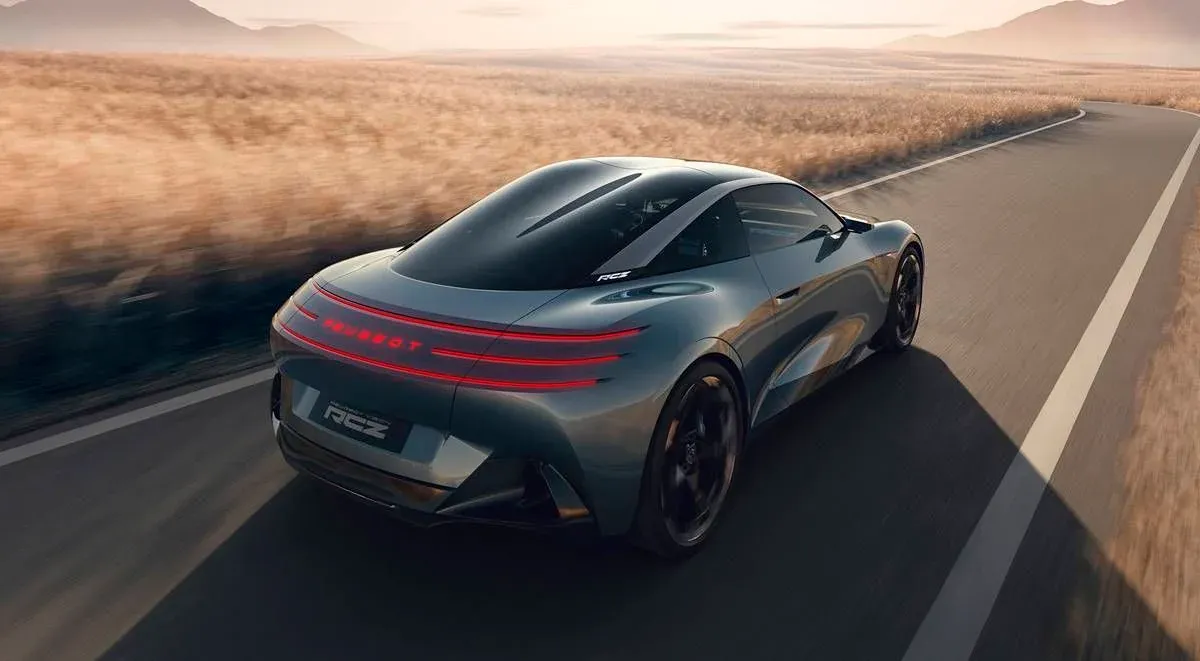
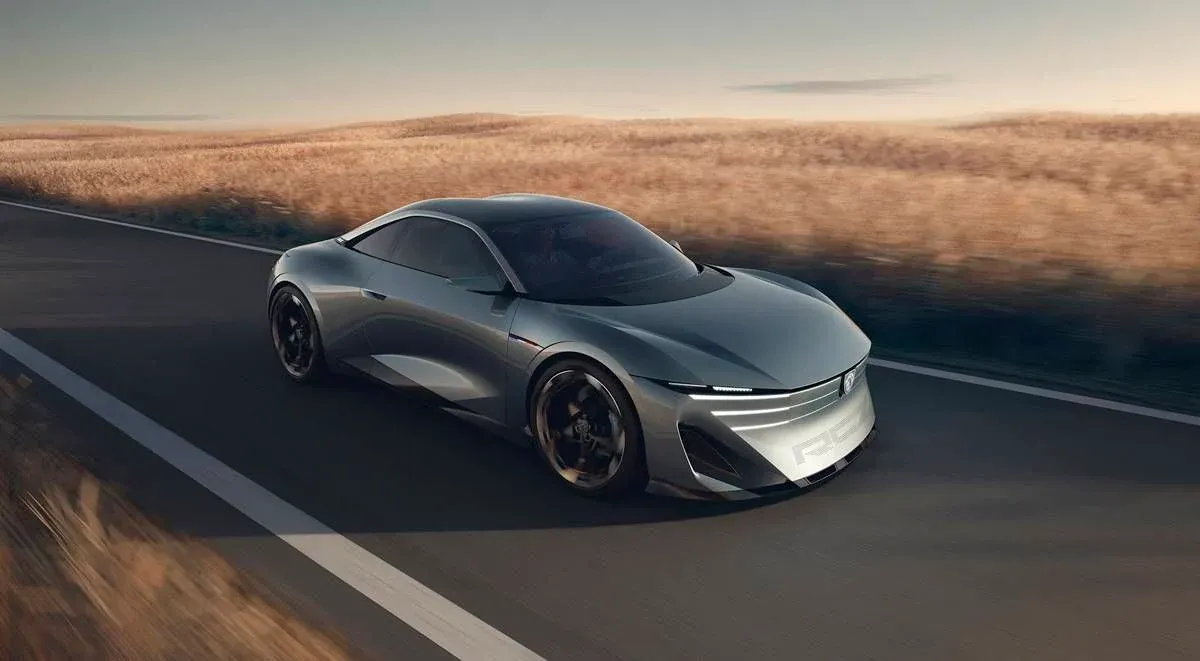
The exterior of the Peugeot RCZ Vision retains some of the most distinctive features of the original model, but presents them with a much more futuristic aesthetic. The body features sharply defined shoulders, robust wheel arches, and sculpted sides that contrast with a glass-covered interior designed like a glass bubble. The overall design conveys a sense of strength without relying on overly aggressive shapes.
Illumination also plays a crucial role. At the front, the three luminous strips that identify Peugeot are arranged horizontally, accompanied by very narrow LED headlights. At the rear, the three claws incorporate all lighting functions, while an active spoiler remains hidden when the car is stationary and unfolds during driving to improve aerodynamics.
The glass roof visually extends the transparent surface from the front to the back, while the arches framing it reinterpret the original RCZ’s distinctive double bubble design. Peugeot claims this solution also aims to improve the space available for passengers in the rear seats. The forged aluminum wheels, 21 inches at the front and 22 inches at the back, complete a silhouette that prioritizes both lightness and efficiency.
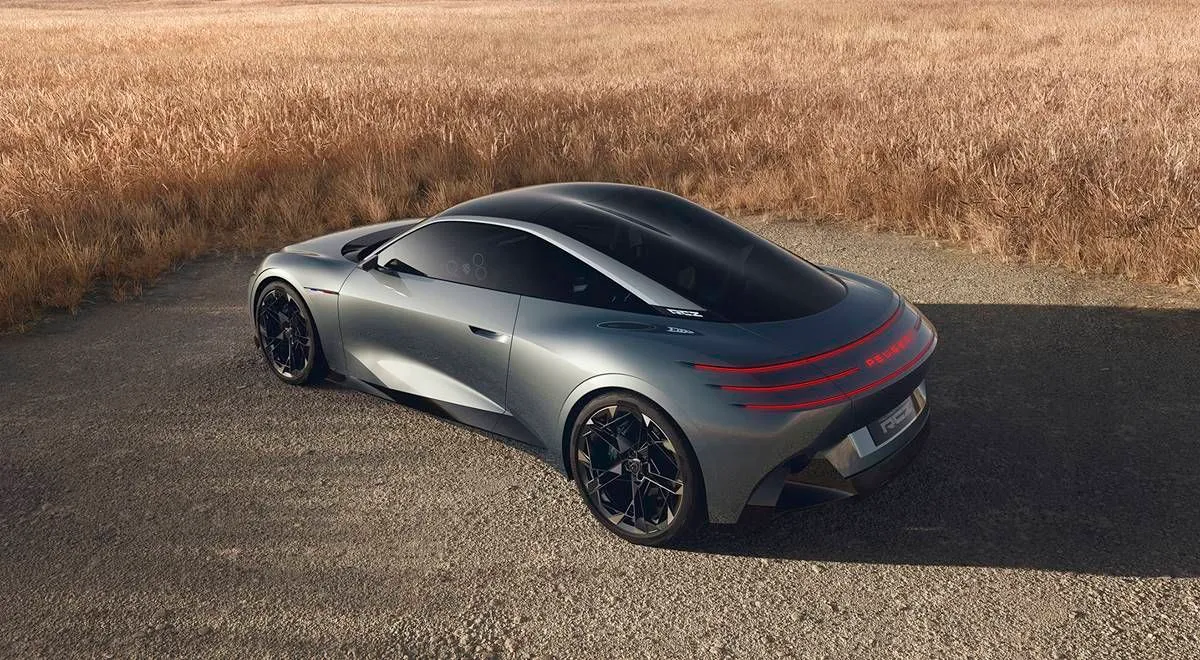
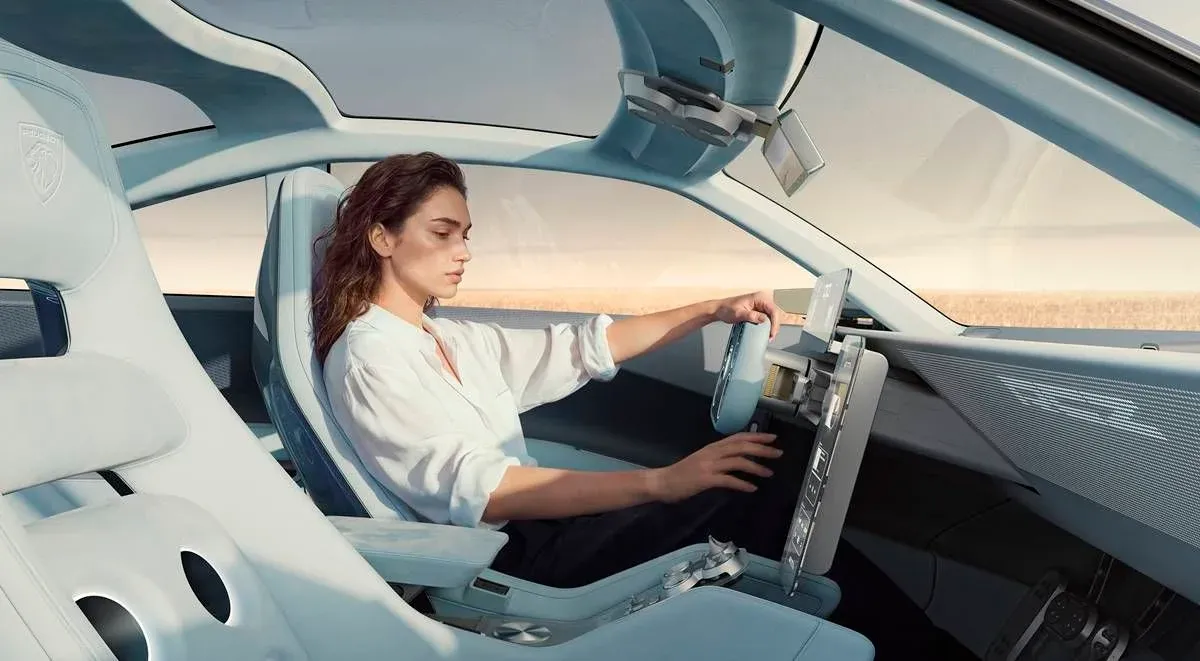
The interior follows a similar philosophy. Peugeot opts for a four-seater cabin with a Gran Turismo orientation, designed for comfortable travel without sacrificing a sporty driving position. The seats feature an asymmetric structure to enhance lateral support and reduce weight, while the rear seats can be folded down to increase cargo space.
Instead of cluttering the dashboard with screens, the French manufacturer opts for a more innovative solution: the new Peugeot i-Cockpit combines transparent surfaces with Micro LED technology. Essential information is projected into the driver’s field of view above the steering wheel, while a vertical central screen handles navigation and entertainment functions. This latter screen can be completely turned off to minimize visual distractions.
The floating central console features physical controls for functions such as climate control and driving modes, with aluminum finishes and a translucent glass surface. It also includes a clock developed in collaboration with the French watch manufacturer SERICA, integrated into the dashboard assembly. The materials used include Alcantara and a coating called PELINOVA, made from scraps of leather recovered from the leather goods industry.
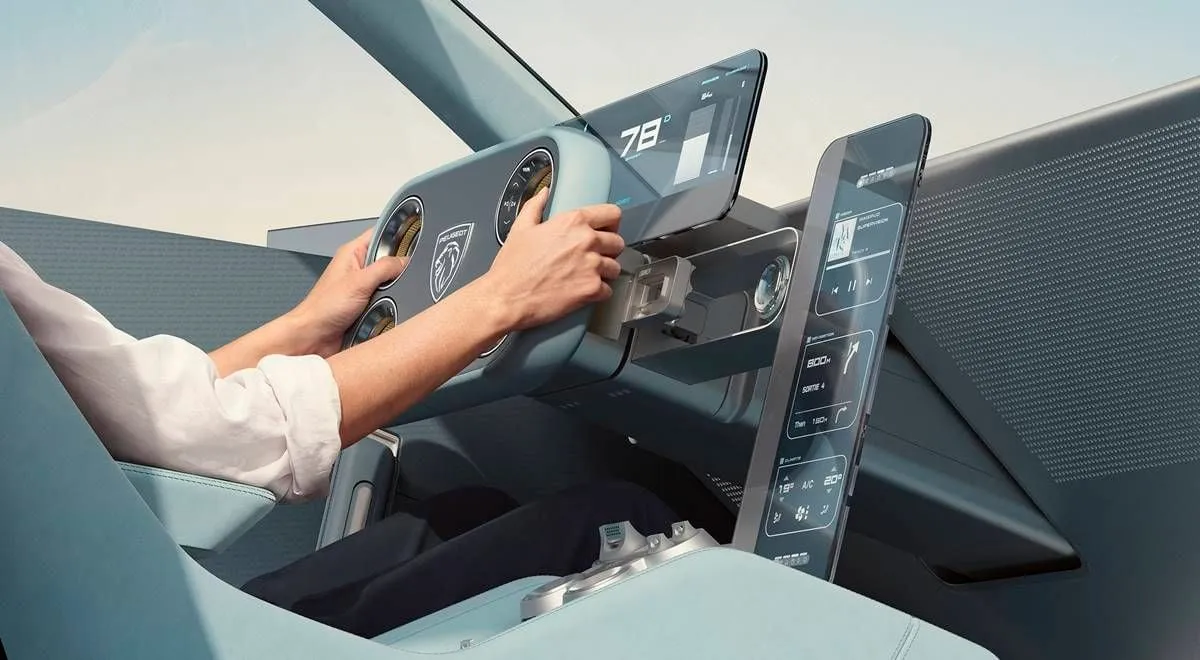
The biggest novelty of the steering wheel is the Hypersquare, a rectangular-shaped control that features four circular areas for operating the main functions without removing hands from them. Peugeot confirms that the prototype uses the same production version of this system planned for the next generation of the Peugeot E-208.
The electronic steer-by-wire system eliminates the traditional mechanical connection between the control and the wheels. The steering ratio adjusts according to speed: at low speeds it allows for maneuvering with less hand movement, while at higher speeds it provides a more progressive response. According to Peugeot, the maximum steering angle is less than one full turn, compared to approximately three full turns in a conventional system.
The RCZ Vision also introduces Peugeot’s Brake-by-Wire system, which replaces the hydraulic connection between the pedal and brakes with electronic control. The brand aims to achieve more precise braking modulation and a smoother integration of energy recovery. This is complemented by a level 2++ autonomous driving feature that allows driving without keeping hands on the steering wheel under certain conditions, both in urban areas and on roads.
A solid battery with 10% to 80% charging in ten minutes
The mechanical aspect is one of the most striking features of the Peugeot RCZ Vision. The prototype is built on an architecture derived from the STLA One modular platform, designed by Stellantis for its future models and prepared to accommodate advanced electronic technologies and various battery solutions. This foundation aims to simplify development and make it easier for its components to be reused or recycled at the end of their useful life.
Peugeot announces an electric propulsion system with a power output of 500 CV, equivalent to around 368 kW, though it does not provide data on acceleration from 0 to 100 km/h or top speed. It also does not specify the total or usable battery capacity, so it is still not possible to assess the vehicle’s performance using the usual metrics for electric car tests.
The major innovation is a solid-electrolyte battery developed in collaboration with Factorial Energy, with a thickness of just 110 millimeters. This technology promises to store more energy in a smaller space, which is particularly valuable for a low-slung sports car where the battery’s height can affect both design and driving position.
The battery operates on a 1,000-volt electrical architecture, a voltage that enables very high charging capacities. Peugeot claims the battery can go from 10% to 80% charge in just 10 minutes—a figure that, if confirmed in a production vehicle, would place the RCZ Vision among the most ambitious models in this category. So far, the maximum charging power and the exact conditions under which this time was calculated have not been disclosed.
The brand also announces a range of up to 600 kilometers and a target homologated fuel consumption of 11.5 kWh/100 km in the combined WLTP cycle. However, Peugeot warns that this latter figure still needs to be confirmed. Without knowing the battery capacity or having independent measurements, it is best to consider these figures as project targets rather than final results.
The exterior design, weight reduction, and battery integration are all part of the same strategy. Peugeot aims to show that an electric sports car can combine performance, efficiency, and a low profile without technology excessively affecting its proportions. The RCZ Vision is therefore a statement of intent regarding the direction the brand wants to take.
For now, Peugeot has not announced a market launch date nor confirmed that the RCZ Vision will be produced in series. Its value lies in previewing solutions that could make their way to future models, from the Hypersquare system to solid-state batteries and electronic steering and braking controls. It remains to be seen how many of these innovations will move from prototype to cars that customers can purchase.