
Peugeot showed the 600 kW-powered E-T16 and the electric RCZ. The version closest to production is the one with a steering wheel.
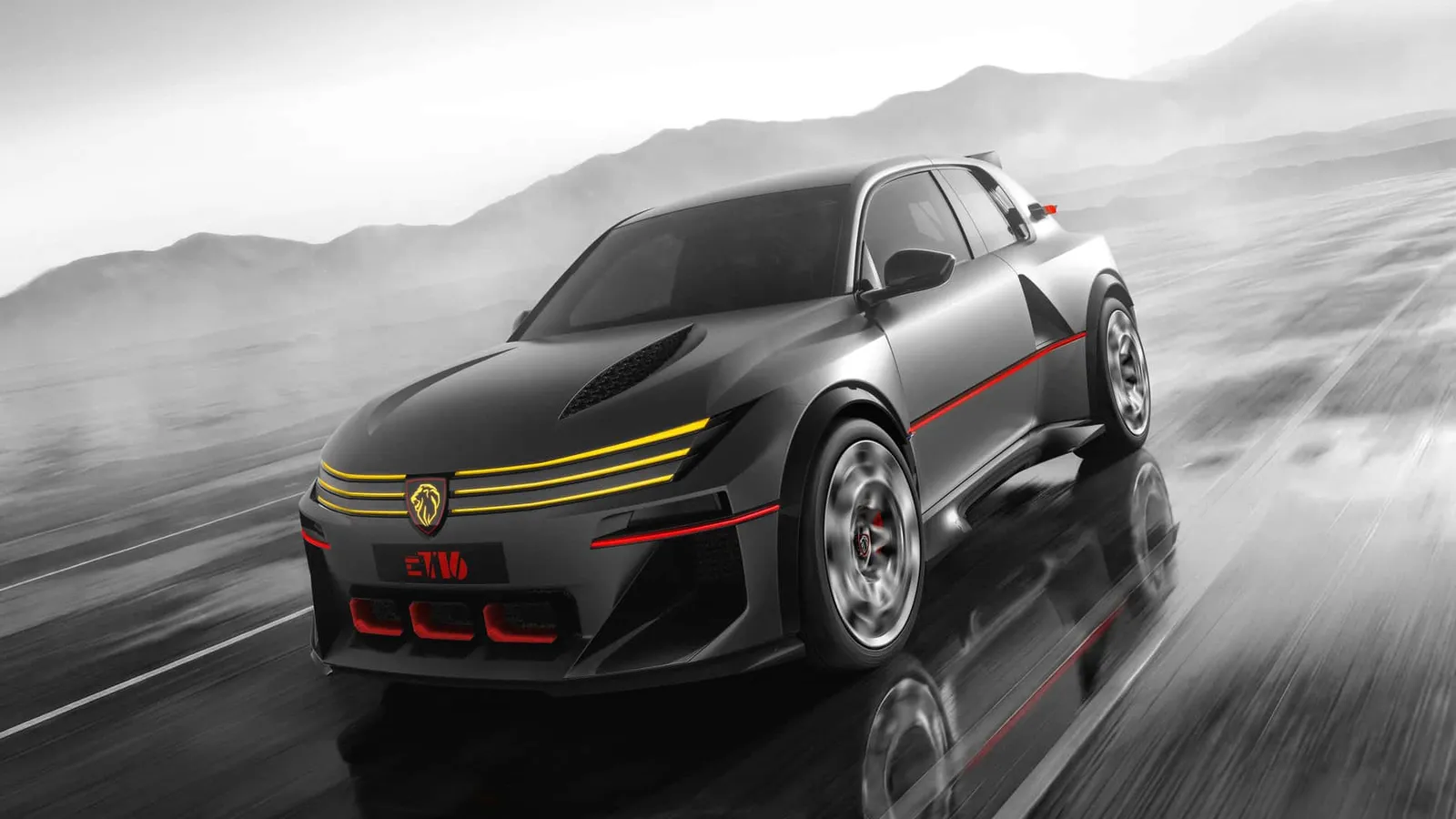
On October 12, 2026, Peugeot brought two electric concept cars to the Paris Motor Show, inspired by the 205 Turbo 16 and the RCZ coupé. The E-T16 features three motors, 600 kW of power, and an 85 kWh battery, while the RCZ Vision is equipped with a solid-state battery and a 1000 V power system. Neither model has an officially confirmed production version yet, but both showcase technologies being developed for the new E-208.
Table of Contents
Show
Hide
The French chose two cars from completely different eras. The Peugeot 205 Turbo 16 won the World Rally Championship for manufacturers and drivers in 1985 and 1986, and its road version, produced in 200 units, helped the brand meet the homologation requirements for Group B. The RCZ was a much more subdued coupé, manufactured by Magna Steyr in Austria from 2009 to 2015.
The E-T16 has 600 kW, but beneath its rally-inspired design lies the new E-208
Peugeot refers to the E-T16 as an electric hyper-hatch. It is a one-off prototype developed in collaboration with Peugeot Sport, powered by three engines. Two are located at the rear axle, while the third is at the front. The total power output is 600 kW, or approximately 816 horsepower.
The 0 to 100 km/h sprint time is claimed to be 2.5 seconds, with reaching 300 km/h taking 16 seconds. According to the manufacturer, this makes it the second most powerful Peugeot in history. Only the 208 T16 Pikes Peak ranks higher, which Sébastien Loeb used to set a record in mountain racing in 2013.
Specifications
Peugeot E-T16 Concept
Peugeot RCZ Vision
Power
600 kW
approximately 373 kW, 500 horsepower
Architecture
800 V
1000 V
Battery
85 kWh
solid-state, capacity not disclosed
WLTP range
up to 400 km
up to 600 km
Charging 10-80%
under 15 minutes
10 minutes
0-100 km/h
2.5 s
No data available
Status
One-off concept
Concept without production decision
The E-T16 battery has a capacity of 85 kWh, and the electrical system operates at 800 V. Peugeot claims a WLTP range of up to 400 km and the ability to charge from 10% to 80% in less than 15 minutes. However, the maximum charging power and full charging curve have not been disclosed, so these are currently prototype specifications rather than promises for the production E-208.
The Side Cooling system might be more interesting than just the top speed figure. The cells are cooled by the side walls rather than from the bottom of the pack. The manufacturer claims this allows the E-T16 to complete three additional laps around the Nürburgring Nordschleife without power limitations caused by temperature. This is Peugeot’s claim, not the result of an independent test.
The drive system utilizes active torque distribution between the axles and individual wheels. The driver has three preset settings that affect drive response, suspension, and torque distribution, including a Track mode. A fourth profile can be customized manually.
The body design draws inspiration from the 205 T16 with gray paint, a red stripe, robust fenders, and a rear hatch that opens as one unit. Where the original had side air intakes, there are now charging ports and door opening mechanisms. The enormous wings and off-road proportions will remain on display, but the horizontal lights with three claw motifs hint at the appearance of the next E-208.
The new generation of the urban Peugeot is set to arrive in 2027 as an electric vehicle, sold alongside the current hybrid 208. The manufacturer confirmed structural integration of the battery with the platform but did not reveal specifications for the production model. An 800 V system in the B-segment would be unusual today, so the E-T16’s specifications should not be automatically applied to the road car.
Hypersquare will hit roads, RCZ Vision not yet
The most tangible indication of production is the cockpit. The E-T16 features a curved 21-inch screen and a rectangular Hypersquare controller with four hand slots. The central display shows speed and lap times, but in the production E-208, it will be replaced by an airbag. Peugeot also has not confirmed that it will retain the 21-inch screen.
The Sam Hypersquare is set to go into production alongside the new E-208. It works with a steer-by-wire system that eliminates mechanical connections between the steering wheel and wheels. Electronics can adjust the gear ratio based on speed, so a smaller movement of the hand is sufficient to make a full turn. It sounds reasonable in a showroom setting, but only a production car will show whether this unconventional rectangular design is more comfortable than a regular steering wheel.
The RCZ Vision adopts the same concept for its cockpit but goes much further technically. This four-seater coupe is built on an architecture based on STLA One. It features a 1000 V electrical system and a solid-state electrolyte battery developed in collaboration with Factorial Energy. The package is only 110 mm thick, allowing it to maintain a low profile and a driver position typical of a sports car.
Peugeot claims around 500 horsepower, a WLTP range of up to 600 km, and 10-minute charging from 10% to 80%. The preliminary energy consumption figure is 11.5 kWh/100 km. This is an exceptionally low figure for a powerful coupe with 21-inch front wheels and 22-inch rear wheels, but this is a target for the concept vehicle, not a measurement of the final car.
The body shape clearly resembles the first RCZ. It features wide fenders, a sharply sloping roof, and characteristic double bulges in the windshield. An active spoiler is hidden at the rear. The different wheel sizes might suggest rear-wheel drive, but Peugeot has not specified the engine layout.
The manufacturer has not confirmed plans to put the RCZ Vision on sale. Thus, among the two Paris premieres, the lights, the new i-Cockpit, and Hypersquare are much closer to reality than a 1000-volt coupé with a solid-state battery. In 2027, we will find out how much of this vision can actually fit into the urban E-208, which competes with the Renault 5, Volkswagen ID. Polo, and Cupra Raval.
LovEV Newsletter
Want more content like this?
Sign up — we’ll send you a weekly summary once the newsletter starts.