
Peugeot E-T16: this concept reveals the style of the future electric 208
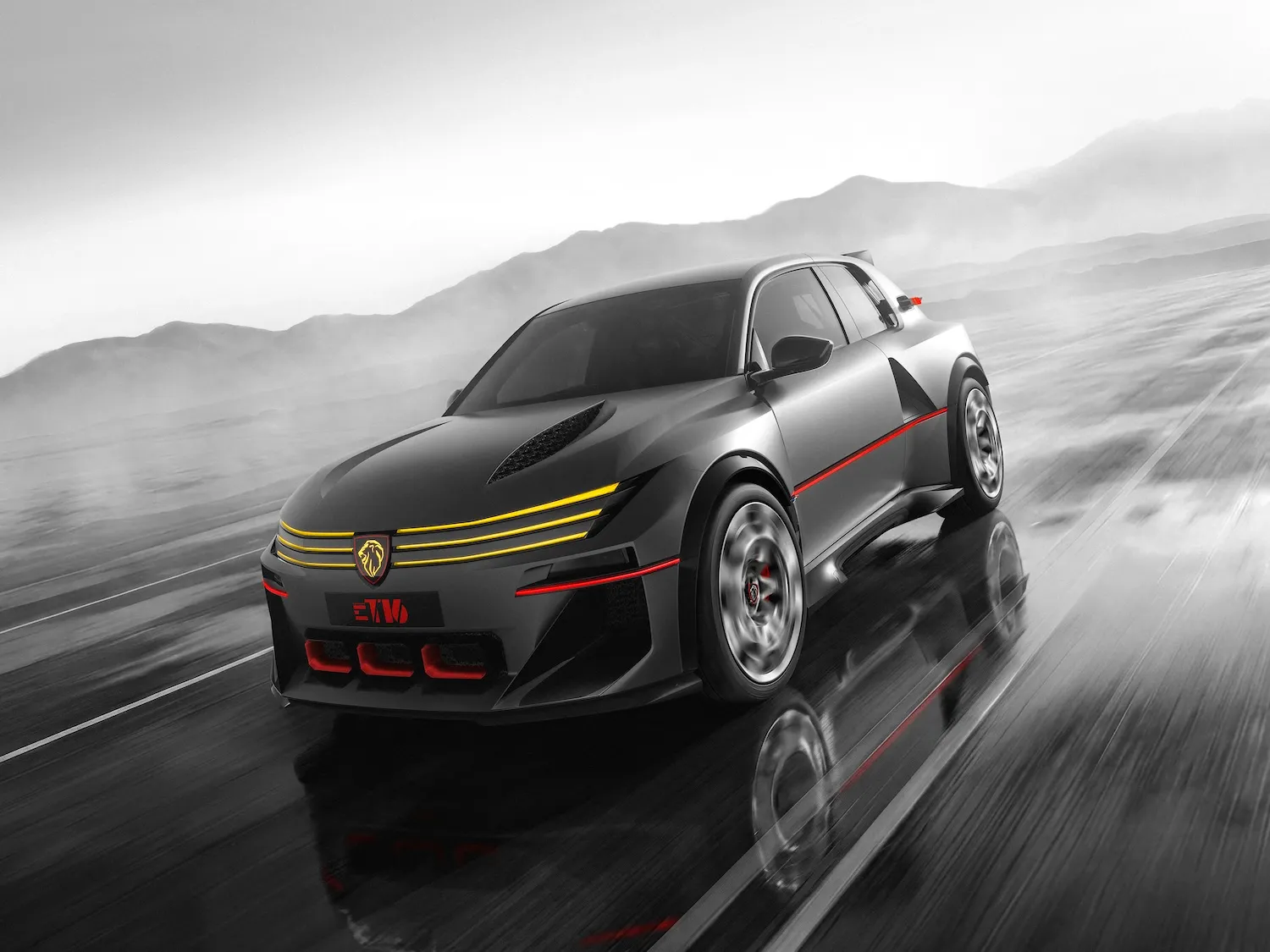
With this E-T16 concept, Peugeot pays tribute to the 205 T16, the world rally champion in the 1980s. But it also reveals the overall design of the upcoming electric 208, expected in 2027.
Peugeot quickly dashed hopes of seeing the highly anticipated new electric 208 at the World Motor Show. The car will only be launched in the second half of 2027, and Peugeot didn’t want an overly early reveal. To keep us waiting, it unveiled the E-T16 Concept instead.
This vehicle is presented as “a tribute and celebration of the achievements of the iconic 205 T16, World Rally Championship champion in 1985 and 1986.” But as Peugeot states itself in its press release, it is also “an ultimate vision of the future e-208.” Thus, behind its muscular silhouette and oversized aerodynamic elements, one can discern the overall design of the upcoming city car. For context, Peugeot is developing a new fully electric generation that will coexist with the current model, which will be revised to continue offering internal combustion engine options.
Peugeot’s new face
What should be remembered about this concept? First, the elements of its overall silhouette, which clearly pay homage to the 205, such as the shape of the side windows. The new lighting features can also be retained. The three claws are reinterpreted in a horizontal layout. Of course, the series version will feature the three strips surrounding the emblem at the front, echoing the slats of the 205. As hinted at in the concept, the main lighting module will be hidden within the shield. The headlights from the concept are also similar to those in the series, featuring three strips on a vertical element.
Naturally, we overlook the exaggerated elements to focus on what makes a strong visual impact and evokes the rally spirit and the 205 T16, such as the oversized wings, the hood with two air vents, the large exhausts on the fender, the air extractor behind the wheels, the XXL diffuser, and the red line that circles the vehicle (backlit). The Winchester Mat Grey paint color is close to the original gray.
Inside as well, there are hints of the future e-208, which will introduce the Hypersquare steering wheel—a rectangular wheel paired with a mechanical-free steering system. Above it is a large 21-inch panoramic screen, similar to that in the 3008. It’s likely the rectangular structure with air vents on each side will also appear in the production model.
As for the rest, it’s a rally car with bucket seats molded into a carbon fiber shell and four-point harnesses, a tubular roll cage, and a vertical handbrake... The famous Hypersquare steering wheel here features a central screen that displays driving data (time, etc.). Red, the iconic color of GTIs, is notably visible on the roof panel.
816 horsepower!
Technically, this vehicle represents the extreme end, equipped with three electric motors (one at the front, two at the back), delivering a maximum power of 816 horsepower. This results in a weight-to-power ratio of less than 2 kg/hp. Thanks to the three motors, torque is distributed in real time between the rear wheels as well as between the front and rear axles. It accelerates from 0 to 100 km/h in 2.5 seconds, and it only takes 16 seconds to reach 300 km/h.
The concept is equipped with an 85 kWh Lithium Nickel Manganese battery. Range is only 400 km, which is related to power output, but it’s a minor concern here! More interestingly, Peugeot announces an 800V architecture that enables ultra-fast charging (10 to 80% in less than 15 minutes).
Engineers worked on battery cooling to avoid “derating” (the need to reduce power to prevent overheating). They adopted the “Side Cooling” technology from racing, which cools battery cells through their side walls rather than their base as in traditional systems. This allows the concept to complete 3 laps around the Nürburgring without power limitations. Notably, similar to the 205 T16, its entire rear body panel swings open to reveal the mechanical components.