
Solar canopies in parking lots: can they power an electric car?
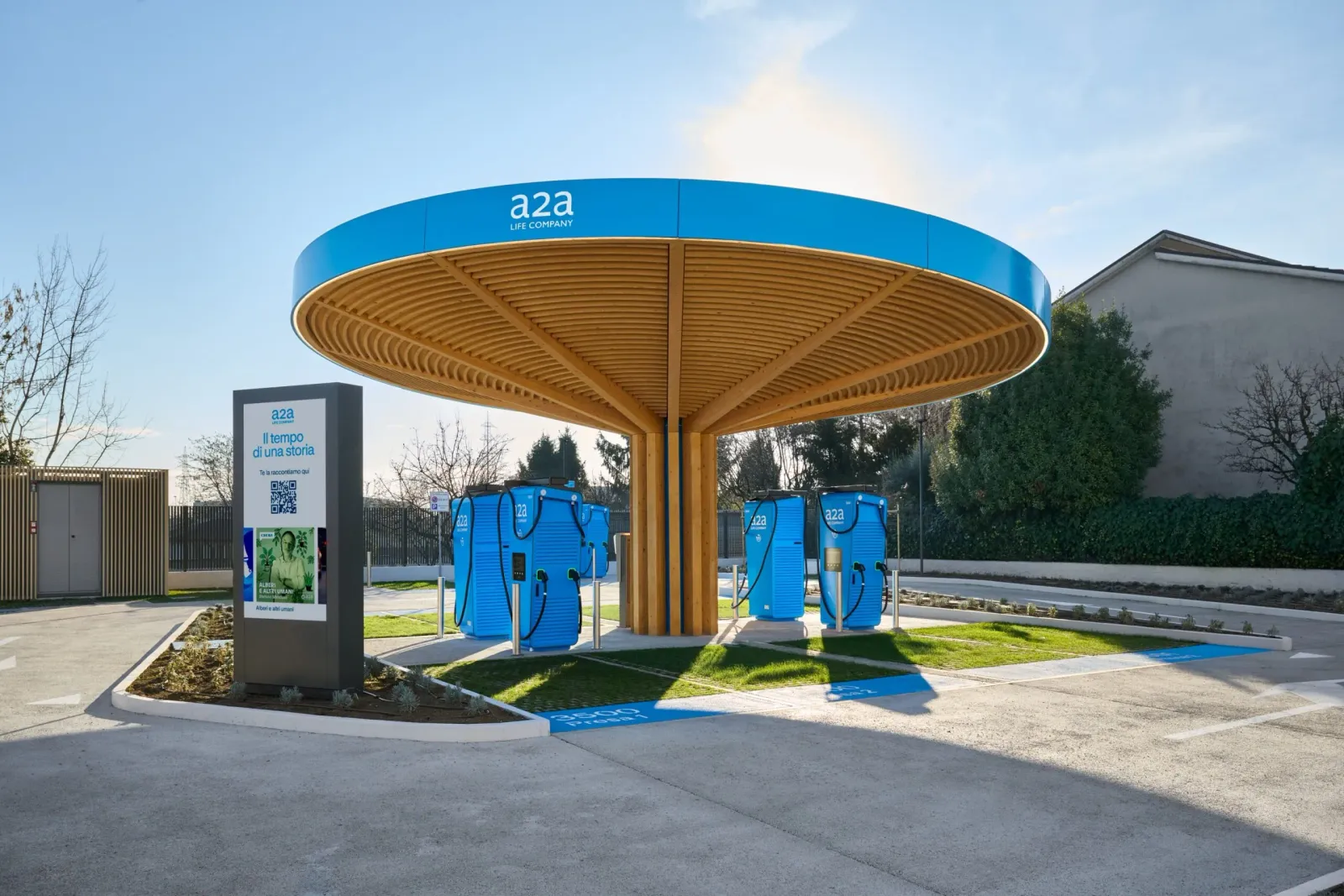
Are photovoltaic canopies in parking lots useful for charging electric cars? Silvio is asking for our opinion, which is certainly positive. But under specific conditions. To contact us: info@vaielettrico.it.
Opponents would need enormous areas for this...
“Can photovoltaic canopies in parking lots generate enough electricity to charge a car? I know that the efficiency of solar panels, thanks especially to research in China, has improved significantly recently. But opponents claim that charging a car requires large areas of panels, so photovoltaic canopies don’t achieve their purpose. Is that true? Are canopies only meant to provide shade and protect cars from the elements?” Silvio Fabrizi
20 m² may be sufficient, but…
Answer – A photovoltaic canopy can in many cases cover a significant portion of a car’s annual energy consumption. By comparing, for example, the energy produced by the panels with the distance the car travels in a year, it is easy to calculate that a canopy with about 20 m² of photovoltaic panels can meet the energy needs of an average car for 20,000 kilometers of driving (450-550 W per panel; installed capacity of about 4-5 kWp; 4,000-5,500 kWh per year in Northern Italy with proper orientation; average consumption of 15-18 kWh per 100 km).
Solar parking lots with charging stations, a Lombardy project
The problem is that production and demand do not necessarily align over time. Production follows the natural cycle of solar radiation, while a car’s usage depends on drivers’ needs (working and resting hours, mobility requirements). Therefore, to make full use of self-generated electricity, additional technologies such as storage batteries and smart charging management are required.
…it’s not just a matter of surface area
This eliminates the argument that enormous areas are required. This objection often arises from comparing the power of a car to that of just a few panels. But charging doesn’t work this way. A car parked under a canopy for 6–8 hours can accumulate energy throughout that time. Thus, even a relatively small installation can generate enough power daily to provide 100–150 kilometers of range. However, this isn’t true in all seasons of the year—production drops significantly in winter while electric car consumption increases.
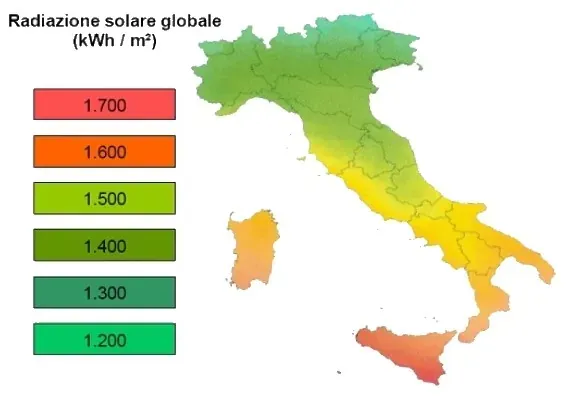
And it’s not available in all regions of the country. For reference, the specific photovoltaic production (kWh/kWp/year) is as follows:
North: ~1,100–1,300 kWh/kWp/year
Central region: ~1,300–1,500 kWh/kWp/year
Southern region: ~1,450–1,700 kWh/kWp/year
Using our example of 20,000 km per year, the area of photovoltaic panels needed to power a car with an average consumption of 16 kWh/100 km is respectively
13.6 m² in the North,
11.7 m² in the Central region,
10.2 m² in the South
In conclusion, the combination of parking + photovoltaics + smart charging + potential energy storage can be much more advantageous than simply installing grid-powered charging stations.
READ ALSO: E.ON bets: “Electric cars will become batteries for the grid” and watch the VIDEO
Previous article
Incentives in Germany: less money, but more cars financed (100,000)
Next article
Like one euro per liter... here’s the cost for electricity vehicles
