
EVP passports in cars starting November 29, 2026. The QR code will display the homologation details
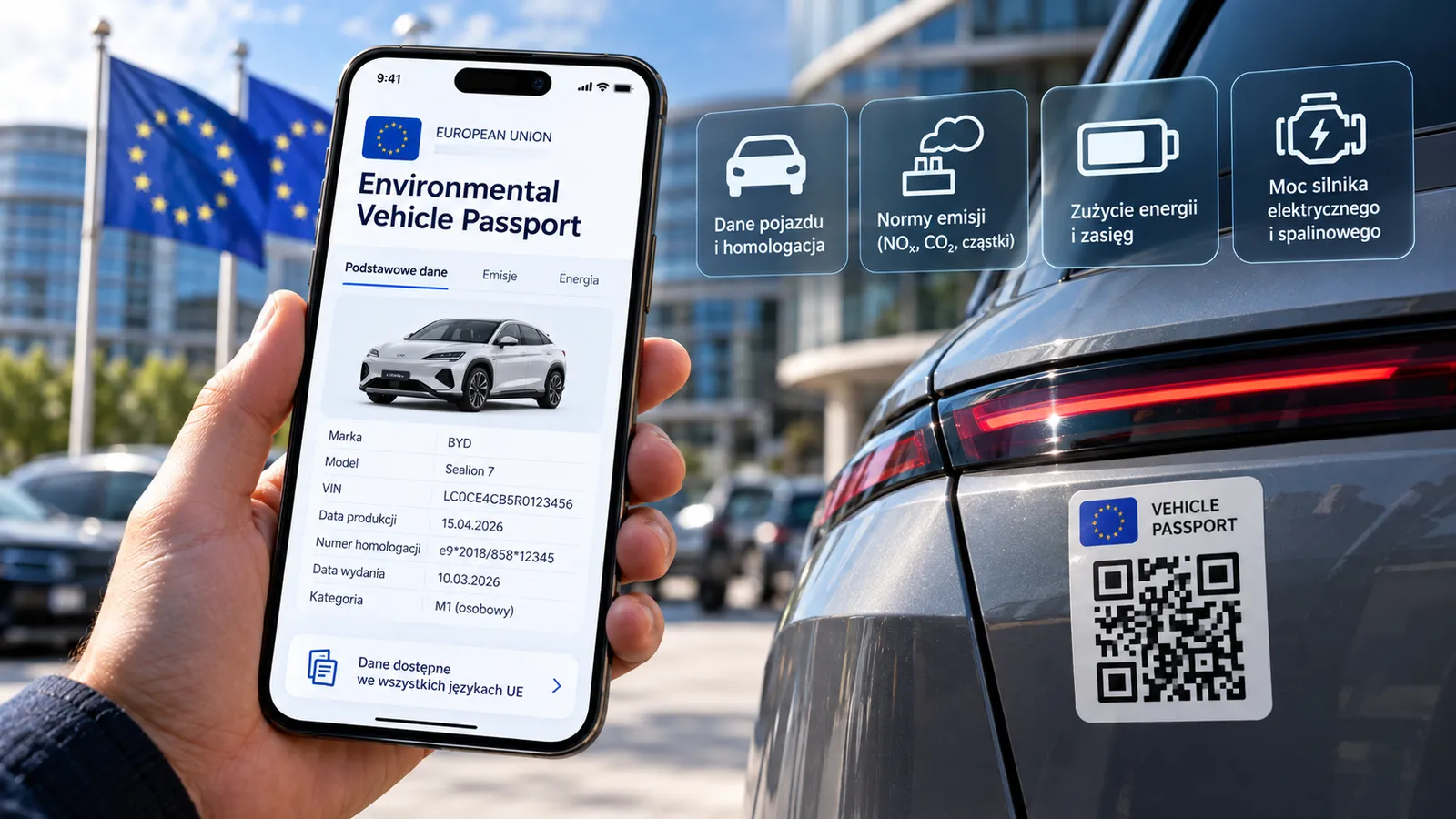
The European Union will begin requiring a digital Vehicle Environmental Passport starting from November 29, 2026. Initially, the EVP will apply to new vehicle types that receive homologation, and a year later to all new passenger cars and light commercial vehicles sold in the EU.
The Environmental Vehicle Passport will be a set of official data linked to the VIN number. Drivers can access it using a QR code, without needing to install an app, create an account, or share personal data with the manufacturer.
Code on the car or in five clicks
The EVP Passport is one of the components of Euro 7 regulations. The QR code must be located in an easily accessible place on the vehicle or on the multimedia system screen. If the manufacturer chooses the latter option, accessing the code should require no more than five clicks.
After scanning, we will see the brand, trade name, VIN, production date, as well as the approval number and date. The EVP will also display the vehicle family used for emission testing, the maximum power of the electric and combustion engine, as well as the approved levels for nitrogen oxides, particulate matter, and other regulated pollutants.
In the case of an electric vehicle, the most relevant information will be the official energy consumption in kWh/100 km and range. For combustion engine or hybrid vehicles, fuel consumption and CO2 emissions will also be shown. The data is intended to be available in all official languages of the European Union, including Polish.
The schedule has two phases. Starting from November 29, 2026, EVP will be mandatory for new vehicle types. Starting from November 29, 2027, every new M1 category passenger car and N1 category light commercial vehicle will have a passport. The regulations will not apply retroactively, so older vehicles won’t need to be equipped with the code.
EVP will not indicate battery condition
The term “passport” might suggest a detailed report on a specific vehicle, but the scope of the document will be much narrower. It will not include information on mileage, service history, accidents, or repairs.
EVP will also not show the current SoH of the battery, that is, its condition relative to the factory state. Data on battery health are subject to separate requirements. The passport will not display current consumption and emissions measured during operation by OBM or OBD systems either.
The buyer of a used car will thus have easy access to the factory specifications assigned to the VIN, but they will still need to check the car’s history and battery condition separately. EVP may make it harder for sellers to provide details of a different engine version, but it cannot replace inspecting the car before purchase.
LovEV Newsletter
Want more content like this?
Sign up — we’ll send you a weekly summary once the newsletter starts.