
Opel Grandland Electric: Now available optionally with a 22-kW onboard charger
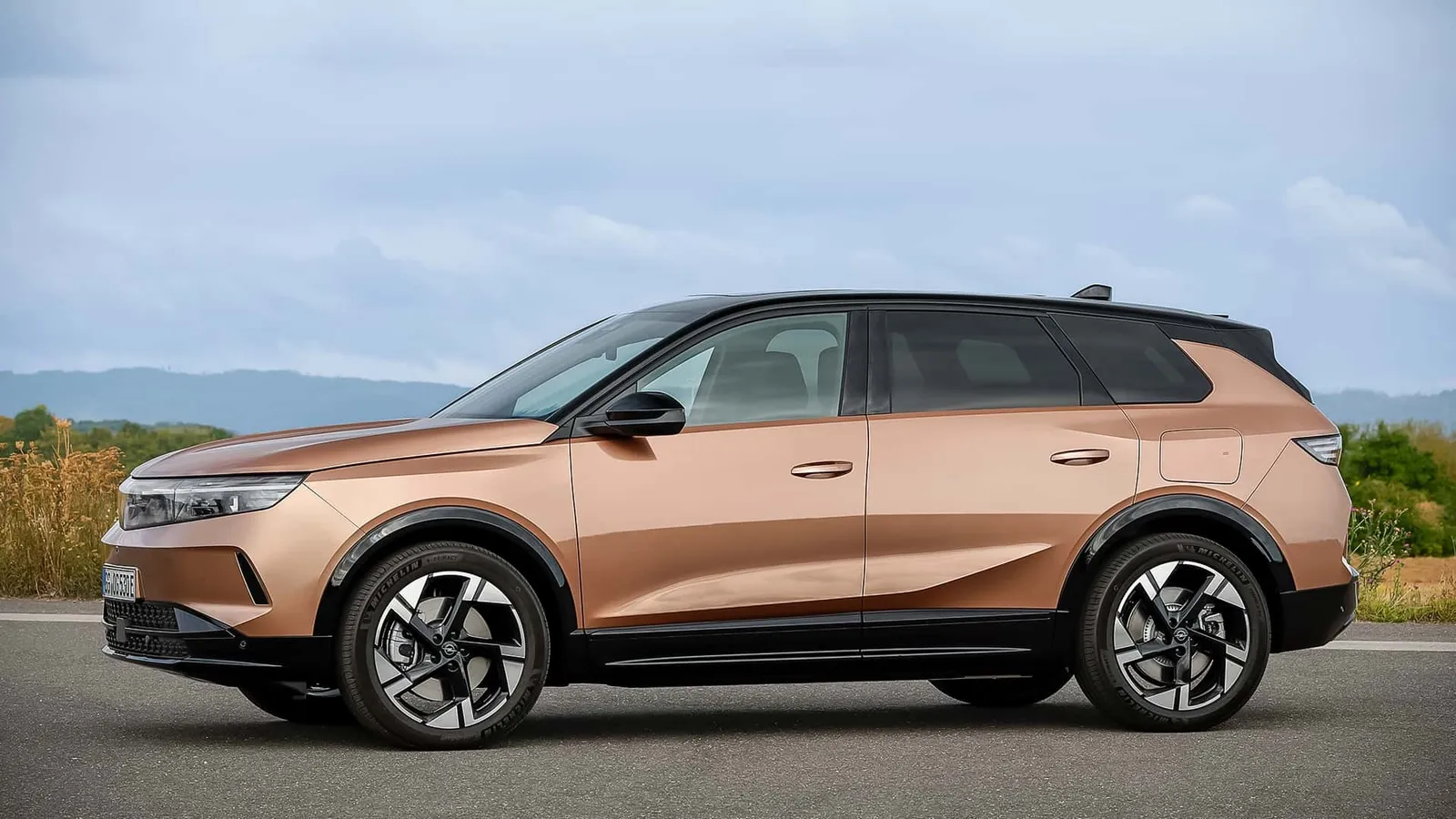
The Grandland Electric is the first Opel model to come with a 22-kW onboard charger. As before, a bidirectional 11-kW charger is standard, but it’s available for an additional 800 euros to upgrade to 22 kW. This onboard charger is available for all trims except the Start version. This reduces charging time at compatible wallboxes or public AC chargers by about half.
The Opel Grandland Electric has been available at German dealerships since November 2024. With the all-wheel-drive version introduced in June 2025 and the Long-Range version becoming available in October 2025, the number of drive variants increased to three. The temporarily offered version with an 82-kWh battery was removed again.
The base version with 157 kW of power and the all-wheel-drive version with 239 kW both come equipped with a battery having a net capacity of 73 kWh, but the real star of the lineup is the 170 kW Long-Range variant, which features a 97-kWh battery and a WLTP range of up to 691 km. The base version costs 45,550 euros, while the 691-km version is available starting at 51,950 euros.
Exterior/Dimensions | Interior | Powertrains/Batteries | Prices/Features | Competitors/Tests
Exterior and Dimensions
At 4.65 meters in length, this electric SUV falls in the middle ground between compact and mid-size categories. It is based on the group’s STLA Medium platform, meaning the Grandland is closely related to the Peugeot E-3008/E-5008, Jeep Compass Electric, Citroën e-C5 Aircross, and DS N°7/N°8. The Grandland is a standard SUV like the E-5008, not a coupe-style SUV like the E-3008. With a length of 4.65 meters, the Opel is quite similar in size to the e-C5 Aircross.
Length
Width
Height
Wheelbase
Opel Grandland Electric
4,650 mm
1,934 mm
1,665 mm
2,784–2,795 mm
Citroën e-C5 Aircross
4,652 mm
1,936 mm
1,691 mm
2,784 mm
The Grandland Electric comes standard with 19-inch steel wheels in the base version, while other versions offer aluminum wheels in 19 or 20 inches. The available colors are relatively muted; in addition to white, gray, silver, and black, there is also a copper-colored and a dark blue-green paint option.
Interior
Inside, the Grandland Electric, like the E-3008, comes standard with two 10-inch displays. Unlike Peugeot, Opel also offers a large 16-inch touchscreen, which is standard in the top Ultimate version.
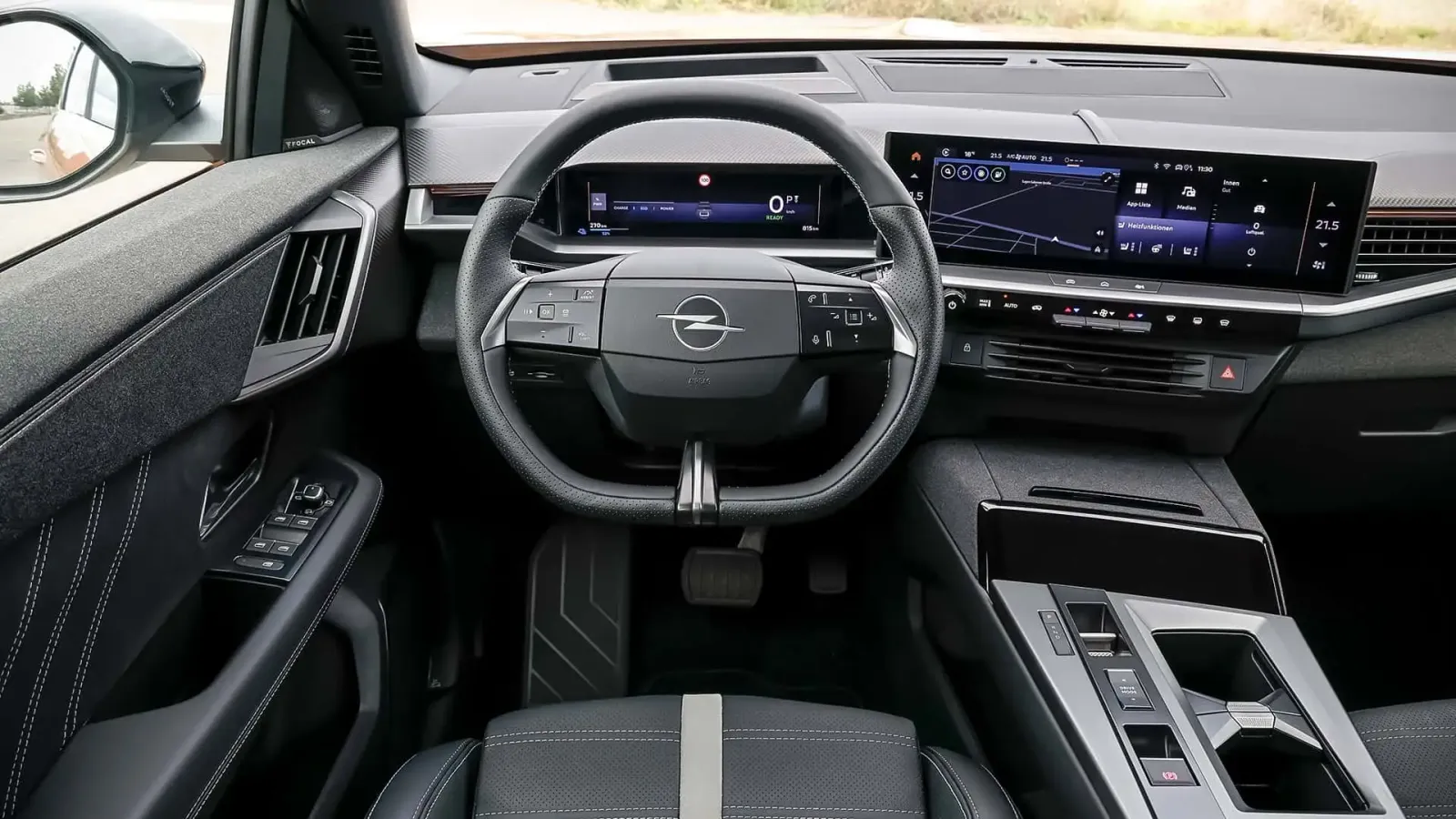
The Opel Grandland has two displays of different heights
Images by: Opel
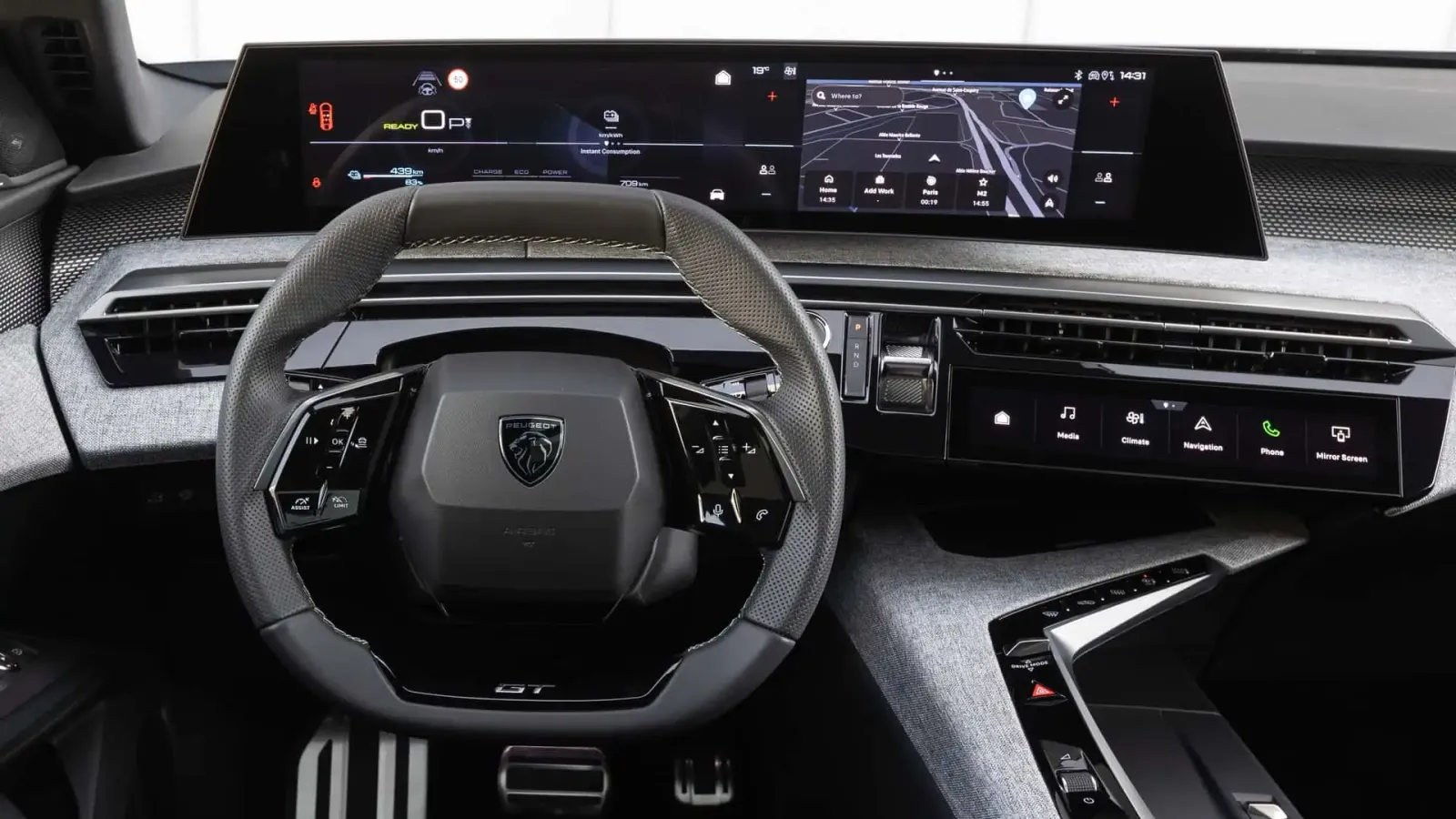
Image source: Peugeot
The display height is the same in all versions of the E-3008
The comparison images above show that the two displays in the Opel model do not match as well visually as those in the Peugeot. One reason for this might be that Opel has positioned and sized the instrument display so that it can be seen through the steering wheel, while in the Peugeot it appears above it.
The trunk offers space for 550 to 1,645 liters of luggage, while the all-wheel-drive version provides only 485 to 1,580 liters. Naturally, the 14 cm longer E-5008 or the DS N°8 offer more space. The STLA medium models generally do not have a frunk.
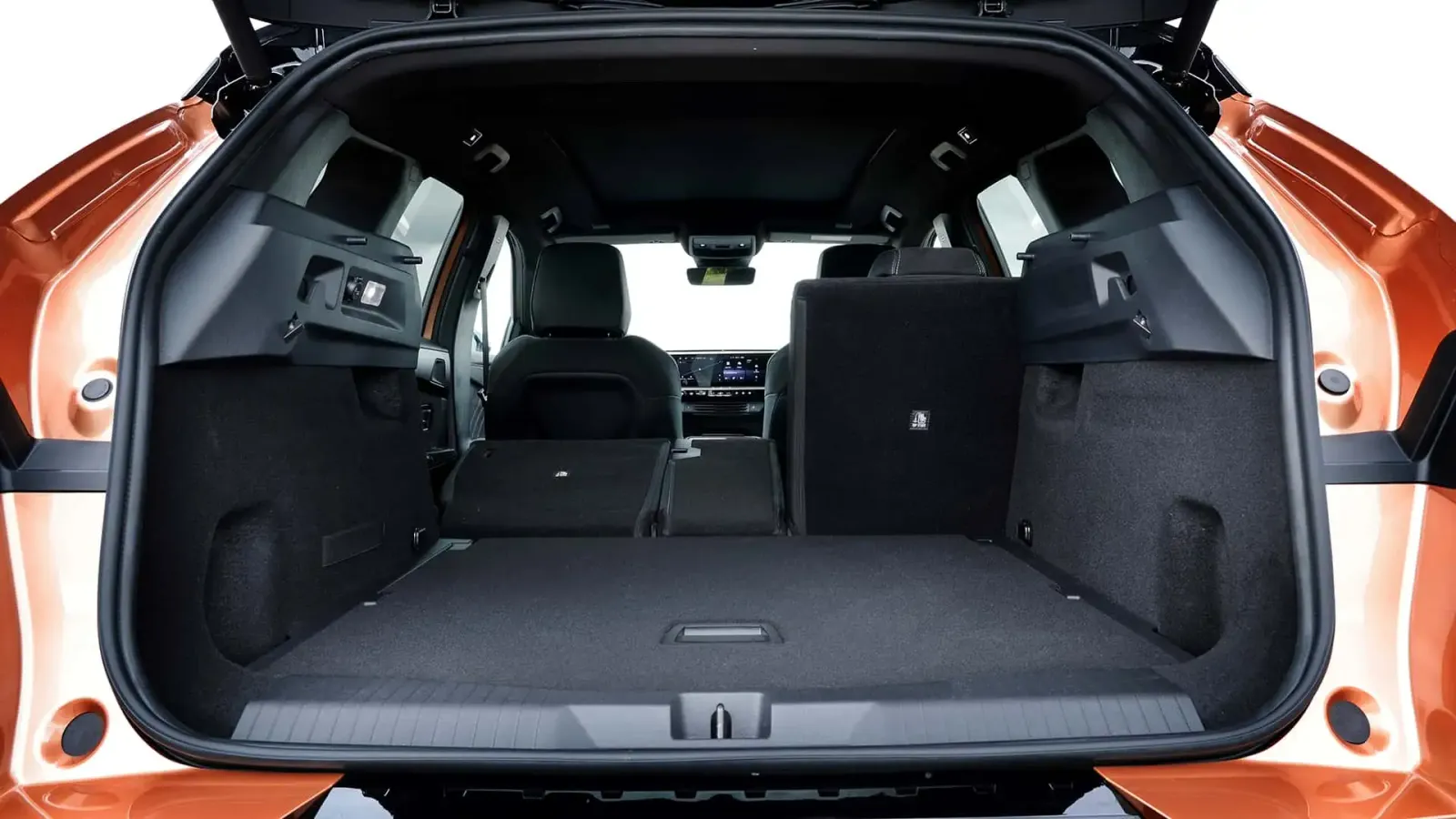
The rear seats can be folded in a 40:20:40 ratio as standard, but the loading floor is not completely flat.
Image by: Opel
Powertrains and Batteries
The powertrains and batteries are familiar from the sibling models. There are three engine options:
Opel Grandland
73 kWh
Opel Grandland
97 kWh
Opel Grandland
AWD 73 kWh
Drive Type
FWD 157 kW
FWD 170 kW
AWD 239 kW
(157 & 83 kW)
Torque
345 Nm
345 Nm
509 Nm
(345 & 166 Nm)
0-100 km/h / Top Speed
9.0 seconds / 170 km/h
8.8 seconds / 170 km/h
6.1 seconds / 180 km/h
WLTP Power Consumption
17.8 kWh/100 km
18.6 kWh/100 km
18.3 kWh/100 km
Net battery capacity
73.0 kWh
96.9 kWh
73.0 kWh
WLTP range
501–519 km
654-691 km
476-499 km
Max. towing capacity
1,200 kg
1,150 kg
1,350 kg
In both front-wheel-drive models, a permanent magnet synchronous motor (PSM) provides propulsion. This is likely the M4 from Emotors, a joint venture between Stellantis and Nidec. The all-wheel-drive version probably features an additional PSM at the rear, similar to Peugeot’s model, which can be mechanically disconnected. The all-wheel-drive system is paired with the smaller battery, just like in the Peugeot model.
Opel Grandland
73 kWh
Opel Grandland
97 kWh
Opel Grandland
AWD 73 kWh
Max. AC/DC charging power
11 (optional 22) / 160 kW
11 (optional 22) / 160 kW
11 (optional 22) / 160 kW
DC Charging Time
20-80 %
about 30 minutes
about 27 minutes
about 30 minutes
DC Charging Speed 20-80 %
about 1.5 kWh/min
about 2.2 kWh/min
about 1.5 kWh/min
Average Charging Power
20-80 %
88 kW
129 kW
88 kW
Range Extension Charging
up to 10.4 km/min
up to 15.4 km/min
up to 10.0 km/min
Both batteries can be charged at up to 160 kW. However, the charging speed in kWh/min is significantly higher for the larger battery. The smaller battery has a rate of 1.5 kWh/min, while the larger one has 96.9 kWh × 0.6 / 27 minutes = 2.2 kWh/min. This is a very good value for a 400-volt vehicle. The VW ID. Tiguan achieves 1.6 or 1.9 kWh/min depending on the battery.
We have also calculated values for range replenishment: A one-minute wait at a DC charging station recharges the small battery for about 10 km, while the long-range version can cover around 15 km per minute (calculation: 691 km × 0.6 / 27 minutes). This puts the Opel Grandland roughly on par with the VW ID. Tiguan, which has 210 kW and a 77-kWh battery (up to 14.7 km per minute).
Prices and Trims
There are four different trims, with the base Start version only available with the base engine option. Notably, the Grandland with a larger battery costs the same as the AWD version:
Grandland 73 kWh
Grandland 97 kWh
Grandland AWD 73 kWh
Start
45,550 euros
—
—
Edition
47,150 euros
51,950 euros
51,950 euros
GS
51,350 euros
56,150 euros
56,150 euros
Ultimate
56,150 Euros
60,950 Euros
60,950 Euros
The base Start version comes with 19-inch steel wheels, matrix LED headlights (“Intelli LED”), rear parking sensors, frequency-selective shock absorbers, a two-zone automatic climate control system, a synthetic leather steering wheel with levers for adjusting regenerative braking, wireless Apple CarPlay and Android Auto, V2L reverse charging, an adaptive cruise control system, and a lane-keeping assist feature. Unusually, the exterior mirrors are only adjustable manually.
The Edition version adds 19-inch aluminum wheels, electrically adjustable, heated, and foldable exterior mirrors, front parking sensors, a rear camera, a floor tray in the trunk, and a heat pump.
GS adds seat and steering wheel heating, an electrically operated trunk lid, tinted windows, inductive smartphone charging, ambient lighting, and a blind spot warning system. The all-wheel-drive version comes equipped with 20-inch wheels here.
The top-tier Ultimate version typically features 20-inch wheels, adaptive matrix LED headlights, Alcantara seat covers, electrically adjustable front seats with memory function for the driver’s seat and adjustable seat arms, a heated windshield, and aluminum pedals. The touchscreen is 16 inches instead of 10 inches here, and it runs a navigation system. It also includes a 360-degree view system, a head-up display, a sensor-controlled trunk lid, and a Focal audio system.
Optional features include a glass sunroof, Nappa leather seats, a trailer hitch, as well as a winter package with seat and steering wheel heating, an infotainment package with a 16-inch touchscreen, and a tech package featuring sensor-controlled trunk lid and blind spot warning.
Rivals and Test
The prices for the Grandland start at 45,550 euros. This makes the base Grandland significantly more expensive than the entry-level VW ID. Tiguan (42,695 euros according to the configurator, 38,695 euros with the ID. purchase bonus), which offers slightly less range and power. The Tesla Model Y, in its base version with 220 kW and 525 km of range, costs only 39,990 euros.
Opel charges just under 52,000 euros for the most interesting version of the Grandland series, which boasts a range of nearly 700 km. The Model Y, in its Premium Long Range RWD version, only achieves 603 km of range, falling far behind the Opel. It is slightly cheaper at just under 51,000 euros.
Other competitors include the Skoda Enyaq 85 Selection with 210 kW of power and a 581 km range, priced at 50,990 euros, as well as the Hyundai Ioniq 5 RWD 84 kWh model with 168 kW of power, fast 800-volt charging, and a 570 km range, costing 54,100 euros.
In our test of the Opel Grandland Electric, we liked the good build quality, but the manual seat back adjustment is hard to reach. There was enough space in the back seat for our 1.87-meter-tall test editor. The 157-kW powertrain is sufficient but not enough for sporty driving. Regeneration is a bit disappointing: even at the highest level, one-pedal driving is not possible. However, the suspension with frequency-selective dampers and the smooth steering were well received by our colleague.
More on the STLA Medium platform:
In summary
The star of the STLA medium-platform is undoubtedly the 97-kWh battery, which provides a range of around 700 km — a figure far beyond that of models like the Skoda Enyaq or Hyundai Ioniq 5. In terms of charging speed, the Grandland Long Range naturally can’t match Hyundai’s 800-Volt technology, but for a 400-Volt vehicle, its speed is commendable. With the new 700-km version, the Grandland Electric and its sibling models offer a true competitive advantage.
Last updated on November 3, 2026: 22-kW onboard charger added, prices, specifications, and technical details updated, trailer towing capacity added, additional charging table created, competitor comparisons updated.