
The new Xpeng G9L, a luxury cry of desperation for the European customer who can afford it
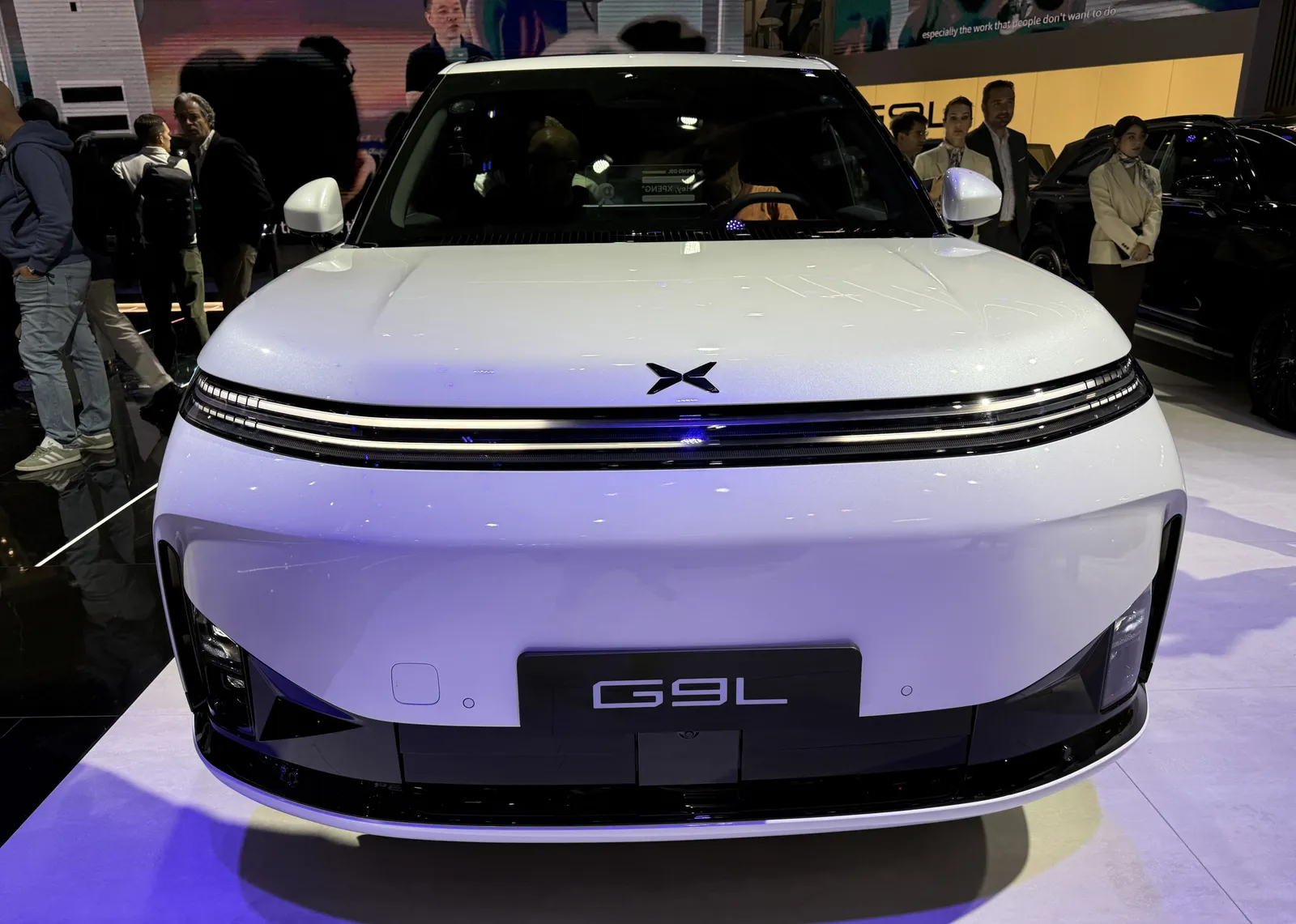
At the auto show in Paris, Xpeng unveiled its newest model, the Xpeng G9L. The car generated significant interest, with excitement about it even appearing on Polish internet forums. However, anyone familiar with the Chinese market knows that the Xpeng G9L represents a clumsy attempt, even desperation, calculated by spreadsheets. It can be sold at a high price on the continent, which is willing to accept prices twice as high as those in China.
Xpeng G9L: First impressions. A work of art from someone who should be selling landscapes
Let’s start with a caveat, as this error is rampant everywhere. We promise this is the last time. The Xpeng G9L, although it has a nearly identical name to the Xpeng G9, has little in common with the Xpeng G9 and is not a larger version of it. The G9L is based on the Xpeng X9 (an electric minivan), is assembled on the same production lines, has a similarly high level of equipment, and serves as the flagship SUV in Europe. The version for the Old Continent is manufactured at the Magna Steyr factory in Austria.
The Xpeng G9L at the 2026 Paris Motor Show. Note the narrow light strip just below the main headlights (those at the level of the license plate). It can glow turquoise to indicate that the vehicle is operating in at least partially autonomous mode (SAE Level 3 and above).
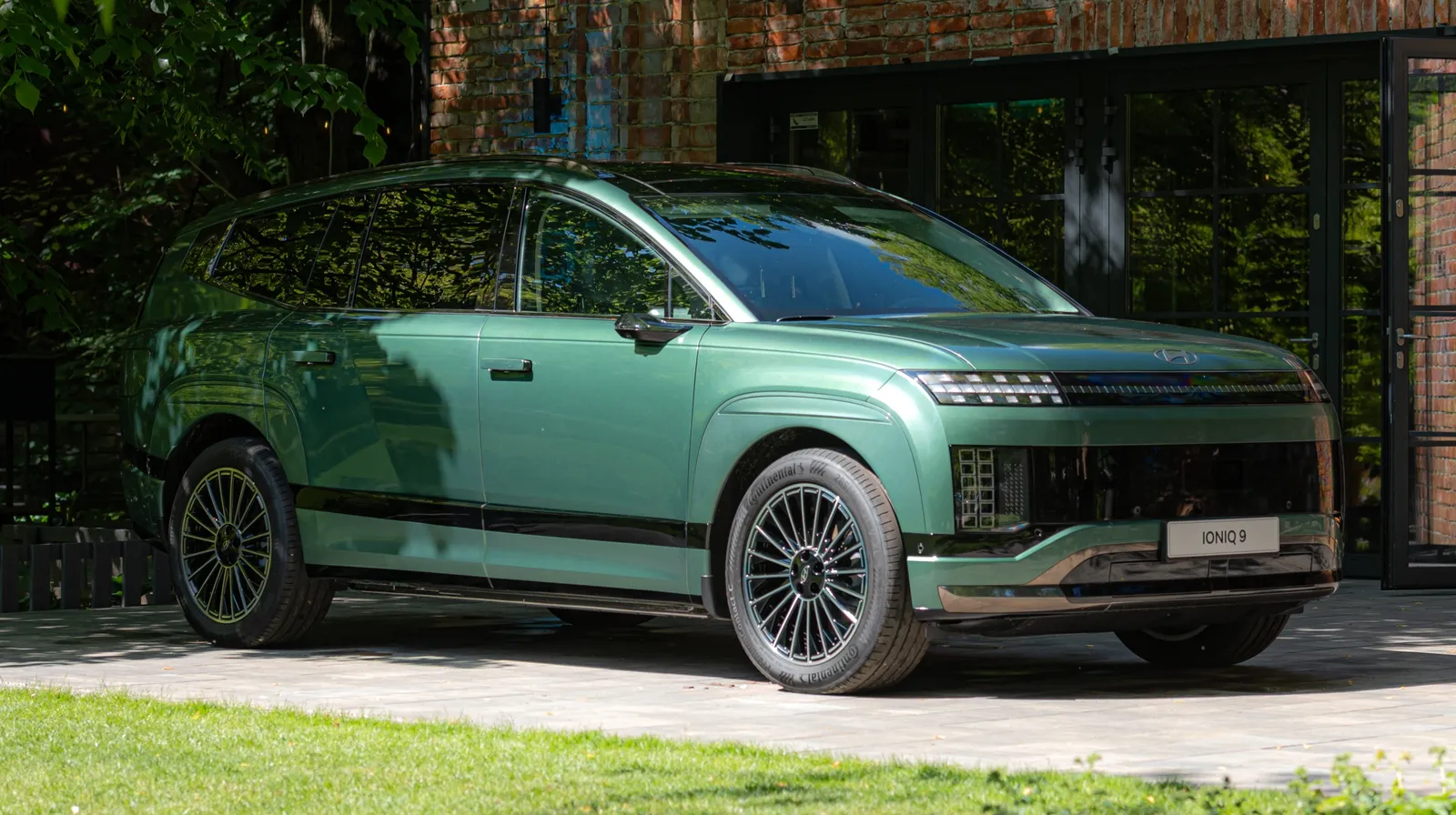
The Hyundai Ioniq 9, which we will discuss in the next paragraph.
This vehicle falls into the category of “easy to review.” It is impressively large, measuring 5.12 meters in length and 3.1 meters in wheelbase. Additionally, Xpeng, for some reason, decided to make it resemble the Hyundai Ioniq 9: the car is presented in a color similar to that of the standard Ioniq 9 and also features lighting strips in its style. We have seen a similar approach with the Hyundai Kona Electric and Xpeng G6, as if the Chinese manufacturers believe it’s worth following proven models from South Korea.
Xpeng G9L in Hyundai-green
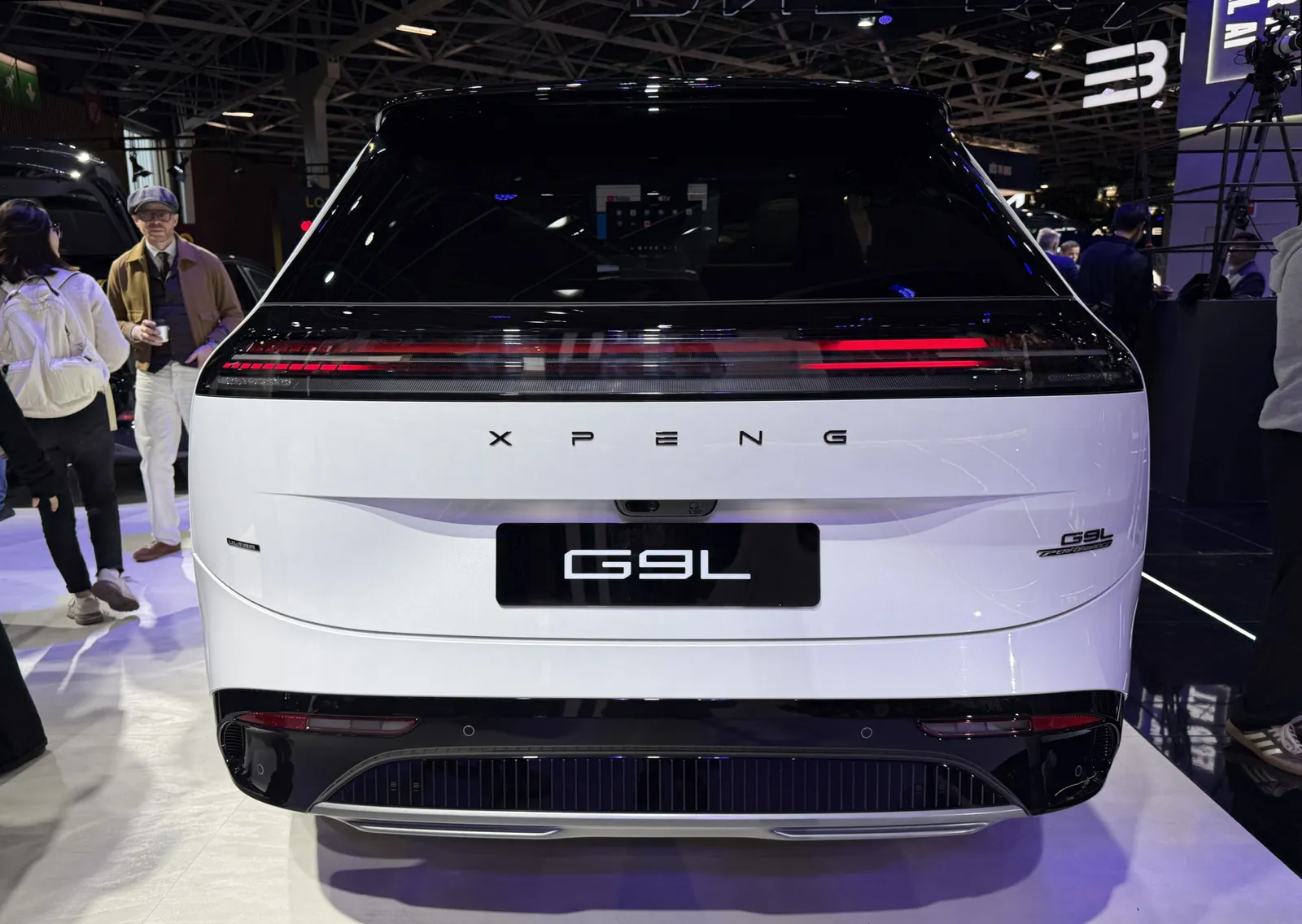
The Xpeng G9L in white. The tail lights are also pixelated too; we’ve seen this before somewhere...
Xpeng G9L, technical specifications
Xpeng’s flagship SUV is available in a plug-in hybrid (PHEV/EREV, Xpeng uses the term “REEV”) version as well as a pure electric version. The electric Xpeng G9L comes with a battery capacity of 91.9 kWh (LFP) or 110 kWh (Li-NCM), which is relatively small for a vehicle of these dimensions [and for the next decade ;)], but similar to the Ioniq 9 (~116 kWh). Unlike the X9, which is a van and thus comes standard with front-wheel drive, the G9L is offered with rear-wheel drive or all-wheel drive. The base RWD version has 270 kW/367 horsepower, while the AWD variant delivers 430 kW/585 horsepower.
Xpeng has made sure the car does not impose restrictions on its owner. It claims a 12-minute charge from 10% to 80% for both models with a lower-capacity LFP battery of 91.9 (~90) kWh, and the 110 (~107) kWh version with a Li-NMC pack. Of course, this is what the manufacturer states. One must remember that for a 110 kWh battery, a charger capable of reaching 540 kW is required. In Poland, there is only one such charger, with peak rates of up to three times that.
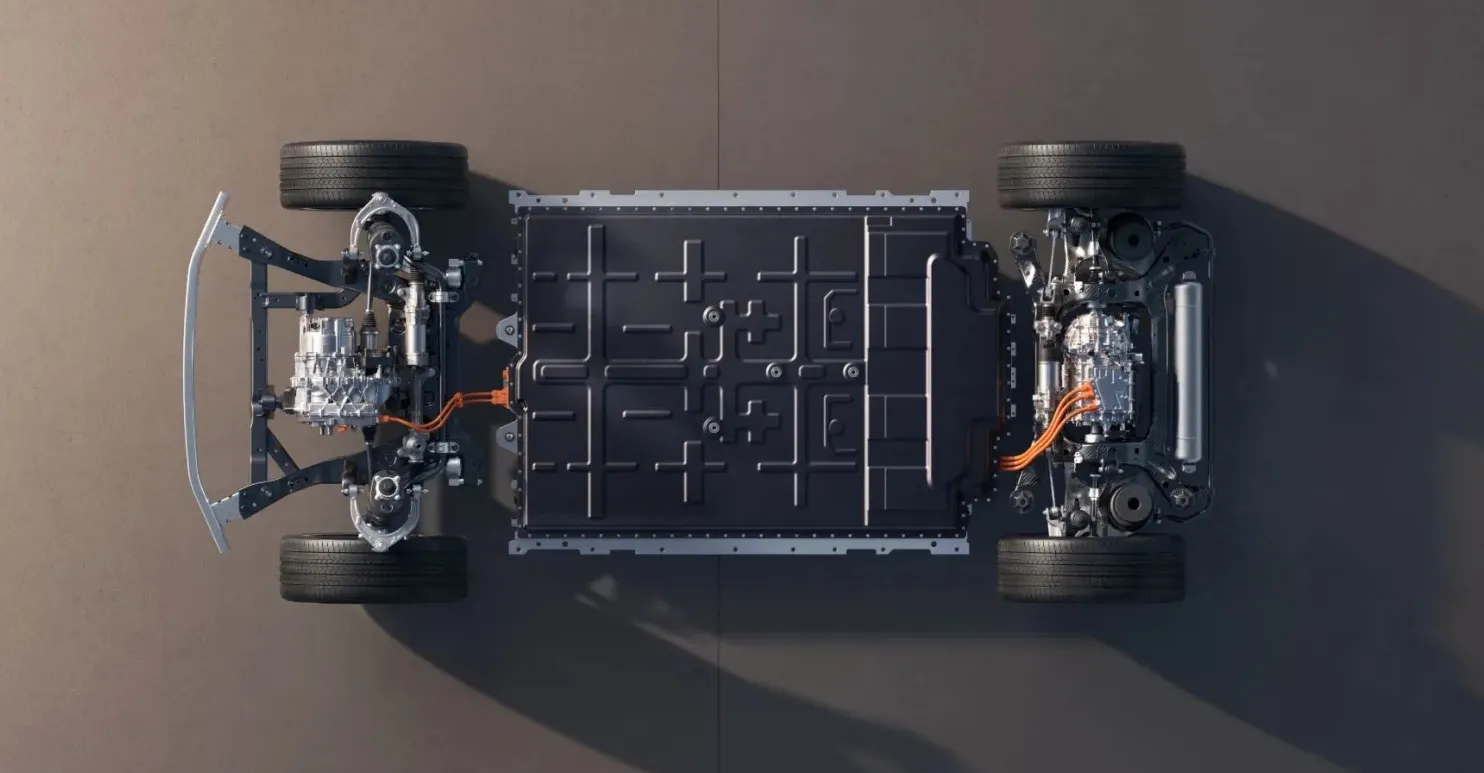
Xpeng G9L platform, visible battery, and engines in the front and rear
Xpeng G9L REEV cockpit with visible electronics mounting points
Interesting facts about the Xpeng G9L
As we mentioned, this car is easy to review because it has everything at a high level. The interior is finished in soft orange leather [it’s no coincidence that “oranges” and “Chinese mandarin oranges” are called the same way—the fruit came to Europe from China – editor], a roof-mounted screen, or a third row of seats. The latter can be folded flat against the floor when needed, giving the owner access to a huge cargo space. Among the large Chinese SUVs we’ve tested, the Xpeng G9L offered the third-row passengers the most legroom (compare: BYD Atto 8):
In addition, the Xpeng G9L features a steerable rear axle, captain’s seats in the second row (“AI seats”), matrix headlights (a rarity in Chinese models), and a minimal number of control buttons to create a Tesla-like cockpit. It also promises compatibility with Xpeng’s VLA 2.0 system, which aims to match Tesla’s TAD/FSD in terms of autonomy levels. Each seat in the second row is equipped with a mandatory thigh support mechanism and more cushions than an average Polish household has on all its beds combined (video below):
https://elektrowoz.pl/wp-content/uploads/2026/11/Xpeng-G9L-budowa-foteli.mp4
The Chinese market, the key factor
The price of the Xpeng G9L is not yet known, but we know from other sources that the manufacturer wants to focus on more expensive and high-margin models, avoiding competition for customers in the lowest price segment. At the Paris auto show, it was clear that every Chinese brand aspired to displace models like the BMW X5, Audi Q7, or Mercedes GLE. Xpeng is no exception. The G9L is a product expected to be expensive (i.e., high-margin) and sold in a market capable of supporting high prices (read: in Europe). It was welcomed with enthusiasm by Polish influencers, so there is a chance it could sell in the hundreds of units.
The car is perfectly suited for large families (space inside the cabin, ultra-fast charging), but the problem is that there are fewer and fewer of these on the Old Continent. It will be too long for ordinary users, and definitely too long for those who drive alone. The agile rear axle makes maneuvering easier, but later it turns out that the car’s silhouette extends beyond the parking space — which becomes inconvenient.
Article Rating
Readers’ Ratings
[Total: 0 votes Average: 0]
Don’t miss new content — CLICK and FOLLOW Elektrowoz.pl on Google News. You might also be interested in the following ads: