
The new electric Citroën 2CV will cost 15,000 euros
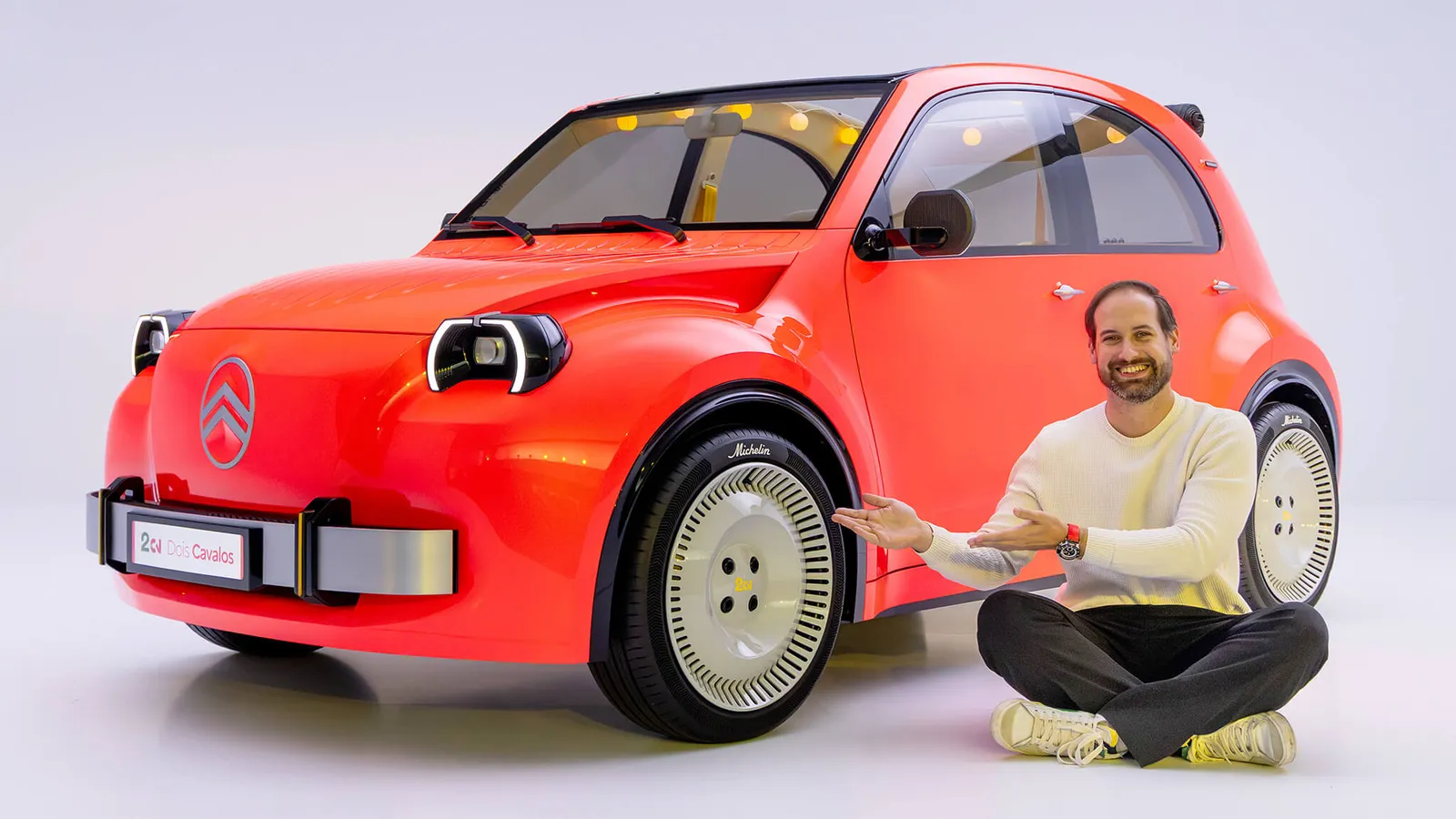
The Citroën 2CV returns 78 years later as an electric vehicle with a clear mission: to make electric mobility accessible to all Europeans.
It is the highlight of the 2026 Paris Motor Show. The Citroën 2CV is back as a 100% electric model and will cost only 15,000 euros.
It is still presented as a prototype, but it already reveals much of what we will see in the production model, which is expected to be unveiled next year with a launch scheduled for 2028.
Accessible, compact, versatile, and full of personality, the new 2CV honors the DNA of the original model but is adapted to modern challenges. We went to Paris to meet it and uncover all its secrets.
Saying the Citroën 2CV marked an era is an understatement. It was introduced in 1948 and remained on the market for over 40 years, until 1990, selling more than five million units. Interestingly, the last unit was produced in Portugal, at the Mangualde factory.
Along the way, it became a true icon, though that was never its intention. In fact, its purpose was quite the opposite: it was designed to put France on wheels, especially in rural areas, giving people the freedom to go to work and travel.
The requirements specified for the original model are still remarkable today: it had to be a car capable of carrying four people, able to reach 60 km/h, and able to transport a 50 kg bag of potatoes and a basket of eggs, which naturally had to arrive at their destination intact.
In other words, what was needed was a car that could handle the daily challenges while remaining affordable, easy to maintain, and simple to drive. The engineers at Citroën stepped in, and as they say, the rest is history.
A new type of mobility
Although the world has changed significantly over the past 78 years and mobility challenges are clearly different now, the mission for the new 2CV isn’t that much different from that of the original model.
The European public has lost purchasing power in recent years, with fewer and fewer people able to afford a new car. Until 2019, around one million cars were sold in Europe at prices below 15,000 euros. In 2024, only 90,000 new cars were sold at prices lower than that.
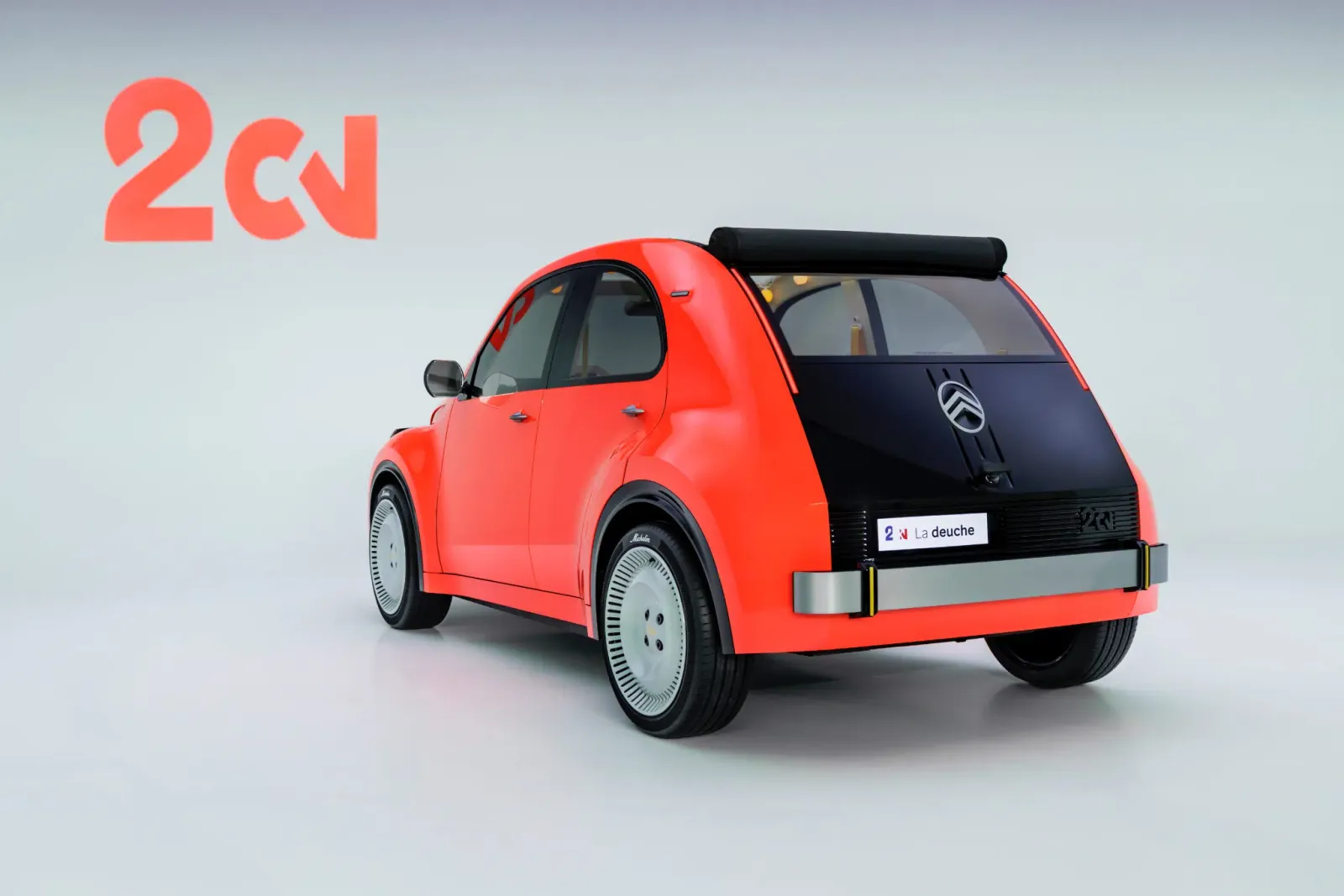
Citroën aims to change this by setting a base price of just 15,000 euros for the 2CV, aligning it with the new European regulations for electric cars. It is expected to sit somewhere between an Ami (quadricycle) and an ë-C3.
As a result, it is quite compact — measuring only 3.76 meters in length — and will weigh just 1,000 kg. Because of its light weight, it won’t require a large battery, which means one thing: lower costs.
With that said, we can now talk about the elephant in the room. Citroën hasn’t provided any specifications regarding the electric motor that will power this 2CV—neither about the electric motor, the battery, nor even the range. It merely states that this model will have “a range tailored for daily use.”
A Return to the Past
But we quickly forget about the lack of information on the future production model when we look at this prototype: I don’t know about you, but I really like what Citroën has done.
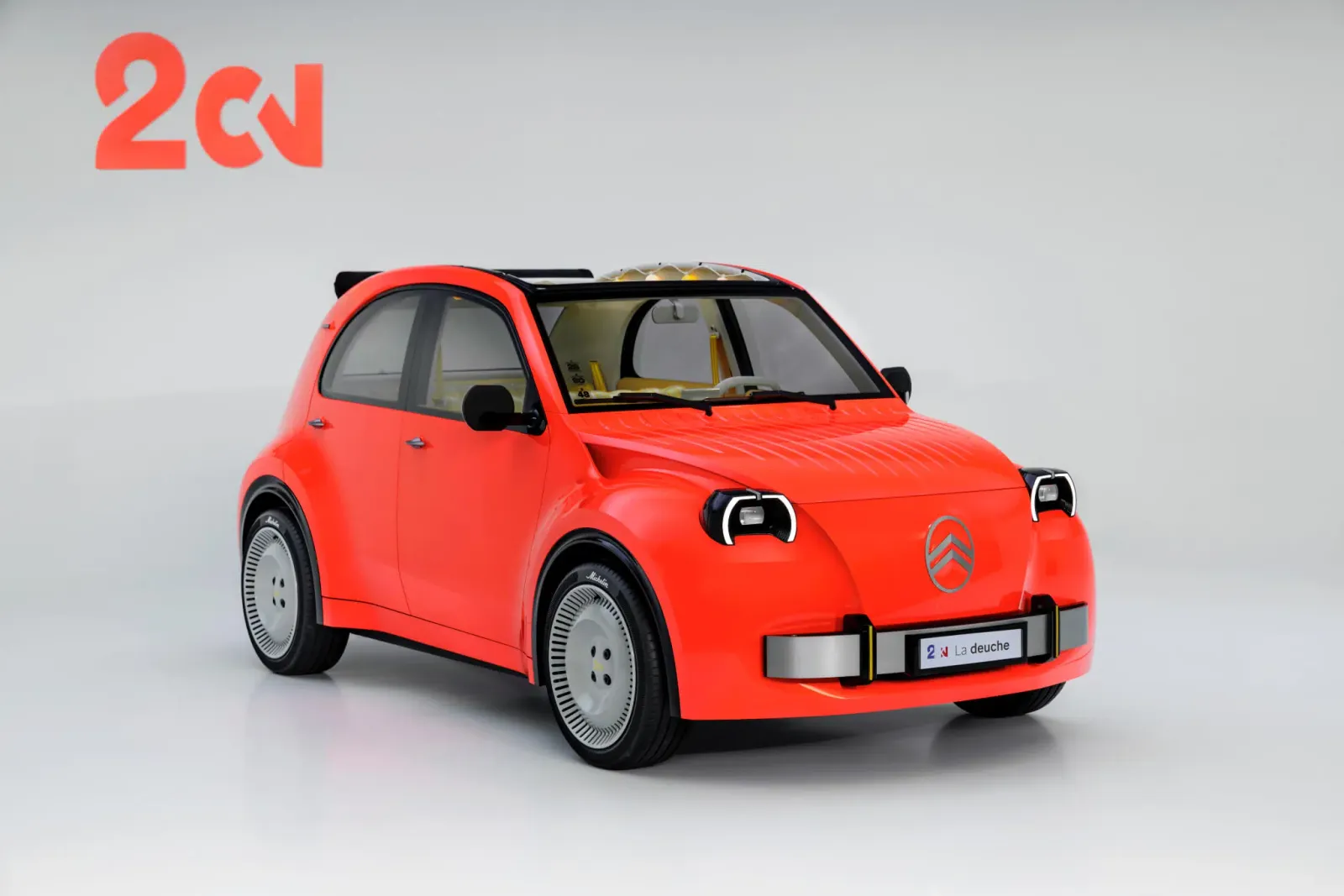
We can easily recognize it as a modern 2CV, but I feel it has the right balance of everything. It’s not an over-the-top retro design effort, yet it’s instantly recognizable at the same time. And this balance is essential to me.
Curiously, one of the key elements in this design was the angle of the roofline. In a conversation with one of the designers on this model, he admitted that they tried several different silhouettes and realized that simply changing the angle of the roof slightly was enough to make this model stop looking like the original one immediately.
The rear end helps emphasize the roof line, which features a retractable fabric cover and a black finish that extends to the bumper, just like on the original model.
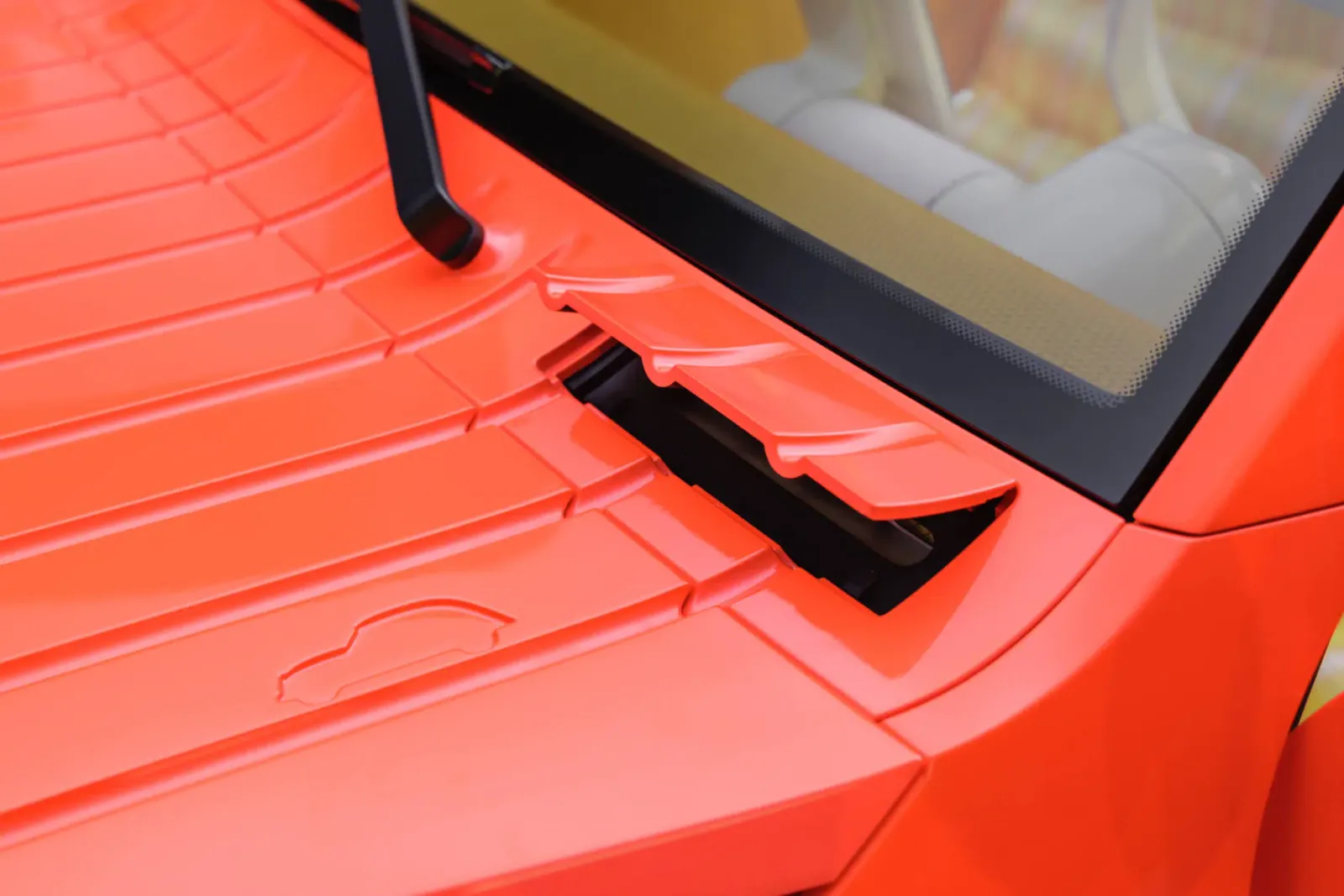
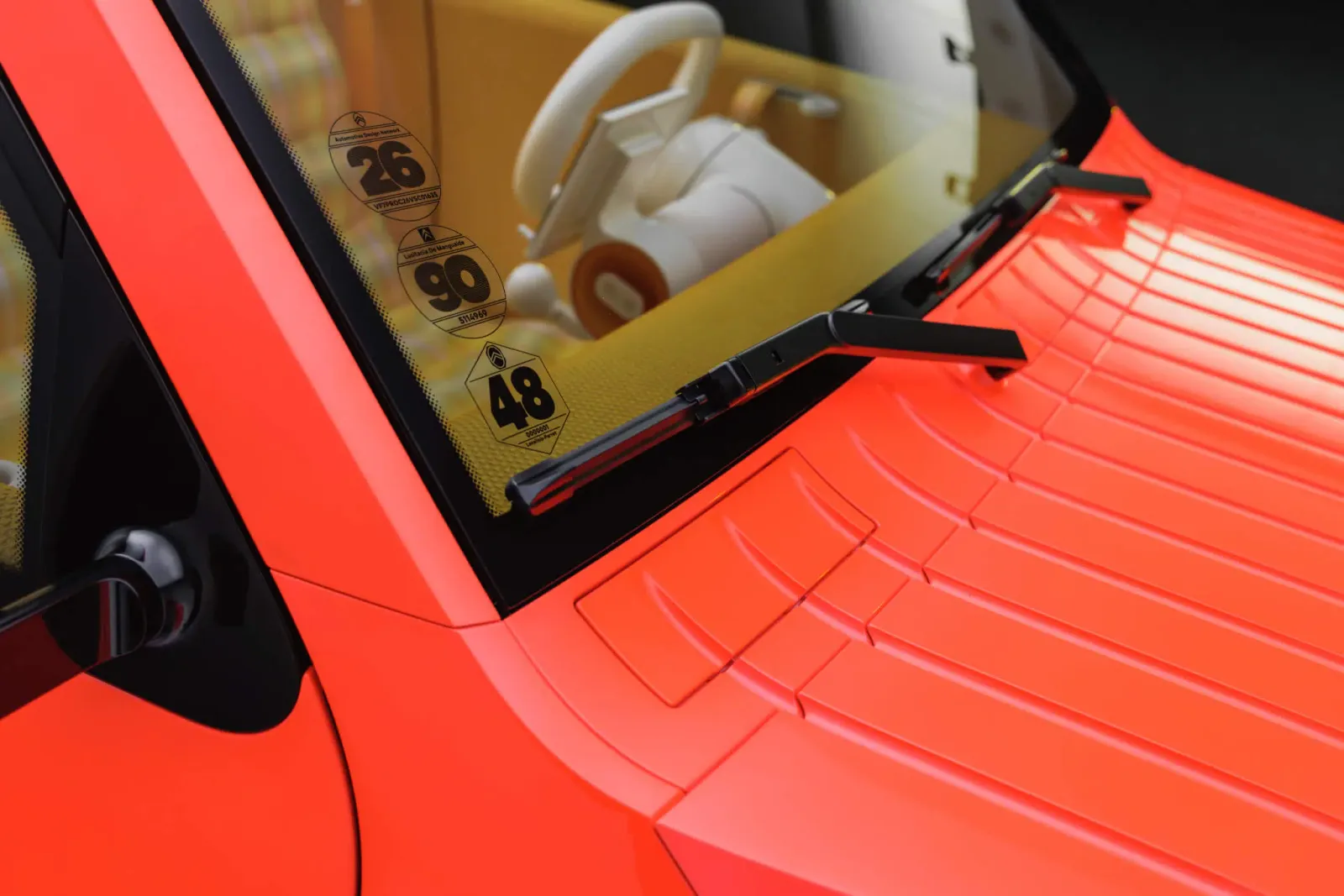
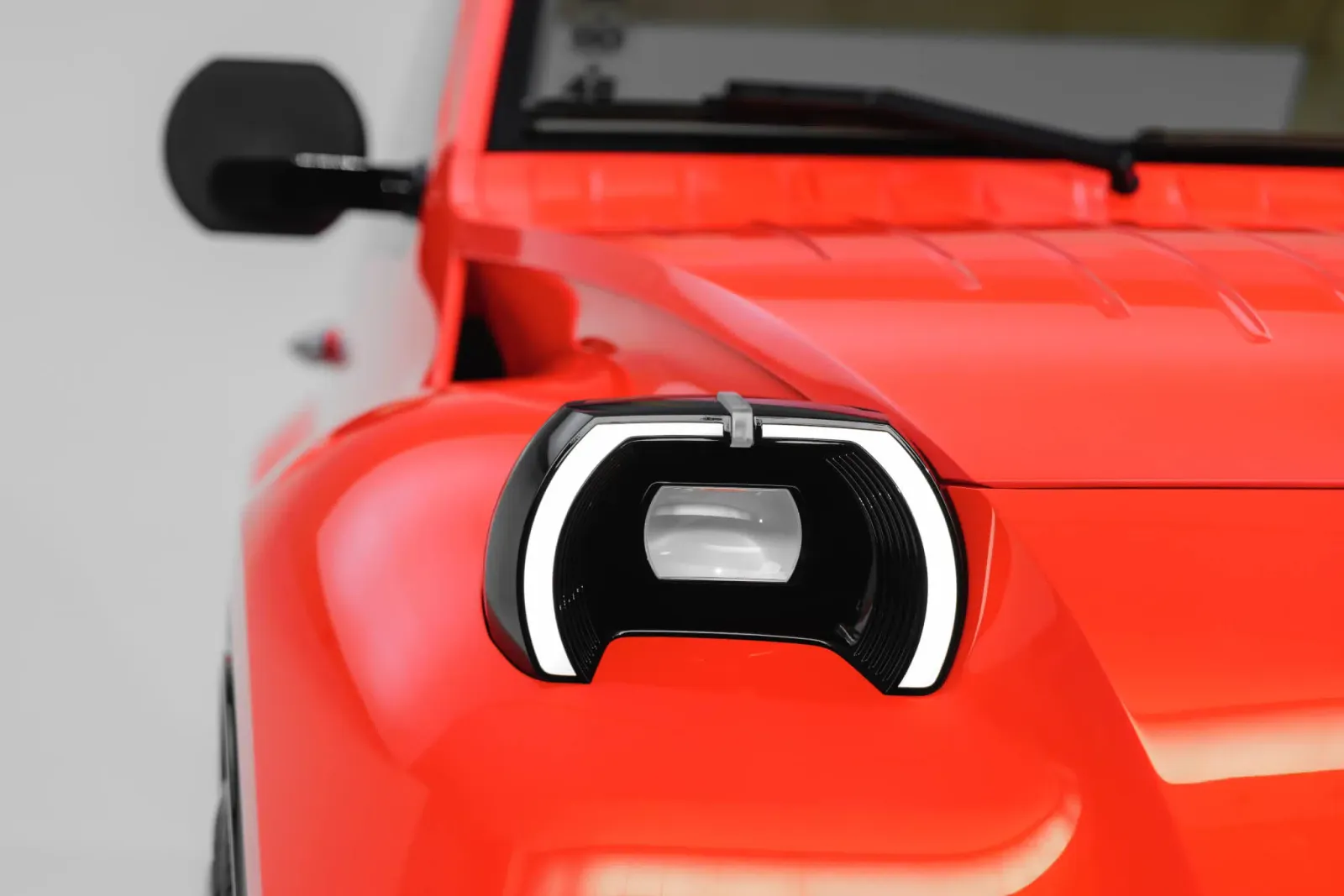
However, the first impression comes when looking at this model from the front. It retains the prominent headlights above the fenders, as in the original model, along with a highly sculpted hood featuring creases inspired by the first 2CV, exposed windshield wipers, and integrated air intakes.
5 images
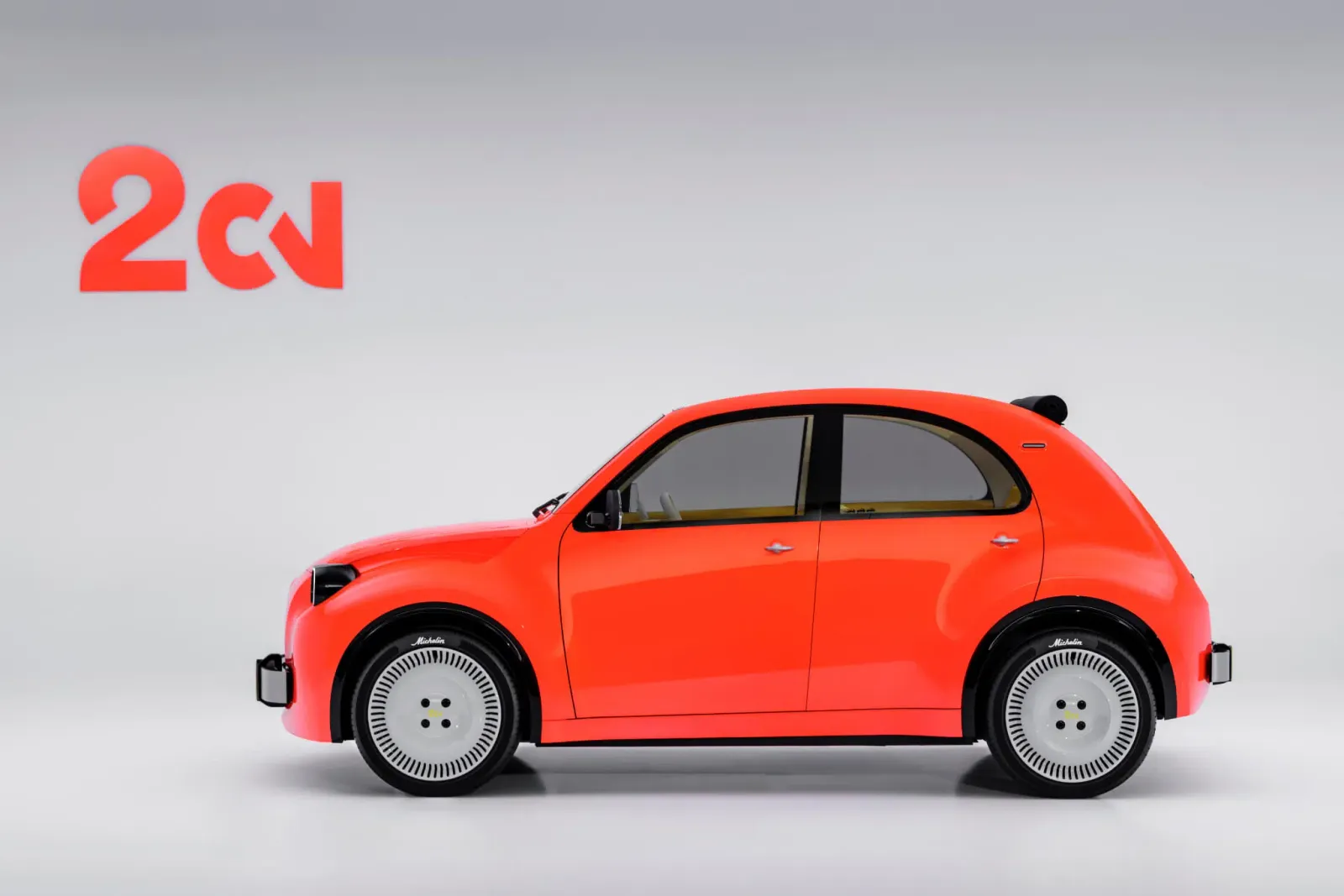
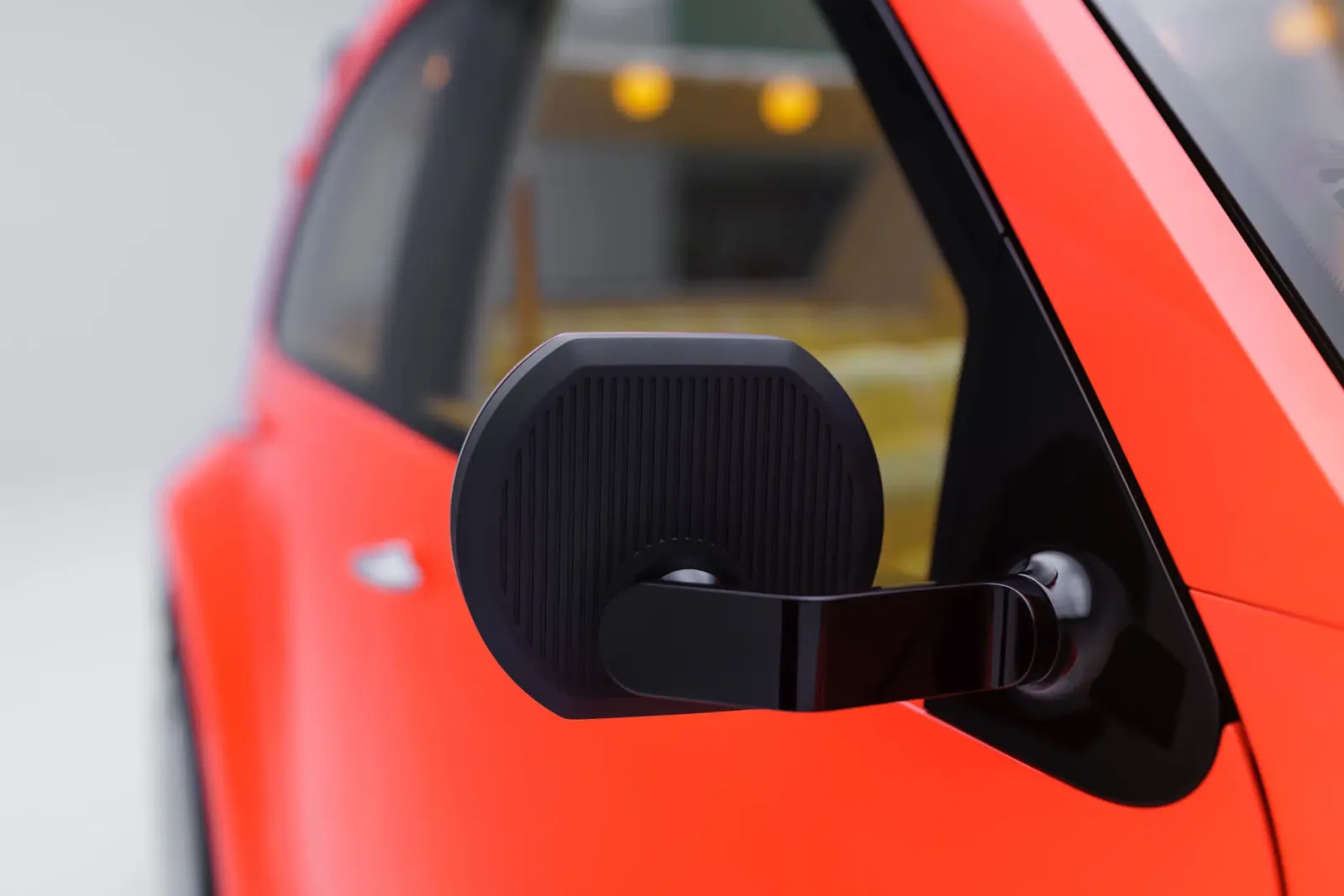
In profile, in addition to the roof line already explained, it’s important to note the handles made from an aluminum piece, the very prominent wheel wells, the turn signal indicators integrated into the rear pillar, and the 18-inch steel wheels wrapped in Michelin tires that feature the brand’s old logo.
Simplifying is also innovation
In recent years, we’ve become accustomed to seeing cars equipped with more and more technology, decorative elements, and luxuries. Although appreciated, these features aren’t always utilized.
For this project, Citroën declared war on all of this and sought to replicate the simplification approach it used 78 years ago with the original 2CV.
The result is a minimalist interior with space for four occupants that, interestingly, never feels bare, even though it lacks traditional elements such as a dashboard, center console, or separate front seats.
The design relies on two continuous fabric seats with a simple metal frame. I asked the brand’s officials about the feasibility of getting this approved, and they were optimistic: they reminded me of the solution used in the first Citroën Cactus.
5 images
Just like in the 2CV, the steering column is completely exposed, along with the steering wheel, which, despite having a modern design, lacks any controls.
The gear shift knob from the original model remains here, but it now serves to accommodate the Start & Stop button and the controls for the automatic transmission.
There is also an eight-inch central screen, whose graphics were created by Belgian cartoonist Jean-Luc Delvaux, a portable radio inspired by an optional feature from the original 2CV, and even a picnic basket that functions as a central console.
But the most curious detail is hidden inside the doors, where we find an egg holder, clearly a tribute to the specification sheet of the original model. This detail shows well how much fun the designers at this French brand had developing this model.
Naturally, it will be difficult for the production model to meet all these requirements. But one thing is certain: simplicity will always be the guiding principle. After all, it is directly related to production costs. And there are no miracles that can maintain the base price at 15,000 euros.
What to expect?
It’s true that this is still a prototype, and we won’t see the production version until next year. But the mission behind the new 2CV has long been defined: to create a simple, versatile, and affordable model that can address daily mobility challenges and bring electrification to a broader range of European customers who have seen a decline in purchasing power over the past few years.
The phrase “just enough,” or “only what’s necessary,” accurately captures what the brand aims to offer with this electric future, which goes against almost everything we’ve seen recently in the automotive industry.
At a time when cars are bigger, heavier, more complex, and more expensive than ever, the 2CV aims to be simple, small (it’s shorter than the original), lightweight, and affordable. And that alone is newsworthy.