
Germany is changing the rules for green stickers. Polish drivers are also affected.
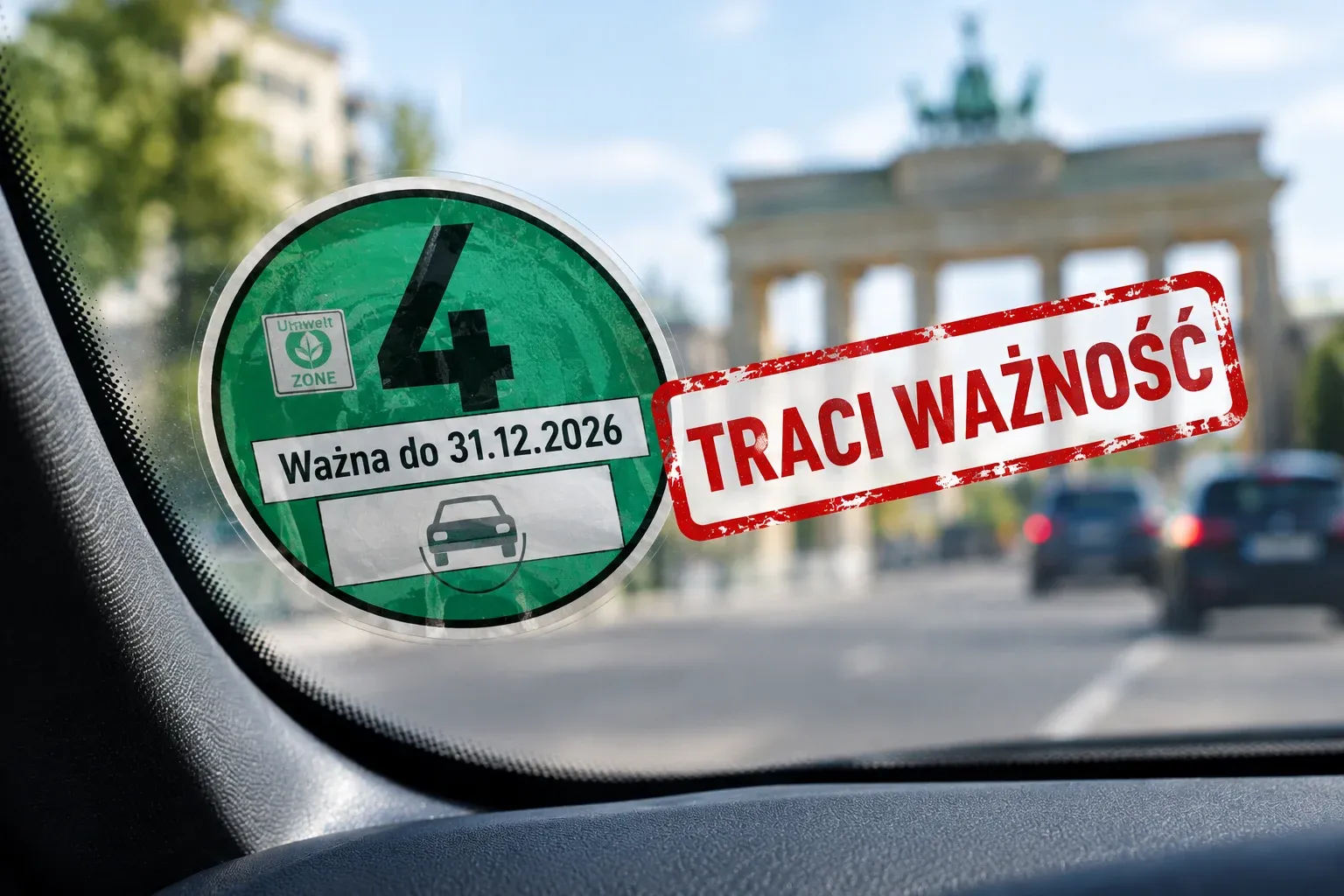
The distinctive green sticker on the front windshield has for years been associated with road trips across Germany. The Umweltplakette confirms that a vehicle meets the requirements to enter ecological zones, known as Umweltzonen.
Rules changed on October 1. This does not mean the end of green stickers, but they are no longer necessary for some drivers. The change stems from an amendment to Regulation 35 under the federal law on emission protection. The regulation was adopted on September 25, published in Germany’s Federal Law Gazette on September 30, and came into effect on October 1, 2026.
Germany – Vehicles with an “E” badge no longer need a green sticker
Until now, even fully electric cars had to have a green Umweltplakette if the driver wanted to enter Germany’s ecological zone with them. This created a rather peculiar situation for German cars – the vehicle had a special license plate with the letter “E,” yet an additional sticker confirming permission to enter was still required on the windshield.
Germany has now abandoned this dual marking system. Cars designated under § 11 of Germany’s vehicle registration regulations have been added to the list of vehicles exempt from the Umweltplakette requirement. For cars registered in Germany, this refers primarily to the distinctive letter “E” at the end of the license plate number. The change applies to fully electric cars, fuel cell vehicles, and qualifying plug-in hybrids.
Germany – Plug-in hybrids can also benefit, but there are conditions
Not all hybrids receive an “E” rating in Germany. Traditional hybrids without the ability to charge externally are not covered by this system at all. A plug-in hybrid, however, must meet one of two conditions: its CO2 emissions cannot exceed 50 g/km, or the vehicle must travel at least 40 km solely using electric power. If such a car has a German license plate with an “E” letter, a green sticker is no longer required. Without the appropriate rating, the situation is different. Just being a plug-in hybrid does not automatically exempt one from the requirement to have an Umweltplakette.
Germany – What does this mean for cars from Poland?
German regulations also cover cars registered abroad. Paragraph 11, clause 5 of Germany’s FZV regulation states that foreign license plates issued for electric vehicles or corresponding foreign stickers are treated in the same way as German ones.
Polish all-electric and hydrogen cars have distinctive green license plates. These are a special government designation for such vehicles, so there is no need to add a German green Umweltplakette after the regulations changed.
The situation is different for plug-in hybrids registered in Poland. PHEVs receive ordinary white license plates here, so it is not possible to determine their status based solely on the license plate number.
Germany – There is also a blue “E” sticker
Germany also has a solution for foreign cars that qualify as electric vehicles under local regulations but do not have the appropriate marking in their country of origin. A special blue plate with the letter “E” can be obtained. Unlike the green Umweltplakette, it is placed at the back of the car. It is intended for vehicles registered outside Germany. To obtain it, a document confirming compliance with the required conditions must be provided, such as a registration certificate, a CoC certificate, or another appropriate document.
Germany – Unchanged gasoline and diesel
For the vast majority of drivers using gasoline-powered cars, nothing changes. Gasoline, diesel, or conventional hybrids still need to have the appropriate environmental sticker if they enter an eco-zone. The current environmental zones in Germany allow cars with a green sticker. According to Germany’s Federal Environmental Agency, there are currently 35 such zones left. Their number has been declining in recent years because over 90% of cars already meet the requirements for a green sticker, and many cities have improved air quality enough to eliminate these zones. This does not mean they can be forgotten, however. Entering an eco-zone with a car that lacks the proper sticker is considered an offense and can result in a fine of 100 euros.
Germany – Eliminating an Unnecessary Requirement
The change itself does not grant electric vehicles a new right to enter German city centers. They already had this right before. The difference is that there is no need to confirm the same thing twice now. Germany’s Environment Ministry justified the change by aiming to reduce bureaucracy. Since a plate with the letter “E” or an equivalent foreign mark already clearly indicates a vehicle’s status, an additional green sticker on the windshield added nothing new.
For Poles, the most important thing is distinguishing between vehicle types. An electric or hydrogen vehicle with Polish green plates should no longer require a traditional Umweltplakette. In the case of a Polish plug-in hybrid, ordinary white plates are insufficient — an appropriate additional mark is still needed.
Piotr Sobczyk