
Mercedes-Benz launches a V2G service for private customers
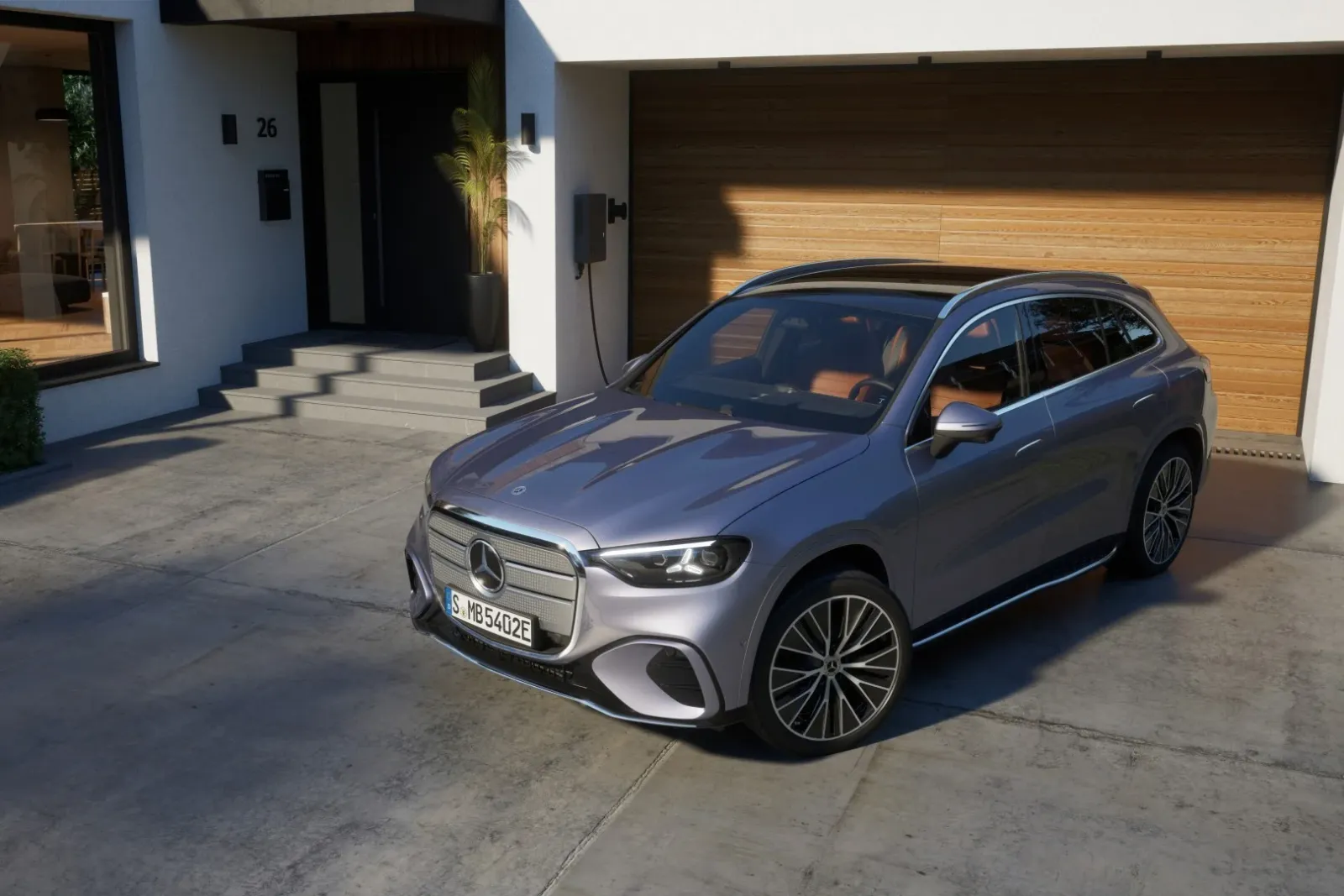
Mercedes outlines its V2G ambitions for Germany. Shortly after introducing their new V1G home charging rates in September, the Stuttgart-based company is now adding a Bidi package that will initially work with the electric GLC and the new C-Class in this country. The Mobility House serves as the technology partner.
Image: Mercedes-Benz
Mercedes joins other automakers in announcing the launch of a Vehicle-to-Grid (V2G) service in Germany. Together with The Mobility House, the automaker plans to enable its customers to feed electricity from the batteries of its current electric vehicles back into the public power grid, thereby reducing costs. The key concept here is two-way charging, or BiDi-charging, which falls under the V2G category. Other companies have previously announced similar services, including Volkswagen/Elli with The Mobility House, BMW with E.ON, Ford with Octopus Energies, and Renault with The Mobility House.
At Mercedes, the new service will be launched under the name MB.CHARGE Home Pro Intelligent. Ambitions in this direction were first announced in April. At that time, the leadership of The Mobility House told FAZ that a V2G service — linked to a corresponding residential electricity tariff — would be introduced this year, among other things for the new Mercedes electric vehicle GLC.
This is now official: “Customers will for the first time have the option to not only charge their all-electric vehicles but also actively integrate them into the energy system — and thus earn money from their electric cars in everyday use,” write the Stuttgart-based company in a statement. The package includes a bidirectional DC wallbox and what is called the Mercedes‑Benz Intelligent Pro Eco tariff. Customers can keep track of charging processes, power feedback, and resulting credits through the Mercedes‑Benz Charge Home app.
Initially, the Bidi feature is available in Germany for the electric GLC and the new C-Class. It is set to be expanded soon to many other Mercedes electric vehicles, including the VLE, GLA, EQS, CLA, CLA Shooting Brake, and GLB. “Depending on the vehicle model, the bidirectional charging function will be enabled after launch via an over-the-air update,” the company states. Introducing this feature in additional “selected markets” is also planned.
The new Bidi offering is already the third newly developed smart home charging solution from Mercedes in just a few weeks. Back in September, the company introduced the two unidirectional home charging options, MB.CHARGE Home Dynamic and MB.CHARGE Home Intelligent, which allow charging sessions to be shifted to cheaper time periods. Both are also supported by The Mobility House and differ mainly in terms of electricity rate integration. The charging package now presented goes far beyond these two options due to its bidirectional design. As is well known, V2G charging in Germany becomes economically attractive thanks to the MiSpeL regulations proposed by the Federal Network Agency at the beginning of this month (MiSpeL stands for “Market Integration of Storage and Charging Points”).
Mercedes specifies in the fine print of its new Bidi offering that a smart meter is required, and that usage “may be subject to market-specific conditions regarding legislation and the requirements of energy suppliers.” The bidirectional wallbox itself is an 11-kW DC device (“ChargeLine Bidi”) that supports all electric vehicles with 400- and 800-Volt technology and can be kept up to date via OTA updates. Mercedes emphasizes that it is the first automaker to offer a market-ready solution for bidirectional charging based on open and standardized technologies in Germany. “The goal is high interoperability between Mercedes-Benz vehicles capable of bidirectional charging, charging infrastructure, and compatible energy management systems,” it states. Mercedes-Benz relies on open standards such as ISO 15118-20 for this purpose.
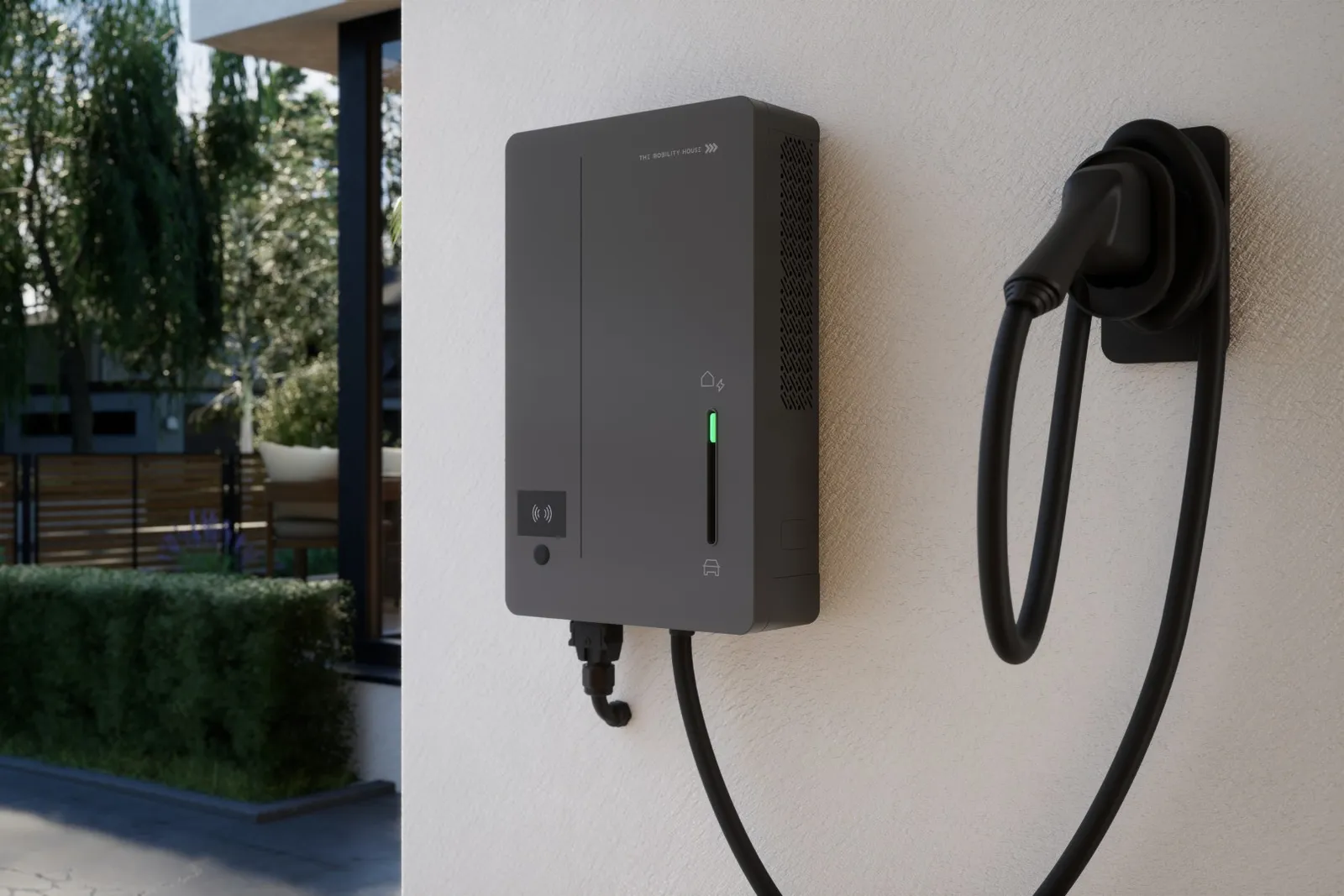
What’s included as a credit? Mercedes plans to offer an introductory deal (valid until the end of March 2027) to the first 500 customers: “They will receive the bidirectional Wallbox from The Mobility House at an introductory price of 1,990 euros instead of the regular price of 2,990 euros. Additionally, every hour the vehicle is connected to the Wallbox at home will be compensated for, regardless of whether it’s charging, discharging, or in pause mode,” the company states. Early customers will also receive a 250-euro charging credit on top of that.
In general, according to Mercedes, those who charge their vehicle at a wall charger for an average of twelve hours per day in everyday use can expect a bonus of over 500 euros per year. With regular use, the investment in a wall charger can be recouped within four years by taking advantage of the introductory offer, states Mercedes. Without these special conditions, it would take six years in this calculation example. The actual bonus amount depends on the vehicle’s availability, rising or falling accordingly with the charging time.
Jörg Bartels, head of drive systems at Mercedes‑Benz AG, commented: “Two-way charging represents the next logical step in electric mobility for us. We are transforming vehicles from mere consumers into active components of the energy system. In this way, we combine innovative vehicle technology with more efficient use of renewable energy, creating sustainable value for our customers as well as for the energy infrastructure.”
Thomas Raffeiner, CEO of The Mobility House, added: “The electric car is more than just a vehicle – it’s the battery storage of the future. Together with Mercedes‑Benz, we are making two-way charging practical for everyday use. Mercedes‑Benz customers will be able to earn money with their cars while reducing their energy costs. At the same time, they help alleviate strain on the power grid and support climate protection.”